Exhibition | Thomas Gainsborough: Drawings at the Clark
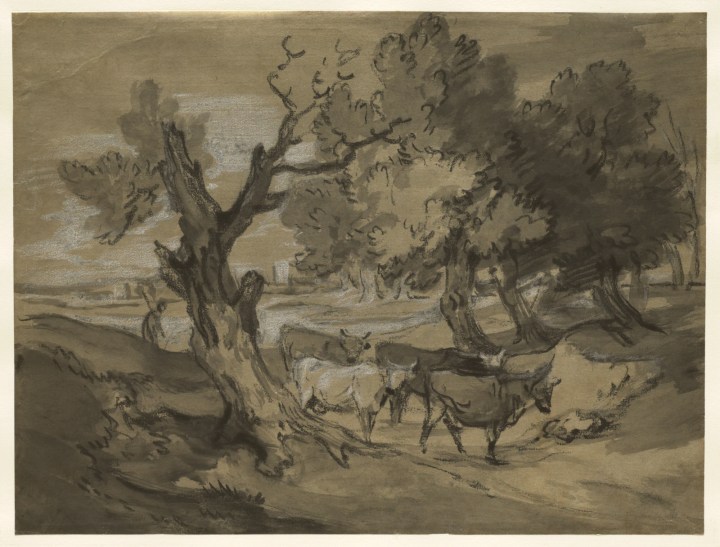
Thomas Gainsborough, Landscape with Herdsman Driving Cows and Distant Buildings, mid to late 1780s, black chalk over brush and gray wash with lead white on beige laid paper, fixed with gum (Williamstown: The Clark Art Institute, gift of the Manton Art Foundation in memory of Sir Edwin and Lady Manton, 2007.8.77).
◊ ◊ ◊ ◊ ◊
From The Clark:
Thomas Gainsborough: Drawings at the Clark
The Clark Art Institute, Williamstown, Massachusetts, 1 December 2018 — 17 March 2019
Though recognized as one of the most fashionable portrait painters of the eighteenth century, Thomas Gainsborough (1727–1788) made hundreds of drawings of the English landscape. Abounding with foliage, cottages, and pastoral figures—shepherds driving flocks of sheep and cows drinking from pools or streams along meandering paths—Gainsborough’s landscapes present an idealized view of country life. Rather than depicting specific locales, these lyrical sheets evoke the gentle woodland and heath of his native Suffolk, in the east, and later, the mountainous Lake District of Cumbria, in the northwest. Thomas Gainsborough: Drawings at the Clark reveals the artist’s fascination with mixed-media technique: graphite, chalks, ink washes, watercolor, and oil paints intermingle on toned papers. Together, the sixteen drawings on view in the Clark’s Manton Gallery for British Art demonstrate how Gainsborough championed an imaginative approach over naturalistic detail and reveal his fascination with mixed-media technique.
Exhibition | Secret Tiepolo
Seven frescoes by Giandomenico Tiepolo are on public view for the first time in Vicenza:
Secret Tiepolo / Tiepolo Segreto
Palladio Museum, Vicenza, 3 November 2017 — 31 December 2018
Curated by Guido Beltramini and Fabrizio Magani
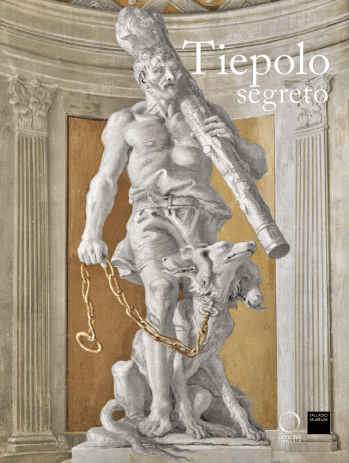 Sette straordinari affreschi di Giandomenico Tiepolo (1727–1804) da oltre cinquant’anni anni erano conservati nelle residenze dei proprietari che coraggiosamente li salvarono dalle distruzioni belliche. Oggi gli eredi, convinti dell’opportunità di un godimento pubblico di tali capolavori, li hanno destinati al Palladio Museum. Ad essi viene dedicata una mostra, realizzata grazie alle competenze e alla collaborazione della Soprintendenza di Verona diretta da Fabrizio Magani, che la cura insieme al direttore del Palladio Museum, Guido Beltramini.
In questa vicenda s’intrecciano più storie. Quella della straordinaria arte dei Tiepolo, in grado di trasformare dalla radice la tradizione frescante veneta. Quella della difesa del patrimonio artistico negli anni cupi della seconda guerra mondiale. Ma esiste una terza storia che lega in modo indissolubile gli affreschi di Palazzo Valmarana Franco agli studi palladiani: essi infatti sono realizzati due decenni dopo la straordinaria decorazione di Villa Valmarana ai Nani, per il figlio del committente, Gaetano Valmarana. Nella dimora suburbana a poca distanza dalla Rotonda palladiana, per il padre Giustino Valmarana, i Tiepolo celebrano la naturalezza di una vita ‘moralizzata’ in campagna. Vent’anni dopo, in città, a poca distanza dal Teatro Olimpico, il registro è completamente diverso: Tiepolo concepisce per il figlio una riedizione in pittura della magnificente scena del teatro all’antica di Palladio adottando non più il registro lieve e scherzoso della vita agreste ma il linguaggio aulico, monocromo ma nondimeno guizzante, della vicina architettura palladiana.
“Siamo orgogliosi di poter contribuire alla cultura della nostra città—dichiarano Camillo e Giovanni Franco, proprietari degli affreschi—con una parte della storia della nostra famiglia.” Fu fra l’altro Fausto Franco, zio dei generosi proprietari e Soprintendente ai Monumenti, a seguire il salvataggio degli affreschi di famiglia nel 1945. Dieci anni dopo lo stesso Franco, insieme—fra gli altri—a Rodolfo Pallucchini, Anthony Blunt, Rudolf Wittkower e André Chastel, fu fra i tredici fondatori del primo Consiglio scientifico del Centro palladiano, coordinato da Renato Cevese.
Tiepolo Segreto (Vicenza, Palladium Museum, 2018), 80 pages, ISBN: 978-8899765781, 17€.
Exhibition | Luxury in Silk: Fashion in the 18th Century
From the GNM:
Luxury in Silk: Fashion in the 18th Century / Luxus in Seide: Mode des 18. Jahrhunderts
Germanisches Nationalmuseum, Nuremberg, 5 July 2018 — 6 January 2019

Sacque (sack-back gown or robe à la française), ca. 1760 (Nuremberg: Germanisches Nationalmuseum).
In 2017, the GNM was able to acquire a remarkable object: a one-piece silk dress from the period around 1760 with a hooped skirt from about the same time. The colours of the silk fabric are extremely well-preserved; the pale blue background with the colourful flower decoration has hardly faded at all—which is extremely rare in textiles from this period.
But what did one wear with a dress of this kind? In the exhibition, splendid jewellery, accessories, and ‘fancies’ such as headpieces and collars, fans and gloves, silk stockings and shoes complete the picture of a lady ‘à la mode’. Contemporary portrayals and excerpts from historical literature also give a deep insight into the enormous skill that went into making such elaborate clothing and accessories. With around 100 items on display, the exhibition offers a fascinating insight into luxury clothing of the 18th century and also examines various issues within historical textile and clothing research.
Exhibition | Museo del Prado, 1819–2019: A Place of Memory
Now on view at the Prado:
Museo del Prado, 1819–2019: A Place of Memory / Un lugar de memoria
Museo Nacional del Prado, Madrid, 19 November 2018 — 10 March 2019
Curated by Javier Portús

Francisco de Goya y Lucientes, Portrait of José Álvarez de Toledo, Marquis of Villafranca and Duke of Alba, 1795, oil on canvas (Madrid: Museo Nacional del Prado).
This exhibition launches the extensive programme organised by the Prado to mark the 200th anniversary of its foundation. It offers a survey of the museum’s history, focusing on the dialogue between the museum and society; heritage policies in Spain; the trends that have guided the growth of the museum’s collection; and its transformation into a place that has allowed Spanish and foreign writers, intellectuals, and artists to reflect on the country’s past and its collective identity.
Organised around the art and documentary collections at the Prado (both visual and sound archives), which shall be exhibited alongside works by artists who have come into contact with the museum over the last two centuries, the exhibition presents a total of 168 original works, 34 from different Spanish and foreign institutions, together with a variety of complementary materials including documents, maps, pictures, photographs, and audiovisual installations.
Exhibition | Art of Native America: The Diker Collection
Press release for the exhibition:
Art of Native America: The Charles and Valerie Diker Collection
The Met Fifth Avenue, New York, 4 October 2018 — 6 October 2019
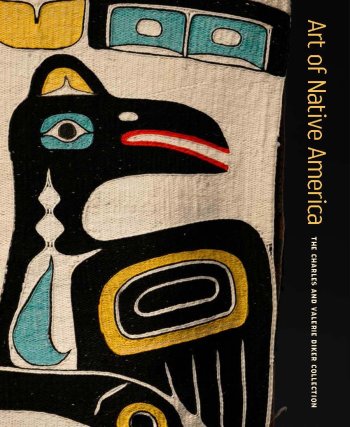 Opening October 4 at The Metropolitan Museum of Art, Art of Native America: The Charles and Valerie Diker Collection will feature 116 artworks from more than 50 cultures across North America. Ranging in date from the 2nd to the early 20th century, the diverse objects are promised gifts (first announced in spring 2017), donations, and loans to The Met from the pioneering collectors Charles and Valerie Diker. The collection has particular strengths in sculpture from British Columbia and Alaska, California baskets, pottery from southwestern pueblos, Plains drawings and regalia, and rare accessories from the eastern Woodlands.
Max Hollein, the Museum’s Director, commented: “The presentation in the American Wing of these exceptional works by Indigenous artists marks a critical moment in which conventional narratives of history are being expanded to acknowledge and celebrate the contributions of cultures that have long been marginalized. The extraordinary gift of the Diker Collection has forever transformed The Met’s ability to more fully display the development of American art, enabling an important shift in thinking.”
The exhibition is made possible by The Peter Jay Sharp Foundation, the Diane W. and James E. Burke Fund, the Enterprise Holdings Endowment, and the Walton Family Foundation.
A ceremonial opening of the exhibition involving contemporary Native American artists will be accompanied by a robust series of public programs.

Shoulder bag, ca. 1780; Anishinaabe, probably Ojibwa; possibly made in Minnesota, Wisconsin, or Ontario; native-tanned leather, porcupine quills, dye, metal cones, deer hair, vegetal fiber, and wool yarn (New York: The Metropolitan Museum of Art, Promised Gift of Charles and Valerie Diker, L.2018.35.70).
Art of Native America will be the first exhibition of Indigenous American art to be presented in the American Wing since it was established in 1924. Originally focused on Colonial and early Federal decorative arts and architecture, the Wing’s collecting areas have continued to evolve.
Sylvia Yount, the Lawrence A. Fleischman Curator in Charge of the American Wing, said: “We are committed to exploring thoughtfully and sensitively the entangled histories of contact and colonization from both Native and Euro-American perspectives. The Met takes seriously its curatorial responsibility to share with our broad audiences—in a variety of displays and contexts—the cultural endurance and creative continuity of Indigenous American artists.”
Art of Native America will highlight production from seven distinct regions: Woodlands, Plains, Plateau, California and Great Basin, Southwest, Northwest Coast, and Arctic. Featured works cover all of the major artistic forms by both identified and unrecorded Native Americans: paintings, drawings, sculpture, textiles, quill and bead embroidery, basketry, and ceramics. Highlights include a ca. 1800 shoulder bag made from finely tanned and dyed deerskin hide embellished with porcupine quills by an Anishinaabe woman, possibly from Ontario, Canada; a striking ca. 1895–1900 ceramic jar depicting the Butterfly Maiden spirit being (Palhik Mana) by renowned Hopi-Tewa potter Nampeyo from Hano Village, Arizona; a monumental 1907 woven basket by Washoe artist Louisa Keyser from Carson City, Nevada; a masterfully carved 1820–40 Tsimshian headdress frontlet with abalone shell inlays from British Columbia; and an elaborate ca. 1900 dance mask by a Yup’ik artist from Hooper Bay, Alaska.
A core group of works from the Diker Collection will remain on view in the American Wing’s Erving and Joyce Wolf Gallery, while light-sensitive works will be rotated annually. Displays of Native and non-Native art—historical and contemporary—will also be organized in response to the Diker Collection.
The Met is collaborating with a range of advisors on the exhibition, including: Kathleen Ash-Milby (Diné/Navajo), Associate Curator, Smithsonian National Museum of the American Indian, New York; Bruce Bernstein, Executive Director, Ralph T. Coe Center for the Arts, Santa Fe, New Mexico; Ned Blackhawk (Western Shoshone), Professor of History and American Studies, Yale University, New Haven, Connecticut; Steven C. Brown, independent scholar, Olympic Peninsula, Washington; Elizabeth Hutchinson, Associate Professor, Art History, Barnard College and Columbia University, New York; and Brian Vallo (Acoma), Director, Indian Arts Research Center, School for Advanced Research, Santa Fe, New Mexico.
Gaylord Torrence, with contributions by Ned Blackhawk and Sylvia Yount, Art of Native America: The Charles and Valerie Diker Collection (New York: The Metropolitan Museum of Art, 2018), 232 pages, ISBN: 978-1588396624, $50.
Exhibition | Artistic Encounters with Indigenous America
From The Met:
Artistic Encounters with Indigenous America
The Met Fifth Avenue, New York, 3 December 2018 — 13 May 2019
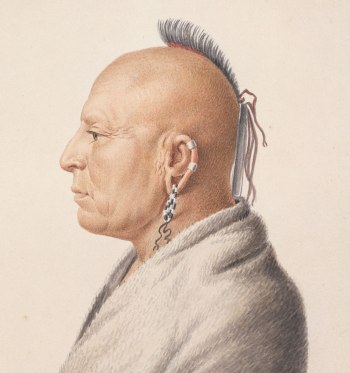
Charles Balthazar Julien Févret de Saint-Mémin, Osage Warrior (detail), 1805–07, watercolor and graphite on off-white wove paper, 18 × 16 cm (New York: The Metropolitan Museum of Art, 54.82).
This exhibition will explore how European and American artists represented Indigenous North Americans in drawings, prints, watercolors, photographs, and popular ephemera from the seventeenth to the early twentieth century. Through forty-five examples from The Met collection, the display will trace the evolution of this complex imagery over time, highlighting the ways in which it contributed to the creation and dissemination of myths and misconceptions about Native peoples, often justifying their dispossession, cultural destruction, and genocide. From formulaic depictions of so-called savage warriors and Indian princesses to romanticized representations of a ‘vanishing race’, these works reveal the pervasive influence of Indigenous America on the Euro-American imagination.
Artistic Encounters with Indigenous America complements the exhibition Art of Native America: The Charles and Valerie Diker Collection, on view at The Met Fifth Avenue from 4 October 2018 through 6 October 2019.
Exhibition | Magnificent Venice!
Now on view at the Grand Palais (and also worth noting that the Royal Collection exhibition on Canaletto opens in Dublin in December) . . .
Magnificent Venice! Europe and the Arts in the 18th Century
Grand Palais, Paris, 26 September 2018 — 21 January 2019
Fondazione Musei Civici di Venezia, Palazzo Ducale, Venice, 23 February — 9 June 2019
Curated by Catherine Loisel
 Venice fascinated Europe in the 18th century. Its site, on islands transformed into a monumental city, its political regime, its artistic and musical traditions, and its carnival made it attractive and unique. At the time, the Republic of Venice, with its rich history, was among the key powers in Europe. But throughout the century, the city also suffered a series of crises, both economic and social, which led to its decline and precipitated its fall in 1797 at the hands of Bonaparte’s armies. Despite this difficult context, the city’s arts scene still displayed an exuberant vitality. Painters, sculptors, decorators, and designers were among the most illustrious on the Italian stage. Composers, playwrights, instrumentalists and singers were famous throughout Europe. It is this last golden age that the exhibition aims to recount, with an emphasis on the influence of Venetian artists in England, France, Germany, and Spain. It also evokes the power of the myth reflected in their works inspired by the joyful and decadent Serenissima. In addition to fine art, the exhibition also seeks to recreate the atmosphere of these last flames of a civilisation. To this end, the scenography has been entrusted to Macha Makeïeff, a set designer renowned for her lively inventiveness.
Catherine Loisel, Éblouissante Venise! Les arts et l’Europe au XVIIIe siècle (Paris: Les éditions Rmn-Grand Palais, 2018), 256 pages, ISBN: 978-2711870714, €45.
The exhibition booklet, in English, is available as a PDF file here»
Exhibition | De Vouet à Boucher
Now on view at Musée des Beaux-Arts d’Orléans:
De Vouet à Boucher, au cœur de la collection de Motais de Narbonne
Musée des Beaux-Arts d’Orléans, 15 September 2018 — 13 January 2019
Curated by Olivia Voisin and Viviane Mesqui
 Le musée des Beaux-Arts d’Orléans présentera du 15 septembre 2018 au 13 janvier 2019 l’intégralité de la collection d’Héléna et de Guy Motais de Narbonne dans une exposition originale plongeant au coeur de l’univers des collectionneurs : entre culture muséale et connoisseurship, les Motais de Narbonne ont rassemblé 80 tableaux des XVIIe et XVIIIe siècles, italiens et français, résolument tournés vers l’histoire.
Leur collection, qui par ses artistes et par ses sujets entre en résonnance avec la collection de peintures anciennes du musée des Beaux-Arts d’Orléans, sera montrée pour la première fois au public dans son intégralité, en dialogue avec des oeuvres de collections publiques ou privées.
Cette exposition se place sous le parrainage de Pierre Rosenberg, membre de l’Académie française et grand connaisseur de la collection Motais de Narbonne, en collaboration avec de nombreux historiens de l’art. Tout au long du parcours, le visiteur pénétrera dans l’intimité d’une collection privée vivante, rythmée par les histoires et les coups de coeur qui ont conduit à sa constitution. Les Motais de Narbonne partagent avec cette exposition non seulement l’exceptionnelle collection qu’ils ont rassemblée, mais également une part de l’histoire intime qui se tisse entre un amateur et un tableau. L’émotion, les motifs insolites et surprenants occupent ainsi une place particulière dans le coeur d’Héléna et de Guy Motais de Narbonne, stimulant leur regard et générant parfois une acquisition. De même, leur vif intérêt pour les musées, qui a joué un rôle déterminant dans la formation de leur regard et de leur goût, ponctue le parcours par des rapprochements avec des peintures qui les ont inspirés.
The press kit (dossier de presse) is available here»
Viviane Mesqui and Pierre Rosenberg, De Vouet à Boucher, au coeur de la collection Motais de Narbonne (Heule: Snoeck, 2018), 263 pages, ISBN: 978-9461614742, $50.
Exhibition | Armenia!

Altar Frontal, detail, New Julfa, 1741; gold, silver, and silk threads on silk (Mother See of Holy Etchmiadzin, Armenia; photo by Hrair Hawk Khatcherian and Lilit Khachatryan).
◊ ◊ ◊ ◊ ◊
Press release (20 September 2018) for the exhibition now on view at The Met:
Armenia!
The Met Fifth Avenue, New York, 22 September 2018 — 13 January 2019
Curated by Helen Evans, with C. Griffith Mann and Constance Alchermes
Armenia! explores the arts and culture of the Armenians from their conversion to Christianity in the early fourth century through their leading role on international trade routes in the 17th century. The exhibition emphasizes how Armenians developed a distinctive national identity in their homeland at the base of Mt. Ararat (widely accepted as the resting place of Noah’s Ark) and how they maintained and transformed their traditions as their communities expanded across the globe.
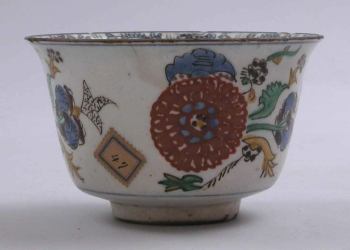
Kütahya Vessel, 18th century, stonepaste; polychrome painted under transparent glaze, 6.7 cm high (New York: The Metropolitan Museum of Art, 02.5.45).
More than 140 opulent gilded reliquaries, richly illuminated manuscripts, rare textiles, liturgical furnishings made of precious materials, khachkars (cross stones), church models, and printed books demonstrate Armenia’s distinctive imagery in their homeland and other major Armenian sites, from the Kingdom of Cilicia on the Mediterranean to New Julfa, in Safavid Persia. Select comparative works display Armenian interaction with other cultures. Major Armenian repositories of their culture provide almost all the works in the exhibition. Most are on view in the United States for the first time; many have not traveled for centuries.
Armenia! focuses on major Armenian centers of production from their homeland west and east. It includes images of Armenians, from self-portraits to depictions of male and female rulers, donors, theologians, and historians. Special attention is given to works by major artists such as T’oros Roslin, Sargis Pidzak, Toros Taronatsi, and Hakob of Julfa working in the Armenian homeland, the Kingdom of Cilicia, and New Julfa.
More than half of the works on display are on loan from The Republic of Armenia with the support of The Ministry of Culture. Imposing liturgical works are coming from the Mother See of Holy Etchmiadzin, the primary site of the Armenian Church. In Yerevan, the ‘Matenadaran’ Mesrop Masthots` Institute – Museum of Ancient Manuscripts is lending exceptional manuscripts, and the History Museum of Armenia is lending monumental church sculptures. The Holy See of Cilicia in Lebanon, the Armenian Patriarchate of Jerusalem, and the Armenian Mekhitarist Congregation in Venice are the other major Armenian religious communities lending exceptional works. Armenian collections lending select works are the Calouste Gulbenkian Museum in Portugal and in America, the Diocese of the Armenian Church (Eastern) (New York); the Armenian Museum of America (Boston); and the Alex and Marie Manoogian Museum (Southfield, Michigan). Additional works are coming from The Met and other American and European institutions.
Photographs of Armenian architecture and landscapes by noted Armenian-Canadian photographer Hrair Hawk Khatcherian and his assistant Lilit Khachatryan will provide context for the works in the exhibition, in the catalogue, and on the exhibition page of the website.
The exhibition was organized by Helen C. Evans, the Mary and Michael Jaharis Curator of Byzantine Art, with the support of C. Griffith Mann, the Michel David-Weill Curator in Charge, Department of Medieval Art and The Cloisters, and the assistance of Constance Alchermes, Research Assistant. Exhibition design is by Michael Langley, Exhibition Design Manager; graphics are by Chelsea Amato and Morton Lebigre, Graphic Designers; and lighting is by Clint Ross Coller and Richard Lichte, Lighting Design Managers.
The exhibition is made possible by The Hagop Kevorkian Fund. Additional support is provided by the Carnegie Corporation of New York, the Michel David-Weill Fund, the Armenian General Benevolent Union, The Giorgi Family Foundation, The Hirair and Anna Hovnanian Foundation, the Karagheusian Foundation, The Nazar and Artemis Nazarian Family, the Ruddock Foundation for the Arts, The Strauch Kulhanjian Family and The Paros Foundation, Aso O. Tavitian, and the National Endowment for the Arts.
The catalogue is distributed by Yale UP:
Helen Evans, ed., Armenia: Art, Religion, and Trade in the Middle Ages (New York: The Metropolitan Museum of Art, 2018), 352 pages, ISBN: 978-1588396600, $65.
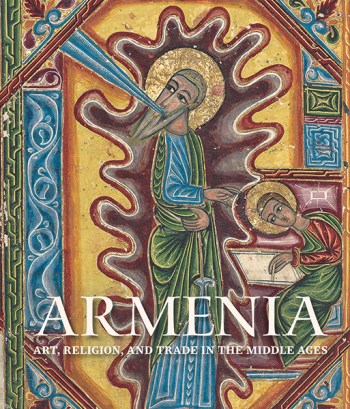 As the first people to officially convert to Christianity, Armenians commissioned and produced astonishing religious objects. This sumptuous volume depicts and contextualizes the compelling works of art that defined the rich and complicated culture of medieval Armenians, including carvings, liturgical furnishings, beautifully illustrated manuscripts, gilded reliquaries, exquisite textiles, printed books, and more. Situated at the center of trade routes that connected the East and West during the Middle Ages, Armenia became a leading international trade partner for Seljuk, Mongol, Ottoman, and Persian overlords, while also serving as a powerful ally to Byzantium and European Crusader states. Written by a team of international scholars, with contributions from Armenian religious leaders, this book will stand as the definitive text on the art and culture of medieval Armenia.
Helen C. Evans is Mary and Michael Jaharis Curator of Byzantine Art in the Department of Medieval Art and The Cloisters at The Metropolitan Museum of Art.
Exhibition | Armenia: Art, Culture, Eternity
Press release (25 October 2018) from the Armenian Museum of America:
Armenia: Art, Culture, Eternity
Armenian Museum of America, Watertown, Massachusetts, exhibition open from November 2018

Kütahya vessel, 18th century, polychrome fritware (Watertown, Massachusetts: Armenian Museum of America).
The Armenian Museum of America is pleased to share its vision for the future. Founded in 1971, the Museum serves as the largest repository of Armenian artifacts in the diaspora, as well as the largest ethnic museum in Massachusetts. As the Museum builds towards the future, it strives to create a stronger, more connected community through shared exploration of Armenian art and history, both for Armenians and those who are new to Armenian culture.
The Museum’s new gallery Armenia: Art, Culture, Eternity provides an overview of Armenian culture from antiquity to present-day Armenian experience here in the United States. Over fifty objects are on display, illustrating Armenia’s origins in the Asian continent, the invention of a unique Indo-European language and alphabet, the early adoption of Christianity, Armenian medieval illuminated manuscripts, interconnected trade routes, and the tragedy of the Genocide.
Armenia: Art, Culture, Eternity is the culmination of twelve months of intense research and design and represents a new level of scholarship and interpretation at the Museum. The project was made possible by the support of the Board of Trustees and was spearheaded by Executive Director Jennifer Liston Munson and architect Virginia Durruty, who worked side-by-side with Michele Kolligian, President of the Board of Trustees, on the inspired design. The gallery represents an incredible achievement and is the start of a holistic consideration of the entire Museum, which will examine everything from the building’s distinctive Brutalist architecture—including how the hard space is a meaningful metaphor for Armenia’s difficult history—to the Museum’s role in telling the modern Armenian-American cultural narrative.










 Enfilade
leave a comment