Online Seminars | Sartorial Society Series, Summer 2021

I’ve included here a selection of talks most relevant to the 18th century, but the whole series looks terrific.–CH From the Sartorial Society Series:
Looking Back: The Historicisms, Hauntings, and Heritage of Dress
Sartorial Society Series, Summer Semester 2021
A digital seminar series exploring the history of dress, fashion, and bodily adornment.
“The past has to be taken apart. Old themes are worn as new details.” –Judith Clark
When introduced to histories of dress, we are often met with timelines of fashion that imply a neat, progressive evolution of fashionable styles through the years. Clothing is framed as an index to history. Yet dress does not conform to an orderly chronology. It is full of disruptive reverberations, re-interpretations, and revivals. The fashions of the past are repeatedly dismantled and reimagined, sending sartorial echoes through time.
The historic resonance of dress can also carry an emotional weight on a personal level. Clothes can serve as welcome memories of loved ones, or less-welcome spectres of the past. Memories of clothes can be deeply nostalgic, while the garments not-worn can serve as ‘sliding-door’ moments, causing us to dwell on the parallel lives we did not live or bodies unlike our own. This has been explored, for example, by Shahidha Bari, who describes “spectral visions of ourselves [that] haunt these garments like all things that are romanticised and never realised.”
Dress maintains its capacity to ‘haunt’ in the setting of the museum or archive. Elizabeth Wilson described museums of dress as ‘mausoleums of culture’: haunted and eerie. She stated that ‘there are dangers in seeing what should have been sealed up in the past. We experience a sense of the uncanny when we gaze at garments that had an intimate relationship with human beings long since gone to their graves.’ Carol Tulloch has written of the power of archives to access personal fashion histories that may otherwise have been lost, suggesting that: “archives enable a lived experience to be revived and reassessed time and time again.”
The Sartorial Society Series is organised by a group of dress historians and curators with the aim of celebrating the diverse, innovative, and excellent research emerging in the field of dress history. We want to create a space that welcomes and supports dress historians from all backgrounds, and fosters positive connections within our field. The series will encourage collegiality and will be an open, inclusive, and friendly space to meet others interested in dress history. We encourage BYO wine, tea or soft drink of choice and invite you to join the post-talk Q&A.
All sessions are held on Thursday evenings at 6pm UK time (BST/GMT). Most talks are 20 minutes; some are 10 minutes. Registration links are available here.
◊ ◊ ◊ ◊ ◊
Week 1 | Nostalgia and Nationalism
20 May 2021
• Cecilia Gunzburger, French Revolutionary Dress in the Bourbon Restoration: The Political Uses of Historic Dress
• Sabine Wieber, Vienna’s 1879 Festzug and the Habsburg Empire’s ‘Glorious’ Past
• Alison Toplis, An Exploration of the Smock as a Nostalgic Spectre of Rural England
◊ ◊ ◊ ◊ ◊
Week 3 | Reconstruction and Reproduction
10 June 2021
• Amber Pouliot, Serena Partridge’s ‘Accessories’ Collection for the Brontë Parsonage Museum: Haunting the Heritage Context
• Jordan Mitchell-King, Reanimating Dress: Interpreting Historical Clothing through Experimental Wearing
• Cynthia Chin Kirk, ‘I Am Only Fond of What Comes from the Heart’: Memory and Trauma in Martha Washington’s Purple Silk Gown
◊ ◊ ◊ ◊ ◊
Week 4 | Performance and Performativity
24 June 2021
• Ella Hawkins, The Time is Out of Joint: ‘Haunted’ Costuming at Shakespeare’s Globe
• Hilary Davidson, Looking Back Through Fashion: Regency Romanticisms
• Anouska Lester, ‘Item, One Ghost’s Crown’: Haunting and Loss in Philip Henslowe’s 1598 Theatrical Inventories
◊ ◊ ◊ ◊ ◊
Week 7 | Historicism, Revival, and Re-Use
29 July 2021
• Serena Dyer, Sartorial Chronology and Fashionable Anachronism: Historicism, Temporality, and the Making of Dress Histories
• Sarah Hodge, A Fancy for the Past: Historical Style in Britain, 1800–1851
• Ruby Hodgson, Robe a la Grand-Mere: Re-Use of 18th-Century Silk in Romantic Era Dress
• Jane Hattrick, Queering the Hartnell Crinoline: Reinventing Second Empire French Fashions, Fantasy, Gender Performativity, and the Royal Body
Online Lecture and Conference | Piranesi @300

Base of the Antonine Column from Piranesi’s Campo Marzio (Rome, 1762)
(British School at Rome Library)
◊ ◊ ◊ ◊ ◊
Clare Hornsby, Piranesi at the BSR: Thomas Ashby’s Curious Campo Marzio
Online Lecture, 6 May 2021, 18.00–19.30 CET
Piranesi @300
Online Conference, 19–21 May 2021
Giovanni Battista Piranesi (Venice 1720 – Rome 1778) was one of the leading figures in 18th-century Italian and European culture. An artist, engraver, architect, merchant, intellectual, and polemicist, he was essential in the formation of modern aesthetic sensibility, for the birth of modern archaeology, for the theories of architecture and urbanism. His influence has been enduring, from Romanticism to the avant-garde movements of the 20th century, up to the present day.
The third centenary of Piranesi’s birth struggled to achieve resonance in 2020 due to the pandemic. Initiatives to celebrate the great artist’s work will resume in Rome in May 2021, accessible online internationally.
◊ ◊ ◊ ◊ ◊
On Thursday, May 6, the British School at Rome, will host an online lecture exploring Piranesi’s book Campo Marzio di Antica Roma of 1762, its magnificent map, and some of the curiosities of the copy of the volume held in the rare books collections of the library at BSR. This lecture by Clare Hornsby in collaboration with Valerie Scott BSR librarian will feature the recently launched initiative of BSR Library and Archive, the Digital Collections website, of which the Piranesi Campo Marzio volume will be a highlight.
◊ ◊ ◊ ◊ ◊
On 19, 20, and 21 May a group of Roman institutions—the Biblioteca Nazionale Centrale, British School at Rome, Villa Médicis-Académie de France, and the Centro di Studi sulla Cultura e l’Immagine di Roma—have organised an online conference, Piranesi@300, bringing together more than 20 Italian and foreign scholars (from Brazil, the United States, Japan, Germany, France, England, Spain, etc.) to present new research and new analyses of some of the many aspects of Piranesi’s extraordinary personality and creativity.
During the week of the conference, further presentations will be made available via video recording; a highlight is The Digital Piranesi presented by a team from the University of South Carolina. Additionally, the YouTube channel of the Biblioteca Nazionale Centrale will host contributions from a number of Piranesi experts, including the Director of the Vatican Museums Barbara Jatta and the restoration team which brought the church of Santa Maria del Priorato on the Aventine hill in Rome, Piranesi’s architectural masterpiece, back to its original beauty.
1 8 – 2 4 M A Y 2 0 2 1
Pre-recorded sessions (available all week)
Hosted on the website of the University of South Carolina
• Jeannie Britton, From Page to Screen: A New Look at Piranesi’s Annotated Images
• Zoe Langer, The Digital Piranesi: New Approaches to Translating the Opere
• Jason Porter, The Virtual Piranesi: New Methods of Immersive Literacy
• Michael Gavin, Piranesi’s Diagrammatic Sublime
Hosted on the YouTube channel of the Biblioteca Nazionale Centrale, Rome
• Barbara Jatta (Direttore, Musei Vaticani), Piranesi in Vaticano
• Daniela Porro (Soprintendente Speciale archeologia, belle arti e paesaggio di Roma) Restauri della Soprintendenza alla piazza di S. Maria del Priorato
• Alessandro Mascherucci (Soprintendenza Speciale archeologia, belle arti e paesaggio di Roma), Problematiche tecniche del restauro al complesso piranesiano
• Giorgio Ferreri (Sovrano Militare Ordine di Malta), S. Maria del Priorato, i restauri
• John Wilton-Ely (Professor Emeritus, Hull University), Soane’s Attitude towards Piranesi
• Maria Cristina Misiti (Ministero della Cultura) and José Maria Luzon Nogué (Real Academia de Bellas Artes de San Fernando, Madrid), Piranesi dal libro cartaceo all’opera multimediale
• Sergei Tchoban (Tchoban Voss architects, Berlin), Imprint of the Future: Destiny of Piranesi‘s City
• Pierluigi Panza (Politecnico di Milano), Piranesi alla Scala
W E D N E S D A Y , 1 9 M A Y 2 0 2 1
Hosted by Biblioteca Nazionale Centrale, Roma
9.45 Welcome by Andrea De Pasquale (Direttore, Biblioteca Nazionale Centrale, Roma) and Marcello Fagiolo (Presidente, Centro di Studi sulla Cultura e l’Immagine di Roma)
10.00 Piranesi’s Techniques: Drawing, Etching
Chairs: Mario (Bevilacqua (Università di Firenze / Centro di Studi sulla Cultura e l’Immagine di Roma) and Simonetta Prosperi Valenti Rodinò (Roma)
• Andrea De Pasquale (Biblioteca Nazionale Centrale, Roma), Piranesi e il suo torchio
• Giovanna Scaloni (Istituto Centrale per la Grafica, Roma), L’Istituto centrale per la grafica per Piranesi
• Lucia Ghedin (Istituto Centrale per la Grafica, Roma) and Sofia Menconero (Sapienza – Università di Roma), La tecnica di reflectance transformation imaging (RTI) applicata alle matrici calcografiche: una sperimentazione sulla serie delle Carceri piranesiane
• Ginevra Mariani (Roma), Progetto Piranesi: il catalogo generale delle matrici di Piranesi, 2010–2020. Nuovi dati e future prospettive sull’opera incisa di Giambattista Piranesi
• Stefan Morét (Staatliche Kunsthalle Karlsruhe), The Role of Drawn Copies after Antique Ornaments in Piranesi’s Workshop
• Bénédicte Maronnie (Università della Svizzera Italiana, Mendrisio), Pratiques graphiques dans l’atelier de Giovanni Battista Piranesi à l’exemple d’un dessin inédit conservé à Zurich
13.30 Lunch Break
14.30 Piranesi and European 18th-Century Collections
Chairs: Mario Bevilacqua (Università di Firenze / Centro di Studi sulla Cultura e l’Immagine di Roma) and Barbara Jatta (Vatican Museum)
• Ebe Antetomaso (Biblioteca Corsiniana e dei Lincei, Roma), Materiali piranesiani nella collezione Corsini: appunti dai bibliotecari
• Charleen Rethmeyer and Georg Schelbert (Humboldt-Universität zu Berlin), Piranesi in Prussia: Spotlights on a Variable Relationship
• Gudula Metze (Staatliche Kunstsammlungen Dresden), 1720–1778: Piranesi and the Kupferstich-Kabinett Dresden
16.45 Break
17.00 Keynote Address
• Delfin Rodriguez Ruiz (Universidad Complutense, Madrid), Piranesi e la Spagna
T H U R S D A Y , 2 0 M A Y 2 0 2 1
Hosted by the British School at Rome
9.45 Welcome by Chris Wickham (Director, British School at Rome)
10.00 Piranesi: Architect, Antiquarian, and Theorist
Chairs: Clare Hornsby (BSR) and Caroline Barron (Birkbeck)
• Maria Grazia D’Amelio Università di Roma ‘Tor Vergata’) and Fabrizio De Cesaris Sapienza – Università di Roma), Giovan Battista Piranesi e l’architettura pratica
• Lola Kantor-Kazovsky (The Hebrew University of Jerusalem), Piranesi’s Carceri, Cartesian ‘Dream Argument’ and Scientific Interests in Early 18th-Century Venice
• Silvia Gavuzzo Stewart (Roma), La dedica di Piranesi a Lord Charlemont nella Tavola II delle Antichità Romane
• Paolo Pastres (Deputazione di Storia Patria per il Friuli), Fantasia al potere: Piranesi, Algarotti e la lezione di Antonio Conti
• Cristina Ruggero (Berliner-Brandenburgische Akademie der Wissenschaften, Berlin), ‘Onde per riguardo della Pianta… non resta che l’indice ad incidersi’: Piranesi e Villa Adriana
• Eleonora Pistis (Columbia University, New York), Piranesi without Images: The Thinkability of Architecture
13.45 Lunch Break
14.30 From Venice to Rome: Piranesi as Artist, Dealer, and Entrepreneur
Chair: Harriet O’Neill (British School at Rome / Royal Holloway University of London)
• Enrico Lucchese (Univerza v Ljubljani), Pulcinella e poveri Cristi: Per Giambattista Piranesi disegnatore e i suoi rapporti con Giandomenico Tiepolo
• Francesco Nevola (Atene), Piranesi: Peritissimo in tutte le Arti Liberali
15.30 Keynote Address
• Heather Hyde Minor (University of Notre Dame, South Bend, Indiana), Piranesi’s Epistolic Art
F R I D A Y , 2 1 M A Y 2 0 2 1
Hosted by the Villa Médicis-Académie de France à Rome
9.45 Welcome by Sam Stourdzé (Direttore, Accademia di Francia a Roma)
10.00 Piranesi’s Influence: Europe and Beyond
Chair: Heather Hyde Minor (University of Notre Dame)
• Olga Medvedkova (Centre National de la Recherche Scientifique, Paris), ‘La Dévideuse italienne’ ou habiter la ruine
• Valeria Mirra (Roma), Dalla fortuna di Giovanni Battista Piranesi in Francia allo stabilimento dei ‘Piranesi frères’ a Parigi
• Helena Perez Gallardo (Universidad Complutense, Madrid), Sotto il cielo di Parigi: Piranesi negli incisori e fotografi francesi nel 1850
• Angela Rosch Rodrigues (Universidade de São Paulo, Brasil), G. B. Piranesi at the Brazilian National Library: A Trajectory of the rovine parlanti from Rome to Rio de Janeiro
• Hiromasa Kanayama (Keio University, Tokyo), La raccolta piranesiana nel Giappone dell’Ottocento: le vicende della collezione Kamei
13.15 Lunch Break
14.30 Piranesi in the 20th Century
Chair: Francesca Alberti (Académie de France à Rome)
• Giacomo Pala (Universität Innsbruck) Piranesi: Posthumous Architect
• Angelo Marletta (Università degli Studi di Catania), Forma Urbis forma architecturae: Piranesi, Kahn e i frammenti di Roma
• Victor Plahte Tschudi (Oslo School of Architecture and Design), Alfred H. Barr and the Reinvention of Carceri as Modern Art
16.30 Break
17.00 Keynote Address
• Alain Schnapp, Piranèse, ruine des ruines
Panel Discussion | Enduring Versailles

Adam Perelle, Veue et Perspective du Chasteau de Versailles, avec le parterre d’eau du costé du Jardin, detail, 1680s.
◊ ◊ ◊ ◊ ◊
From Eventbrite:
Panel Discussion: Enduring Versailles
Online, Wednesday, 28 April 2021, 18.30–20.00 (EST)
To celebrate the launch of the new book edited by Mark Ledbury and Robert Wellington, The Versailles Effect: Objects, Lives, and Afterlives of the Domaine (Bloomsbury Academic, 2020), we invite you to join us for a panel discussion on the place of the château de Versailles, the Trianons, and the domaine in the history of art today. As symbol, system and ecology, the Château and Domain of Versailles has long held a central but complex place in the history of Western art and in the global imaginary. The panel—hosted by the Historians of Eighteenth-Century Art & Architecture— will discuss how and why Versailles still remains at the center of long-eighteenth-century studies today. How does the monument to the Bourbon regime fare in the era of recuperative histories of gender, race, and class? Why bother with Versailles?
This is an online event; a Zoom link will be sent, one day prior, to those who have registered (via Eventbrite).
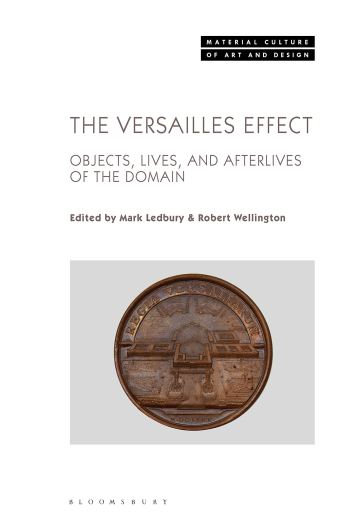 Conveners
• Mark Ledbury—Power Professor of Art and Visual Culture, The University of Sydney
• Robert Wellington—Senior Lecturer, Centre for Art History and Art Theory, Australian National University
Panellists
• Basile Baudez—Assistant Professor in Architectural History, Department of Art and Archeology, Princeton
• Sarah Grandin—The Clark-Getty Paper Project Curatorial Fellow, Clark Art Institute
• Junko Takeda—Professor of History, Maxwell School of Citizenship and Public Affairs, Syracuse University
• Aaron Wile—Associate Curator, Department of French Paintings, National Gallery of Art, Washington, D.C.
US/UK/France
Wednesday, 28 April 2021
15.30–17.00 (PDT)
18.30–20.00 (EST)
23.30–01.00 (GMT)
00.30–02.00 (CEST)
Australia/New Zealand
Thursday, 29 April 2021
08.30–10.00 (AEST)
10.30–12.00 (NZST)
Should you wish to order a copy of The Versailles Effect, we invite you to take advantage of a 30% discount by entering the code AAH21 at the Bloomsbury website.
Online Talk | Imagining the Etruscans: Modern European Perceptions
The keynote talk for this year’s New York Workshop of Etruscan Art, given by Maurizio Harari, addresses reception history, including the eighteenth century:
Maurizio Harari, Imagining the Etruscans: Modern European Perceptions of an Ancient Italian Civilization
Online, Thursday, 29 April 2021, noon (ET)
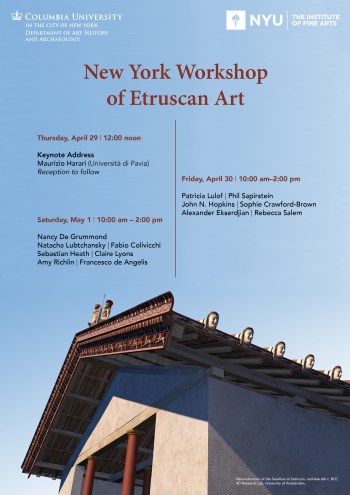 Since the late rise of humanism and through a real crescendo in the 18th to 20th centuries, the Etruscans, an ancient people of pre-Roman Italy, became (and remain) a subject of lively discussions among scholars, as they saw a wide popularity in pseudo-scientific exploration and publication. This lecture aims to explore the ideological features of the foundation process of a highly specialized, but often self-referential discipline, so-called ‘Etruscology’, which only saw its real scholarly development in the first half of the 20th century. In that context, this major branch of scholarship was created with its roots in the rather complicated connections between the Italian territorial situation of Etruscan civilization and the European dimension of its reception and popularization.
Maurizio Harari is Professor of Etruscan and Italic Archaeology and Director of the Archaeological Museum at the University of Pavia, Italy. Author of over 200 publications, his reach focuses on Etruscan and Italic art and archaeology, especially issues of image making and meaning, wall painting, Etruscans of the Po-River region, and the sacred and political institutions of Etruscan cities. Co-Director of excavations at the Italian site of Verucchio since 2011, he is also a specialist in the historiography of Etruscology and its situation within the archaeological disciplines of Europe and the Mediterranean. He has collaborated widely across Europe, including with the European Research Council and on publication of the Enciclopedia dell’arte antica classica e orientale and the Lexicon Iconographicum Mythologiae Classicae, and he is fellow and member of multiple institutions, including the Istituto Nazionale di Studi Etruschi ed Italici.
The New York Workshop of Etruscan Art is an initiative promoted jointly by Columbia University and New York University. The ambition of the workshop is to advance our understanding of the artistic and visual dimensions of pre-Roman Italy by promoting discussion and sustained reflection on their role within the field of Etruscan studies, but it does not prescribe a specific intellectual agenda. This year, the workshop will: advance discussion of buildings, their roofs and decoration and the avenues they provide to investigate production processes, networks of interaction and creation, the sacred image and the porousness of Italic arts; reflect on the impact of 3D-modeling and reconstructions on our understanding of Etruscan aesthetics; present new findings from the Corpus Speculorum Etruscorum; present unpublished bronze figurines of subordinate characters; explore the relation with comedy of the imagery of Praenestine cistae.
Please join us for the keynote talk of this year’s New York Workshop of Etruscan Art given by Maurizio Harari. The event will be live-streamed; RSVP to receive the webinar link.
Online Talk | Helen Jacobsen on the Château de Bagatelle

François-Joseph Bélanger, Château de Bagatelle, 1777, Bois de Boulogne, Paris.
◊ ◊ ◊ ◊ ◊
This upcoming talk is the final installment of the Attingham Trust Spring Lecture Series. Annabel Westman—after more than 40 years of being involved with Attingham—recently announced that she is retiring from her position as executive director, to be succeeded by Helen Jacobsen. (You’re able to stage a virtual passing of the baton by watching a recording of Annabel’s March 8 talk for the lecture series— “What tone is salmon-coloured? Interpreting documentation in historic textile furnishing schemes” —just before you tune in for Helen’s.)
Helen Jacobsen, The Château of Bagatelle: The Story of a Remarkable House and Its Collections
Online, Wednesday, 28 April 2021, 6pm (BST)
Helen Jacobsen, the Director of the Attingham French Eighteenth-Century Studies course, looks at the absorbing story of the Château of Bagatelle, the former hunting lodge in the Bois de Boulogne that was transformed into a jewel of French neoclassicism as the result of a bet between Marie-Antoinette and her brother-in-law, the Comte d’Artois. Much more than a plaything, Bagatelle survived the Revolution and became the much-loved home of two more of the greatest patrons of French art, the 4th Marquess of Hertford and Sir Richard Wallace. Helen, who is also the Curator of French 18th-century decorative art at the Wallace Collection, will chart the life of the house under all three owners, and investigate the continuing connections between Bagatelle and Hertford House.
Online Talks | HECAA Emerging Scholars Showcase
HECAA Emerging Scholars Showcase
Online, Saturday, 17 April 2021, 2:00–3:30pm (EST)
Our next HECAA Emerging Scholars Showcase is on Saturday, April 17, 2–3:30pm EST. Please join us via zoom to hear our final seven emerging scholars present their research. Each participant will present for 3–5 minutes, and after the presentations, we will host a question-and-answer session. If you have any questions or concerns, please contact Dani Ezor (dezor@smu.edu).
Best regards,
HECAA Board
◊ ◊ ◊ ◊ ◊
Zoom: https://smu.zoom.us/j/96125021098
• Carla Hermann (Rio de Janeiro State University), Robert Barker’s Panoramas and Virtual Images of Places
• Chih-En Chen (SOAS, University of London), Trompe l’Oeil Porcelain and Feminine Space in High Qing China
• Jed Surio (Tulane University), A Kingdom of Curious Beasts: Charles Le Brun’s Drawings from the Royal Menagerie
• Megan Baker (University of Delaware), Crayon Rebellion: The Politics of Pastel Portraits in Colonial North America
• Tori Champion (University of Washington), Pinceau à la main: The Intertwined Lives and Careers of Madeleine Françoise Basseporte and Marie-Thérèse Reboul Vien
• Kaitlin Grimes (University of Missouri-Columbia), The Material Politics of Ivory in Early Modern Europe
• Aleksander Musiał (Princeton University), Immersion: Classical Reception and Eastern-European Transformations of Hygiene Architecture, 1680–1830
Online Talk | Juliet Carey on Baron Edmond’s Boxes
Next month from Waddesdon Manor, from the programme flyer:
Juliet Carey, Storing and Staging: Baron Edmond’s Boxes
Online, Monday, 10 May 2021, 6pm
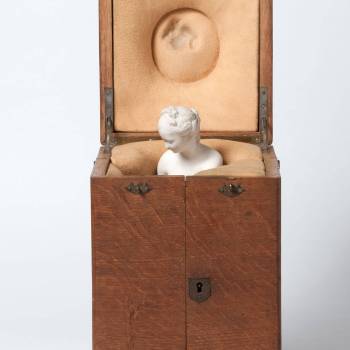 Join Senior Curator Juliet Carey to explore the surprising, beautiful boxes in which some of Waddesdon’s most precious objects live when out of the public eye.
We still use the boxes that Baron Edmond de Rothschild (1845–1934) commissioned for the storage of Sèvres porcelain and small sculptures and antiquities. Their unusually sophisticated fabrication relates to bookbinding, the covers of scientific instruments, etuis for princely treasures, and longstanding Parisian expertise in the protection and transportation of precious things. Far from being neutral or invisible spaces, Edmond’s boxes construct new ways of experiencing their contents—from those that help one to study and categorise vases, Roman glass, and even furniture, to a box that transforms into a stage, creating a private drama of enclosure and revelation around a little marble nymph.
For all their aesthetic and tactile appeal, the protective role of these boxes is underlined by the turbulence of the times that they survived, from revolutions and siege in 19th- century Paris to the Nazi occupation. A recent work by Edmund de Waal responds to this history and provides an intriguing postscript.
Standard registration is £10. Students, please email enquiries@waddesdon.org.uk from your academic email to register for a free place. A zoom link will be emailed to participants 24 hours before the event.
New Book | Culloden: Battle & Aftermath
Friday is the 275th anniversary of the battle of Culloden (fought on 16 April 1746). To mark the anniversary, the National Trust for Scotland will present a series of online events on Saturday, 17 April, entitled Culloden: A Place Worth Protecting. Paul O’Keeffe’s book is the latest to tackle the subject; from Penguin Press:
Paul O’Keeffe, Culloden: Battle & Aftermath (London: Bodley Head, 2021), 432 pages, ISBN: 978-1847924124, £25.
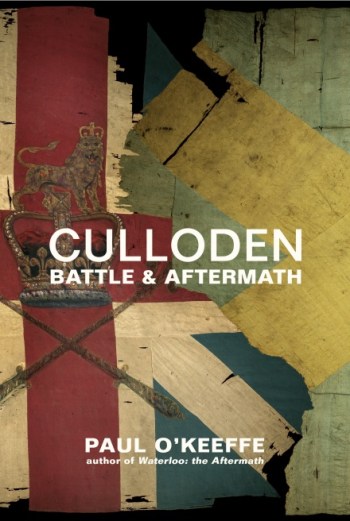 Charles Edward Stuart’s campaign to seize the British throne on behalf of his exiled father ended with one of the quickest defeats in history: on 16 April 1746, at Culloden, his 5,000-strong Jacobite army was decisively overpowered in under forty minutes. Its brutal repercussions, however, endured for months and years, its legacy for centuries.
Paul O’Keeffe follows the Jacobite army, from its initial victories over Hanoverian troops at Prestonpans, Clifton and Falkirk to their calamitous defeat on the field of Culloden. He explores the battle’s aftermath which claimed the lives, not only of helpless wounded summarily executed and fugitives cut down by pursuing dragoons, but also of civilians slaughtered by vengeful government patrols as they ‘pacified’ the Highlands. He chronicles the wild, nationwide celebration greeting news of the government victory, the London stage catering to patriotic fervour with new songs like ‘God Save the King’, popular musical theatre, and operas by Gluck and Handel. Meanwhile, the public was also treated to the grimmer spectacle of Jacobite prisoners, tried for high treason, paying for their participation on block and gibbet throughout the country. Many others—granted ‘the King’s mercy’—suffered the lingering fate of forced labour on fever-ridden plantations in the West Indies and Virginia.
O’Keeffe reveals the unexpected consequences of the rising—mapping the Scottish Highlands to aid military subjugation would eventually lead to the foundation of the Ordnance Survey—and traces the later careers of the battle’s protagonists: the Duke of Cumberland’s transformation from idolised national hero to discredited ‘butcher’ and Charles Edward Stuart’s from ‘Bonny Prince’ to embittered alcoholic invalid.
While in the long term the doomed Stuart cause acquired an aura of romanticism, the Jacobite Rising of 1745–46 remains one of the most bloody and divisive conflicts in British domestic history, which resonates to this day.
Paul O’Keeffe is a freelance lecturer and writer based in Liverpool. He gained his PhD with a scholarly edition of Wyndham Lewis’s Tarr, and won critical acclaim with his 2000 study of Lewis, Some Sort of Genius.
Online Roundtable | Teaching the Long 18th Century
From the roundtable flyer:
Teaching the ‘Long’ 18th Century
Online, Friday, 23 April 2021, 9–11am (EST)
Organized by Sarah Betzer and Dipti Khera
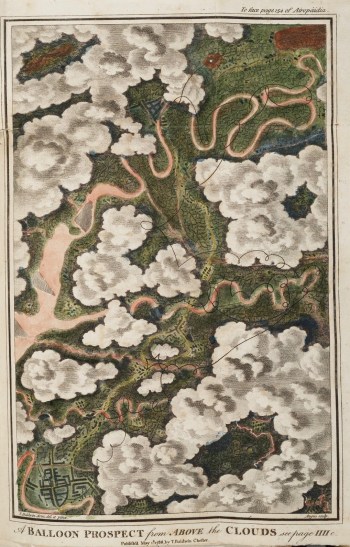
After Thomas Baldwin, A Balloon-Prospect from above the Clouds, plate from Thomas Baldwin, ‘Airopaidia’ (London, 1786), opposite p. 154.
Roundtable featuring:
• Anna Arabindan-Kesson, Princeton University
• Nebahat Avcıoğlu, Hunter College, City University of New York
• Emma Barker, The Open University, London
• Ananda Cohen-Aponte, Cornell University
• Prita Meier, Art History and Institute of Fine Arts, New York University
• Nancy Um, Binghamton University, State University of New York
• Stephen Whiteman, The Courtauld Institute of Art, London
This roundtable brings together scholars from a broad array of geographical foci and institutional perspectives who have been at the forefront of efforts to rethink approaches to thinking, researching, and, crucially, teaching the art and material culture of an interconnected ‘long’ eighteenth century. Convened in conjunction with a session at the 2021 College Art Association conference, the roundtable will appear in distilled form in a dedicated issue of Journal18, forthcoming in Fall 2021. Two key aims animate the roundtable and its afterlife in Journal18: 1) to reflect upon teaching the ‘long’ eighteenth century, particularly in light of renewed debates on the reparation of objects, revision of histories, and inclusion of colonized and enslaved voices in museums, plantation sites, and public squares; and 2) to compile a list of resources and open-access supporting materials that are pragmatically useful for colleagues engaged in teaching the ‘long’ and ‘broad’ eighteenth century.
Organized by Sarah Betzer, University of Virginia, and Dipti Khera, Art History and Institute of Fine Arts, New York University
Online Seminar | Robert Pogue Harrison and Susan Stewart
Coming up from BGC:
Seminar in Epistemologies of Material Culture with Robert Pogue Harrison and Susan Stewart
Online, Bard Graduate Center, Wednesday, 14 April 2021, 6–7.30pm
Robert Pogue Harrison and Susan Stewart will present at the Seminar in Epistemologies of Material Culture. They will each speak briefly on their publications The Dominion of the Dead and The Ruin Lesson, respectively, followed by a conversation moderated by Peter N. Miller and a Q&A session. Held via Zoom, this event will be live with automatic captions. A link will be circulated to registrants by 3pm on the day of the event. Register here.
◊ ◊ ◊ ◊ ◊
Robert Pogue Harrison, The Dominion of the Dead
 How do the living maintain relations to the dead? Why do we bury people when they die? And what is at stake when we do? In The Dominion of the Dead, Robert Pogue Harrison considers the supreme importance of these questions to Western civilization, exploring the many places where the dead cohabit the world of the living—the graves, images, literature, architecture, and monuments that house the dead in their afterlife among us.
This elegantly conceived work devotes particular attention to the practice of burial. Harrison contends that we bury our dead to humanize the lands where we build our present and imagine our future. As long as the dead are interred in graves and tombs, they never truly depart from this world, but remain, if only symbolically, among the living. Spanning a broad range of examples, from the graves of our first human ancestors to the empty tomb of the Gospels to the Vietnam Veterans Memorial, Harrison also considers the authority of predecessors in both modern and premodern societies. Through inspired readings of major writers and thinkers such as Vico, Virgil, Dante, Pater, Nietzsche, Heidegger, and Rilke, he argues that the buried dead form an essential foundation where future generations can retrieve their past, while burial grounds provide an important bedrock where past generations can preserve their legacy for the unborn.
The Dominion of the Dead is a profound meditation on how the thought of death shapes the communion of the living. A work of enormous scope, intellect, and imagination, this book will speak to all who have suffered grief and loss.
Robert Pogue Harrison is the Rosina Pierotti Professor in Italian Literature and chairs the Department of French and Italian at Stanford University. He is the author of The Body of Beatrice, Forests: The Shadow of Civilization, The Dominion of the Dead, Gardens: An Essay on the Human Condition, and Juvenescence: A Cultural History of Our Age, the latter three published by the University of Chicago Press. He is a member of the American Academy of Arts and Sciences. He is also host of the radio program Entitled Opinions on Stanford’s station KZSU 90.1.
◊ ◊ ◊ ◊ ◊
Susan Stewart, The Ruins Lesson: Meaning and Material in Western Culture
 How have ruins become so valued in Western culture and so central to our art and literature? Covering a vast chronological and geographical range, from ancient Egyptian inscriptions to twentieth-century memorials, Susan Stewart seeks to answer this question as she traces the appeal of ruins and ruins images, and the lessons that writers and artists have drawn from their haunting forms.
Stewart takes us on a sweeping journey through founding legends of broken covenants and original sin, the Christian appropriation of the classical past, and images of decay in early modern allegory. Stewart looks in depth at the works of Goethe, Piranesi, Blake, and Wordsworth, each of whom found in ruins a means of reinventing his art. Lively and engaging, The Ruins Lesson ultimately asks what can resist ruination—and finds in the self-transforming, ever-fleeting practices of language and thought a clue to what might truly endure.
Susan Stewart, the Avalon Foundation University Professor in the Humanities at Princeton University, is a poet, critic, and translator. A former MacArthur Fellow and Chancellor of the Academy of American poets, she is the author of six books of poems, including Columbarium, which won the National Book Critics Circle Award, and, most recently, Cinder: New and Selected Poems. Her many prose works include On Longing, Poetry and the Fate of the Senses, The Open Studio: Essays in Art and Aesthetics, and The Poet’s Freedom.










leave a comment