TEFAF Museum Restoration Fund Announces 2013 Grants
Good news for a few eighteenth-century holdings at the Worcester Art Museum and the Ashmolean, announced by the TEFAF Museum Restoration Fund ahead of this year’s art fair at Maastricht (15-24 March 2013) . . .
◊ ◊ ◊ ◊ ◊
The Worcester Art Museum in the United States and the Ashmolean Museum in the United Kingdom are to receive grants from the TEFAF Museum Restoration Fund to help them carry out important conservation projects. The Fund was set up by TEFAF Maastricht, as one of its 2012 Silver Jubilee initiatives and provides up to €50,000 each year to help institutions around the world conserve works of art in their collections. A panel of independent, international experts considered many applications from museums before selecting the two winning projects, which will each receive €25,000.

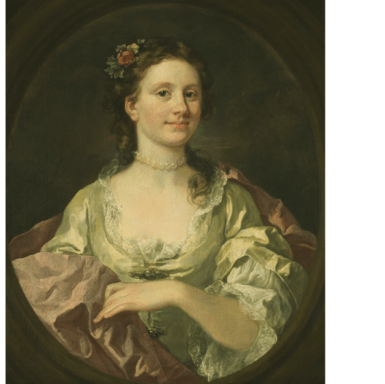
William Hogarth, Portraits of William and Elizabeth James,
1744 (Worcester Art Museum)
◊ ◊ ◊ ◊ ◊
The Worcester Art Museum in Worcester, Massachusetts is to restore a pair of portraits by the eighteenth-century British artist William Hogarth. The pendant portraits of William and Elizabeth James, painted by Hogarth in 1744, were acquired by the museum more than a century ago but have never been comprehensively treated or technically evaluated and will benefit greatly from a conservation project. The work will enable the Worcester Art Museum to feature them prominently in Hogarth and the English Character, an exhibition planned for 2016, and ultimately to return these cornerstone works to its permanent galleries. The restoration will allow those viewing them to experience the full impact of the paintings as exquisite works of art without any concerns about their condition. The newly conserved pictures will reveal more authentic palettes and broader tonal ranges that, when reunited with their newly conserved frames, will enable viewers to have the pleasing experience intended by Hogarth.
William Hogarth (1697-1764) was one of the masters of British painting. Although best known for his biting satires of society that were popularised in engravings, he was also a skilled portraitist. In these paintings he captured the confidence of William James, a country squire from the English county of Kent, and his wife Elizabeth, both proud of their fashionable London clothes.
◊ ◊ ◊ ◊ ◊
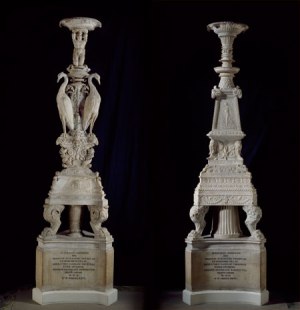 The Ashmolean Museum in Oxford is to carry out a conservation project on two candelabra by the Italian artist Giovanni Battista Piranesi (1720-78). The intricately carved candelabra are some of the finest examples of neo-classical sculpture in the United Kingdom. They form a key element of the collections displayed in the Ashmolean’s impressive Randolph Sculpture Gallery and are of international significance. They were purchased from Piranesi by Sir Roger Newdigate, who made two Grand Tours in 1739-40 and 1774-75. The candelabra were shipped in component form from Italy to Oxford with instructions for their re-assembly provided by Piranesi. The candelabra have become structurally unsound because the plaster bonding in the joints between each vertical section has failed during the 100 years since they were last restored. Until they were re-plinthed on pallets in 1991, these vulnerable objects were traditionally moved by masons dragging them across the floor, using winches, rather than lifting them. Although they are now mounted on pallets, disguised as plinths, moving them still puts them at risk as they comprise many loose components. For that reason the museum has developed this project to dismantle, conserve and structurally stabilize these remarkable objects.
Imperial Apartments at the Correr Museum Restored
This article by Gildas le Roux from the AFP appeared on Sunday, 16 December 2012 at ArtDaily:

Piazza San Marco with View of Museo Correr
(Photo March 2007 by Andrew Balet, Wikimedia Commons)
◊ ◊ ◊ ◊ ◊
After a century of neglect, a magnificent palace built by Napoleon in Venice has re-opened its doors to the public on the island city’s famous St Mark’s Square thanks to a French restoration effort. The reasons for the long abandonment are easily explained — Venice is not Napoleon’s biggest fan. Nor do canal residents have fond memories of the Royal Palace’s most famous resident — 19th-century Austrian empress Elisabeth or ‘Sisi’ — a symbol of the city’s imperial domination. “In popular consciousness, Napoleon is primarily the man who ended the glorious republic of Venice (697-1797),” said Andrea Bellieni, director of the Correr Museum which oversees the Royal Palace.
A group called French Committee for Safeguarding Venice [Comité Français de Sauvegarde de Venise in partnership with the Napoleon Foundation] has financed the restoration of this sumptuous palace, which was in a pitiful state. With a budget of 2.5 million euros ($3.2 million) from private donors, the committee has restored the main halls and the empress’s apartment to its old-time splendour when a 19-year-old ‘Sisi’ and her husband, Emperor Franz Joseph I, stayed there. The furniture decorating the restored chambers is in the same neo-Baroque style popular at the imperial court in Vienna at the time. The empress’s boudoir is a highlight with its images of feminine allegories and flowery garlands.
Napoleon proclaimed himself King of Italy in 1805 and ordered the palace built in 1807 in front of the iconic St Mark’s Basilica after visiting Venice, but never actually lived in it. Built in six years and decorated by French-inspired painter Giuseppe Borsato, the structure is now the only neo-Classical royal palace in Italy. . .
The full article is available here»
Birmingham Acquires Reynolds’s Portrait of Dr. John Ash
Press release from the Birmingham Museum & Art Gallery (2 October 2012) . . .

Sir Joshua Reynolds, Portrait of Dr John Ash, 1788 (Birmingham Museum & Art Gallery)
Director Ann Sumner today announces that Birmingham Museums has been successful in raising funds to acquire Sir Joshua Reynolds’ iconic portrait of Dr John Ash. The magnificent work, currently owned by Queen Elizabeth Birmingham Hospitals Charity, has been on loan to Birmingham Museum & Art Gallery since 1993. This acquisition secures the painting for the city, ensuring that future generations can continue to enjoy the masterpiece.
The portrait of Dr Ash by the celebrated eighteenth-century portrait painter Reynolds is valued at £900,000 but the Queen Elizabeth Birmingham Hospitals Charity has generously agreed to reduce this to £875,000 to enable Birmingham Museums to successfully complete the acquisition. Professor Sumner comments, “”We are delighted to announce that Birmingham Museums will be acquiring this significant work. The portrait is one of Reynolds’ late, great works, and its combined historic and artistic qualities make it one of the most important cultural icons of the city of Birmingham. The acquisition comes at a particularly opportune time for the city, and will be presented as part of a larger celebration of portraiture from Birmingham’s collections in 2013.”
Councillor Ian Ward, deputy leader of Birmingham City Council said: “This painting has real importance for the city’s heritage, and I’m delighted that Birmingham Museums have raised the necessary funds in addition to the lottery fund grant. I would like to thank everyone who played a part in securing this wonderful painting which the people of Birmingham – and visitors to our city – will be able to enjoy and appreciate.”
Birmingham Museums Trust was awarded a grant of £675,000 from the Heritage Lottery Fund and £100,000 from The Art Fund to support the acquisition. The Museums Trust has successfully raised a further £100,000 through grants from organisations including the Museum Development Trust, Public Picture Gallery Fund, the Friends of Birmingham Museum & Art Gallery, William A Cadbury Trust and John Feeney Trust.
Although Birmingham Museums Trusts has successfully raised the money to acquire the portrait, the public appeal will continue in order to raise the funds to undertake minor conservation works to the painting, not least having it reglazed with non-reflective glass so visitors can better appreciate the Reynolds’ masterpiece.
John Ash (1723–98) was an eminent physician who built up a successful medical practice from his house in Temple Row in Birmingham. Ash was a co-founder of the Birmingham General Hospital, and the portrait commissioned by the governors of the Hospital in honour of his services to the people of Birmingham. The first installment of 100 guineas (half payment) was paid to Reynolds by George Birch on behalf of the governors in April 1788. The eleven sittings with Ash are recorded in the artist’s pocket book between 28th April and 7th July the same year.
MetPublications
From MetPublications:

◊ ◊ ◊ ◊ ◊
About MetPublications
MetPublications is a portal to the Met’s comprehensive publishing program. Beginning with nearly 650 titles published from 1964 to the present, this resource will continue to expand and could eventually offer access to nearly all books, Bulletins, and Journals published by the Metropolitan Museum since the Met’s founding in 1870. It will also include online publications.
MetPublications includes a description and table of contents for almost every title, as well as information about the authors, reviews, awards, and links to related Met bibliographies by author, theme, or keyword. Current titles that are in-print may be previewed and fully searched online, with a link to purchase the book. The full contents of almost all other titles may be read online, searched, or downloaded as a PDF, at no cost. Books can be previewed or read and searched through the Google Books program. Many out-of-print books are available for purchase, when rights permit, through print-on-demand capabilities in association with Yale University Press.
Readers may also locate works of art from the Met’s collections that are included within each title and access the most recent information about these works in Collections. Readers are also directed to every title located in library catalogues on WATSONLINE and WorldCat. Please check back frequently for updates and new book titles. MetPublications is made possible by Hunt & Betsy Lawrence.
About the Met’s Publishing Program
From its founding in 1870, the Metropolitan Museum has published exhibition catalogues, collection catalogues, and guides to the collections. Today it is one of the leading museum publishers in the world, and its award-winning books consistently set the standard for scholarship, production values, and elegant design. Each year, the Met produces about thirty exhibition and collection catalogues and general-audience books, as well as informative periodicals such as the quarterly Metropolitan Museum of Art Bulletin and the annual Metropolitan Museum Journal.
Beginning in 2000, the Met developed two groundbreaking online publications: the Heilbrunn Timeline of Art History, with 300 chronologies, 900+ essays, and close to 7,000 works of art written by Museum specialists; and Connections, which offers personal perspectives on works in the collections.
The Met’s print and online publications program will continue to expand in scope in order to reach the broadest possible audience, thus fulfilling its mission to increase public awareness of and appreciation for art, presenting insightful scholarly discussions and diverse Museum voices on works of art, art history, and especially the Museum’s collections and exhibitions.
Art Institute of Chicago Unveils LaunchPad
AIC press release (29 October 2012) . . .
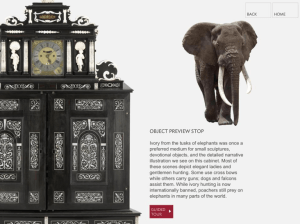 The Art Institute of Chicago’s Department of Digital Information and Access and the Department of European Decorative Arts are pleased to unveil a new gallery interactive that revolutionizes the museum experience while improving public access to art. LaunchPad is a specially developed platform for the iPad—containing engaging and interactive multimedia resources—that brings three-dimensional objects to life. With the new LaunchPads in the galleries, visitors have at their fingertips basic introductory facts about works of art enhanced by animations, brief video documentaries on techniques and use, and views of the works not possible in the galleries alone.
Drawers open, music plays, and objects are assembled and re-assembled right in front of visitors—lending great insight to the original contexts, uses, and construction of works of art from the 16th through the 19th centuries. The new technology and visualization tools will debut on October 28, 2012 with more than 50 objects featured on 25 iPads installed in the Eloise W. Martin Galleries of European Decorative Arts. LaunchPad will also be stationed at 16 kiosks throughout the new Jaharis Galleries of Ancient, Roman, and Byzantine Art when those galleries open to the public on November 11. With this effort, the Art Institute of Chicago becomes one of the first museums to offer such extensive scholarly and entertaining content—more than 1000 supporting images, 16 videos, and behind-the-scenes glimpses into context and conditions of production of works of art—on a custom platform rooted in the gallery experience.
 “The decorative arts in a museum have always presented something of a challenge,” said Douglas Druick, President and Eloise W. Martin Director of the Art Institute of Chicago. “These objects—chairs, cabinets, tableware—were originally designed to be used but must now be protected so they can be preserved. We are thrilled that we can present these intricate objects in a much richer context through the creative use of technology, thanks to the generosity of Melinda Martin Sullivan and the Eloise W. Martin Legacy Fund. And we are confident that the LaunchPad platform and the resources it contains will be a model not only
for other galleries here at the Art Institute but for other
museums as well.”
“LaunchPad has truly been a collaborative effort involving no fewer than 71 professionals across the museum and beyond,” said Sam Quigley, project leader for LaunchPad and vice president for collections management, imaging, and information technology. “Working so intimately with Ghenete Zelleke, Samuel and M. Patricia Grober Curator in the Department of European Decorative Arts, and her colleagues, along with videographers, editors, photographers, and researchers has been a monumental, and monumentally satisfying, effort. And our hope is that similar institutions may take up LaunchPad as a model; with our development partners at IMA Labs of the Indianapolis Museum of Art and Sandbox Studios, we have been committed to making this an open source platform so that others may benefit from, and build on, what we have developed.”
More than two and a half years in development, LaunchPad will offer visitors the chance to get up close to some of the centuries-old objects in the Art Institute’s collection and discover their hidden stories through several innovative technologies. Users will be able to virtually “handle” objects, turning them over to examine the exquisite artistry on each and every side, through advanced 360-degree imaging. And animated videos of works such as the magnificent multi-chambered Augsburg Cabinet will allow users to open doors and drawers and see the beautiful carvings in the interiors and the pharmaceutical tools and bottles that are stored inside.
For the LaunchPad platform, teams at the museum have additionally created more than a dozen videos that focus on the skilled craftsmanship that went into making the pieces, providing an intimate view into the actual processes and techniques behind these objects. One such film captures Patrick Edwards, one of very few Americans trained in traditional 18th-century French marquetry, or wood inlay, recreating sections of an intricate coffer by André Charles Boulle in his San Diego studio— without a power tool in sight. Another video records two artists, one from the School of the Art Institute’s ceramics department, fashioning a replica of an earthenware vase step by step, from throwing to painting to glazing.
With its host of unique resources—which even includes an 18th-century recipe for rabbit stew for the museum’s rabbit-shaped porcelain tureen—LaunchPad will enhance visitors’ experience and appreciation of the museum’s rich holdings of European decorative arts and offer a model for creating the most productive intersection possible between the technology of today and the creative expression of the past.
LaunchPad was designed and written by staff from numerous departments at the Art Institute of Chicago. Its open source software was developed by IMA Labs at the Indianapolis Museum of Art with project coordination and management by Sandbox Studios of Minneapolis, Minnesota. The software is based on the TAP project, which is a collection of free and open source tools supporting the creation and delivery of mobile tours.
LaunchPad was originally conceived for the galleries of European Decorative Arts by Melinda Martin Sullivan and was created with a grant from her late mother, Eloise W. Martin.
Museum News | Serena Urry and Esther Bell Move to Cincinnati
The Cincinnati Art Museum has just announced two appointments: Serena Urry as Chief Conservator and Esther Bell as Curator of European Painting, Sculpture and Drawings. Bell completed her Ph.D. at the Institute of Fine Arts, New York University, writing on “Charles-Antoine Coypel: Painting and Performance in Eighteenth-Century France,” under the direction of Mariët Westermann and Mark Ledbury. The press release as noted at ArtDaily (30 October 2012) . . .
◊ ◊ ◊ ◊ ◊
The Cincinnati Art Museum announced Serena Urry as Chief Conservator. Before coming to the Cincinnati Art Museum, Serena served as Senior Conservator of Paintings at the Barnes Foundation, preparing its Impressionist and Post-Impressionist collection for the historic move to downtown Philadelphia. Prior to that, Serena was Conservator of Paintings at the Detroit Institute of Arts where she conserved paintings ranging in date from the 14th to the 20th century. Among the exhibitions she worked on were American Beauty (2002-2004) and Masterpieces from the Detroit Institute of Arts at TEFAF in 2005.
Serena has a B.A. from Tufts University, and a M.A. in art history and a diploma in Conservation from the Institute of Fine Arts of New York University. She was awarded a residency by the Rockefeller Foundation in Bellagio in 1996, and a fellowship by Save Venice in Venice in 1999-2000. She has lectured and published about many of the conservation projects she has undertaken. “We are so excited to have somebody of Serena’s experience and insights joining the Art Museum. She will be able to build on the terrific work past Chief Conservators have done to make our art shine forth in all its beauty,” says Cincinnati Art Museum Director Aaron Betsky. Serena grew up in the Boston area and holds dual American and Italian citizenship. She has six nephews and nieces in an extended family that stretches from East cost to the West. Serena looks forward to exploring all that Cincinnati has to offer.
 The Cincinnati Art Museum also announced Esther Bell as Curator of European Painting, Sculpture and Drawings. Esther received her doctorate from the Institute of Fine Arts, New York University with a specialization in 17th- and 18th-century European art. She received a Masters in the history of art at Williams College and a bachelor of arts from the University of Virginia. With over ten years of experience in some of the nation’s finest museums, Dr. Bell has worked at the Sterling and Francine Clark Art Institute, Williamstown, MA; the Metropolitan Museum of Art, New York; and the Morgan Library & Museum, New York. At the Morgan, she recently organized exhibitions such as Ingres at the Morgan and Rembrandt’s World: Dutch Drawings from the Clement C. Moore Collection.
Dr. Bell lived extensively in Paris during her graduate work; she was a Fulbright Scholar with an affiliation at the Musée du Louvre, Paris and a Theodore Rousseau Fellow in Paris in association with the Metropolitan Museum of Art. She has delivered lectures in many distinguished international venues such as the University of St. Andrews, Scotland; the Musée des Beaux-Arts, Nantes; and the Metropolitan Museum of Art, New York, and she has published numerous articles and exhibition catalogues. “Esther brings an enthusiasm to her art history that is positively electrifying. She combines thorough knowledge and expertise with the desire to have everybody share her love of art, and we look forward to her contributions here,” says Cincinnati Art Museum Director Aaron Betsky. Esther is a self-proclaimed “foodie” and enjoys travel, reading fiction, and yoga. She will move to Cincinnati with her husband, Jason, and they look forward to exploring Blue Grass music, Graeter’s, and the local contemporary art scene.
Rijks Studio Offers 125,000 Images Free of Copyright
After years of hearing that museums couldn’t provide high resolution reproductions of works in their collections because people might make t-shirts with them, we now learn that the Rijkmuseum is inviting us to do precisely that . . . and more. -CH

◊ ◊ ◊ ◊ ◊
As a prelude to its reopening 13 April 2013, one of the world’s leading museums, the Rijksmuseum in Amsterdam, will launch Rijks Studio, a ground-breaking new online presentation of 125,000 works in its collection. Rijks Studio invites members of the public to create their own masterpieces by downloading images of artworks or details of artworks in the collection and using them in a creative way. The ultra high-resolution images of works, both famous and less well-known, can be freely downloaded, zoomed in on, shared, added to personal ‘studios’, or manipulated copyright-free. Users can have prints made of entire works of art or details from them. Other suggestions for the use of images include creating material to upholster furniture or wallpaper, or to decorate a car or an iPad cover for example.
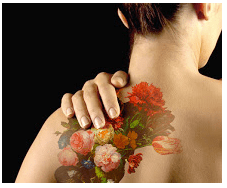 To celebrate this digital milestone, the Rijksmuseum is asking leading international artists, designers and architects to become pioneers of Rijks Studio by selecting one work from the collection and using it creatively to create a new artwork. These will be released in the run up to the reopening of the museum. The first work to be unveiled, by Droog Design, is a tattoo inspired by a flower painting in the collection called Still-Life with Flowers by Jan Davidszn. de Heem and Rachel Ruysch from the 17th century.
Taco Dibbits, Director of Collections, said: “The Rijksmuseum is a museum for and of everyone, and with the launch of Rijks Studio we are excited to share the extensive collection with art lovers around the world using the latest digital technology. We created Rijks Studio based on the belief that the collection of the Rijksmuseum belongs to us all. The collection inspires, we want to unleash the artist in everyone.”
Study Day in Sydney To Celebrate Major Ceramics Gift
To celebrate a major gift of maiolica and porcelain, the Art Gallery of New South Wales in Sydney is presenting a study day toward the end of this month. From the museums’ website:
◊ ◊ ◊ ◊ ◊
Renaissance and Rococo Ceramics Study Day: The Arts of Maiolica and Porcelain
Art Gallery of New South Wales, Sydney, 28 October 2012
Discover two of the most significant material innovations in the history of European decorative arts with this study day focused on the extraordinary Kenneth Reed Collection, in the European galleries. Comprising 16th- and 17th-century maiolica (tin-glazed earthenware) and 18th-century porcelain, the Reed Collection offers insight into Renaissance and rococo art and material culture.
Curator Richard Beresford and art historian Mark de Vitis outline the history of the two ceramic traditions, illustrated with examples from the Reed Collection, followed by a demonstration of materials and processes by noted Sydney ceramicist Bronwyn Kemp.
◊ ◊ ◊ ◊ ◊
From the press release (16 October 2012) . . .

Meissen (Germany), Parrots, 1745, hard-paste porcelain, 39 x 27 x 18 cm (on loan from Kenneth Reed) The group was originally modeled by Joseph Joachim Kändler in April 1745 for Augustus III’s consort Maria Josepha of Austria.
Kenneth Reed today announced his intention to bequeath to the Art Gallery of New South Wales his entire private collection of 200 pieces of rare and valuable 18th-century European porcelain valued at $5.4 million. Mr Reed also helped the Gallery acquire an important Italian renaissance maiolica masterpiece, Francesco Xanto Avelli’s Sack of Rome plate of 1530 with his generous donation of $550,000.
‘This most generous gift to the Gallery represents a significant addition to the Gallery’s European collection. Ken has been one of our most generous benefactors in the history of this Gallery’, said Michael Brand, director, Art Gallery of New South Wales.
Mr Reed, a Sydney-based retired lawyer, has been a collector of European paintings and decorative arts for more than 25 years. He says that he was inspired by visits as a child to the Art Gallery of New South Wales where his father used to take the family on Sunday afternoons.
The Gallery is to receive a spectacular group of parrots originally modelled at Meissen by Joseph Joachim Kändler for Augustus III’s consort, Maria Josepha of Austria, superlative examples of Vincennes and Sèvres porcelain, including a rare rose marbré tea service, a unique piece of experimental hard paste from the early 1760s, plus
exquisite Chelsea figures and wares from all periods of the factory’s
production.
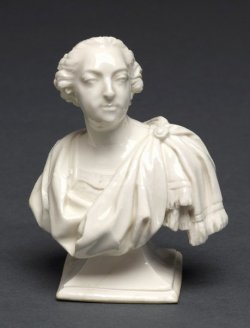
Sèvres, Bust of Louis XV, ca. 1762-63, hard-paste porcelain, 11 x 9 x 6 cm
(on loan from Kenneth Reed)
In the words of Richard Beresford, senior curator of European art, “This promised gift transforms the Gallery’s presentation of European art. We have never owned anything comparable in range and quality to this collection but now the Gallery will be able to show some of the highest quality 18th-century porcelain in the world. The Gallery has had neglected holdings of European decorative arts until now. The decision to show 16th-18th-century ceramics alongside paintings of the same period will add a new dimension to the Gallery’s collection display. The Gallery is now also better placed to respond to an expected rise in public interest in ceramic history.”
In 2010 Kenneth Reed announced a bequest to the Gallery which then consisted of 25 old master paintings, 25 pieces of 18th-century porcelain and 22 pieces of Italian maiolica from the 16th and 17th centuries. The addition to his bequest of this European porcelain brings the total value of the bequest to almost $13 million, ranking Mr Reed among the top benefactors in the Gallery’s history.
William Morris Gallery Reopens after Renovation
Yes, I realize William Morris stretches the long eighteenth century to the breaking point. I note the reopening of the museum because of the building itself, which dates to around 1744. The official ceremony marking the completion of the renovation took place on 2 August 2012. The following is an excerpt from Alastair’s Sooke’s response for The Telegraph. -CH
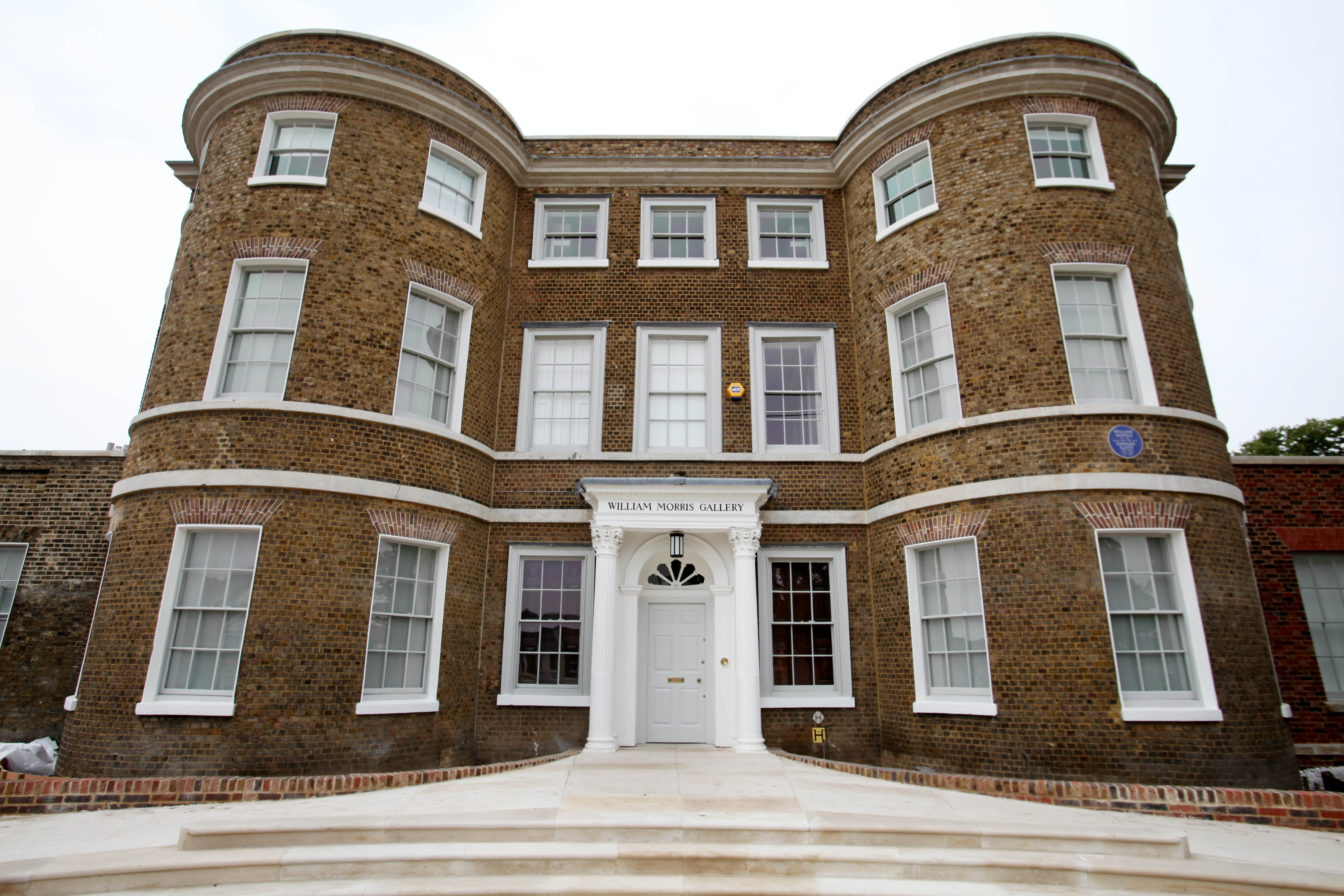
William Morris Gallery, Walthamstow, London © Oliver Dixon / Imagewise — The building dates to ca. 1744
. . . Making sense of the personality, achievements and legacy of such a visionary polymath is a complicated task. Yet that is what the new-look William Morris Gallery, which reopens this week following a year-long £5 million refurbishment, manages to do. The gallery occupies a magnificent Grade II-listed Georgian villa, with a front boasting full-height semicircular bays and a white-painted timber porch with Corinthian columns. Situated in Lloyd Park in Walthamstow in northeast London, like a beacon of beauty amid the local asphalt-benighted urban sprawl, the three-storey building was home to the Morris family between 1848 and 1856, when William was at Marlborough College and then Oxford University, where he met his lifelong friend and collaborator, the painter Edward Burne-Jones, as well as Jane Burden, whom he married in 1859. . .
The full review is available here»
Ethan Lasser Announced as New Curator of American Art at Harvard
Ethan Lasser, the new curator of American Art at the Harvard Art Museums, completed his dissertation at Yale in 2007, writing on “Figures in the Grain: The Enlightenment of Anglo-American Furniture, 1660-1800.” Press release (dated 15 August 2012) . . .
◊ ◊ ◊ ◊ ◊
 The Harvard Art Museums are pleased to announce the appointment of Ethan Lasser as Margaret S. Winthrop Associate Curator of American Art, effective September 18, 2012. Lasser will join the Art Museums’ Division of European and American Art.
Lasser’s innovative work as a curator and academic experience align well with the Art Museums’ teaching and research mission. From 2007 to the present, Lasser has been curator of the Chipstone Foundation in Milwaukee, Wisconsin, a research institute committed to advancing progressive scholarship in American art through exhibitions, publications, teaching, and public programming. In 2008, he reinstalled the foundation’s permanent galleries at the Milwaukee Art Museum, a 13,000-square-foot exhibition space for American paintings and decorative arts. He has also served as adjunct professor in the Department of Art History at the University of Wisconsin–Madison, where he initiated the Object Lab, a summer program for undergraduates focused on teaching American art and craft history through hands-on research with artifacts. Lasser is currently developing two new exhibitions—The Practice and Poetics of Repair and Makers: Craft and Industry in American Art—both of which explore his interest in art-making processes and materiality. Lasser, who graduated magna cum laude from Williams College, has a PhD in art history from Yale University. (more…)










leave a comment