Exhibition | Inventing Utamaro: A Japanese Masterpiece Rediscovered
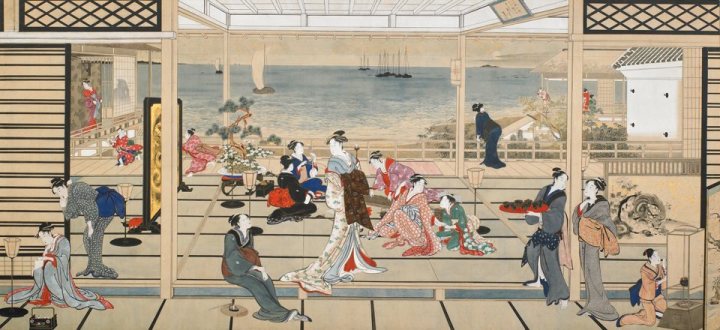
Kitagawa Utamaro, Moon at Shinagawa (or Moonlight Revelry at Dozō Sagami), detail, ca. 1788; painting mounted on panel; color on paper
(Washington, D.C., Freer Gallery of Art, F1903.54)
◊ ◊ ◊ ◊ ◊
Press release (10 March 2017) for the exhibition:
Inventing Utamaro: A Japanese Masterpiece Rediscovered
Wadsworth Atheneum Museum of Art, Hartford, 7 January — 26 March 2017
Arthur M. Sackler Gallery, Washington, D.C., 8 April — 9 July 2017
Okada Museum of Art, Hakone, 28 July — 29 October 2017
Curated by Julie Nelson Davis and James Ulak
Inventing Utamaro: A Japanese Masterpiece Rediscovered reunites for the first time in nearly 140 years three works by the legendary Japanese ukiyo-e (‘pictures of the floating world’) master, Kitagawa Utamaro (1753–1806). The exhibition is open at the Smithsonian’s Arthur M. Sackler Gallery April 8–July 9.
Last seen together in 1879, the three paintings left Japan and traveled to Paris where they were separated and marketed by Siegfried Bing in the 1880s. Charles Lang Freer, founder of the Smithsonian’s Freer Gallery of Art, acquired Moon at Shinagawa in 1903, and today it is part of the Freer’s permanent collection. Cherry Blossoms at Yoshiwara, passed through several hands before entering the collection at the Wadsworth Atheneum Museum of Art in Hartford, Connecticut, in the late 1950s. Snow at Fukagawa, held by the Okada Museum of Art in Hakone, Japan, was rediscovered in 2014 after missing for nearly 70 years. In 2014, the Okada Museum of Art announced the discovery and acquisition of Snow at Fukagawa. Whereabouts of that painting had been unknown since the late 1940s.
Separately conceived exhibitions inspired by the monumental triptych will occur at each of these museums, although all will be different in scope and content. Due to conditions of Freer’s will and bequest, the Sackler will be the only venue to show all three pieces. A facsimile of the Freer’s Moon at Shinagawa will be displayed at the other two locations.
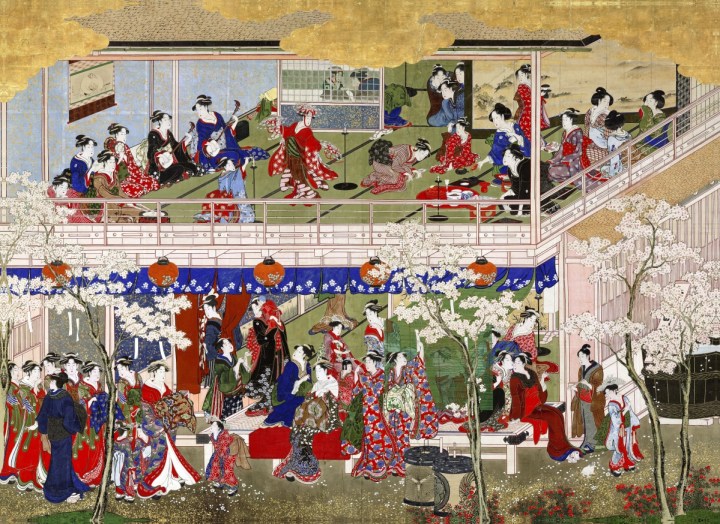
Kitagawa Utamaro, Cherry Blossoms at Yoshiwara, ca. 1793; ink, gouache, gold and gold leaf on bamboo paper
(Hartford: Wadsworth Atheneum Museum of Art)
◊ ◊ ◊ ◊ ◊
The Sackler exhibition explores the carefully constructed persona of Utamaro and the many questions surrounding his work and subject matter. The trio, painted in ukiyo-e style, idealize Edo’s (modern day Tokyo) ‘floating world’—pleasure centers of leisure, consisting of numerous brothels, which served as diversions from the pressures of everyday life. Unusual in scale and meticulously detailed, the three paintings portray the romanticized lives and appearances of workers of these quarters. Little is known about Utamaro’s life, but to this day he is considered one of the greatest artists of the ukiyo-e genre.
Utamaro began his study of painting in the studio of Toriyama Sekien, who introduced him to the publisher Tsutaya Jūzaburō, forever transforming his career. Together, they promoted the pleasure quarter, setting the tone for Utamaro’s success and brand as a connoisseur of female beauty that was carried throughout his career.
By the 1890s, Japan and the West had become uncomfortable and overwhelmed with the changes, including societal changes, caused by modern industrialization and internationalism. In Paris, in particular, the craze for things Japanese and ‘Oriental’ found a uniquely receptive market for paintings and prints of Japan’s ‘courtesans’ and pleasure quarters.
The exhibition frames these reunited paintings in the context of two moments of ‘branding and marketing’: first, the clever selling of Utamaro’s persona in his own time as a connoisseur of women, someone perfectly suited to create accurate and emotionally resonant images of the ‘beauties’, and second, the adroit response of Japanese and Western art dealers to the special moment of receptivity to the Japanese ‘beauty’ in fin-de-siècle Paris. This created a uniquely receptive market and audience in the West, with Paris at its center, which craved a return to civilized behaviors and romanticized moments of pleasure.
At this time, a glamorized image of ‘old Edo’ began to emerge as Japan struggled to hold onto its traditional identity and values in the face of this rapid change. Japanese art became an embodiment of the desire for simpler times and Utamaro’s work captured a sense of this world before it had permanently passed into memory. The exhibition examines how these two moments in time—Paris during the end of the nineteenth century and the 1780s, when Utamaro created his paintings—are simultaneously separated and connected through the need for fantasy and escape. Utamaro, as a carefully constructed persona and brand, was deliberately marketed both as an artist and as a personality to advance the introduction of Japanese art to collectors in Europe and the United States.
Equally as carefully managed by international Japanese art dealers were depictions of the ‘floating world’, promoting a fantastical depiction that illustrated an unsullied and harmonious world—one in stark contrast to the fast-paced and often gritty world that replaced it. Dealers, striking upon the West’s desire for the exoticism of the ‘Orient’, made deliberate and self-conscious efforts in the late 19th century to refine the concept of what Japanese art could mean for Western consumers and expanded the market by introducing ukiyo-e, alongside binjutsu or fine art, to collectors. Through the carefully concerted efforts of art dealers, Utamaro became a predominant tour de force in the visual arts exported by Japan.
Utamaro’s work was well known both in Japan and Europe and the exhibition places him in the larger context of Japonisme, the influence of Japanese art on Western art. Since the mid-1850s, Japan strategically sought exposure in world markets and eventually the demand for Japanese Edo-period works skyrocketed. Art dealers exported thousands of Japanese works to Europe and Northern America. The exhibition showcases Edo-period prints, books and paintings, mostly by Utamaro revealing his artistic persona and influence on the time as well as his skill at depicting female beauty. Other period works will also be on view with the common theme being beautiful women.
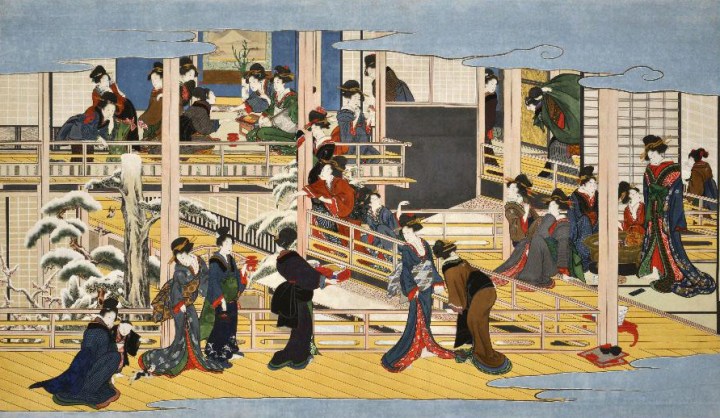
Kitagawa Utamaro, Snow at Fukagawa, ca. 1780s
(Hakone: Okada Museum of Art)
◊ ◊ ◊ ◊ ◊
“The rediscovery of Snow at Fukagawa has presented the unique opportunity to reunite these paintings,” said James Ulak, Sackler senior curator of Japanese art. “Seeing Utamaro as a successfully fabricated persona in his own time and at the moment that Charles Freer assembled his collection certainly frames our assessment in a new and deeply informative light.”
The exhibition includes significant loans from The British Museum, the John C. Weber Collection, and several anonymous private lenders. Important books, prints, and paintings from the Sackler’s permanent collection will also be on display. Programming information is available here.
Mitsubishi Corp. is the lead sponsor for Inventing Utamaro: A Japanese Masterpiece Rediscovered. Additional support is provided by the Anne van Biema Endowment Fund.
Conference | Women Artists and Patrons at the Late Medici Court
From H-ArtHist:
A Legacy of Ladies: Women Artists and Patrons at the Late Medici Court
The Medici Archive, Palazzo Alberti, 21 April 2017
Organized by Sheila Barker, Amy Fredrickson, and Julie James
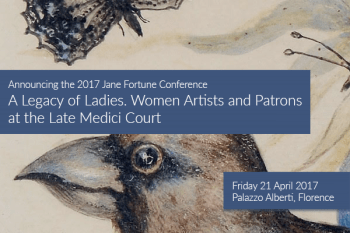 The 2017 Jane Fortune Conference examines the deep imprint that women left on the artistic ferment of Baroque Florence, beginning under the regency of Archduchess Maria Maddalena of Austria and continuing through the last years of Electress Palatine. To do so, it will explore the cultural agency of both female patrons at the Medici court and the women artists who flourished there, from the mid seventeenth century to the early eighteenth century.
Only in recent years has attention been given to the complex web of female social patterns at the late Medici court. Vittoria della Rovere has been acknowledged as a key patron, yet her successors and their own patronage patterns have yet to be fully explored. The physical spaces used by noble women and their female households throughout Europe are essential to this study. Here, both heraldry and the displays of art collections helped to demarcate these spaces. Thanks to their talents, some low-born women were given a degree of access to female courts. Exacting standards of moral conduct were expected of them, mitigating against their social station. Juxtaposing women painters with the irreproachable embroiders and lacemakers and the potentially licentious singers and actresses opens a discussion about the social and behavioral aspects of female creativity in early modern Florence.
P R O G R A M M E
10:00 Introductory Remarks
10:15 Keynote Address
• Adelina Modesti, Women Artists at the Medici Court of Grand Duchess Vittoria della Rovere (1622–1694): Painters, Pastellists, Lacemakers, and Embroiderers
11:15 Morning Session
• Ilaria Hoppe, Uno spazio di potere femminile: Villa del Poggio Imperiale, residenza di Maria Maddalena d’Austria
• Silvia Benassai, ‘Io ho grande ardire, e non temo niente’: Violante Beatrice di Baviera, mecenate nella Toscana degli ultimi Medici
• Laura Windisch, Between Power and Privacy: Anna Maria Luisa de’ Medici’s Patronage at Villa La Quiete
• Laura Cirri, Le Granduchesse di Toscana: la loro rappresentazione attraverso l’araldica
1:00 Lunch
14:45 Afternoon Session
• Lisa Goldenberg Stoppato, Agnese Dolci: New Attributions
• Sheila Barker, Suor Teresa Vitelli’s Natural History Paintings: Women Artists and the Scientific Culture of the Early Enlightenment
• Julie James, A Nun Artist at the Medici Court: The Religious Pastel Works of Suor Teresa Vitelli
• Amy Fredrickson, Giovanna Fratellini: Motives, Patronage, and Success within the Medici Court System
• Poiret Masse, Violante Siries Cerroti at the Medici Court, ca. 1724–37
• Francesca Fantappiè, Donne in carriera: attrici, cantanti, musiciste alla corte medicea
Moderators: Alessio Assonitis, Elisa Acanfora, Susanna Cecilia Berger, and Catherine Turrill Lupi
Exhibition | Treasures of the Hispanic Society of America
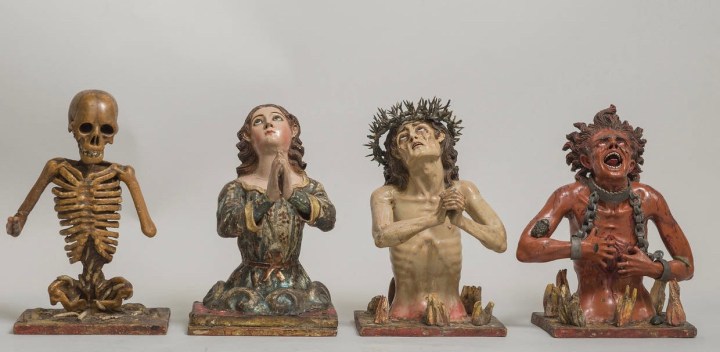
Manuel Chili, known as Caspicara, Four Fates of the Soul: Death, Soul in Heaven, Soul in Purgatory, and Soul in Hell, ca. 1775 (New York: The Hispanic Society of America).
◊ ◊ ◊ ◊ ◊
Press release (31 March 2017) for the exhibition:
Treasures of the Hispanic Society of America: Visions of the Hispanic World
Museo Nacional del Prado, Madrid, 4 April — 10 September 2017
Curated by Mitchell Codding
Through September 10, the Museo del Prado will present the treasures of the museum and library of the Hispanic Society, an institution located in Upper Manhattan in New York, founded in 1904 by Archer Milton Huntington (1870–1955), one of America’s greatest philanthropists. Huntington created an institution that reflected an appreciation of Spanish culture and the study of the literature and art of Spain, Portugal, and Latin America. Treasures of the Hispanic Society of America: Visions of the Hispanic World brings together more than two hundred works of art including paintings, drawings, and sculpture, archaeological artifacts, liturgical vestments, furniture, and books and manuscripts from the library, creating a fascinating chronological and thematic experience of the highlights of the Hispanic Society’s vast collections.
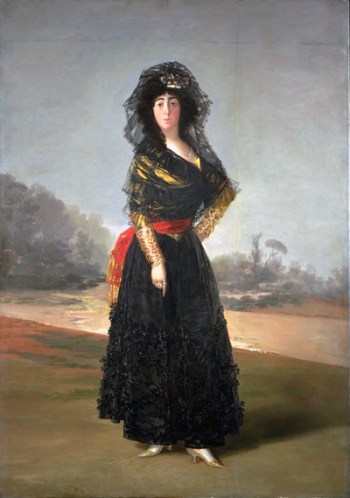
Francisco de Goya y Lucientes, The Duchess of Alba, 1796–97, oil on canvas, 210 × 149 cm (New York: The Hispanic Society of America).
With this exhibition—which occupies all of the temporary exhibition galleries in the new extension—the Museo del Prado offers its visitors the privilege of enjoying one museum within another, as it did in 2012 with the exhibition The Hermitage in the Prado. In this case, the renovation of the Hispanic Society’s galleries has allowed the treasures of their collections of Spanish and Latin American art, along with rare books and manuscripts, to travel to Spain. Many of the works of art that will be shown have not previously been exhibited or were unknown, including the reliquary busts of Santa Marta and Santa María Magdalena by Juan de Juni and the Fates of Man by Manuel Chili, known as Caspicara. Others have recently been identified, such as the Map of Tequaltiche, which was thought to be lost. Besides the individual value of each work of art, this exceptional grouping gives context to the magnitude of the rich history of Hispanic culture in the Iberian Peninsula, America, and Philippines. Spanning more than 3,000 years, the collection shows a quality of art works that no museum outside of Spain can compete with, demonstrating the passion of a unique collector who put his resources and knowledge towards creating a Spanish museum in America.
The extraordinary selection of paintings includes master works such as Portrait of a Little Girl, Camillo Astalli and Gaspar de Guzmán, Conde-Duque de Olivares by Velázquez, Pieta by El Greco, The Prodigal Son by Murillo, Santa Emerenciana by Zurbarán, and the emblematic Duchess of Alba by Goya, especially conserved for this occasion at the Museo del Prado with the collaboration of Fundación Iberdrola. Also represented are paintings by Post-Impressionists and modern artists, such as Zuloaga, Sorolla, and Santiago Rusiñol. The selection of sculpture includes, among others: the Efigie of Mencía Enríquez de Toledo from the Workshop of Gil de Siloé, the terracotta The Mystical Marriage of Saint Catherine by Luisa Roldán, and Fates of Man, a group of polychromed wood sculptures by Manuel Chili, known as Caspicara.
The exhibition also includes a selection of important archaeological artifacts, among them Celtiberian jewelry, Bell-Beaker vessels, and a Visigothic belt buckle. Completing the survey is a significant selection of decorative arts, with Renaissance and Baroque metalwork, ceramics from Manises, Talavera and Alcora, and an exquisite Pyxis made of ivory with gold plated hinges. Alongside these objects are textiles including a Fragment of the tunic of Prince Felipe de Castilla and a Nazrid silk textile.
An innovative mounting technique will allow the important holdings of the library of the Hispanic Society to be appreciated in all their splendor; works include A grant (Privilegio) issued by Alfonso VII, king of Castile and León, Biblia sacra iuxta versionem vulgata. Bible in Latin; unique letters such as Holograph instructions for his son Philip, the Letter to Phillip II of Spain from Elizabeth I, Queen of England, and the Holograph letter, signed “Diego de Silva Velazquez” to Damián Gotiens; and various maps including Portolan Atlas by Battista Agnese and the Mapamundi by Juan Vespucci.
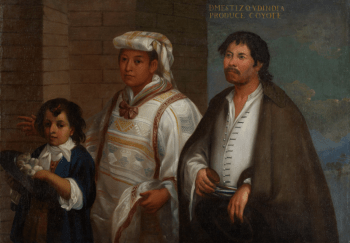
Juan Rodríguez Juárez, De Mestizo y de India produce Coyote, ca. 1716–20; Mexico, oil on canvas, 104 × 146 cm (New York: The Hispanic Society of America).
The first part of the exhibition (Galleries A and B) is organized chronologically and thematically by period in Spain and Latin America and comprises archaeological artifacts from sites on the Iberian Peninsula, Roman sculpture, magnificent ceramics, glass, furniture, textiles, silverworks, and Islamic and Medieval treasures as well as those from the Golden Age. Of particular relevance are Spanish paintings, in dialogue with the collections of the Prado, and colonial art closely related to the peninsula’s artistic legacy. Also included is a section dedicated to the library at the Hispanic Society, one of the most important in the world.
Gallery C offers a broad selection of the best Spanish painting from the 19th century through the early 20th century, including an exceptional collection of portraits of the leading Spanish scholars of that period, who worked closely with Huntington. After the First World War, Archer Huntington halted acquisitions, but maintained a close relationship with Spanish art and culture through his friendship with various painters, principally Joaquín Sorolla, who was commissioned to paint the famous series of large scale canvases depicting the regions of Spain for the Hispanic Society.
Accompanying the exhibition is a documentary projected in Gallery D, directed by Francesco Jodice, that transports the visitor to New York in the beginning of the twentieth century and narrates the history of the Hispanic Society and the passion of its founder, the philanthropist Archer Milton Huntington. The film contextualizes the origins of the early collecting practices of Huntington; the construction and inauguration of the headquarters of the Hispanic Society; Huntington’s collections and the fantastic holdings of the library; his relationship with Spain through Alfonso XII and the great Spanish intellectuals of the era; his friendship with Sorolla in New York; and the philanthropy of this great patron who wanted to remain anonymous during his entire life. The story is told by the director, Mitchell Codding, Chairman of the Board of Trustees, Philippe de Montebello, and the curators. The film, which runs for approximately 20 minutes, was filmed in New York and at the Prado Museum and is in English with Spanish subtitles.
Visions of the Hispanic World is the latest chapter in the decade-long collaboration between the Museo del Prado and the BBVA Foundation, involving the annual organization of a major exhibition event. This partnership has made possible such celebrated exhibitions as Passion for Renoir, The Hermitage in the Prado, El Greco and Modern Painting, and Bosch: The 5th Centenary Exhibition. Thanks to the Prado’s select network of relations with public and private lenders, these shows are the opportunity for an international public to view works that might otherwise never be seen under one roof. The exhibitions presented by the Prado and BBVA Foundation have met with an extraordinary response. In particular, those devoted to the Hermitage and Bosch successively broke the record of visits to the Madrid museum’s temporary exhibits, with over 580,000 spectators each.
Archer Milton Huntington, only son of one of the wealthiest families in The United States, from a young age possessed a profound interest in the Hispanic world. His education and numerous trips to Europe inspired an interest in collecting, always with the idea of creating a museum. In less than forty years, Huntington created a library and museum designed to elevate the study of Hispanic art through unparalleled collections in both scope and quality. At the same time, he published various facsimiles of important rare books and manuscripts. Huntington, in an effort to not deprive Spain of its artistic treasures, acquired most of his collection outside of the country. One can confirm, as did Jonathan Brown, that Huntington saw the Hispanic Society as an encyclopedic depository of Spanish art and literature. Huntington was one of the first Hispanists in the United States in the first half of the 20th century. For this reason he was awarded by numerous American universities. He was an active member of various Spanish museums and was invested as member of the Spanish Royal Academies. This exhibition pays homage to Huntington’s lifelong work for The Hispanic Society Museum & Library in the diffusion and study of Spanish culture in the United States of America.
Tesoros de la Hispanic Society of America (Madrid: Museo Nacional del Prado, 2017), 448 pages, ISBN: 978 84848 04079, 35€.
ASECS Awards, 2016–17
Recent awards from ASECS (with a full list available here) . . .
The Biennial Annibel Jenkins Biography Prize
Jane Kamensky (Professor of History and Pforzheimer Foundation Director of the Schlesinger Library, Harvard University), A Revolution in Color: The World of John Singleton Copley (New York: W. W. Norton and Company, 2016).
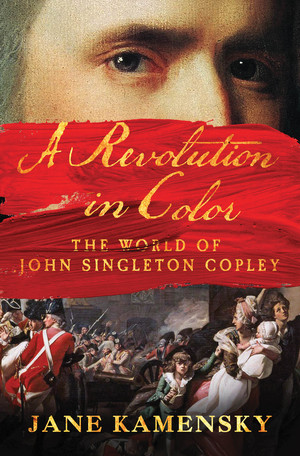 Committee’s evaluation: Kamensky’s “brilliantly written study of an ambitious painter in colonial Boston and then England is a joy to read from beginning to end. Kamensky is a deft storyteller with a keen eye for irony and paradox, and she draws upon a transatlantic archive that includes printed, manuscript, and visual sources. She cross fertilizes between history and art history in dazzling ways, and readers are sure to learn a great deal about the craft, politics, and finances of painting in colonial America and on the Continent as well. In making visible the complexities of cultural identity in a time of vexed allegiances, the author brings texture and depth to our understanding of Copley’s world before, during, and after the American Revolution.”
The Biennial Annibel Jenkins Biography Prize is given to the author of the best book-length biography of a late seventeenth-century or eighteenth-century subject. The prize is named in honor of Annibel Jenkins, Professor of English (Emerita) at the Georgia Institute of Technology. A founding member of the Southeastern American Society for Eighteenth-Century Studies, she was an outstanding teacher and scholar who has been for many years one of the most active and encouraging members of the academic community in America.
Robert R. Palmer Research Travel Fellowship
Margo Bernstein (Art History and Archaeology, Columbia University) “Carmontelle’s Profile Pictures and the Things that Made Them Modern.”
Smithsonian American Art Museum Fellows Lectures, 2017
I’ve noted details for the session most relevant to the eighteenth century; the full schedule is available via the posting at H-ArtHist. –CH
Smithsonian American Art Museum Fellows Lectures
Smithsonian American Art Museum, Washington, D.C., 3–5 May 2017
The Smithsonian American Art Museum cordially invites you to attend three afternoons of lectures delivered by its research fellows. The talks will be held in the museum’s McEvoy Auditorium, located at 8th and G Streets NW, Washington, D.C. This event is open to the public, and no reservations are required. The talks will be available through a simultaneous webcast, available here. A wine reception will conclude the series on Friday evening. For further information, please e-mail SAAMFellowships@si.edu.
Wednesday, 3 May 2017, 2:00–3:40
Moderator: William H. Truettner (Curator Emeritus, Smithsonian American Art Museum)
• Emily Thames (Joe and Wanda Corn Predoctoral Fellow, Florida State University), Rendering Reform, Rendering Empire: José Campeche as Draftsman in Late Eighteenth-Century San Juan, Puerto Rico
• Jennifer Chuong (Predoctoral Fellow, Harvard University), Bedeviling the Stamp Act: Materiality and Protest in Revolutionary America [as Chuong notes below in the comments: “due to some late-breaking research finds, I will actually be talking about a different Revolutionary-era printer: that is, Benjamin Franklin, and his interest in paper marbling.”]
• Patricia Johnston (Terra Foundation Senior Fellow in American Art, College of the Holy Cross), The China Trade and the Classical Tradition in Federal America
Exhibition | Thomas Jefferson: The Private Man
Thomas Jefferson was born 274 years ago today (13 April). From the New-York Historical Society:
Thomas Jefferson: The Private Man
From the Collections of the Massachusetts Historical Society
Massachusetts Historical Society, Boston, 29 January — 26 May 2016
New-York Historical Society, 7 April — 16 July 2017
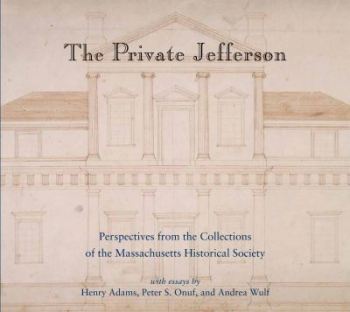 Thomas Jefferson’s role as a private citizen is as defining as his personae as founder, president, and political standard-bearer. A gifted writer and political philosopher, Jefferson was also an accomplished gardener, farmer, and architect. Thomas Jefferson: The Private Man provides a glimpse of his life outside the public sphere through the iconic documents he created. Among the 36 documents and artifacts on display from the collection of the Massachusetts Historical Society are Jefferson’s garden book, his last letter to John Adams, manuscript leafs from his Notes on the State of Virginia, early drawings of Monticello, and a copy of the Declaration of Independence in Jefferson’s hand.
Distributed by The University of Virginia Press:
Ondine LeBlanc, ed., with essays by Peter S. Onuf, Andrea Wulf, and Henry Adams, The Private Jefferson: Perspectives from the Collections of the Massachusetts Historical Society (Boston: Massachusetts Historical Society, 2016), 224 pages, ISBN: 978 19365 20084 (hardcover), $60.00 / ISBN: 978 19365 20091 (paperback), $35.
Exhibition | Taming Traders: Origins of the New York Stock Exchange
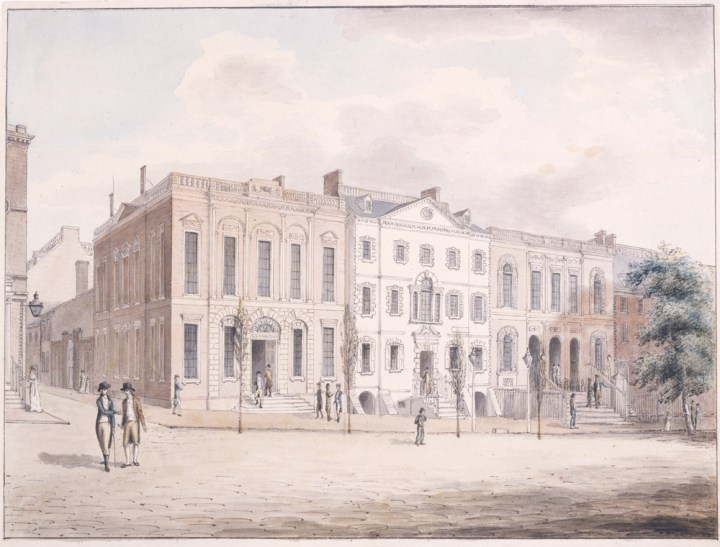
Archibald Robertson, View up Wall Street, ca. 1798; watercolor, black ink, and graphite on paper
(New-York Historical Society)
◊ ◊ ◊ ◊ ◊
Now on view at the New-York Historical Society:
Taming Traders: Origins of the New York Stock Exchange
New York-Historical Society, 31 March — 11 June 2017
Curated by Michael Ryan
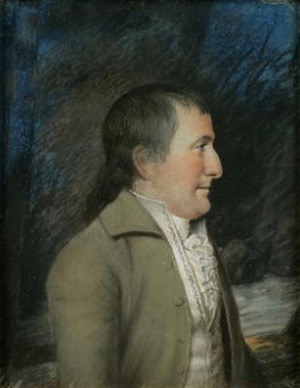
James Sharples Sr., Portrait of Leonard Bleecker, ca. 1796–1801; pastel on paper (New-York Historical Society).
On May 17, 1792―under a buttonwood tree, the site of street trading at the time―24 stock brokers signed an agreement that regulated aspects of trading, thus creating the New York Stock Exchange. Before then, in the early days of the new republic when the United States was deeply in debt, it was Alexander Hamilton’s job as the first Secretary of the Treasury to persuade his colleagues in the first Congress that debt could be a beneficial commodity that could be sold and traded. But rampant speculation in war debt and bank stock turned to financial panic and provided the cautionary backdrop for the drafting of the Buttonwood Agreement in May 1792, which would change global commerce forever.
On the 225th anniversary of the New York Stock Exchange, Taming Traders: Origins of the New York Stock Exchange charts the development of this crucial trading institution. Objects on display include early bond and stock certificates, correspondence, portraits of traders, and views of Wall Street and the Tontine Coffee House. Also on view will be video clips from New-York Historical’s major oral history project, Remembering Wall Street, 1950–1980. The exhibition is curated by Dr. Michael Ryan, New-York Historical vice president and director of the Patricia D. Klingenstein Library.
Conference | Winckelmann and Switzerland
From H-ArtHist, with the program available as a PDF file here:
Winckelmann und die Schweiz
Schweizerisches Institut für Kunstwissenschaft, Zurich, 18–19 May 2017
Registration due by 12 May 2017
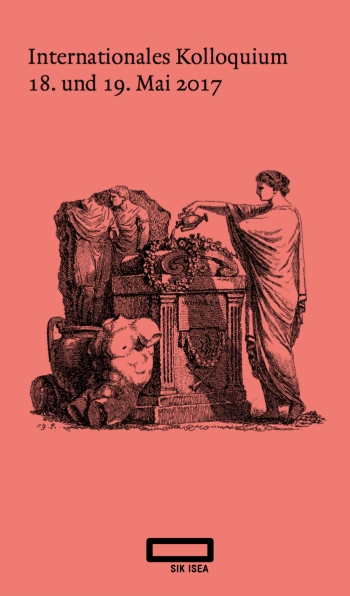 1778 erschien in Zürich bei Orell, Gessner, Füesslin und Compagnie die von Leonhard Usteri herausgegebene Sammlung «Winckelmanns Briefe an seine Freunde in der Schweiz», ein sprechendes Zeugnis der in den 1750er Jahren begründeten und stetig bedeutender werdenden Beziehungen zwischen Johann Joachim Winckelmann und einzelnen Schweizer Persönlichkeiten, namentlich Johann Caspar Füssli, Heinrich Füssli, Salomon Gessner, Christian von Mechel, Leonhard Usteri und Paul Usteri.
Winckelmann, wie viele europäische Intellektuelle des 18. Jahrhunderts ein begeisterter Verehrer der «freien» eidgenössischen Schweiz, plante wiederholt eine Reise in das Alpenland mit römischer Vergangenheit, doch am Ende hat er die Schweiz nie besucht. Dessen ungeachtet waren sein Werk und seine Person nicht nur in Zürich anerkannt. Anlass zu gegenseitiger Wertschätzung gaben jenseits des brieflichen Austausches auch persönliche Begegnungen wie die mit Angelika Kauffmann; weitere Kontakte schufen Winckelmanns Führungen für Schweizer Reisende in Rom, die im Frühjahr 1761 in seinem «Sendschreiben» für Leonhard Usteri ihre Systematisierung fanden und durch Unterweisungen für Heinrich Füssli, Paul Usteri und Christian von Mechel ergänzt werden sollten. Eine Erweiterung des Bekanntenkreises brachten zudem gemeinsam unternommene Reisen—so mit Johann Caspar Füssli nach Neapel—, verlegerische Projekte wie der zunächst erwogene Druck der «Geschichte der Kunst» in der Schweiz und natürlich die wechselseitige Rezeption der Werke.
Das vom Schweizerischen Institut für Kunstwissenschaft (SIK-ISEA) in Zusammenarbeit mit der Winckelmann-Gesellschaft, Stendal, und dem Kunsthistorischen Seminar der Universität Basel organisierte Kolloquium hat zum Ziel, die bislang wenig erforschten Kontakte zwischen Winckelmann und Schweizer Persönlichkeiten fächerübergreifend und auf der Basis aktueller archivalischer Recherchen zu beleuchten sowie die Aufnahme seines Werkes durch Schweizer Intellektuelle und Künstler zu untersuchen. In den Blick rücken auch die Schweiz als Plattform der Kulturvermittlung in ihrer Bedeutung für Winckelmann sowie der Ästhetik-Diskurs in der Schweiz, Deutschland und Italien nebst der Antikenrezeption in der Schweiz im 18. Jahrhundert.
Die Teilnahme am Kolloquium ist kostenlos. Die Platzzahl ist beschränkt. Bitte melden Sie sich an bis am 12. Mai 2017 (sik@sik-isea.ch).
In der Bibliothek Werner Oechslin wird am 20. Mai 2017 eine Ausstellung zu Winckelmann eröffnet, die in rund 100 Exponaten dessen Entwicklung vom Bibliothekar zur Gründerfigur der deutschen Kunstwissenschaft herausstellt. In besonderer Weise thematisiert wird dabei der Kontrast zwischen der Figur des Antiquars, der sich gemäss Caylus der «Physique» der Kunstgegenstände bis in alle Verästelungen hinein widmen soll, und dem nach Höherem strebenden, idealisch denkenden Winckelmann; darauf beziehen sich sowohl die Vorstellung des Klassischen wie ein ethisch begründeter Schönheitsbegriff mit Wirkungen bis in unsere Zeit. Die Ausstellung dauert bis Ende 2017.
D O N N E R S T A G , 1 8 M A I 2 0 1 7
13.30 Begrüssungsworte: Roger Fayet (Direktor, SIK-ISEA), Max Kunze (Präsident der Winckelmann-Gesellschaft, Stendal), Andreas Beyer (Kunsthistorisches Seminar der Universität Basel)
13.45 Die Schweiz als neues Arkadien
Moderation: Roger Fayet (Direktor, SIK-ISEA)
• Andreas Beyer (Kunsthistorisches Seminar der Universität Basel), Arkadische Schweiz
• Volker Riedel (Mitglied des Kuratoriums, Winckelmann-Gesellschaft, Stendal), Winckelmann und Gessner: Zur Problematik der Idylle im 18. Jahrhundert
• Matthias Oberli (Abteilungsleiter Kunstdokumentation, SIK-ISEA), «Merckwürdige Überbleibsel» und «stattliche Antiquitäten»: Zum Antikenverständnis in der Schweiz im Zeitalter Winckelmanns
15.15 Kaffeepause
15.45 Freundschaften und Netzwerke
Moderation: Gérard Seiterle (ehemals Direktor des Museums zu Allerheiligen, Schaffhausen)
• Max Kunze (Präsident der Winckelmann-Gesellschaft, Stendal), Antiken-Empfehlungen: Winckelmanns Schweizer Freunde in Rom
• Elisabeth Décultot (Humboldt-Professur für neuzeitliche Schriftkultur und europäischen Wissenstransfer, Germanistisches Institut, Martin-Luther-Universität Halle-Wittenberg), Christian von Mechel: Zu einer Schlüsselfigur von Winckelmanns schweizerischem Netzwerk
• Christoph Frank (Istituto di storia e teoria dell’arte e dell’architettura (ISA), Università della Svizzera italiana), Winckelmann und Basel: Christian von Mechel und Johann Friedrich Reiffenstein
17.15 Aperitif
18.15 Abendvortrag
• Marcel Baumgartner (em. Ordinarius für Kunstgeschichte, Justus-Liebig-Universität, Giessen), Kunstgeschichten: Winckelmann—Piranesi—Caylus—Herder
F R E I T A G , 1 9 M A I 2 0 1 7
9.30 Die Künste in der Schweiz
Moderation: Matthias Fischer (Kurator Kunst- und Grafiksammlung, Museum zu Allerheiligen, Schaffhausen)
• Gisela Bungarten (Stellvertretende Direktion und Projektmanagement, Museumslandschaft Hessen – Kassel), Füssli und Winckelmann: Wechselvolle Beziehungen in Zürich, Rom und London
• Dieter Ulrich (lic. phil., freischaffender Kunsthistoriker), «Hohe Griechische Einfalt bezeichnete seine Wercke und hauchte Leben in seinen Marmor.»
• Michael Thimann (Kunstgeschichtliches Seminar und Kunstsammlung, Georg-August-Universität Göttingen), Schweizergeschichte statt homerische Helden. Antiklassizistische Bildkonzepte um 1800
11.00 Kaffeepause
11.30 Konzepte und Strategien
Moderation: Adelheid Müller (wissenschaftliche Mitarbeiterin am Projekt «Winckelmann-Ausgabe» der Akademie der Wissen-schaften und der Literatur, Mainz)
• Eva Kocziszky (Institutsdirektorin, Pannonische Universität Veszprém, Institut für Germanistik und Translations-wissenschaft), Die Allegorie bei Winckelmann, Lavater und Füssli
• Johannes Rössler (Institut für Kunstgeschichte der Universität Bern), Kunst und Wissenstransfer im Zeichen Winckelmanns 1795–1830: Das Schweizer Netzwerk von Heinrich Keller (Rom), Heinrich Meyer (Weimar) und Johann Jakob Horner (Zürich)
• Hans Christian Hönes (Forschungsgruppe «Bilderfahrzeuge», The Warburg Institute, London), Die Sümpfe der Schweiz: Klimatheorie und Ursprungssuchen
13.00 Mittagspause
14.00 Formen der Rezeption
Moderation: Andreas Beyer (Kunsthistorisches Seminar der Universität Basel)
• Bettina Baumgärtel (Leiterin der Gemäldegalerie, Museum Kunstpalast Düsseldorf), Die vielen Gesichter des Winckelmann: Die Wandlungen des Winckelmann-Bildes von Angelika Kauffmann
• Adelheid Müller (wissenschaftliche Mitarbeiterin am Projekt «Winckelmann-Ausgabe» der Akademie der Wissenschaften und der Literatur, Mainz), «Flammenworte der Begeisterung» oder: Bündnisse, gefühlt und gelebt. Friederike Brun, Winckelmann und die Schweizer Freunde
• Harald Tausch (Institut für Germanistik / Arbeitsbereich Literatur, Justus-Liebig-Universität Giessen), Kreis ohne Meister: Kleist, Winckelmann und die Schweiz
15.30 Kaffeepause
16.00 Schlussbetrachtungen
• Werner Oechslin (Stiftung Bibliothek Werner Oechslin, Einsiedeln), «…zuerst unter dem griechischen Himmel…»
16.45 Aperitif
New Book | Jean-Baptiste Descamps
From Brepols:
Gaëtane Maës, De l’expertise artistique à la vulgarisation au siècle des Lumières: Jean-Baptiste Descamps (1715–1791) et la peinture flamande, hollandaise et allemande (Turnhout: Brepols Publishers, 2016), 608 pages, ISBN: 978 2503 567709, 125€.
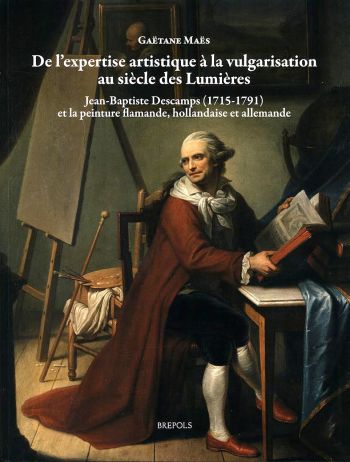 Peintre flamand peu connu aujourd’hui, Jean-Baptiste Descamps (1715–1791) demeure important par les livres qu’il a publiés de son vivant. Entre 1753 et 1763, paraissent ainsi les quatre volumes de son recueil intitulé La vie des peintres flamands, allemands et hollandois, suivis en 1769 de la publication d’un Voyage pittoresque de la Flandre et du Brabant. Ces textes ont longtemps été négligés car, contrairement aux modèles représentés par Giorgio Vasari et Karel van Mander, ils sont considérés comme de simples compilations. Consacrer une étude aux ouvrages de Descamps vise, par conséquent, à remettre en question ce postulat en soulignant les réels enjeux intellectuels que revêt l’écriture de ce polygraphe. Par ses livres, Descamps a, en effet, su se construire une visibilité et une légitimité d’expert de la peinture septentrionale, qui lui ont ouvert les portes de l’Académie royale de Peinture et de Sculpture à Paris en 1764.
Dans ce contexte, l’enquête monographique sert ici de simple fil conducteur à des questionnements variés sur la France des Lumières, et plus particulièrement sur le rapport entre Paris et la province, entre les grands et petits maîtres, entre la littérature érudite et les écrits de vulgarisation. L’étude s’attache aussi à définir la place des Arts dans l’espace public ouvert par le développement des expositions, du marché de l’art et du tourisme culturel. Elle met enfin l’accent sur l’attraction puissante qu’ont exercée les œuvres flamandes, hollandaises et allemandes sur les collectionneurs du XVIIIe siècle.
Cette synthèse sera prochainement suivie de la réédition critique du Voyage pittoresque de la Flandre et du Brabant, qui a été le premier guide publié en France avec l’intention explicite de proposer aux artistes et amateurs d’art une autre destination que l’Italie.
Gaetane Maes est Maître de conférences habilitée à diriger des recherches, et elle enseigne l’Histoire de l’Art des Temps modernes à l’université de Lille. Ses recherches s’attachent autant à l’art des anciens Pays-Bas (Flandre et Hollande) qu’à l’art français, afin de les envisager dans un esprit de décloisonnement. Avec Jan Blanc, elle a notamment publié Les échanges artistiques entre la France et les anciens Pays-Bas. 1482–1814 (Brepols, 2010). Elle est également l’auteur de nombreux articles sur l’historiographie des peintres et les fonctions sociales de l’art.
T A B L E D E S M A T I E R E S
Introduction
1ère partie. La vie et la carrière d’un peintre flamand en France
1 Entre vie mythique et vie réelle
2 Du peintre à l’entrepreneur : une stratégie de carrière réfléchie
3 La gloire ou l’argent ?
Conclusion de la 1ère partie
2e partie. L’entreprise éditoriale de La vie des peintres
4 Le peintre-écrivain au XVIIIe siècle: entre mythe et concurrence
5 Le livre comme objet social
6 Méthode de travail et documentation
Conclusion de la 2e partie
3e partie. Le sens de La vie des peintres : une théorie implicite ?
7 Un manuel pour connaisseurs
8 Le commerce contre l’histoire ou l’impossible union
9 La pensée esthétique de Descamps
10 Les goûts artistiques de Descamps
Conclusion de la 3e partie
4e partie. Le Voyage pittoresque de la Flandre et du Brabant
11 L’élaboration d’un best-seller
12 Le contenu du Voyage pittoresque
13 L’art et son public ou le Voyage pittoresque comme préfiguration de la notion de patrimoine
Conclusion de la 4e partie
Conclusion générale
Annexes
Bibliographie
Liste des illustrations
Crédits photographiques
Index des noms propres
Planches en couleurs
Conference | Diplomatic Presents between China and Europe
From the provisional programme:
Les présents diplomatiques entre la Chine et l’Europe aux XVIIe–XVIIIe siècles
Paris, 4–5 May 2017
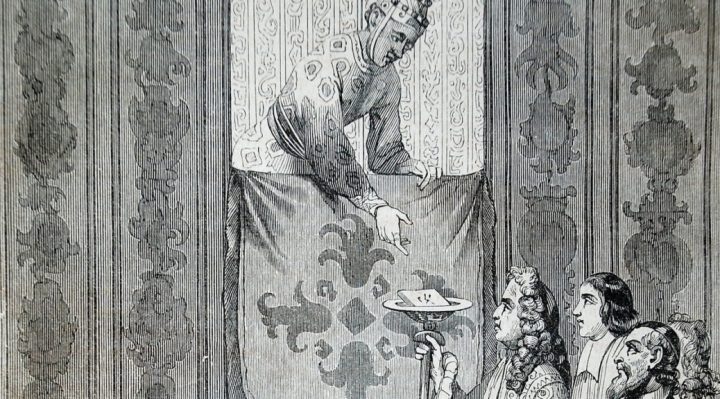
Peut-on employer le terme « cadeaux diplomatiques » pour ce qui concerne les XVIIe- XVIIIe siècles entre la Chine et les pays européens, alors que dans la tradition chinoise, tout pays étranger n’était qu’un vassal devant l’empereur de Chine ? Nous regroupons en fait sous ce terme tous les objets destinés à être offerts par une cour européenne ou un membre de la famille royale ou aristocratique à l’empereur de Chine, aux princes, et aux mandarins, et réciproquement. Dans ce contexte des échanges officiels, les présents soigneusement choisis sont porteurs d’une fonction politique de faire-valoir, en plus des caractéristiques formelles propres aux objets dotés de pouvoirs de séduction. Agissant ainsi comme objets de pouvoir et de courtoisie, leur nature est ambivalente : les caractéristiques intrinsèques (esthétique, économique et technique) doivent refléter aussi bien l’identité de celui qui offre que celle de celui qui reçoit. En plus de la matérialisation du pouvoir suprême, les objets « exotiques » de prestige par excellence, assument également de multiples autres fonctions sociales entre autres, le témoignage de respect et de confiance, le moyen d’introduction et d’obtention de faveurs.
Le colloque sera l’occasion de faire dialoguer entre elles les sources primaires, en particulier les archives (imprimées et surtout manuscrites) issues de traditions textuelles différentes et de contextes sociaux qui s’ignoraient. L’objectif est de construire une histoire des échanges à « plusieurs voix » et à une réalité sociale multiple.
Colloque international organisée par le programme LIA TrEnamelFC avec les soutiens du CRCAO, CCJ, ICT, CAK, CNRS et PSL
Organisateurs : Liliane Hilaire-Pérez (ICT/CAK), Isabelle Landry-Deron (CCJ), Sébastien Pautet (ICT), Fabien Simon (ICT), Bing Zhao (CRCAO)
◊ ◊ ◊ ◊ ◊
4 M A I 2 0 1 7
Salon de la Maison de l’Asie, 22, avenue du Président Wilson, 75016, Paris
8.45 Accueil
9.00 Introduction par Bing Zhao (Centre de recherche sur les civilisations de l’Asie orientale), Le projet LIA TrEnamelFC et la question de l’efficacité des objets diplomatiques
9.15 1ère session | Les premiers échanges sino-français : pratiques et acteurs
Présidence de séance : Catherine Jami (Centre Chine, Corée, Japon)
• Nathalie Monnet (Bibliothèque François Mitterrand), Diplomatie jésuite ou diplomatie d’Etat ?
• Stéphane Castelluccio (Centre André Chastel), Louis XIV et l’Orient : Séduire et être séduit
10.15 Pause
10.30 2e session | Les objets émaillés, cadeaux privilégiés des échanges sino-européens
Présidence de séance : Sébastien Pautet (ICT)
• Emily Byrne Curtis (chercheur indépendant), Aspects of a Multi-Faceted Process : The Circulation of Enamel Wares between the Vatican and Kangxi’s Court, 1700–22
• Isabelle Landry-Deron (Centre Chine, Corée, Japon), La circulation des objets émaillés entre la France et la Chine d’après les sources missionnaires françaises
11.30 Bing Zhao (Centre de recherche sur les civilisations de l’Asie orientale), L’impact des objets européens introduits à la cour des Mandchous aux XVIIe–XVIIIe siècles : Le cas des objets émaillés
12.00 Discussion
12.30 Buffet
14.00 Séance privée et visite du mnaag-Guimet (réservée aux participants et aux membres LIA TrEnamelFC)
5 M A I 2 0 1 7
Salle M019, Bâtiment Olympe de Gouge, université Paris Diderot, Place Paul Ricoeur, 75013 Paris
9.00 Accueil
9.15 3e session | Les échanges étatiques sino-européens de la 2e moitié du XVIIIe siècle
Présidence de séance : Liliane Hilaire-Pérez (ICT/Centre Alexandre Koyré)
• Marie-Laure de Rochebrune (Musée du château de Versailles), Les porcelaines de Sèvres envoyées en guise de cadeaux diplomatiques à l’empereur de Chine par les souverains français dans la seconde moitié du XVIIIe siècle
• John Finlay (Centre Chine Corée Japon), Henri Bertin and the Presents from Louis XV to the Qianlong Emperor
• Guo Fuxiang (Département de la vie curiale, Musée du Palais de Pékin), Tribut ou cadeaux diplomatiques : Le devenir des objets offerts par la mission Marcadet à la cour des Qing
10.45 Pause
11.00 4e session | Les perspectives historiques et comparatives
Présidence de séance : Fabien Simon (ICT)
• Françoise Wang-Toutain (Centre de recherche sur les civilisations de l’Asie orientale), Présents diplomatiques, Présents de longévité : Les cadeaux offerts par les dignitaires tibétains laïcs et religieux à la cour impériale mandchoue
• Indravati Félicité (ICT), Les cadeaux diplomatiques dans les échanges entre les cours européennes et asiatiques à l’époque moderne : Un aperçu des orientations de la recherche
• Kee II Choi (University of Warwick), ‘In All Things Must the Ancients Be Imitated’: Vases and Diplomacy at the Qing Court
12.30 Discussion
13.00 Buffet
15.00 Visite du Musée des Arts décoratifs (réservée aux participants et aux membres LIA TrEnamelFC, à confirmer)
◊ ◊ ◊ ◊ ◊
From the blog of the research project, “The Circulation of Enameled Objects between France and China (late-17th to mid-19th Century): Technological, Cultural, and Diplomatic Interactions” . . .
The objective of this Franco-Chinese program (2015–20) is to propose a ‘symmetrical’ history of the circulation of enameled objects and enamel technology between France and China from the end of the seventeenth to the middle of the nineteenth century. Enamel is the prime example of a technology that was originally European, whether it be cloisonné enamel, champlevé, or painted enamel, the practice of which moved from West to East in the wake of the objects. The present project consists of concurrent and interdisciplinary research conducted by an international, multidisciplinary team focused on all types of enameled objects, produced in France or in China, held in the collections of the Palace Museum, Beijing, and French museums. It will serve as well as an interface among all international researchers who are working on the circulation of technologies across the long distance between China and Europe. Integrated into a multidisciplinary approach (including physics, chemistry, history of technology, archaeology, experimentation, and social history), the work of these researchers prioritizes new textual, physical or chemical, and archaeological data.










 Enfilade
leave a comment