Call for Papers | Making Room for Order: Court Ordinances
I’ve no idea how flexible the end date of 1700 is for the larger Palatium project, but I imagine this workshop will be of interest to many readers. -CH
From the Call for Papers:
Making Room for Order: Court Ordinances as a Source
for Understanding Space at Early Modern Princely Residences
Kalmar Castle, Sweden, 2–3 October 2014
Proposals due by 22 June 2014
Organized by ESF Research Networking Programme PALATIUM with Linnaeus University, Kalmar
One of the obvious sources when analysing how space was used at early modern royal residences are court ordinances. These are however far from as clear‐cut as they may seem. In several instances we can see how a world of order emerges that can easily be an illusion. Court ordinances are thus a rich material to use, but a source that poses a number of important methodological questions. The value of court ordinances has long been apparent. Already in 1761 Friedrich Carl Moser used court ordinances while compiling his work Teutsches Hof‐Recht. A more scholarly approach came later however. In 1905 and 1907 Arthur Kern published Deutsche Hofordnungen des 16. und 17. Jahrhunderts. This was an important step in making court ordinances accessible for research. After Kern various court ordinances have been published for principalities such as Kleve, Aragon, Brandenburg and Burgundy.
For court studies, the analysis of court ordinances has been indispensable. In his groundbreaking research on early modern courts, David Starkey made extensive use of the Eltham Ordinances. The possible Burgundian influences on the late Plantagenet English court, through court ordinances, is an on‐going debate. In later years two important scholarly works on early modern court ordinances have been published. The first, edited by Werner Paravicini, was Höfe und Hofordnungen 1200–1600 in 1999. This was the result of a conference in 1996 by the Residenzen‐Kommission. The second large volume, Zu Diensten Ihrer Majestät: Hofordnungen und Instruktionsbücher am frühneuzeitlichen Wiener Hof, was published in 2011 by Jakob Wührer and Martin Scheutz.
Thus, some scholars have highlighted court ordinances recently. They have however not focussed specifically on royal residences and the interplay between architecture and court life. This leaves a fruitful and rich vein for PALATIUM to tap into. The workshop in Kalmar is aimed at analysing from a methodological standpoint how we can understand the uses and ideas of space at court by deploying court ordinances as a source. It will be necessary to include not just court ordinances proper but also instructions and similar sources. The differences between court ordinances, instructions and other court laws/regulations were fluid at the time and this should be reflected in the discussions.
Naturally court ordinances have methodological issues. Why was a court ordinance drawn up? Was the aim to enforce economy at court or to enhance magnificence? The information we can draw from court ordinances depends to a large degree on such reasons. A number of evident questions to discuss leap to mind. Can we see how the shift from peripatetic to more sedentary courts is reflected in court ordinances? Will court ordinance reflect specific palaces rather than a generic group of royal residences for a prince?
Another obvious issue is how court ordinances both reflect reality and norms. Can we see if court ordinances were translated verbatim without any consideration for spatial differences between courts? Would court ordinances be switched from one architectural setting to another? Did this result in changes in architectural layout? What happened if a new court ordinance clashed with the existing palace plan? Yet another issue concerns whether we can see how different court ordinances influence each other? The example of Burgundy and the court of Edward IV have already been mentioned. Were certain court ordinances especially influential?
The interplay between the spatial reality and court ordinances must always be kept in mind. Perhaps we can deduce what a lost court ordinance looked like by using the architectural material, which can indicate both functions and shifts in those functions.
Papers will be organised around the following three topics:
I. Space and Function: Norm versus Reality
Court ordinances are interesting on two levels. First, they tell us something about prevailing ideas and attitudes within courtly society at the time. Second, they might tell us something about how reality was organised. The second half is, however, far from straightforward. As a normative source, court ordinances pose special problems. How certain can we be that ordinances paint a true picture of how space was used at court? We need case studies that analyse how far the norm was realised. What can ordinances really tell us about the use of certain spaces at certain ceremonies?
II. Invention or Tradition?
Did court ordinances actually introduce real change in how space was organised at princely courts? Can we see if court ordinances precede or follow real changes in palatial space? Perhaps a court ordinance merely reflected already existing usage rather than introducing new ways? Might court ordinances act as a conservative force?
III. A Source Leaving the Residence Partly in Shadow?
An evident methodological issue when using court ordinance is whether there are spaces at royal palaces that fall outside court ordinances? Will certain areas not be covered? Will the hunt, gardens or the menagerie be outside the usual scope? Does that mean that these areas were less constricted by ceremony and regulation? (more…)
Conference | The Mobile Spectator
From H-ArtHist:
The Mobile Spectator: Viewing on the Move International Conference
University of Nottingham, 4–5 July 2014
This interdisciplinary conference brings together speakers from the UK, Europe and North America to examine the ways in which our experiences of art, vision and movement are inseparable. Travel is often a prerequisite to putting oneself in a position to be able to see something, or to see it properly; physical effort is required to address the object or image appropriately. Conference papers ranging from classical antiquity to today on artefacts and environments in Europe, East Asia and the United States will examine the mobilisation of spectators as well as objects in various media.
Conference fee: £20 (includes tea, coffee) for both days or £10 for one day.
Conference dinner: £18 (includes wine); must be booked in advance.
Contact: ting.chang@nottingham.ac.uk and richard.wrigley@nottingham.ac.uk
◊ ◊ ◊ ◊ ◊
F R I D A Y , 4 J U L Y 2 0 1 4
10:00
• William Leveritt (Classics, University of Nottingham, “Controlling the Viewer’s Gaze: the Case of Roman Sarcophagi”
• Katharina Lorenz (Classics, University of Nottingham), “The Pergamon Altar: An Itinerary of the Divine”
11.30 Coffee
11.50
• Tina Bawden (Art History, Kunsthistorisches Institut, Freie Universität Berlin), “Moving from Seeing to Feeling and Back: Encounters at the Door, Medieval and Beyond”
• Jeannet Hommers (Art History, Kunsthistorisches Institut, Universität zu Köln), “Moving and Viewing, Discovering and Believing: Physical Movement in Romanesque Churches on the Way to St James”
1.15 Lunch
2.00
• Jeffrey Moser (Art History and Communication Studies, McGill), “Compositional and Experiential Motion in the Qingming Handscroll”
• Rachel Saunders (East Asian Languages and Civilizations, Harvard), “Temporal Kinetics: Movement and Stasis in the Viewing of Japanese Narrative Scrolls”
3.30 Coffee
4.00
• Katharina Eck (Mariann Steegmann Institute for Art and Gender, University of Bremen), “Viewing and Living on the Move: Scenic Wallpapers”
5.00 Keynote
• Bronwen Wilson (School of Art History and World Art Studies, University of East Anglia), “Moving Pictures: Inscription, the Horizon and Melchior Lorck’s Prospect of Constantinople”
S A T U R D A Y , 5 J U L Y 2 0 1 4
9.30
• Susanna Caviglia and Niall Atkinson (Art History, University of Chicago), “Wandering in Rome in the Eighteenth Century: The Aesthetics of the Mobile Gaze”
• Sarah Betzer (Art History, University of Virginia), “Vernon Lee’s Rome: Sculpture, Archaeology, and Empathy”
11.00 Coffee
11.30
• Michaela Giebelhausen (School of Philosophy and Art History, University of Essex), “Game or Prey: Movement and Meaning in the Museum of Natural History”?
• Ellery Foutch (Courtauld Institute of Art, London), “Moving Pictures: Magic Lanterns and Urban Advertising in the Nineteenth Century”
1.00 Lunch
2.00
• Jessen Kelly (Art and Art History, University of Utah), “Mutable Perspectives: Fortune and the Viewer in Renaissance Games of Chance”
• Michael Gott (Romance Languages and Literatures, University of Cincinnati), “Travelling Beyond the Frame: Cinematic Speed and Perception in French-Language Comics”
3.30 Coffee
4.00
• Tatiana Senkevitch (Sarah Blaffer Foundation, Museum of Fine Arts, Houston), “Et in Pictura Ego: Alexander Sokurov’s Visual Elegies”
• Richard Taws (Art History, University College London), “Moving Histories: Revolutionary Scenography in Eric Rohmer’s L’Anglaise et le duc”
Exhibition | Making Colour
Press release from The National Gallery for the exhibition:
Making Colour
The National Gallery, London, 18 June — 7 September 2014
Curated by Ashok Roy and Caroline Campbell

Moses Harris, Prismatic Colour Wheel, from ‘The Natural System of Colours’, hand-coloured etching, 1769/1776
(Royal Academy of Arts, London)
Making Colour, the first exhibition of its kind in the UK, offers visitors an exceptional opportunity to discover the wide-ranging materials used to create colour in paintings and other works of art. Using the National Gallery’s own paintings and loans from major UK cultural institutions, the exhibition traces the history of making colour in Western paintings, from the Middle Ages to the end of the 19th century. The exhibition brings together the worlds of art and science to explain how artists overcame the technical challenges involved in creating colour. Work on this subject has long been a specialism of the Gallery’s internationally recognised Scientific Department. Making Colour shows the material problems faced by artists in achieving their painterly aims, the breakthroughs they struggled for, and the difficulties they faced in creating works of art that were both beautiful and enduring. Making Colour looks at its subject from multiple perspectives. It examines the origins of paint sources—be it the natural world or human invention—and their supply, manufacture and application, as well as their permanence and colour effect.
The rich and diverse display with National Gallery paintings at its core is part of the ‘National Gallery Inspires’ programme of exhibitions. Drawn from the National Gallery collection, the exhibitions take a fresh view of National Gallery paintings alongside special loans and featuring world-leading research by Gallery experts. Making Colour shows the central importance of colour to painting, but also incorporates minerals along with textiles, ceramics and glass, demonstrating the material connections in these sister arts.
The exhibition begins by examining how theories of colour—such as an awareness of primary colour, or of the colour spectrum—have influenced painters’ use of pigments, and their quest for new materials. Visitors then journey from lapis lazuli to cobalt blue, ancient vermilion to bright cadmium red, through yellow, orange, purple and verdigris to deep green viridian in a series of colour-themed rooms. Finally, they enter a dazzling central room devoted to gold and silver. These metals were of fundamental importance to the colour effects of European painting through many centuries, although they do not appear on the traditional colour wheel.
Making Colour is illustrated at every stage by National Gallery paintings, complemented by selected objects on loan, such as Joseph Mallord William Turner’s paintbox. The exhibition includes Claude Monet’s Lavacourt under Snow (about 1878–81) on display with lapis lazuli figurines from the British Museum and the Ashmolean Museum, Oxford. Anthony van Dyck’s Lady Elizabeth Thimbelby and her Sister (1637) and elaborate majolica plates from the British Museum help to illustrate the story of yellow. In the red room Degas’s Combing the Hair (La Coiffure) (about 1896) and Masaccio’s Saints Jerome and John the Baptist (about 1428–29) are displayed alongside fragments of beautiful crimson velvet brocade on loan from the Victoria and Albert Museum, London.
The exhibition is complemented by a scientific experiment that introduces a new world of contemporary and scientific thought on colour. It deals with human colour perception, and the degree to which it is individually variable. It will also consider the ways in which the brain processes different visual information—for example in lighting paintings—and the impact that this has on our perception of colour.
The computer-controlled experiment in lighting and perception will be presented beside the Sainsbury Wing exhibition galleries, designed to demonstrate how we perceive and register colour, and to show that the eye and brain respond to colour in unexpected ways. The experiment has been developed with the advice of Professor Anya Hurlbert, Professor of Visual Neuroscience and Director of the Institute of Neuroscience, University of Newcastle and the support of the Wellcome Trust.
Ashok Roy, Director of Collections at the National Gallery, said: “Art and science really do come together in Making Colour. By exploring the materials that make up the array of artists’ pigments, we can begin to comprehend some of the historic circumstances and difficulties in creating colours that we now take for granted. The inclusion of objects such as early textiles, mineral samples and ceramics ensures an enticing display that provides a new angle from which to approach familiar works in the collection.”
Caroline Campbell, Curator of Italian Paintings before 1500 at the National Gallery, said: “Artists from the Middle Ages to the present day have sought to find suitable pigments and colours. This exhibition is a wonderful opportunity to celebrate this quest for colour. Thanks to the work of our Scientific Department, we can add another layer to our understanding of how artists created such beautiful images.”
Making Colour is curated by Ashok Roy, Director of Collections, and Caroline Campbell, Curator of Italian Paintings before 1500.
Study Day | Fame and Friendship: Pope, Roubiliac and the Portrait Bust
The exhibition Fame and Friendship: Pope, Roubiliac and the Portrait Bust (recently closed at YCBA) opens June 18 at Waddesdon Manor in Buckinghamshire (where it will be on display until 26 October 2014). In connection, Malcolm Baker will lead a special interest day on Thursday, 10 July.
From Waddesdon Manor:
Study Day | Fame and Friendship: Pope, Roubiliac and the Portrait Bust
Waddesdon Manor and Stowe Landscape Gardens, 10 July 2014
 Led by Professor Malcolm Baker, the curator of the exhibition, this day will begin with an in-depth look at Fame and Friendship: Pope, Roubiliac and the Portrait Bust, followed by lunch in the Manor Restaurant. In the afternoon, participants will travel to nearby Stowe Landscape Gardens to see the famous Temple of British Worthies and to explore the central role of the sculpture portrait bust in the creation and celebration of fame and friendship. The day will end with tea at Stowe. The price of your ticket (£70) includes coach travel from Waddesdon to Stowe and return to your car at Waddesdon; normal admissions charges apply to both Waddesdon and Stowe.
Malcolm Baker is Distinguished Professor of the History of Art, University of California, Riverside, and Honorary Senior Research Fellow at the Victoria and Albert Museum.
◊ ◊ ◊ ◊ ◊
In addition to The Marble Index: Roubiliac and Sculptural Portraiture in Eighteenth-Century Britain, Malcolm Baker’s major publication related to the exhibition and due out later this year from Yale University Press, a more tightly focused catalogue will be published by Paul Holberton:
Malcolm Baker, Fame and Friendship: Pope, Roubiliac and the Portrait Bust (London: Paul Holberton Publishing, 2014), 128 pages, ISBN: 978-0954731052, £15 / $25.
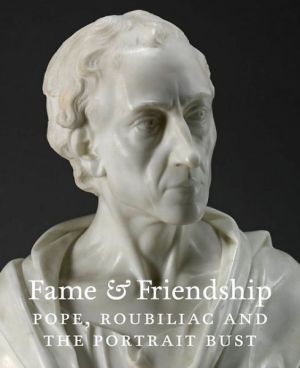 No literary figure of the eighteenth century was more esteemed than the poet Alexander Pope, and his sculpted portraits exemplify the celebration of literary fame at a period when authorship was being newly conceived and the portrait bust was enjoying new popularity. Accompanying an exhibition at Waddesdon Manor (The Rothschild Collection), this publication explores the convergence between authorship, portraiture, and the sculpted image in particular, by bringing together a wide range of works that foreground Pope’s celebrity status.
Pope took great pains over how he was represented and carefully fashioned his public persona through images, published letters and the printed editions of his works. Alongside some of the most celebrated painted portraits of the poet will be a selection of the printed texts which Pope planned with meticulous care. The publication focuses on eight versions of the same portrait bust by the leading sculptor of the period, Louis François Roubiliac.
The marble bust had long been seen as a form appropriate for the celebration of literary fame and Pope’s bust in part imitates those of classical authors whose works he both translated and consciously imitated in his own poems. More than any other sculptor, Roubiliac reworked the conventions of the bust, transforming it into a genre that was considered worthy of close and sustained attention. Nowhere is this seen more tellingly than in his compelling and intense portraits of Pope. Based on a vividly modelled clay original, the variant marble versions were carved with arresting virtuosity, recalling Pope’s own phrase, “Marble, soften’d into Life.” At the same time, the image was reproduced by both the sculptor himself and by others, in a variety of materials.
Multiplied and reproduced throughout the eighteenth century, Pope’s bust was the most familiar and visible sign of his authorial fame. At the same time, it was also used as a way of articulating friendship—a constant theme in Pope’s verse—and all the early versions of Roubiliac’s bust were probably executed for Pope’s closest friends. By bringing together the eight versions thought to have been executed by Roubiliac and his studio, and a number of other copies in marble, plaster and ceramic, this publication will offer the opportunity to explore not only the complex relationship between these various versions but the hitherto little understood processes of sculptural production and replication in eighteenth-century Britain.
Exhibition | Royal Spectacle at the French Court

C.-N. Cochin père, after C.-N. Cochin fils, Décoration du Bal Masqué donné par le Roy, plate 7 of Recueil des Festes, Feux d’Artifice, et Pompes Funèbres (Paris: Ballard, 1756). National Trust / Waddesdon Manor, 3176. Photo by Mike Fear. Depiction of the ball given by Louis XV in February 1745, on the occasion of the marriage of the Dauphin to Marie Thérèse Raphaëlle of Spain. Click here for a higher resolution image.
◊ ◊ ◊ ◊ ◊
From Waddesdon Manor:
Royal Spectacle: Ceremonial and Festivities at the French Court
Waddesdon Manor, Buckinghamshire, 26 March — 26 October 2014
Curated by Selma Schwartz and Rachel Jacobs
This exhibition marks the publication of the Catalogue of Printed Books and Bookbinding: The James A. de Rothschild Bequest at Waddesdon Manor (2013), highlighting illustrated books published on the occasion of court festivities, celebrations and spectacles. Lavishly illustrated books, with engravings of the largest format, document the many extravagant festivities and ceremonies staged for the French court during the 17th and 18th centuries to mark the life cycle of births, marriages and deaths. Fanciful theatrical stage settings are the backdrop for richly costumed processions, equestrian tournaments, theatre performances, church ceremonies and spectacular firework displays. The books themselves are often bound in exquisite bindings intended for the royal family and aristocracy. While focusing on France, the exhibition also includes some comparative material from other European courts.
Tours of the exhibition with one of the curators will take place on Friday 30 May, 11 July and 26 September. For more information on how to book, please click here.
◊ ◊ ◊ ◊ ◊
Note (added 18 June 2014) — A 45-page, illustrated checklist with details on the 58 exhibited works is available for download as a PDF file at the Waddesdon website.
Call for Papers | Exhibiting Art for Sale: The Commercial Gallery Space
As posted at H-ArtHist (click the link for the German version). . .
Exhibiting Art for Sale: The Commercial Gallery Space from the 18th Century to the Present
Technische Universität Berlin, 29 November 2014
Proposals due by 10 July 2014
Those who exhibit art for sale will carefully consider the manner in which the objects are presented. Many such concepts are based on the evocation of a historic context: dealers in old master paintings, for instance, tend to show their selection in period frames and with furniture which stems from the same epoch as the exhibits. Galleries of contemporary art, on the other hand, often present their shows in so-called white cubes, futuristic spaces that avoid all periodization, thus suggesting the timeless appeal of the art they offer for sale. Other galleries again choose to dramatize their setting with unexpected, contrasting combinations of objects originating from different periods and a variety of regions.
The commercial gallery thus provides a space where the significance of art is set in complex relation to its market value. This rarely considered subject will be explored by the 3rd Workshop of the Forum Art and Market, TU Berlin. By investigating the strategies of cooperating and competing agents, this conference not only aims to reveal modes of presentation typical for specific periods; it also seeks to address the changing concepts of selling exhibitions as a reflection of the art market’s history from the 18th century to the present day.
Proposals for contributions may for instance address the following aspects:
• the presentations of objects and the design of selling exhibitions (frames and bases, lighting, furniture, wall colours and covering, arrangement of exhibits, the size of spaces and their succession, show cases, shop windows, etc.) in art galleries, auction houses, academies, art fairs, museums and exhibition spaces managed by art associations
• the (changing) purposes of exhibitions in the art trade (such as providing information, education and pleasure, adding value, enabling pricing and sales) and the visitors they address
• the marketing and reception of such presentations in word and image (catalogues, advertisements, published reviews, artists’ notes, correspondence, etc.), also in comparison with non-commercial art exhibitions
Conference languages are German and English. Please send proposals (maximum 2000 characters), and a brief curriculum by 10 July 2014 to: exhibitingartforsale@gmail.com. Additional information on the conference cycle of the Forum Art and Market and its annual workshops may be found here.
Convenors: Dorothee Wimmer, Johannes Nathan, and Bénédicte Savoy, assisted by Lukas Fuchsgruber
Exhibition | China at Versailles: Art and Diplomacy in the 18th Century
From the Château de Versailles:
China at Versailles: Art and Diplomacy in the 18th Century
Château de Versailles, 27 May — 26 October 2014

Audience granted to the King of Siam’s ambassadors, 1 September 1686, at the Palace of Versailles, Etching on copper in black and burin At Pie. Landry rue St. Jacques at St. François de Sales, Almanac for the year 1687 (Paris, Bibliothèque nationale de France)
The Palace of Versailles presents China at Versailles: Art and Diplomacy in the 18th Century, organised for the 50th anniversary of the establishment of diplomatic relations between France and China. The exhibition follows the history of political and artistic exchanges between China and France during the 18th century. The paintings, furniture, lacquerware, porcelains and tapestries exhibited bear testimony to the extreme luxury of their time and are very rare today. The approximately 150 works gathered together for the exhibition illustrate France’s taste for Chinese artistic productions and reveal the interest among Europeans for descriptions of China throughout the 18th century.
A Political and Cultural Dialogue
In 1688, Louis XIV undertook a diplomatic policy that was to lead to high-level scientific and intellectual exchanges between France and China. By sending French Jesuits to the court in Beijing, the Sun King developed privileged, lasting relations with the Kangxi Emperor, his contemporary. Correspondence and exchanges intensified under the reigns of Louis XV and Louis XVI. The two countries developed unique diplomatic relations. The political and intellectual ties that were forged between France and China led to a veritable golden age of diplomatic relations between the two countries up to the French Revolution.

Claude-Louis Châtelet, View of the Chinese Ring Game; drawing in black chalk, watercolour and gouache; excerpt from Recueil des vues et plans du Petit Trianon à Versailles, under the direction of Richard Miquet, 1786.
Chinese Art at Versailles
Porcelains, wallpaper, lacquerware, fabrics and silks: Chinese artistic productions aroused a great deal of interest in France starting in the 18th century. Under the reign of Louis XIV, France’s taste for ‘lachine’ or ‘lachinage’ was attributed to the gifts brought from the Far East by the King of Siam’s ambassadors in 1686. This appetite for Chinese art can also be seen in what was later to be called ‘la chinoiserie’, a trend in tastes that took on various forms:
• imitations of Chinese art,
• influence of Chinese art on French art,
• adaptation of oriental materials to French tastes,
• but also the creation of an imaginary, peaceful China.
Although the French sovereigns, protectors of the arts, could not openly display their taste for China in the royal apartments, many pieces of Chinese artwork decorated their private apartments at Versailles and Trianon.
◊ ◊ ◊ ◊ ◊
Published by Somogy, the catalogue as described at the Château de Versailles:
Marie-Laure de Rochebrune, Anne-Cécile Sourisseau, and Vincent Bastien, eds., La Chine à Versailles: Art et Diplomatie au XVIIIe Siècle (Paris: Somogy éditions d’Art, 2014), 280 pages, ISBN: 978-2757208137, 39€.
 L’exposition La Chine à Versailles: Art et diplomatie au XVIIIe siècle retrace l’histoire des échanges politiques, scientifiques et artistiques entre la France et la Chine au siècle des Lumières.
Peintures, meubles, laques, gravures, porcelaines, livres précieux, tapisseries… les chefs-d’oeuvre exposés au château de Versailles témoignent du luxe raffiné de leur époque. Ils illustrent, dès le règne de Louis XIV, le goût français pour les productions artistiques chinoises. Ils révèlent aussi l’intérêt de la cour de Versailles pour l’Extrême-Orient, suscité par les descriptions que les jésuites envoyés en Chine rédigèrent dès la fin du XVIIe siècle.
Les cent cinquante oeuvres rassemblées dans cette exposition ‘évènement’ proviennent des plus grandes institutions françaises (musée du Louvre, musée Guimet, Bibliothèque nationale, etc.) et étrangères (collections royales anglaises, musée de l’Ermitage à Saint-Pétersbourg, etc.) ainsi que de collections particulières.
More information about the catalogue (in French) is available as PDF file here»
Walpole Library Fellowships for 2014–15
The Lewis Walpole Library is delighted to announce the recipients of fellowship and travel grant awards for the 2014–2015 academic year:
F E L L O W S H I P S
• Sophie Coulombeau, University of York, John Trusler’s Memoirs
• Leigh-Michil George, UCLA, Comical Consciousness: Caricature and the Novel, 1726–1837
• Claire Grogan, Bishop’s University, The Role of Political Caricature in Britain during the 1790s
• Jordan Howell, University of Delaware, Book Abridgment in Eighteenth-Century England; Lewis Walpole Library and Beinecke Rare Book and Manuscript Library Fellow
• Nicholas J.S. Knowles, Independent Scholar, A Catalogue Raisonné of Rowlandson’s Prints
• Cody Lass, Texas Tech University, Being British in America: The Seven Years War and Colonial Identity
• J. Vanessa Lyon, Grinnell College, Catholic Tastes: Religion, Foreignness, and the Birth of Gothic Visual Culture in England, 1715–1790; Roger W. Eddy Fellow
• Heather McPherson, University of Alabama at Birmingham, Speculum Mundi: Caricature and the Stage; LWL-ASECS Fellow
• Tim Pye, British Library, The Library of Thomas Tyrwhitt
• Matthew Sangster, British Library, Antiquarian Networks and the Meanings of Literature in the Eighteenth Century; Charles J. Cole Fellow
• Paris A. Spies-Gans, Princeton University, Creativity through Conflict: How Female Artists Navigated the Age of Revolution; George B. Cooper Fellow
• Edward Vallance, Roehampton University, Mark Noble, the Sentimental Loyalist
• Jane Wessel, University of Delaware, Property, Originality, and Performance: The Condition of Authorship on the Eighteenth-Century Stage
T R A V E L G R A N T S
• Colin B. Burke, University of Maryland at Baltimore County, Information Challenges of the American Intelligence Agencies
• Silvia Davoli, Strawberry Hill House, Horace Walpole’s Collection at Strawberry Hill
• Thomas N. McGeary, Independent Scholar, Music and the Grand Tour
• Terry F. Robinson, University of Toronto, A History of Nobody: A Graphic and Literary Record of Being and Non-Being, 1700–1900
• David Worrall, Nottingham Trent University, The Strawberry Hill Private Theatricals of 1800 and 1801
Lecture | Kimberly Chrisman-Campbell on Bigwigs
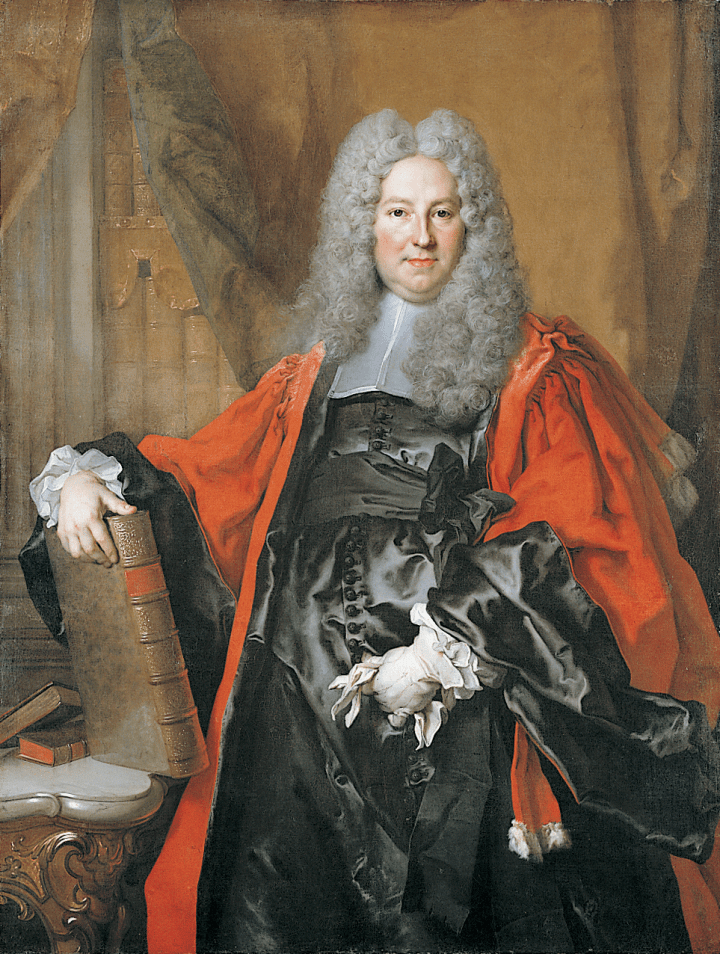
Nicolas de Largillière, Portrait of Barthélemy-Jean-Claude Pupil, 1729
(San Diego: Timken Museum)
◊ ◊ ◊ ◊ ◊
From the Timken:
Kimberly Chrisman-Campbell
Bigwigs: Hair, Fashion, and Power in the 18th-Century Portrait
Timken Museum of Art, San Diego, Monday, 10am, 9 June 2014
Conference | Dresden’s Academy of Fine Arts Turns 250
If only more conferences included World Cup parties. . . . As noted H-ArtHist:
„Die Geister, die ich rief…“ 250 Jahre Kunstakademie Dresden
Dresden, 12–13 June 2014
Die Kunstakademie Dresden feiert in diesem Jahr ihr 250-jähriges Bestehen. Dieses ist Anlass, einen Blick in die Vergangenheit zu werfen und damit Überlegungen zu Gegenwart und Zukunft der Hochschule anzustoßen. Die zentrale Ausstellung geradezu momentan, ein essayistisch konzipierter Parcours durch die Geschichte der Hochschule, wird abgerundet durch eine Tagung, die einflussreiche Künstler- und Lehrerpersönlichkeiten wie Christian Ludwig von Hagedorn, Giovanni Casanova oder Gotthardt Kuehl ins Zentrum rückt. Zur Sprache kommen die Entwicklung der Akademieausstellungen und die Geschmacksbildung im ausgehenden 18. Jahrhundert ebenso wie kulturpolitische Richtungsdebatten im 20. Jahrhundert etwa am Beispiel des Malers und Rektors Richard Müller.
Organisiert von Bettina Uppenkamp und Dietmar Rübel
◊ ◊ ◊ ◊ ◊
D O N N E R S T A G , 1 2 J U N I 2 0 1 4
17.00 (Oktogon), Führung durch die Ausstellung geradezu momentan mit Susanne Greinke und Dietmar Rübel (HfBK Dresden)
19.00 (Aktsaal) Begrüßung durch Bettina Uppenkamp (Dresden)
19.15 Roland Kanz (Bonn), Die frühe Kunstakademie als Soziotop
21.00 Grillen und WM-Party
F R E I T A G , 1 3 J U N I 2 0 1 4
9.30 Matthias Flügge (Dresden), Geist und Geister. Zur aktuellen Situation der Kunstakademien
10.00 Bärbel Kovalevski (Berlin), „Es ist eine Ehre sich auf dem Niveau der großen Künstler zu sehen.“ (Rosina de Gasc 1768) – Künstlerinnen an der Kunstakademie Dresden
10.45 Dirk Syndram (Dresden), Christian Ludwig von Hagedorn oder von der Nützlichkeit der Kunst
11.30 Kaffeepause
11.45 Anke Fröhlich (Dresden), Altargemälde, Aktstudien, Kurfürstenporträts, Porzellanentwürfe und Genreszenen. Johann Eleazar Zeissigs, genannt Schenau an der Akademie in Dresden
12.30 Mittagspause
14.00 Harald Marx (Dresden), Reflexe der frühen akademischen Kunstausstellungen in der zeitgenössischen Presse
14.45 Jürgen Müller (Dresden), Von den Strategien der Moderne – Gotthardt Kuehl und der deutsche Impressionismus
15.30 Stephan Weber (Dresden), Überzeugungstäter und Mitläufer. Die Professoren der Dresdener Kunstakademie im Schatten des Nationalsozialismus
16.15 Kaffeepause
17.00 (Oktogon), Richard Müller zwischen Kunst und Politik. Diskussion mit Ralf Lehmann; Bettina Uppenkamp und Dietmar Rübel in der Ausstellung geradezu momentan.










leave a comment