Study Day | Objects From Abroad: The Life of Exotic Goods
Objects From Abroad: The Life of Exotic Goods
in France and the United States (18th-20th Centuries)
New York University, 25 April 2013
Register by 19 April 2013
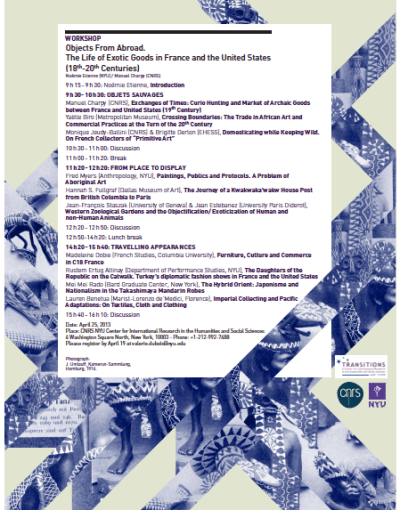 9:15 Noémie Etienne, Introduction
9:30 O B J E T S S A U V A G E S
• Manuel Charpy (CNRS), Exchanges of Times: Curio Hunting and Market of Archaic Goodsbetween France and United States in the 19th Century
• Yaëlle Biro (Metropolitan Museum), Crossing Boundaries: The Trade in African Art and Commercial Practices at the Turn of the 20th Century
• Monique Jeudy-Ballini (CNRS) and Brigitte Derlon (EHESS), Domesticating While Keeping Wild: On French Collectors of ‘Primitive Art’
11:00 Break
11:20 F R O M P L A C E T O D I S P L A Y
• Fred Myers (Anthropology, NYU), Paintings, Publics, and Protocols: A Problem of Aboriginal Art
• Hannah S. Fullgraf (Dallas Museum of Art), The Journey of a Kwakwaka’wakw House Post from British Columbia to Paris
• Jean-François Staszak (University of Geneva) and Jean Estebanez (University Paris Diderot), Western Zoological Gardens and the Objectification / Exoticization of Human and Non-Human Animals
12:50 Lunch break
14:20 T R A V E L L I N G A P P E A R A N C E S
• Madeleine Dobie (French Studies, Columbia University), Furniture, Culture, and Commerce in 18th-Century France
• Rustem Ertug Altinay (Department of Performance Studies, NYU), The Daughters of the Republic on the Catwalk: Turkey’s Diplomatic Fashion Shows in France and the United States
• Mei Mei Rado (Bard Graduate Center, New York), The Hybrid Orient: Japonisme and Nationalism in the Takashimaya Mandarin Robes
• Lauren Benetua (Marist-Lorenzo de’Medici, Florence), Imperial Collecting and Pacific Adaptations: On Textiles, Cloth, and Clothing
◊ ◊ ◊ ◊ ◊
NYU Center for International Research in the Humanities and Social Sciences, 4 Washington Square North, New York, 10003 – Phone: +1-212-992-7488. Please register by April 19 at valerie.dubois@nyu.edu.
Exhibition | Mexican Art at the Louvre
From The Louvre:
Le Mexique au Louvre: Chefs-d’oeuvre de la Nouvelle Espagne, XVIIe et XVIIIe siècles
Musée du Louvre, Paris, 7 March — 3 June 2013
Curated by Guillaume Kientz and Jonathan Brown
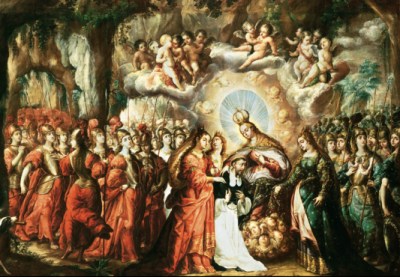
Cristobal de Villalpando, La Lactacion de Santo Domingo, © Rafael Doniz / Conaculta-INAHSinafo-Mex.
Mexican art, an area in which the Louvre’s Hispanic collection is intended to expand, will be showcased at the museum this spring. A selection of some ten of the finest works from this ‘sister’ school will be exhibited among the Spanish paintings. Among others, the monumental ‘Zurbaranesque’ work of José Juárez, the Baroque dynamism of Cristóbal Villalpando and the softness and delicacy of Rodríguez Juárez will introduce visitors to the many facets of New World art during this period and give them an understanding of its close yet independent relationship with Spanish art.
Although represented in national museums, Latin American art remains little known in France. The book that accompanies this exhibition, based on inventory work conducted by the Louvre and the French National Institute of Art History (the BAILA project), provides an overview of the major Latin American works in French museums, and explores the origins and evolution of this artistic school.
The Louvre’s press release (14 February 2013) is available here»
New Title | The Books That Shaped Art History
From Thames & Hudson:
Richard Shone and John-Paul Stonard, eds., The Books That Shaped Art History: From Gombrich and Greenberg to Alpers and Krauss (London: Thames & Hudson, 2013), 268 pages, ISBN: 978-0500238950, £25 /$35.
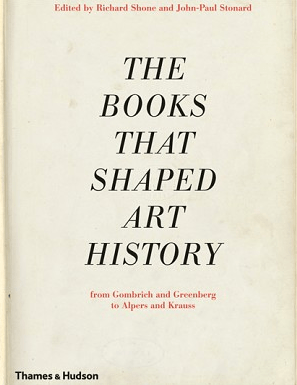 It provides an invaluable roadmap of the field by reassessing the impact of several of the most important works of art history. Each chapter, focusing on a single title, is written by a leading art historian, curator or one of the promising scholars of today, presenting a varied and invaluable overview
of the history of art, told through its seminal texts.
The sixteen books include Nikolaus Pevsner’s gospel of Modernism, Pioneers of the Modern Movement, Alfred Barr’s now legendary monograph on Matisse, E.H. Gombrich’s Art and Illusion, Clement Greenberg’s Art and Culture, which had a seismic impact when it was published in 1961, and Rosalind Krauss’s The Originality of the Avant-Garde and Other Modernist Myths, which introduced structuralist and poststructuralist thinking into art historical study.
Each chapter – with writers including John Elderfield, Boris Groys, Susie Nash and Richard Verdi – analyses a single major book, setting out its premises and argument and mapping the intellectual development of its author, discussing its position within the field of art history, and looking at its significance in the context both of its initial reception and its legacy. An introduction by John-Paul Stonard explores how art history has been forged by these outstanding contributions, as well as by the dialogues and ruptures between them. Supplementary documentation summarises the achievements of each art historian and provides a detailed publication history of their texts, with suggestions for further reading.
Richard Shone is Editor of The Burlington Magazine. He is the author of a number of books on French and British art, including Bloomsbury Portraits, The Post-Impressionists, Walter Sickert and Sisley. He contributed to the exhibition catalogue for ‘Sensation’ at London’s Royal Academy and organised ‘The Art of Bloomsbury’ for the Tate Gallery.
John-Paul Stonard is an art historian and former Contributing Editor of The Burlington Magazine. His book Fault Lines: Art in Germany 1945–55 was published in 2007. He has worked as a Visiting Lecturer at the Courtauld Institute of Art, and from 2010–11 was a Senior Fellow at the National Gallery of Art, Washington, DC. He has published widely on modern and contemporary German and British art, and is a regular contributor to The Burlington Magazine, the Times Literary Supplement and Artforum.
Call for Papers | Gall and Guts: Entrails and Digestion
Gall and Guts: Entrails and Digestion in the Long Eighteenth Century
Paris, 21-22 March 2014
Proposals due by 31 May 2013 (final papers due 15 July 2013)
In his recent book, Versailles, l’ordre et le chaos, Michel Jeanneret describes the representations of Molière’s Monsieur de Pourceaugnac. The play wittily mixes the underbelly and the underworld: Parisian purse-snatchers confront provincial narrow-mindedness in a farce whose emblems are the clyster and the “obscure and polluted area of the entrails.” The farcical catharsis is enabled by the purgation of Pourceaugnac’s allegedly diseased body. Jeanneret underlines the close relation between this play and Le Malade imaginaire (The Imaginary Invalid), another of Molière’s comedies in which the bowels and their evacuation are at the very centre of the scatological farce. At Versailles, Le Malade imaginaire was played in front of the setting of the artificial cave of Thetis and Jeanneret sees the valetudinarian obsessed with his entrails as being echoed by the man-made grotto “which opens onto marine depths, buried in the bowels of the earth, imitating the labyrinth of the viscera.”
The representation of the entrails, the belly and the bowels is not limited to the anatomical descriptions that have influenced the caricatures and the apprehension of the body in the eighteenth century (Mandressi, 2003). The bodily functions associated with the bowels — digestion and evacuation — were used as metaphors throughout the period. They are also linked to medical practices that rely on entrails for diagnosis and treatment. The examination of excrement or the frequent prescription of enemas and emetics also confirm the central position of the belly in the perception of the body. Untainted by metaphors, patients’ narratives and case-descriptions underline the materiality of digestion. (more…)
Gale Announces New Platform, Artemis
Press release from Gale (2 April 2013) . . .
Gale, part of Cengage Learning and a leading publisher of research and reference resources for libraries, schools and businesses, today announced plans to unify, over the coming years, its extensive digital humanities collections on one state-of-the-art platform, creating the world’s largest online curated primary source and literary collection. The new research experience, Artemis, named for the Greek goddess who symbolizes new ideas, discovery, power and “the hunt,” will enable researchers to make connections and realize relationships among content that has never before been possible.
“Artemis represents a significant investment in our products and new technology. No other publisher offers this combination of rich full-text content, metadata, and intuitive subject indexing – all enhanced by revolutionary work-flow and analytical technology that breathes new life into the study of the humanities,” said Frank Menchaca, executive vice president, research solutions, Cengage Learning. “We are creating the most valuable curated digital humanities collection in the world through this integrated research environment.”
Artemis moves beyond the limitations of simple search and retrieve – it offers users the ability to search across both primary and secondary materials as well as different subjects and genres. It also adds term clusters and term-graphing tools to allow users to conduct new kinds of analysis on familiar content sets, thematic subject indexing to aid in content discovery, and interface updates that conform to today’s design standards, including sharing and collaboration tools. Overall, Artemis will transform the way students and researchers explore material, giving them the ability to challenge assumptions and create new theories and academic debate. (more…)
Exhibition | Napoleon and Europe
As noted at Art Daily:
Napoléon et l’Europe
Musée de l’Armée, Hôtel National des Invalides, Paris, 27 March — 14 July 2013
Curated by Émilie Robbe
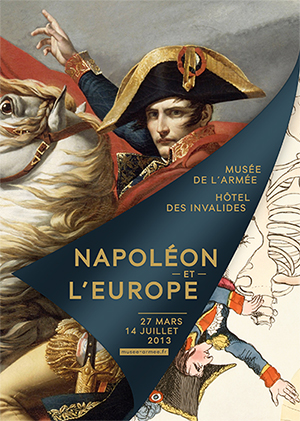 Napoleon Bonaparte (1769-1821) had a deep and lasting effect on the history of Europe, despite remaining in power for a mere fifteen years. The exhibition Napoléon et l’Europe [Napoleon and Europe], at the Musée de l’Armée from 27 March to the 14 July 2013, bears witness to Napoleon Bonaparte’s European ambitions between 1793 and 1815. The visit reveals his ambitious policies for expansion in Europe and the subsequent reactions by the various European countries, whether in support of, or against, such policies. The exhibition also highlights the consequences and the deep scars that such a conquest left on Europe.
Far removed from stereotype and biased opinion, this exhibition aims to present an influential episode in French and European history in a different manner; by combining the diverse, often-times opposing viewpoints of Napoleon’s contemporaries, on themes such as war, politics, diplomacy, the government, currency, propaganda and the arts… In order to recount or retrace this chapter of history, 250 artworks, objects and documents have been gathered together, on loan from fifty or so European museums and institutions, with more than half of these coming from outside France. Since the retrospective exhibition Napoléon held in 1969 at the Grand Palais, Paris, no other exhibition of this scope and ambition has been organized in France.
Conquest and Resistance
The entire exhibition is punctuated by or structured around two viewpoints that both question and mirror the other: the progressive and concrete creation of Napoleon’s Empire on the one hand, and the reactions of certain peoples and the main European powers to this direct quest for domination, on the other hand. From alliances to battles, from treaties to reform, this incredibly rapid succession of events is recounted in chronological fashion and explained in context. (more…)
Berlusconi’s Interventions Reversed
As reported by the Agence France-Presse (AFP):

AFP Photo by Andreas Solaro
An ancient statue of Mars has lost its fake penis and his counterpart Venus her hands, in the reversal of cosmetic changes ordered by Italy’s ex-prime minister Silvio Berlusconi, a newspaper reported Wednesday.
In 2010 Berlusconi decided the two marble statues adorning the official residence of the prime minister were ‘incomplete’ and ordered a swift intervention to remedy their shortcomings. In a move which horrified the art world, Mars was touched up with a fake penis, shield, hand and the point of his sword and Venus her two hands. The 70,000 euro ($90,000) cost of the changes also sparked ridicule and anger
from the opposition. . .
The full article is available here»
This Week in Cleveland
From the Editor
For those of you who will be in Cleveland this week for ASECS, these two items might be of interest: The Dunham Tavern Museum and Mitsuko Uchida’s performance of Mozart with the Cleveland Orchestra.
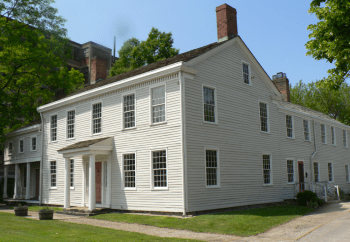
Dunham Tavern, Cleveland, Ohio (Photo: Wikimedia Commons)
Admittedly, I’m an easy sell for house museums. Built in 1824, the Dunham House is Cleveland’s oldest building. Rufus and Jane Pratt Dunham arrived in 1819 from Massachusetts, farming fourteen acres in the Western Reserve (previously known as ‘New Connecticut’, the region had been claimed by Connecticut as early as 1662 and finally turned over to the Connecticut Land Company only in 1800). Positioned on a stagecoach route, the house also functioned as a tavern during the middle decades of the nineteenth century. As for the history of the museum, it’s entirely typical of this sort of site: preservation plans and renovations took place in the 1930s; it became a Cleveland Landmark in 1973 and was added to the National Register of Historic Places in 1974. It seems to be open only Wednesday and Sunday afternoons.
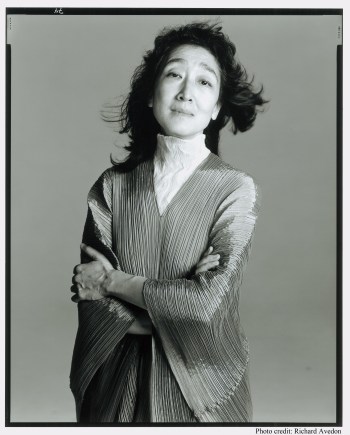
Richard Avedon, Mitsuko Uchida
British pianist and conductor Mitsuko Uchida has garnered an impressive array of critical recognition within the past few years: Dame Commander of the British Empire, an honorary doctorate from the University of Oxford, and a Grammy award. It’s especially fitting to hear her in Cleveland, for she served as artist-in-residence with the city’s Orchestra from 2002 to 2007, and her 2011 Grammy came in connection with her performance of Mozart also in Cleveland. She performs Mozart’s Piano Concerto No. 17 in G major, K453; Divertimento in B-flat major, K137; and Piano Concerto No. 25 in C major, K503 — April 4-6, Thursday, Friday, and Saturday evenings at 8:00.
Exhibition | Marquis de Marigny
I’m afraid this is another exhibition that slipped past me, but I include it here nonetheless. The catalogue is, at least, still available from Artbooks.com. -CH
◊ ◊ ◊ ◊ ◊
From the press release:
Le Naturel Exalté: Marigny, Ministre des Arts au Château de Menars
Expo 41, Loir-et-Cher, Blois, 30 June — 16 September 2012
 Ambitieux, fier, ombrageux : les qualificatifs ne manquent pas pour définir Abel-François Poisson de Vandières, marquis de Marigny et seigneur de Menars (1727-1781). Son destin, tracé à la plume de l’exception, en fait foi. Il eut la chance d’être le frère cadet de la maîtresse de Louis XV, titrée marquise de Pompadour, qui l’introduisit dès son adolescence à la cour du roi. À vingt-quatre ans, il est nommé directeur général des Bâtiments du roi, arts et manufactures. Un voyage en Italie en compagnie d’artistes et d’architectes engagés dans les débats esthétiques contemporains fut le déclic vers l’émancipation : Marigny commença alors à se constituer une collection d’exception. Sa galerie de statues était la 1ère de France après celle de Louis XV. Il dirigea surtout la politique des arts du royaume pendant 30 ans, laissant à l’humanité des chefs-d’oeuvre tels que la place de la Concorde, l’École Militaire, les jardins des ChampsÉlysées ou le Panthéon de Paris.
L’exposition Le naturel exalté. Marigny, ministre des arts au château de Menars, qui sera présentée à Expo 41, du 30 juin au 16 septembre 2012, est la 1ère rétrospective mondiale consacrée au frère de la Pompadour et ministre de Louis XV. Le visiteur découvrira le fonds exceptionnel des archives départementales de Loir-et-Cher, encore jamais dévoilé au public, constitué de centaines de dessins représentant l’aménagement des jardins du château de Menars en Loir-et-Cher, plusieurs tableaux majeurs en provenance du musée du Louvre ou du château de Versailles, ainsi que des oeuvres issues de la collection personnelle de Marigny. . .
◊ ◊ ◊ ◊ ◊
Christophe Morin, ed., Le Naturel Exalté: Marigny, Ministre des Arts au Château de Menars (Milan: Silvana, 2012), 192 pages, ISBN: 978-8836622658, €28 / $55.
 Abel-François Poisson (1727-1784), marquis de Vandières puis de Marigny est plus que le frère de la marquise de Pompadour. Directeur général des Bâtiments du roi à compter de 1751, il a rang de ministre et participe à la vie de cour autour de Louis XV. Courtisan zélé, il conserve ses fonctions au-delà même de la disparition de sa soeur, jusqu’en 1773. Il a toute la reconnaissance du roi qui lui offre un somptueux ” meuble ” pour décorer son hôtel de la rue Saint-Thomas-du-Louvre, ainsi que de nombreuses sculptures qui viendront embellir son château de Menars.
Le présent ouvrage rappelle, grâce aux contributions des meilleurs spécialistes de la question, la brillante carrière d’un grand commis de l’Etat au service de Louis XV. Pour la première fois, une exposition monographique sur le marquis de Marigny rassemble des oeuvres qui évoquent la carrière de l’homme public dont le rôle fut éminent dans la transformation radicale du goût au milieu du XVIIIe siècle.
L’autre versant de cette entreprise, tout aussi inédit, regarde le seigneur de Menars, ses collections et sa vie en Val de Loire. Ce ne sont pas moins de 90 dessins d’architecture qui sont présentés ici. Des oeuvres parfois majeures, parfois émouvantes, commandées par Marigny aux plus grands artistes du temps pour décorer le parc de sa maison de campagne. Grand seigneur sur ses terres, il aménage en effet le château de Menars, à sa mesure, réglant les moindres détails de son nouveau jardin anglo-chinois.
Symposium | Design and Mobility
From Parsons The New School for Design:
Design and Mobility: The 22nd Annual Parsons/Cooper-Hewitt Symposium
on the Decorative Arts and Design
Parsons The New School for Design, New York, 26-27 April 2013
A keynote address by Professor Edward Cooke of Yale University will be delivered and papers delivered by graduate students and faculty from universities around the US and UK. Free and open to the public.
This year’s theme is mobility which has become one of the defining traits of the age: new modes of living and transportation have created increasingly mobile lifestyles, aided by mobile communications networks, cultural products can move and spread across the globe with ease, and changing climate conditions are forcing relocations and rethinking of building patterns. On the individual scale, designers have worked with transformable and reusable products, or to help make individuals more mobile. The symposium will explore various aspects of mobility in the decorative arts and design — on macro and micro scales, from literal to metaphoric perspectives.
Sponsored by The MA Program in the History of Decorative Arts and Design, School of Art and Design History and Theory, Parsons The New School for Design in conjunction with: Cooper-Hewitt, National Design Museum, Smithsonian Institution with the additional support of: donations to the Catherine Hoover Voorsanger memorial fund.
◊ ◊ ◊ ◊ ◊
F R I D A Y , 2 6 A P R I L 2 0 1 3
5:30 The Catherine Hoover Voorsanger Keynote Address
Edward Cooke (Yale University), Design and Mobility
S A T U R D A Y , 2 7 A P R I L 2 0 1 3
11:00 Session I
• Iris Moon (Massachusetts Institute of Technology), The Cabinet de platine (1800-1804): Monumentality, Materiality, and the Mobile Interior at the End of the Enlightenment
• Penny Wolfson (Parsons The New School for Design/Cooper-Hewitt, National Design Museum), The Wheelchair in Post-Civil War America
• Rebecca Gross (Parsons The New School for Design/Cooper-Hewitt, National Design Museum), Holiday Magazine: Paving the Postwar American Dream Road with Patriotism
2:30 Session II
• Jonathan Patkowski (City University of New York Graduate Center), Transformation, Reproduction, Reuse: The Reception of Asian Silks in Late Medieval Italy
• Neil Malcolm Douglas Ewins (University of Sunderland), UK Ceramic Manufacturing Strategy, Marketing, and Design in Response to Globalization, ca. 1990-2010
• Elise Hodson (York University), ‘Born and Raised on Kickstarter’: The Near Immaculate Conception of a Smart Watch Named Pebble










leave a comment