Exhibition | Thomas Jefferson: The Private Man
Thomas Jefferson was born 274 years ago today (13 April). From the New-York Historical Society:
Thomas Jefferson: The Private Man
From the Collections of the Massachusetts Historical Society
Massachusetts Historical Society, Boston, 29 January — 26 May 2016
New-York Historical Society, 7 April — 16 July 2017
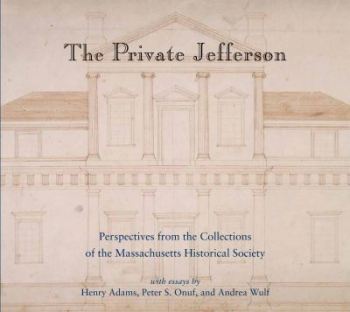 Thomas Jefferson’s role as a private citizen is as defining as his personae as founder, president, and political standard-bearer. A gifted writer and political philosopher, Jefferson was also an accomplished gardener, farmer, and architect. Thomas Jefferson: The Private Man provides a glimpse of his life outside the public sphere through the iconic documents he created. Among the 36 documents and artifacts on display from the collection of the Massachusetts Historical Society are Jefferson’s garden book, his last letter to John Adams, manuscript leafs from his Notes on the State of Virginia, early drawings of Monticello, and a copy of the Declaration of Independence in Jefferson’s hand.
Distributed by The University of Virginia Press:
Ondine LeBlanc, ed., with essays by Peter S. Onuf, Andrea Wulf, and Henry Adams, The Private Jefferson: Perspectives from the Collections of the Massachusetts Historical Society (Boston: Massachusetts Historical Society, 2016), 224 pages, ISBN: 978 19365 20084 (hardcover), $60.00 / ISBN: 978 19365 20091 (paperback), $35.
Exhibition | Taming Traders: Origins of the New York Stock Exchange
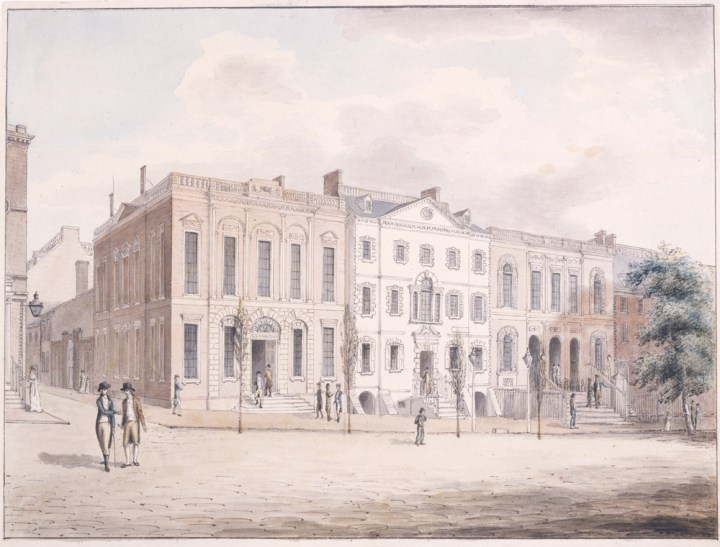
Archibald Robertson, View up Wall Street, ca. 1798; watercolor, black ink, and graphite on paper
(New-York Historical Society)
◊ ◊ ◊ ◊ ◊
Now on view at the New-York Historical Society:
Taming Traders: Origins of the New York Stock Exchange
New York-Historical Society, 31 March — 11 June 2017
Curated by Michael Ryan
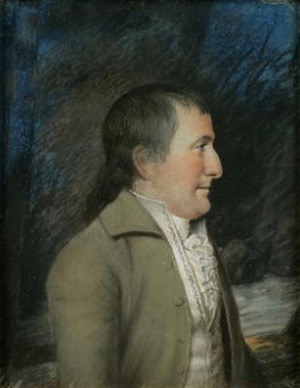
James Sharples Sr., Portrait of Leonard Bleecker, ca. 1796–1801; pastel on paper (New-York Historical Society).
On May 17, 1792―under a buttonwood tree, the site of street trading at the time―24 stock brokers signed an agreement that regulated aspects of trading, thus creating the New York Stock Exchange. Before then, in the early days of the new republic when the United States was deeply in debt, it was Alexander Hamilton’s job as the first Secretary of the Treasury to persuade his colleagues in the first Congress that debt could be a beneficial commodity that could be sold and traded. But rampant speculation in war debt and bank stock turned to financial panic and provided the cautionary backdrop for the drafting of the Buttonwood Agreement in May 1792, which would change global commerce forever.
On the 225th anniversary of the New York Stock Exchange, Taming Traders: Origins of the New York Stock Exchange charts the development of this crucial trading institution. Objects on display include early bond and stock certificates, correspondence, portraits of traders, and views of Wall Street and the Tontine Coffee House. Also on view will be video clips from New-York Historical’s major oral history project, Remembering Wall Street, 1950–1980. The exhibition is curated by Dr. Michael Ryan, New-York Historical vice president and director of the Patricia D. Klingenstein Library.
Conference | Winckelmann and Switzerland
From H-ArtHist, with the program available as a PDF file here:
Winckelmann und die Schweiz
Schweizerisches Institut für Kunstwissenschaft, Zurich, 18–19 May 2017
Registration due by 12 May 2017
 1778 erschien in Zürich bei Orell, Gessner, Füesslin und Compagnie die von Leonhard Usteri herausgegebene Sammlung «Winckelmanns Briefe an seine Freunde in der Schweiz», ein sprechendes Zeugnis der in den 1750er Jahren begründeten und stetig bedeutender werdenden Beziehungen zwischen Johann Joachim Winckelmann und einzelnen Schweizer Persönlichkeiten, namentlich Johann Caspar Füssli, Heinrich Füssli, Salomon Gessner, Christian von Mechel, Leonhard Usteri und Paul Usteri.
Winckelmann, wie viele europäische Intellektuelle des 18. Jahrhunderts ein begeisterter Verehrer der «freien» eidgenössischen Schweiz, plante wiederholt eine Reise in das Alpenland mit römischer Vergangenheit, doch am Ende hat er die Schweiz nie besucht. Dessen ungeachtet waren sein Werk und seine Person nicht nur in Zürich anerkannt. Anlass zu gegenseitiger Wertschätzung gaben jenseits des brieflichen Austausches auch persönliche Begegnungen wie die mit Angelika Kauffmann; weitere Kontakte schufen Winckelmanns Führungen für Schweizer Reisende in Rom, die im Frühjahr 1761 in seinem «Sendschreiben» für Leonhard Usteri ihre Systematisierung fanden und durch Unterweisungen für Heinrich Füssli, Paul Usteri und Christian von Mechel ergänzt werden sollten. Eine Erweiterung des Bekanntenkreises brachten zudem gemeinsam unternommene Reisen—so mit Johann Caspar Füssli nach Neapel—, verlegerische Projekte wie der zunächst erwogene Druck der «Geschichte der Kunst» in der Schweiz und natürlich die wechselseitige Rezeption der Werke.
Das vom Schweizerischen Institut für Kunstwissenschaft (SIK-ISEA) in Zusammenarbeit mit der Winckelmann-Gesellschaft, Stendal, und dem Kunsthistorischen Seminar der Universität Basel organisierte Kolloquium hat zum Ziel, die bislang wenig erforschten Kontakte zwischen Winckelmann und Schweizer Persönlichkeiten fächerübergreifend und auf der Basis aktueller archivalischer Recherchen zu beleuchten sowie die Aufnahme seines Werkes durch Schweizer Intellektuelle und Künstler zu untersuchen. In den Blick rücken auch die Schweiz als Plattform der Kulturvermittlung in ihrer Bedeutung für Winckelmann sowie der Ästhetik-Diskurs in der Schweiz, Deutschland und Italien nebst der Antikenrezeption in der Schweiz im 18. Jahrhundert.
Die Teilnahme am Kolloquium ist kostenlos. Die Platzzahl ist beschränkt. Bitte melden Sie sich an bis am 12. Mai 2017 (sik@sik-isea.ch).
In der Bibliothek Werner Oechslin wird am 20. Mai 2017 eine Ausstellung zu Winckelmann eröffnet, die in rund 100 Exponaten dessen Entwicklung vom Bibliothekar zur Gründerfigur der deutschen Kunstwissenschaft herausstellt. In besonderer Weise thematisiert wird dabei der Kontrast zwischen der Figur des Antiquars, der sich gemäss Caylus der «Physique» der Kunstgegenstände bis in alle Verästelungen hinein widmen soll, und dem nach Höherem strebenden, idealisch denkenden Winckelmann; darauf beziehen sich sowohl die Vorstellung des Klassischen wie ein ethisch begründeter Schönheitsbegriff mit Wirkungen bis in unsere Zeit. Die Ausstellung dauert bis Ende 2017.
D O N N E R S T A G , 1 8 M A I 2 0 1 7
13.30 Begrüssungsworte: Roger Fayet (Direktor, SIK-ISEA), Max Kunze (Präsident der Winckelmann-Gesellschaft, Stendal), Andreas Beyer (Kunsthistorisches Seminar der Universität Basel)
13.45 Die Schweiz als neues Arkadien
Moderation: Roger Fayet (Direktor, SIK-ISEA)
• Andreas Beyer (Kunsthistorisches Seminar der Universität Basel), Arkadische Schweiz
• Volker Riedel (Mitglied des Kuratoriums, Winckelmann-Gesellschaft, Stendal), Winckelmann und Gessner: Zur Problematik der Idylle im 18. Jahrhundert
• Matthias Oberli (Abteilungsleiter Kunstdokumentation, SIK-ISEA), «Merckwürdige Überbleibsel» und «stattliche Antiquitäten»: Zum Antikenverständnis in der Schweiz im Zeitalter Winckelmanns
15.15 Kaffeepause
15.45 Freundschaften und Netzwerke
Moderation: Gérard Seiterle (ehemals Direktor des Museums zu Allerheiligen, Schaffhausen)
• Max Kunze (Präsident der Winckelmann-Gesellschaft, Stendal), Antiken-Empfehlungen: Winckelmanns Schweizer Freunde in Rom
• Elisabeth Décultot (Humboldt-Professur für neuzeitliche Schriftkultur und europäischen Wissenstransfer, Germanistisches Institut, Martin-Luther-Universität Halle-Wittenberg), Christian von Mechel: Zu einer Schlüsselfigur von Winckelmanns schweizerischem Netzwerk
• Christoph Frank (Istituto di storia e teoria dell’arte e dell’architettura (ISA), Università della Svizzera italiana), Winckelmann und Basel: Christian von Mechel und Johann Friedrich Reiffenstein
17.15 Aperitif
18.15 Abendvortrag
• Marcel Baumgartner (em. Ordinarius für Kunstgeschichte, Justus-Liebig-Universität, Giessen), Kunstgeschichten: Winckelmann—Piranesi—Caylus—Herder
F R E I T A G , 1 9 M A I 2 0 1 7
9.30 Die Künste in der Schweiz
Moderation: Matthias Fischer (Kurator Kunst- und Grafiksammlung, Museum zu Allerheiligen, Schaffhausen)
• Gisela Bungarten (Stellvertretende Direktion und Projektmanagement, Museumslandschaft Hessen – Kassel), Füssli und Winckelmann: Wechselvolle Beziehungen in Zürich, Rom und London
• Dieter Ulrich (lic. phil., freischaffender Kunsthistoriker), «Hohe Griechische Einfalt bezeichnete seine Wercke und hauchte Leben in seinen Marmor.»
• Michael Thimann (Kunstgeschichtliches Seminar und Kunstsammlung, Georg-August-Universität Göttingen), Schweizergeschichte statt homerische Helden. Antiklassizistische Bildkonzepte um 1800
11.00 Kaffeepause
11.30 Konzepte und Strategien
Moderation: Adelheid Müller (wissenschaftliche Mitarbeiterin am Projekt «Winckelmann-Ausgabe» der Akademie der Wissen-schaften und der Literatur, Mainz)
• Eva Kocziszky (Institutsdirektorin, Pannonische Universität Veszprém, Institut für Germanistik und Translations-wissenschaft), Die Allegorie bei Winckelmann, Lavater und Füssli
• Johannes Rössler (Institut für Kunstgeschichte der Universität Bern), Kunst und Wissenstransfer im Zeichen Winckelmanns 1795–1830: Das Schweizer Netzwerk von Heinrich Keller (Rom), Heinrich Meyer (Weimar) und Johann Jakob Horner (Zürich)
• Hans Christian Hönes (Forschungsgruppe «Bilderfahrzeuge», The Warburg Institute, London), Die Sümpfe der Schweiz: Klimatheorie und Ursprungssuchen
13.00 Mittagspause
14.00 Formen der Rezeption
Moderation: Andreas Beyer (Kunsthistorisches Seminar der Universität Basel)
• Bettina Baumgärtel (Leiterin der Gemäldegalerie, Museum Kunstpalast Düsseldorf), Die vielen Gesichter des Winckelmann: Die Wandlungen des Winckelmann-Bildes von Angelika Kauffmann
• Adelheid Müller (wissenschaftliche Mitarbeiterin am Projekt «Winckelmann-Ausgabe» der Akademie der Wissenschaften und der Literatur, Mainz), «Flammenworte der Begeisterung» oder: Bündnisse, gefühlt und gelebt. Friederike Brun, Winckelmann und die Schweizer Freunde
• Harald Tausch (Institut für Germanistik / Arbeitsbereich Literatur, Justus-Liebig-Universität Giessen), Kreis ohne Meister: Kleist, Winckelmann und die Schweiz
15.30 Kaffeepause
16.00 Schlussbetrachtungen
• Werner Oechslin (Stiftung Bibliothek Werner Oechslin, Einsiedeln), «…zuerst unter dem griechischen Himmel…»
16.45 Aperitif
New Book | Jean-Baptiste Descamps
From Brepols:
Gaëtane Maës, De l’expertise artistique à la vulgarisation au siècle des Lumières: Jean-Baptiste Descamps (1715–1791) et la peinture flamande, hollandaise et allemande (Turnhout: Brepols Publishers, 2016), 608 pages, ISBN: 978 2503 567709, 125€.
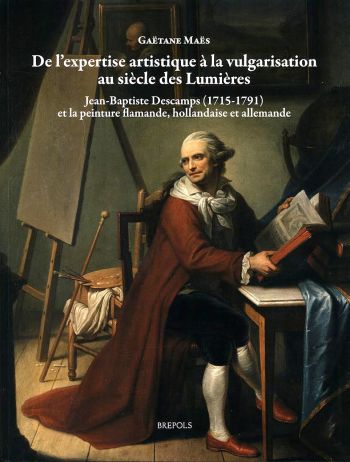 Peintre flamand peu connu aujourd’hui, Jean-Baptiste Descamps (1715–1791) demeure important par les livres qu’il a publiés de son vivant. Entre 1753 et 1763, paraissent ainsi les quatre volumes de son recueil intitulé La vie des peintres flamands, allemands et hollandois, suivis en 1769 de la publication d’un Voyage pittoresque de la Flandre et du Brabant. Ces textes ont longtemps été négligés car, contrairement aux modèles représentés par Giorgio Vasari et Karel van Mander, ils sont considérés comme de simples compilations. Consacrer une étude aux ouvrages de Descamps vise, par conséquent, à remettre en question ce postulat en soulignant les réels enjeux intellectuels que revêt l’écriture de ce polygraphe. Par ses livres, Descamps a, en effet, su se construire une visibilité et une légitimité d’expert de la peinture septentrionale, qui lui ont ouvert les portes de l’Académie royale de Peinture et de Sculpture à Paris en 1764.
Dans ce contexte, l’enquête monographique sert ici de simple fil conducteur à des questionnements variés sur la France des Lumières, et plus particulièrement sur le rapport entre Paris et la province, entre les grands et petits maîtres, entre la littérature érudite et les écrits de vulgarisation. L’étude s’attache aussi à définir la place des Arts dans l’espace public ouvert par le développement des expositions, du marché de l’art et du tourisme culturel. Elle met enfin l’accent sur l’attraction puissante qu’ont exercée les œuvres flamandes, hollandaises et allemandes sur les collectionneurs du XVIIIe siècle.
Cette synthèse sera prochainement suivie de la réédition critique du Voyage pittoresque de la Flandre et du Brabant, qui a été le premier guide publié en France avec l’intention explicite de proposer aux artistes et amateurs d’art une autre destination que l’Italie.
Gaetane Maes est Maître de conférences habilitée à diriger des recherches, et elle enseigne l’Histoire de l’Art des Temps modernes à l’université de Lille. Ses recherches s’attachent autant à l’art des anciens Pays-Bas (Flandre et Hollande) qu’à l’art français, afin de les envisager dans un esprit de décloisonnement. Avec Jan Blanc, elle a notamment publié Les échanges artistiques entre la France et les anciens Pays-Bas. 1482–1814 (Brepols, 2010). Elle est également l’auteur de nombreux articles sur l’historiographie des peintres et les fonctions sociales de l’art.
T A B L E D E S M A T I E R E S
Introduction
1ère partie. La vie et la carrière d’un peintre flamand en France
1 Entre vie mythique et vie réelle
2 Du peintre à l’entrepreneur : une stratégie de carrière réfléchie
3 La gloire ou l’argent ?
Conclusion de la 1ère partie
2e partie. L’entreprise éditoriale de La vie des peintres
4 Le peintre-écrivain au XVIIIe siècle: entre mythe et concurrence
5 Le livre comme objet social
6 Méthode de travail et documentation
Conclusion de la 2e partie
3e partie. Le sens de La vie des peintres : une théorie implicite ?
7 Un manuel pour connaisseurs
8 Le commerce contre l’histoire ou l’impossible union
9 La pensée esthétique de Descamps
10 Les goûts artistiques de Descamps
Conclusion de la 3e partie
4e partie. Le Voyage pittoresque de la Flandre et du Brabant
11 L’élaboration d’un best-seller
12 Le contenu du Voyage pittoresque
13 L’art et son public ou le Voyage pittoresque comme préfiguration de la notion de patrimoine
Conclusion de la 4e partie
Conclusion générale
Annexes
Bibliographie
Liste des illustrations
Crédits photographiques
Index des noms propres
Planches en couleurs
Conference | Diplomatic Presents between China and Europe
From the provisional programme:
Les présents diplomatiques entre la Chine et l’Europe aux XVIIe–XVIIIe siècles
Paris, 4–5 May 2017
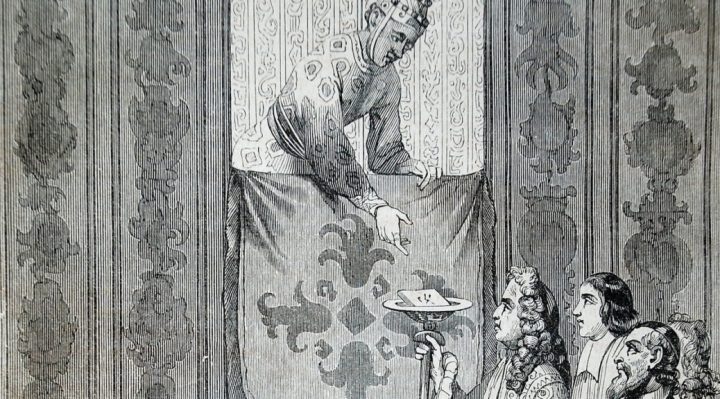
Peut-on employer le terme « cadeaux diplomatiques » pour ce qui concerne les XVIIe- XVIIIe siècles entre la Chine et les pays européens, alors que dans la tradition chinoise, tout pays étranger n’était qu’un vassal devant l’empereur de Chine ? Nous regroupons en fait sous ce terme tous les objets destinés à être offerts par une cour européenne ou un membre de la famille royale ou aristocratique à l’empereur de Chine, aux princes, et aux mandarins, et réciproquement. Dans ce contexte des échanges officiels, les présents soigneusement choisis sont porteurs d’une fonction politique de faire-valoir, en plus des caractéristiques formelles propres aux objets dotés de pouvoirs de séduction. Agissant ainsi comme objets de pouvoir et de courtoisie, leur nature est ambivalente : les caractéristiques intrinsèques (esthétique, économique et technique) doivent refléter aussi bien l’identité de celui qui offre que celle de celui qui reçoit. En plus de la matérialisation du pouvoir suprême, les objets « exotiques » de prestige par excellence, assument également de multiples autres fonctions sociales entre autres, le témoignage de respect et de confiance, le moyen d’introduction et d’obtention de faveurs.
Le colloque sera l’occasion de faire dialoguer entre elles les sources primaires, en particulier les archives (imprimées et surtout manuscrites) issues de traditions textuelles différentes et de contextes sociaux qui s’ignoraient. L’objectif est de construire une histoire des échanges à « plusieurs voix » et à une réalité sociale multiple.
Colloque international organisée par le programme LIA TrEnamelFC avec les soutiens du CRCAO, CCJ, ICT, CAK, CNRS et PSL
Organisateurs : Liliane Hilaire-Pérez (ICT/CAK), Isabelle Landry-Deron (CCJ), Sébastien Pautet (ICT), Fabien Simon (ICT), Bing Zhao (CRCAO)
◊ ◊ ◊ ◊ ◊
4 M A I 2 0 1 7
Salon de la Maison de l’Asie, 22, avenue du Président Wilson, 75016, Paris
8.45 Accueil
9.00 Introduction par Bing Zhao (Centre de recherche sur les civilisations de l’Asie orientale), Le projet LIA TrEnamelFC et la question de l’efficacité des objets diplomatiques
9.15 1ère session | Les premiers échanges sino-français : pratiques et acteurs
Présidence de séance : Catherine Jami (Centre Chine, Corée, Japon)
• Nathalie Monnet (Bibliothèque François Mitterrand), Diplomatie jésuite ou diplomatie d’Etat ?
• Stéphane Castelluccio (Centre André Chastel), Louis XIV et l’Orient : Séduire et être séduit
10.15 Pause
10.30 2e session | Les objets émaillés, cadeaux privilégiés des échanges sino-européens
Présidence de séance : Sébastien Pautet (ICT)
• Emily Byrne Curtis (chercheur indépendant), Aspects of a Multi-Faceted Process : The Circulation of Enamel Wares between the Vatican and Kangxi’s Court, 1700–22
• Isabelle Landry-Deron (Centre Chine, Corée, Japon), La circulation des objets émaillés entre la France et la Chine d’après les sources missionnaires françaises
11.30 Bing Zhao (Centre de recherche sur les civilisations de l’Asie orientale), L’impact des objets européens introduits à la cour des Mandchous aux XVIIe–XVIIIe siècles : Le cas des objets émaillés
12.00 Discussion
12.30 Buffet
14.00 Séance privée et visite du mnaag-Guimet (réservée aux participants et aux membres LIA TrEnamelFC)
5 M A I 2 0 1 7
Salle M019, Bâtiment Olympe de Gouge, université Paris Diderot, Place Paul Ricoeur, 75013 Paris
9.00 Accueil
9.15 3e session | Les échanges étatiques sino-européens de la 2e moitié du XVIIIe siècle
Présidence de séance : Liliane Hilaire-Pérez (ICT/Centre Alexandre Koyré)
• Marie-Laure de Rochebrune (Musée du château de Versailles), Les porcelaines de Sèvres envoyées en guise de cadeaux diplomatiques à l’empereur de Chine par les souverains français dans la seconde moitié du XVIIIe siècle
• John Finlay (Centre Chine Corée Japon), Henri Bertin and the Presents from Louis XV to the Qianlong Emperor
• Guo Fuxiang (Département de la vie curiale, Musée du Palais de Pékin), Tribut ou cadeaux diplomatiques : Le devenir des objets offerts par la mission Marcadet à la cour des Qing
10.45 Pause
11.00 4e session | Les perspectives historiques et comparatives
Présidence de séance : Fabien Simon (ICT)
• Françoise Wang-Toutain (Centre de recherche sur les civilisations de l’Asie orientale), Présents diplomatiques, Présents de longévité : Les cadeaux offerts par les dignitaires tibétains laïcs et religieux à la cour impériale mandchoue
• Indravati Félicité (ICT), Les cadeaux diplomatiques dans les échanges entre les cours européennes et asiatiques à l’époque moderne : Un aperçu des orientations de la recherche
• Kee II Choi (University of Warwick), ‘In All Things Must the Ancients Be Imitated’: Vases and Diplomacy at the Qing Court
12.30 Discussion
13.00 Buffet
15.00 Visite du Musée des Arts décoratifs (réservée aux participants et aux membres LIA TrEnamelFC, à confirmer)
◊ ◊ ◊ ◊ ◊
From the blog of the research project, “The Circulation of Enameled Objects between France and China (late-17th to mid-19th Century): Technological, Cultural, and Diplomatic Interactions” . . .
The objective of this Franco-Chinese program (2015–20) is to propose a ‘symmetrical’ history of the circulation of enameled objects and enamel technology between France and China from the end of the seventeenth to the middle of the nineteenth century. Enamel is the prime example of a technology that was originally European, whether it be cloisonné enamel, champlevé, or painted enamel, the practice of which moved from West to East in the wake of the objects. The present project consists of concurrent and interdisciplinary research conducted by an international, multidisciplinary team focused on all types of enameled objects, produced in France or in China, held in the collections of the Palace Museum, Beijing, and French museums. It will serve as well as an interface among all international researchers who are working on the circulation of technologies across the long distance between China and Europe. Integrated into a multidisciplinary approach (including physics, chemistry, history of technology, archaeology, experimentation, and social history), the work of these researchers prioritizes new textual, physical or chemical, and archaeological data.
Exhibition | Menorah: Worship, History, Legend
Press release (20 March 2017) from the Primo Levi Center:
The Menorah: Worship, History, and Legend
Vatican Museums and the Jewish Museum of Rome, 15 May — 23 July 2017
Curated by Arnold Nesselrath, Alessandra Di Castro, and Francesco Leone
The Vatican Museums and the Jewish Museum of Rome present the exhibition The Menorah: Worship, History and Legend, which opens on May 15th, 2017 at both venues and will remain open until July 23, 2017. This is the first time that the Vatican collaborates with a Jewish Museum. The project was initiated in a spirit of dialogue and mutual understanding by the Jewish Community of Rome and the Vatican administration. The exhibition is co-curated by Arnold Nesselrath, Deputy director of the Vatican Museum’s Curatorial Department and the Conservation Laboratory, Alessandra Di Castro, Director of The Jewish Museum of Rome, and Francesco Leone, Associate Professor of Contemporary Art History at Chieti-Pescara’s ‘G. D’Annunzio’ University, in collaboration with an interdisciplinary team of prominent scholars.
One hundred and thirty treasures recount the story and vicissitudes of the Second Temple’s Menorah, the seven-branch candelabrum that in the year 70 CE was looted from Jerusalem by Titus’s troops and transported to Rome. In the empire’s capital, the Menorah was displayed as trophy in the Forum’s Temple of Peace. This event is recorded in the famous bas-relief that decorates the Arch of Titus as well as in Flavius Josephus’s historical chronicle De Bello Judaico.
According to the Hebrew Bible, at the Lord’s request, Moses had the Menorah forged in pure gold and displayed it in the First Temple. As explained in the Book of Exodus, this ritual object was intended as a symbol of the covenant between the Lord and the Children of Israel. That first Menorah is thought to have been destroyed with the first Temple by Nebuchadnezzar II of Babylon in 586 BCE.
Intertwining history and myth, the story of the Menorah is depicted in the exhibition through major works of art from antiquity to the present, including archaeological objects, sculptures and paintings, architectural and decorative artifacts, manuscripts and illuminated books.
It was in Rome, at the height of the imperial era, that the Menorah became the symbol that most powerfully encapsulates the culture and religion of Judaism. This happened at approximately the same time when the symbols of Christianity were acquiring their final shape and form. Since then, the Menorah has become the emblem of Judaism par excellence, and it is seen in the Jewish world as tangible evocation of divine light, of the cosmic order of creation and of the ancient covenant; as symbol of the burning bush and the tree of life; as testimony to the biblical Shabbat.
Soon after its removal from the Temple, the Menorah began to be depicted in myriad places and on every possible occasion, in the East as well as in the West. We find marvelous examples of it in the Roman Jewish catacombs, on sarcophagi and funerary inscriptions, graffiti, coins and gold-leafed glass, necklaces, pendants, and jewelry of all kinds. This proliferation of depictions is documented in the exhibition through items spanning from the 1st century CE to the 20th century, when the Menorah made its appearance on the emblem of the newly founded State of Israel.
Having made its world appearance in Rome, from Rome the historical Menorah also disappeared. It was probably around the 5th century, when it is said to have been looted by the Vandals in the sack of 455 CE. According to legends and chronicles, it was brought first to Carthage and then to Constantinople. Thereafter, the Menorah’s fate became increasingly shrouded in mystery: it vanished for ever leaving space to countless sagas that for centuries sought in vain to perpetuate its material life. From that date on, all accounts of the celebrated seven-branch candelabrum fell into the realm of legend, in a plethora of romantic tales set in the Middle Ages and after into the 19th century, most of which have been incorporated in the exhibition’s narrative.
Another crucial aspect of the Menorah’s history resides in its relation with early Christian iconography. In the Middle Ages, Christian art began to adopt the Menorah as its own. Seven-branch candelabra were placed in churches for liturgical purposes. This fascinating overlapping of symbols is narrated through several 14th- and 15th-centuries objects including the monumental candelabra from the Sanctuary of the Mentorella, in Prato and Pistoia, and a pair of 18th-century candelabra from Palma de Mallorca (Capitular Museum, Cathedral de Mallorca). Other treasures on display include a recently discovered 1st-century stone bas-relief from the site of the ancient synagogue of Magdala, Galilee; a rare Roman gold-leafed glass; sarcophagi and tombstones from the Jewish catacombs in Rome; the Carolingian Bible of St. Paul, Roman Baroque silverware and paintings by masters including Giulio Romano, Andrea Sacchi, Nicolas Poussin, and Marc Chagall.
The exhibition will be held simultaneously at two venues: the Braccio di Carlo Magno at the Vatican Museums and the Jewish Museum of Rome. It is organized in three sections. The first is comprised of three chapters: Visualizing the Menorah; The Menorah in the Temple and Jewish Art: Iconography and Symbolism; and The Menorah in Ancient Art from Jerusalem to Rome.
The second section is subdivided in four parts: From Late Antiquity to the 14th Century; The Renaissance; The Menorah in Painting from the 16th to the 19th Century; and The Menorah in Jewish Decorative Arts from the Middle Ages to the Dawn of the 20th Century. Taking visitors on a rich artistic journey, it traces the legend of the Menorah from late antiquity to the 20th century, focusing in particular on Christian appropriations and on its perpetuation as an emblem for Jewish culture and identity. A series of paintings explore the popularity of the Menorah in figurative and decorative arts from the Renaissance through the 19th century.
The third section, entitled From the Aftermath of World War I to the 21st Century, takes into consideration works by well-known 20th- and 21st-century artists who depicted the Menorah in modernist artistic styles, combining the deconstruction of traditional forms with a new appraisal of the symbolic relation between Rome and Jerusalem, an emblematic trope of such post-emancipation works as Moses Hess’s Rome and Jerusalem and Stefan Zweig’s The Buried Candelabrum.
Lenders for the exhibition include some of the most prestigious international and Italian museums, including—in addition to the Vatican Museums and the Jewish Museum of Rome—the Louvre in Paris, the National Gallery in London, the Israel Museum and the National Library of Israel in Jerusalem, the Kunsthistorisches Museum and the Albertina in Vienna, the Kupferstichkabinett in Berlin, the Jewish Museum in New York, the Franz Hals Museum in Haarlem, the Sephardic Museum of Toledo, the Veneranda Biblioteca Ambrosiana in Milan, the Jewish Museums of Padua, Florence, Naples and Casale Monferrato, the Museo Archeologico in Naples, the Biblioteca Palatina in Parma, and the Opificio delle Pietre Dure in Florence.
New Book | Plans of the Earl of Mar
From Four Courts Press:
Margaret Stewart, The Architectural, Landscape and Constitutional Plans of the Earl of Mar, 1700–32 (Dublin: Four Courts Press, 2016), 448 pages, ISBN: 978 18468 25750, £55.
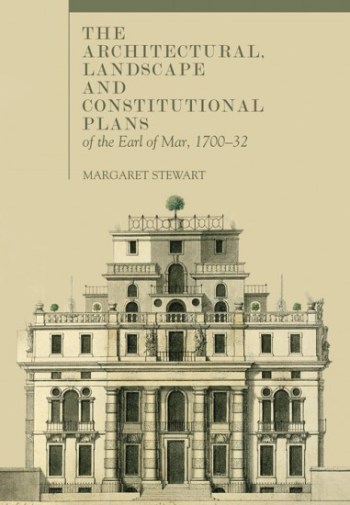 Politics, architecture, landscapes, city designs, and infrastructure planning were the substance of the creative thinking of John Erskine, Earl of Mar (1675–1732) before and after the Anglo-Scottish Union of 1707. Condemned as a traitor after he led and lost the Jacobite Rising of 1715, Mar devoted his time in exile to creating a new constitution for the UK in which England, Ireland, and Scotland would become equal partners in a federation with France for the enduring peace of Europe. Richly illustrated with Mar’s magnificent designs for cities, palaces, and houses, this is the first book about this controversial figure.
Margaret Stewart was born and educated in Edinburgh. She is an art historian and curator and is currently a lecturer in architectural history at University of Edinburgh.
Call for Papers | Fluctuating Alliances: Art, Politics, and Diplomacy
From the conference website:
Fluctuating Alliances: Art, Politics, and Diplomacy in the Modern Era, 16th–18th Centuries
Technische Universität, Berlin, 21–22 September 2017
Proposals due by 20 May 2017
Macchina per le nozze de il Principe di Asturias e Isabel d’Orleans, Domenico Paradisi, Roma, 1721.
In January 1722 after a few days of heavy rain in Rome the ephemeral ‘macchina d’artificio’ built to celebrate the wedding between the Prince of Asturias and Isabel d’Orleans was finally burnt before the palazzo di Spagna. The machine, designed by Domenico Paradisi, showcased a clear message of unity and power between the former enemies: France and Spain. At the summit, allegories of both countries shook hands before the representation of the Four Continents. This functioned as a gentle reminder to their enemies after the years of turmoil surrounding the War of Spanish Succession, which had deeply affected the balance of power in Europe.
This symposium, Fluctuating Alliances: Art, Politics and Diplomacy in the Modern Era, seeks to explore the role played by prints, drawings, and any kind of artistic production, such as music and literature, which represented the changing alliances among kings, rulers and countries in the fluctuating early modern political environment.. Taking as an example the War of Spanish Succession, but not limited to it, we encourage researchers to explore the uses of art for that purpose.
We invite scholars at all stages of their careers to propose 20-minute presentations, preferably focused on case studies. We encourage proposals that deal with particularly tricky diplomatic encounters and which explain how art helped or, indeed, hindered these negotiations. There is no official language for the conference (we accept English, German, Spanish, Portuguese, Italian, and French), but for the sake of clarity all the communications, as well as the proposals, should be in English.
Candidates are invited to submit their proposals by 20 May 2017 to Pilar Diez del Corral diezdelcorralcorredoira@tu-berlin.de. They should include an abstract (up to 500 words) and a brief CV with recent publications (max. 1 page). Unfortunately, it will not be possible to cover travel and accommodation costs for participants. The scientific committee will inform all the applicants of the final selection by 31 May 2017.
UK Export Ban Placed on Ironwork Railings from Chesterfield House
Press release (4 April 2017) from Gov.UK’s Department for Culture, Media & Sport:
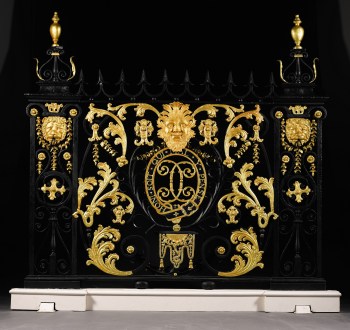
Ironwork railings, possibly by Jean Montigny, from Chesterfield House, London; perhaps made in the 1720s (for the 1st Duke of Chandos’s house, Cannons, in Edgware) and then modified in the 1740s; wrought and cast iron with gilt iron and gilt bronze embellishments.
A set of ornate 18th-century ironwork railings is at risk of being exported from the UK unless a buyer can be found to match the asking price of £305,000. Culture Minister Matt Hancock has placed a temporary export bar on the railings that once surrounded the residence of the 4th Earl of Chesterfield to provide an opportunity to keep them in the country. Made of wrought and cast iron with gilt iron and gilt bronze embellishments, they are among the most highly decorated examples in Britain and illustrate how ornate ironwork was used to show social status in the 18th century.
Built in the 1740s, Chesterfield House was one of the grandest and most famous addresses in London and the railings were intended to impress guests and be viewed from the ground floor reception rooms. The demolition of this great London mansion in 1937 was the catalyst for the foundation of The Georgian Group, which celebrates its 80th anniversary in 2017.
Minister of State for Digital and Culture Matt Hancock said: “More than 80 years after Chesterfield House was sadly torn down, these lavishly decorated railings are a reminder of the opulence of the 18th-century London elite and the wonderful craftsmanship of the time. I hope that a buyer comes forward to help keep them in the UK so that we may enjoy their beauty and learn more about the fascinating ironwork techniques used at the time.”
The set of railings is believed to have been supplied by Jean Montigny, a French Catholic immigrant who specialised in wrought iron, for the 1st Duke of Chandos’s remarkable house, Cannons, in Edgware, in the 1720s. They were then acquired for Chesterfield House, London, for which they were modified in the late 1740s. The decision to defer the export licence follows a recommendation by the Reviewing Committee on the Export of Works of Art and Objects of Cultural Interest (RCEWA), administered by The Arts Council.
RCEWA member Philippa Glanville said: “Admired for more than 250 years for their design and craftsmanship, this set of railings vividly demonstrates how noblemen adorned the exteriors of their London palaces as richly as their interiors. These are rare survivors and exemplify the peak of wrought ironwork, one of the glories of eighteenth century patronage in Britain.”
The RCEWA made its recommendation on the grounds of the railings’ outstanding aesthetic importance and their significance for the study of British patronage of the highest quality ironwork, as well as of metalwork design, decorative techniques, and subsequent structural and decorative modifications.
The decision on the export licence application for the railings will be deferred until 3 July 2017. This may be extended until 3 October 2017 if a serious intention to raise funds to purchase them is made at the recommended price of £305,000 (plus VAT of £61,000). Organisations or individuals interested in purchasing the railings should contact the RCEWA.
New Book | Building the British Atlantic World
From The UNC Press:
Daniel Maudlin and Bernard Herman, eds., Building the British Atlantic World: Spaces, Places, and Material Culture, 1600–1850 (Chapel Hill: The University of North Carolina Press, 2016), 352 pages, ISBN: 978 14696 26826, $40.
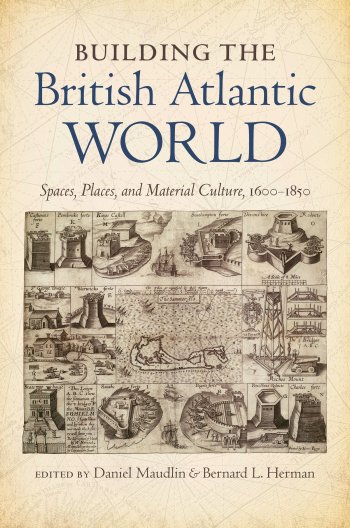 Spanning the North Atlantic rim from Canada to Scotland, and from the Caribbean to the coast of West Africa, the British Atlantic world is deeply interconnected across its regions. In this groundbreaking study, thirteen leading scholars explore the idea of transatlanticism—or a shared ‘Atlantic world’ experience—through the lens of architecture, built spaces, and landscapes in the British Atlantic from the seventeenth century through the mid-nineteenth century. Examining town planning, churches, forts, merchants’ stores, state houses, and farm houses, this collection shows how the powerful visual language of architecture and design allowed the people of this era to maintain common cultural experiences across different landscapes while still forming their individuality.
By studying the interplay between physical construction and social themes that include identity, gender, taste, domesticity, politics, and race, the authors interpret material culture in a way that particularly emphasizes the people who built, occupied, and used the spaces and reflects the complex cultural exchanges between Britain and the New World.
Daniel Maudlin is Professor of Early Modern History at the University of Plymouth. Bernard L. Herman is George B. Tindall Distinguished Professor of Southern Studies and Folklore at the University of North Carolina at Chapel Hill.
C O N T E N T S
Daniel Maudlin and Bernard Herman, Introduction
Part I: Empire and Government
1 Emily Mann, To Build and Fortify: Defensive Architecture in the Early Atlantic Colonies
2 Carl Lounsbury, Seats of Government: The Public Buildings of British America
3 Anna O. Marley, Landscapes of the New Republic at Thomas Jefferson’s Monticello
Part II: Religion and the Churches
4 Peter Guillery, English Artisans’ Churches and North America: Traditions of Vernacular Classicism in the Eighteenth Century
5 Peter Benes, The New England Meetinghouse: An Atlantic Perspective
6 Alison Stanley, The Praying Indian Towns: Encounter and Conversion through Imposed Urban Space
Part III: Commerce, Traffic, and Trade
7 Christopher DeCorse, Tools of Empire: Trade, Slaves, and the British Forts of West Africa
8 Louis P. Nelson, The Falmouth House and Store: The Social Landscapes of Caribbean Commerce in the Eighteenth Century
9 Kenneth Morgan, Building British Atlantic Port Cities: Bristol and Liverpool in the Eighteenth Century
Part IV: Houses and the Home
10 Stephen Hague, Building Status in the British Atlantic World: The Gentleman’s House in the English West Country and Pennsylvania
11 Bernard Herman, Parlor and Kitchen in the Borderlands of the Urban British American Atlantic World, 1670–1720
12 Lee Morrissey, Palladianism and the Villa Ideal in South Carolina: The Transatlantic Perils of Classical Purity
13 Daniel Maudlin, Politics and Place-Making on the Edge of Empire: Loyalists, Highlanders, and the Early Farmhouses of British Canada
Selected Bibliography
Contributors
Index










 Enfilade
leave a comment