Exhibition | Armenia: Art, Culture, Eternity
Press release (25 October 2018) from the Armenian Museum of America:
Armenia: Art, Culture, Eternity
Armenian Museum of America, Watertown, Massachusetts, exhibition open from November 2018

Kütahya vessel, 18th century, polychrome fritware (Watertown, Massachusetts: Armenian Museum of America).
The Armenian Museum of America is pleased to share its vision for the future. Founded in 1971, the Museum serves as the largest repository of Armenian artifacts in the diaspora, as well as the largest ethnic museum in Massachusetts. As the Museum builds towards the future, it strives to create a stronger, more connected community through shared exploration of Armenian art and history, both for Armenians and those who are new to Armenian culture.
The Museum’s new gallery Armenia: Art, Culture, Eternity provides an overview of Armenian culture from antiquity to present-day Armenian experience here in the United States. Over fifty objects are on display, illustrating Armenia’s origins in the Asian continent, the invention of a unique Indo-European language and alphabet, the early adoption of Christianity, Armenian medieval illuminated manuscripts, interconnected trade routes, and the tragedy of the Genocide.
Armenia: Art, Culture, Eternity is the culmination of twelve months of intense research and design and represents a new level of scholarship and interpretation at the Museum. The project was made possible by the support of the Board of Trustees and was spearheaded by Executive Director Jennifer Liston Munson and architect Virginia Durruty, who worked side-by-side with Michele Kolligian, President of the Board of Trustees, on the inspired design. The gallery represents an incredible achievement and is the start of a holistic consideration of the entire Museum, which will examine everything from the building’s distinctive Brutalist architecture—including how the hard space is a meaningful metaphor for Armenia’s difficult history—to the Museum’s role in telling the modern Armenian-American cultural narrative.
Call for Essays | Forms and Genres of Book Illustration
From the Call for Essays:
Forms and Genres of Eighteenth-Century Book Illustration
Edited by Leigh G. Dillard and Christina Ionescu
Proposals due by 1 December 2018; completed chapters due in January 2020
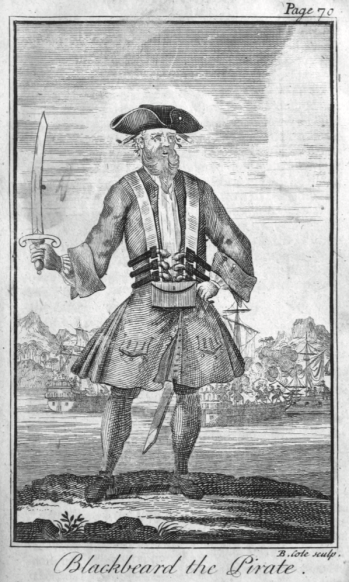 Proposals are invited for a collection of essays designed for students and established researchers seeking an introduction to the field of eighteenth-century illustration, with special attention to its forms and genres. We invite proposals on a wide variety of topics, with particular interest in the following to fill gaps in our existing commitments:
• ballads
• broadsides
• children’s books
• criminal histories
• ephemera
• the epistolary tale
• funerary elegies
• the fantastic
• the historical romance
• literary almanacs
• literary galleries
• the philosophical tale
• songbooks
When possible, examples should be chosen from more than one national tradition. Please send 300–500 word proposals to Christina Ionescu (cionescu@mta.ca) and Leigh Dillard (leigh.dillard@ung.edu) by 1 December 2018. The deadline for the submission of completed chapters will be January 2020.
New Book | Fonthill Recovered
Distributed in North America by The University of Chicago Press:
Caroline Dakers, ed., Fonthill Recovered: A Cultural History (London: UCL Press, 2018) 406 pages, ISBN: 978-1787350465 (hardcover), $90 / ISBN: 978-1787350472 (paperback), $60.
 Fonthill, Wiltshire, is typically associated with the writer and collector William Beckford, who built his Gothic fantasy house, Fonthill Abbey, there at the end of the eighteenth century. The collapse of the Abbey’s tower in 1825 transformed the name Fonthill into a symbol for overarching ambition and folly. But Fonthill is much more than the story of one man’s excesses, and the Abbey was only one of several important houses to be built there, all eventually consumed by fire or deliberately demolished—and all strangely forgotten by contemporary history
Fonthill Recovered draws on new research to explore the rich cultural history of this place where little remains today—a tower, a stable block, the ruins of what was once a kitchen, and an indentation in a field. The first half of the book traces the occupation of Fonthill from the Bronze Age to the twenty-first century. Some of the owners surpassed Beckford in terms of their wealth and political power—and even, in one case, their sexual proclivities. They include Charles I’s Chancellor of the Exchequer and the richest British commoner of the nineteenth century. The second half of the book consists of essays on specific topics, examining such crucial areas as the complex history of the designed landscape, the sources of the Beckfords’ wealth and their extensive art collection, and the recent appearance of the Abbey in a video game.
Caroline Dakers is professor of cultural history at Central Saint Martins and the author of several books, including Forever England and A Genius for Money. She has also curated exhibitions at the Leighton House Museum, London.
Launch of the Wentworth Woodhouse Preservation Trust
From the Wentworth Woodhouse press release, via Rotherham Business News:
The Yorkshire launch of the The Wentworth Woodhouse Preservation Trust’s (WWPT) masterplan took place on Friday, 9 November 2018, with a host of civic dignitaries, local MPs, and representatives of heritage and arts experts from Yorkshire, Derbyshire, and Worksop in attendence. A New Life, the 500-page masterplan, aims to create a world-class visitor attraction with local heritage and culture exhibitions and a focus firmly on the restoration task. Visitors will be able to view heritage and culture exhibitions, explore more of the house and take ‘hard hat and Hi Viz’ tours onto the rooftop to witness restoration work as it happens. . .
For the main house, the future uses will include the main visitor attraction, commercial units, catering and luxury holiday accommodation. A café in the North Wing could be joined by a fine dining restaurant for approx 118 covers towards the East Front with private dining space within Octagonal game larder. State Bedrooms could be home to two suites for exclusive overnight accommodation to support events. A 5–6 bedroom guesthouse for holiday let and self-contained apartments for holiday let, could be created in the North and South Pavilions.
Fourteen commercial units suitable for small businesses are earmarked for the South Wing, and events space and administrative space for the Trust are also in the plans for the house. The plans for the former stable block and riding school, once palatial surroundings, include a range of visitor facilities, events space suitable for weddings, further events space in the courtyard, retail units for artisan crafts and fifteen self-contained apartments. . .
Concluding the masterplan, Sarah McLeod, CEO of WWPT, said: “Through investment, innovative thinking and an audience-focused approach, Wentworth Woodhouse will be a testament to the grit and fortitude of a region that has changed radically over the last century. It will be a beacon for learning. For new approaches to integrating heritage and business. It will be an iconic reminder of the passion, pride and power of the people who pulled together to make this happen.”
The BBC’s coverage of the masterplan is available here»

East front of Wentworth Woodhouse, in South Yorkshire, May 2015 (Photo by Andrew Rabbott, Wikimedia Commons). With construction of the east front starting around 1735, it is the longest façade (606 feet) of any country house in England.
Exhibition | Before the Deluge: Apocalyptic Floodscapes
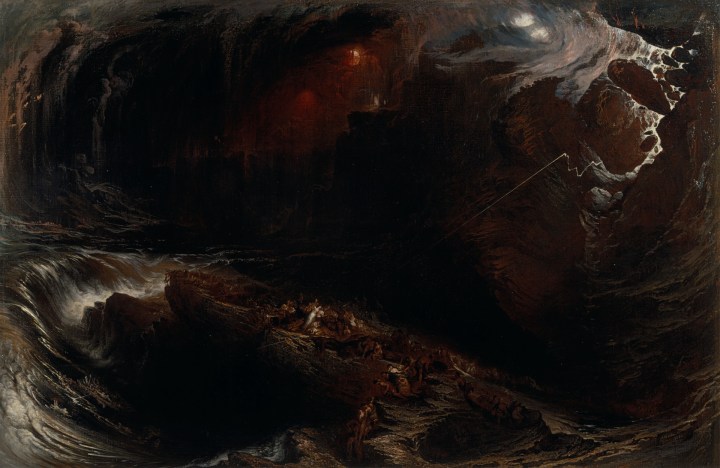
John Martin, The Deluge, 1834, oil on canvas, 66 × 102 inches
(New Haven: Yale Center for British Art, Paul Mellon Collection, B1978.43.11)
◊ ◊ ◊ ◊ ◊
Opening next month at the YCBA:
Before the Deluge: Apocalyptic Floodscapes from John Martin to John Goto, 1789 to Now
Yale Center for British Art, New Haven, 18 December 2018 — 24 March 2019
Curated by Eva Mebius, with Matthew Hargraves
This exhibition will explore how the idea of the Deluge has been represented and interpreted by British artists and writers from the end of the eighteenth century to the present day. It will consider the diverse ways they have responded to accounts of both biblical and mythological, and real and fictional, floods and the political ends to which this theme has been used in their respective historical contexts. Drawing on the Center’s collections of prints and drawings, photographs, and rare books and manuscripts, Before the Deluge will examine the connections between our own sense of antediluvianism and that of earlier times, charting the artistic representation of apocalyptic floods, and the scientific and political debates about the Deluge to which these writers and artists contributed. From John Martin’s Deluge, one of the most sensational images of the Romantic age, to the diluvian reimagining of the eighteenth-century English landscape by contemporary artist John Goto, we see the floodwaters rise and recede, only to seep back once again. However, Before the Deluge will also consider how proximity to water and its threat inspired human ingenuity through various objects, such as paper peepshows of the Thames tunnel, and blueprints for bridges and canals. The fragile relationship between human civilization and the water that sustains or destroys us has perhaps never been more apparent than at the present moment.
Exhibition | Empresses of China’s Forbidden City, 1644–1912
PEM press release:
Empresses of China’s Forbidden City, 1644–1912
Peabody Essex Museum, Salem, Massachusetts, 18 August 2018 — 10 February 2019
Freer|Sackler, Smithsonian Institution, Washington, D.C., 3 March — 23 June 2019
Curated by Daisy Yiyou Wang and Jan Stuart
 The Peabody Essex Museum (PEM) debuts Empresses of China’s Forbidden City, the first major international exhibition to explore the role of empresses in China’s last dynasty—the Qing dynasty, from 1644 to 1912. Nearly 200 spectacular works, including imperial portraits, jewelry, garments, Buddhist sculptures, and decorative art objects from the Palace Museum, Beijing (known as the Forbidden City), tell the little-known stories of how these empresses engaged with and influenced court politics, art and religion. On an exclusive U.S. tour, this exhibition is a once-in-a-lifetime opportunity to see rare treasures from the Forbidden City, including works that have never before been publicly displayed and many of which have never been on view in the United States. Coinciding with the 40th anniversary of the establishment of U.S.-China diplomatic relations, the exhibition is organized by the Peabody Essex Museum, Salem, Massachusetts; the Smithsonian’s Freer Gallery of Art and Arthur M. Sackler Gallery (Freer|Sackler), Washington, D.C.; and the Palace Museum, Beijing.
A leader in preserving and promoting Chinese art and architecture, PEM honors over 200 years of U.S.-Chinese commercial and cultural exchange through its renowned collection and exhibition program. Working closely with its partnering organizations, PEM presents this unprecedented exhibition in order to celebrate the vibrant legacy of cultural dialogue between these two countries.
With an international team of experts, exhibition co-curators Daisy Yiyou Wang, PEM’s Robert N. Shapiro Curator of Chinese and East Asian Art, and Jan Stuart, the Melvin R. Seiden Curator of Chinese Art at the Freer|Sackler, spent four years travelling to the Forbidden City to investigate the largely hidden world of the women inside. Delving into the vast imperial archives and collection, their fresh research unveils how these women influenced history as well as the spectacular art made for, by and about them. “This exhibition establishes a new model for future international research and museum collaborations,” says Dr. Shan Jixiang, director of the Palace Museum.
Revealing the Hidden World of the Empresses

Court painters in Beijing, possibly including Zhang Zhen or his son Zhang Weibang, Drinking Tea from Yinzhen’s Twelve Ladies, Kangxi period, 1709–23, hanging scroll, ink and color on silk (Beijing: Palace Museum, Gu6458-7/12).
China’s grand imperial era—the Qing dynasty—was a multiethnic and multicultural state founded in 1644 by a small northeast Asian group who came to call themselves ‘Manchus’. These conquering rulers adopted the Forbidden City in Beijing as the seat of the government. The Manchu ruling house differed from their populous Han Chinese subjects by language, history, and culture. In the Qing dynasty, Manchu customs prohibited foot-binding and encouraged women to learn to ride and hunt. In general, Manchu women enjoyed more freedom and rights than their Han Chinese counterparts.
While the Qing imperial court was strictly patriarchal and hierarchical, a few empresses stood out and helped shape the long history of the dynasty. The empress headed the imperial harem and could influence the emperor. She was regarded as the ‘mother of the state’ and a role model for all women. Presiding over the state ritual promoting silk production, empresses honored women’s vital role in the economic health of the state through textile production.
While the emperor-centric Qing imperial court recorded only skeletal outlines of the empresses’ lives, only recently have historians begun to fill in a more complete picture. Exhibition curators were able to reconstruct their rich and active lifestyles from the lavish art produced by the Qing court. Sumptuous objects showcased in this exhibition include the largest assemblage of imperial textiles and jewelry that have ever traveled to the U.S. from the Palace Museum. These works demonstrate how Qing dynasty empresses projected authority through what they wore, from stunningly embroidered socks to splendid dragon robes.
“We are very proud to reclaim the presence and influence of these empresses, about whom history has largely been silent,” says Daisy Wang, PEM’s curator for this exhibition. “The exquisite objects related to the empresses give us a better understanding of these intriguing women. Further evidence found in court archives and other historical sources help illuminate their hidden, but inspiring lives.”
Stories of Opulence and Influence
Out of two dozen Qing empresses, this exhibition focuses on three key figures: Empress Dowager Chongqing (1693–1777), Empress Xiaoxian (1712–1748) and Empress Dowager Cixi (1835–1908). Their life experiences revolve around six core themes: imperial weddings, power and status, family roles, lifestyle, religion, and political influence.

Imperial Workshop, Beijing, Stupa Containing Empress Dowager Chongqing’s Hair and Amitayus Buddha, Qianlong period, 1777, gold and silver alloy with coral, turquoise, lapis lazuli, and other semiprecious stones, and glass; pedestal: zitan wood (Beijing, Palace Museum, Gu11866).
Empress Dowager Chongqing came from humble beginnings, entering a princely household as a maidservant at age 11 and bearing her only child at age 18. Her son eventually became the Qianlong emperor, which made Chongqing the focus of his filial piety, a core Confucian virtue. He honored her as the Sage Mother of the state, a status vividly captured by two life-size portraits of her in the exhibition. After her death in 1777, she was commemorated by her son with a 237-pound gold shrine. Encrusted with gemstones, the shrine holds her hair to ensure her rebirth in the Buddhist paradise. As the largest of its kind in the Palace Museum’s collection, the shrine will be displayed at PEM and the Freer|Sackler for the first time outside of China.
Fifteen-year-old Xiaoxian married the future Qianlong emperor while he was a prince. She became the empress after her husband ascended the throne. As childhood soulmates and confidants, Xiaoxian closely attended to her husband as he endured a months-long illness. She was a caring daughter-in-law and a wise manager of imperial family affairs, qualities that garnered her widespread respect.
In 1748, at the age of 36, Xiaoxian fell ill and died while traveling with her husband. In response, the heartbroken emperor brushed a poem to mourn his beloved wife. Empresses of China’s Forbidden City is the first exhibition to ever reveal this soulful elegy to the public.
Though tradition declared that “women shall not rule,” there was room for ambitious Qing empresses. Soon after giving birth to the Xianfeng emperor’s only heir, Cixi, a low-ranking consort, received a promotion. Facing a succession crisis after the death of her husband in 1861, Cixi, alongside the other empress dowager Ci’an (1837–1881), instigated a coup to gain political power and become co-regents to Cixi’s son, the child emperor. As the most powerful empress in Chinese history, Cixi ruled China for nearly half a century, bringing radical changes to the role of women in court politics and art patronage.
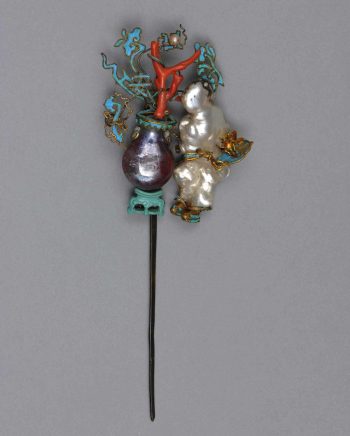
Hairpin with Figure and Vase, 18th or 19th century, pearls, sapphire, coral, turquoise, kingfisher feather, and silver with gilding (Beijing: Palace Museum, Gu10130).
The exhibition culminates with a commanding sixteen-foot oil portrait of Empress Cixi. It was her gift to President Theodore Roosevelt in 1905. Cixi directed the American artist Katharine Carl to create an image of a youthful and benevolent ruler to express her good will to people in America at a time when U.S. and China experienced challenging relations. A recent conservation project at the Smithsonian has restored the painting to its original splendor. Empresses of China’s Forbidden City marks its first public display in the U.S. since the 1960s.
“The study of women in history is exciting, timely and necessary,” says Jan Stuart, co-curator at the Freer|Sackler. “By focusing on the material and spiritual world of these women, we begin to fill in details absent from previous accounts of women in Chinese history. To the extent that the empresses’ experience of the expectations and constraints finds echo in our own world, we hope this exhibition will prompt broader reflection on the position of women in society and fosters a sense of commonality and connection across time and cultures.”
Surrounded by a dazzling array of imperial treasures, visitors will also discover engaging in-gallery interactive experiences, such as creating an empress’s robe. Other experiences include immersive videos and opera performance, as well as English and Chinese language label text and guided tours. In November 2018, halfway through the run of the six-month exhibition at PEM, an additional 30 artworks from the Palace Museum will be installed in the galleries, including magnificent paintings and imperial robes.
“This exciting exhibition fulfills our institutions’ shared commitment to expanding the appreciation of China’s rich culture, in this instance by recovering the preeminence of the Qing empresses through these stunning and rare objects,” notes Dan Monroe, the Rose-Marie and Eijk van Otterloo Director and CEO of Peabody Essex Museum, and Julian Raby, Director Emeritus, Freer Gallery of Art and Arthur M. Sackler Gallery, Smithsonian Institution.
The catalogue is distributed by Yale UP:
Daisy Yiyou Wang and Jan Stuart, eds., with essays and entries by Daisy Yiyou Wang, Jan Stuart, Lin Shu, Luk Yu-ping, Ying-chen Peng, Evelyn Rawski, and Ren Wanping, Empresses of China’s Forbidden City, 1644–1912 (New Haven: Yale University Press, 2018), 264 pages, ISBN: 978-0300237085, $60.
Empresses in the Qing dynasty (1644–1912) played an influential role in the imperial court and the cosmopolitan culture of their time. Offering compelling insights into the material culture, activities, and living spaces of Qing empresses, this lavishly illustrated book features over one hundred spectacular works of art from the Palace Museum in Beijing—including large-scale portraits, court robes, and richly decorated Buddhist sutras—that bring the splendor of the Qing court to life. A series of insightful essays examines the fascinating ways that key imperial women engaged with art, religion, and politics. This unprecedented exploration of the Qing court from the perspective of its royal women is an important new contribution to our understanding of Chinese art and history.
Daisy Yiyou Wang is the Robert N. Shapiro Curator of Chinese and East Asian Art at the Peabody Essex Museum. Jan Stuart is the Melvin R. Seiden Curator of Chinese Art at the Freer Gallery of Art and Arthur M. Sackler Gallery, Smithsonian Institution.
Thomas Chippendale: Silent ‘Biopic’, ca. 1925
During the 300th anniversary of Thomas Chippendale’s birth, we might also mark his 1779 death (he was buried in the grounds of St Martin’s in the Fields on 13 November) by attending to this film, recently discovered by Katie Hay (see below for a link with more information). –CH
In 2017 a set of film canisters were rediscovered in the V&A stores, which turned out to contain 1920s silent ‘biopics’ of the furniture designers Thomas Chippendale and Thomas Sheraton. Both films are imaginative re-enactments of scenes from their lives. They were probably made for the British Empire Exhibition at Wembley in 1925. The Chippendale film is particularly ambitious, charting his rise to prominence and major commissions. A cast of character actors in 18th-century costumes perform on studio sets dressed with antique furniture, and out on location. It includes scenes from two moments in his career: the first in 1760, when he was elected as a member of the Royal Society of Arts, and the second in 1772, the date of his major commissions for the actor David Garrick at Adelphi Terrace and for Edwin Lascelles at Harewood House in Yorkshire. The films were transferred to the British Film Institute and are shown courtesy of the BFI National Archive.
Katie Hay, writing for the V&A Blog (7 August 2018) provides the full story of the discovery of the films with additional information about their 1920s’ context.
Gale Publishes Papers of the Exiled Stuart Kings

A letter written in cipher, with the decoded translation beneath each line, detailing Swedish support for the planned Jacobite uprising of 1717
(Royal Archives / © Her Majesty Queen Elizabeth II 2018)
◊ ◊ ◊ ◊ ◊
Another compelling archived digitized, another reason scholars will need access to well-funded libraries; from the press release via Art Daily:
A major new digitisation programme will provide unparalleled insight into the social, military, and personal worlds of the exiled Stuart dynasty and their Jacobite followers, as they fought to regain the thrones of Scotland, England, and Ireland between the late 17th and early 19th centuries. The Stuart and Cumberland Papers project makes accessible online a total of 245,000 documents from the Royal Archives at Windsor Castle. The project has been undertaken in partnership with Gale, a Cengage Company, a leading provider of educational technology for libraries. Digitised over a period of 18 months, the papers are now available as part of Gale’s State Papers Online programme and can be acquired by academic institutions and libraries worldwide to offer researchers and students a unique window into this turbulent period of European history.
The Stuart claimants to the throne were the descendants of James II (James VII of Scotland), who was forced from the throne and replaced by his Protestant daughter Mary II and her husband William of Orange during the Glorious Revolution of 1688. From then until the death of the last Stuart heir in 1807, the Stuarts were exiles in Europe, at the head of a complex network of Jacobite supporters at home and abroad.
The Stuart Papers bring together the private and diplomatic correspondence of James II; his son, James Francis Edward Stuart, nicknamed the Old Pretender; and his grandson, Charles Edward Stuart, better known as Bonnie Prince Charlie; as well as telling the story of their wives and mistresses, loyal followers, courtiers, and spies. A significant proportion of the papers are wholly or partly in cipher, often with the translation written above each line.
In July 1745, Bonnie Prince Charlie sailed from France to Scotland with plans to raise a Jacobite army against the Hanoverians and regain the throne for his father. By April 1746, the two sides were preparing to meet at Culloden Moor. A memorandum in the Stuart Papers written by General Lord George Murray details the combat orders issued to the exhausted Jacobite troops: “It is required & expected that each indeviduall in the Armie as well officer as Souldier keeps their posts that shall be alotted to them, & if any man turn his back to Runaway the nixt behind such man is to shoot him. No body on Pain of Death to Strip the slain or Plunder till the Batle be over. The Highlanders all to be in Kilts, & no body to throw away their Guns; by HRH Command.”
The Jacobites suffered a catastrophic defeat at the Battle of Culloden, and Bonnie Prince Charlie fled to France. In a letter dated 28 April 1746, the Prince wrote to his Scottish Chiefs, justifying his reasons for leaving Scotland and asking them to conceal his departure for as long as possible. He wrote, “When I came into this Country, it was my only view to do all in my power for your good and safety, This I will allways do as long as life is in me, But alas! I see with grief, I can at present do little for you on this side the water, for the only thing that can now be done, is to defend your selves, ‘till the French assist you…”
Two months later, in one of the most personal letters to be found in the Stuart Papers, Charles’s father, James Francis Edward, wrote to him to discuss the failure of the 1745–46 rebellion. The Prince urged his son: “Do not for Gods sake drive things too far, but think of your own safety, on which so much depends; Tho’ your Enterprize should miscarry, the honor you have gaind by it will always stick by you, it will make you be respected & considerd abroad.” While the majority of the letter was dictated by the Prince to his Secretary, the last sentence was added in the Prince’s own handwriting: “Adieu my dearest Child I tenderly embrace you & am all yours once more God bless and protect you, James R.”
Digitised alongside the Stuart Papers are those of William Augustus, Duke of Cumberland, the second surviving son of George II, who was a key figure in the Hanoverian monarchy and Captain General of the British Army between 1745 and 1757. In 1746, he was also appointed Ranger of Windsor Great Park, a role he retained until his death in 1765. By making available these two distinct but historically related collections, The Stuart and Cumberland Papers project offers unique perspectives into both the Jacobite risings and the methods used by the ruling Hanoverian monarchy to suppress them.
An account by Lord Charles Cathcart, Aide-de-Camp to the Duke of Cumberland, describes the British victory at the Battle of Culloden, and includes sketches showing the order of the battle. He describes how the Hanoverian forces, “after leaving 1,000 dead” on the battlefield, pursued the fleeing Jacobites and “cut 1,000 to pieces,” as well as taking several hundreds of French prisoners.
Oliver Urquhart Irvine, The Librarian & Deputy Keeper of The Queen’s Archives, said, “The Stuart and Cumberland Papers project forms part of our ongoing commitment to make the historic treasures of the Royal Archives as widely accessible as possible through digital technology. We are grateful to our partners at Gale for enabling us to make this invaluable resource available online, giving students and scholars from around the world the opportunity to explore these compelling original documents first-hand.”
Seth Cayley, Vice President, Gale Primary Sources, said, “The history of the exiled Stuart Court, with all of its intrigues, larger-than-life personalities and thwarted ambition, is revealed in intricate detail through these documents and papers of court life and politics. The digital availability of the Stuart and Cumberland Papers in State Papers Online will enrich 18th-century studies research around the world. Gale would like to thank the Royal Archives for collaborating on this milestone project.”
Colonial Williamsburg Acquires Revolutionary War Portrait
Press release (8 November 2018) from the Colonial Williamsburg Foundation, via Art Daily.

Unidentified artist, Portrait of Major Patrick Campbell, 1775–76, oil on canvas (Williamsburg: Colonial Williamsburg Collections, 2018-26).
Likenesses of British officers who served in the Revolutionary War are rare. Therefore, the Colonial Williamsburg Foundation’s recent acquisition of the first bust-length, British military portrait for its collection is significant especially given the connection of this oil on canvas to events that happened nearby. The subject, Major Patrick Campbell, was a Scottish officer who served in the British lines at the Siege of Yorktown. Until the last few decades, the portrait descended through the family of Major Campbell’s sister.
“To be able to accurately depict our nation’s enduring story, especially the individuals who participated in events that happened in such close proximity to Williamsburg, is essential to our mission,” said Mitchell Reiss, president and CEO of the Colonial Williamsburg Foundation. “The exceptional portraits in our collection, such as that of Major Campbell, enable us to fulfill this duty in an authentic way.”
The portrait of Major Campbell joins Colonial Williamsburg’s important collection of militaria pertaining to the Siege and Surrender of Yorktown, which took place approximately 13 miles away. The collection includes maps such as Joseph Frederick Wallet Des Barres’s A Plan of the Posts of York and Gloucester (1782) and Major General Marquis de Lafayette’s manuscript field map used during the Virginia Campaign. Among the paintings are James Peale’s group portrait of George Washington and his generals after the Surrender and two by French artist Louis-Nicholas Van Blarenberghe after drawings from eyewitnesses to the Siege and Surrender. The collection also features objects relating to other regions where the Revolutionary War occurred.
“Our goal is to tell the whole story of the Revolution in Virginia,” said Ronald Hurst, the Foundation’s Carlisle H. Humelsine chief curator and vice president for collections, conservation and museums. “Objects such as the portrait of Patrick Campbell allow us to put faces on the players and therefore humanize these events that changed the course of American history.”
The portrait of Major Campbell was painted in Scotland by an unidentified Scottish artist in late 1775 or early 1776 after Campbell was commissioned into the 71st Regiment to see action in the Revolutionary War. (He also sat for two portraits by John Singleton Copley.) The Major is shown in the uniform of the 71st Regiment prior to receiving command of the Grenadier Company of the 2nd Battalion, at which point a second silver epaulette was added to his uniform. His military career in America was vast: he served in the New York Campaign of 1776, the Philadelphia Campaign of 1777, and sailed to Savannah in late 1778 where he fought in the Campaign of 1779. In December of that year, he was captured aboard a sloop sailing to New York and taken as a prisoner of war to Newport, Rhode Island. He was exchanged back to the British for an American officer of the 2nd Virginia Regiment in 1780. On January 1, 1781, Campbell married Sarah Pearsall, a young woman from a prominent Loyalist Quaker family in New York City, with whom he fathered a son. Major Campbell survived in the British lines at Yorktown in October 1781, where he surrendered as part of the garrison of Redoubt #10, the earthwork fortification in the British defensive line protecting the town. He died in New York City in 1782 and was buried there.
The acquisition of Major Campbell’s portrait also exemplifies the collaborative efforts between two Colonial Williamsburg curators, who each brought forth their expertise in different media: Laura Pass Barry, Juli Granger curator of paintings, drawings and sculpture, and Erik Goldstein, senior curator of mechanical arts and numismatics. “It’s always a win-win situation for Colonial Williamsburg when two specialists can join forces on a project. I am fortunate to be able to rely on Erik for his expertise in military history, especially the people and events of the American Revolution,” said Barry. Added Goldstein, “And, I am appreciative for Laura’s insight into the context for which this portrait was made. Together, we’re able to better understand and therefore tell a more comprehensive story about objects like this in our collection.”
Generous donations by the Friends of Colonial Williamsburg Collections made this acquisition possible.
Exhibition | The Art of London Firearms
Opening next month at The Met:
The Art of London Firearms
The Met Fifth Avenue, New York, 29 January 2019 — 29 January 2020

Samuel Brunn, detail of one of a pair of flintlock pistols, with silver mountings attributed to Michael Barnett, ca. 1800 (New York: The Metropolitan Museum of Art, 1992.330.1,.2).
This exhibition will explore a fascinating and often overlooked chapter in the art of European gunmaking through a selection of important London-made firearms, dating from around 1760 through 1840, drawn exclusively from The Met collection. Many of the works have rarely, or never, been on public display. This will be the first focus exhibition in the United States in nearly fifty years to examine London firearms and will celebrate the in-depth recataloguing of this important section of the Museum’s collection.
Beginning around 1780, a small group of talented gunmakers set up workshops on the outskirts of the London city center. Their names—Durs and Joseph Egg, John and Joseph Manton, H. W. Mortimer, and Samuel Brunn, among others—are largely unknown to those outside the arms and armor field. But their contributions to the art of firearms are almost without parallel. In fierce competition with one another for lucrative commissions, fame, and prestige, they brought the flintlock gun to a level of refinement never before seen. They developed revolutionary new firearms technologies and, most importantly, a distinctly English style of firearm, wholly different from that of Continental Europe and immediately recognizable by its elegant proportions, restrained use of ornament, and precision workmanship. Indeed, they presided over what one writer of the period termed an ‘Augustine age’ of gunmaking.










 Enfilade
leave a comment