Conference | Becoming Roman: Artistic Immigration
From H-ArtHist:
Becoming Roman: Artistic Immigration in the
Urbe from the Sixteenth to the Twentieth Centuries
The British School at Rome, 20 May 2016
Organized by Ariane Varela Braga and Thomas-Leo True
Questions of artistic travel and mobility have been the focus of recent scholarly attention. Rome’s special status as caput mundi and the opportunities it provided as a cultural centre have attracted migrant artists from the Renaissance to the present day.
This conference addresses the issue of mobility from a novel perspective, by concentrating on case-studies of artists—or groups of artists—that not only travelled to, but settled in, Rome and examines issues of mobility, artistic exchange and cultural transfer, patronage and professional networks, cultural identity, and strategies for integration or voluntary exclusion from the local artistic life. When (and how) do foreign artists become Roman artists? What is the role played by social and institutional networks for their integration? How does the process of integration evolve and modify over time? For what sort of clientele (particularly foreign or local) do foreign artists work? How do foreign artist interact with the local artistic environment? How does their activity shape questions of Romanitas or Roman cultural identity?
The conference is an initiative of the Rome Art History Network (RAHN), an independent and international network, based in Rome, which encourages the exchange of ideas between researchers from foreign academies and Italian universities, at an early stage of their career.
◊ ◊ ◊ ◊ ◊
P R O G R A M M E
9:30 Welcome by Thomas-Leo True (BSR)
9:40 Introduction by Ariane Varela Braga (RAHN/University of Zurich)
10:00 Session 1 | Dynamics of Settlement and Integration: Studying Foreign Artists in Rome
Chair: Francesca Cappelletti (Università degli studi di Ferrara)
• Patrizia Cavazzini (BSR), La popolazione dei pittori a Roma nel Cinquecento
• Laura Bartoni (Universita Telematica Internazionale Uninettuno), Artisti stranieri nella Roma del Seicento tra fortuna e fallimento
• Gilles Montègre (Université de Grenoble Alpes), Sono stranieri o diventati romani ? Indagare sugli artisti e residenti francesi nella Roma settecentesca
11:40 Break
12:00 Session 2 | Networks and Socio-institutional Connections
Chair: Raffaella Morselli (Università degli Studi di Teramo)
• Piers Baker-Bates (The Open University), Tierra Tan Extraña: Spanish artists in sixteenth-century Rome
• Elisabeth Kieven (Bibliotheca Hertziana-Istituto Max Planck per la Storia dell‘Arte), Becoming successfully Roman: the case of Gaspar van Wittel (1653–1736)
13:40 Lunch
15:00 Session 3 | Cosmopolitan Circles
Chair: Sarah Linford (Accademia di Belle Arti di Roma)
• Anna Frasca-Rath (Universität Wien), Antonio Canova ed i borsisti internazionali a Roma
• Sarah Kinzel (Humboldt-Universität zu Berlin), Patrons, parties, priceless portraits: Franz von Lenbach’s network in Rome
16:10 Break
16:30 Session 4 | Out of Time: The Choice of Rome
Chair: Laura Iamurri (Università degli Studi Roma Tre)
• Anna Vyazentseva (Università dell’Insubria), Alcuni artisti e architetti Russi a Roma nel Primo Novecento: le questioni dell’integrazione
• Peter Benson Miller (American Academy in Rome), Resident/Alien: American artists in postwar Rome
18:00 Evening Lecture
• Irene Fosi (Università degli Studi “G. d’Annunzio”, Chieti-Pescara), Roma in età moderna: un mosaico di ‘nationes’
Conference | Imagining Apocalypse
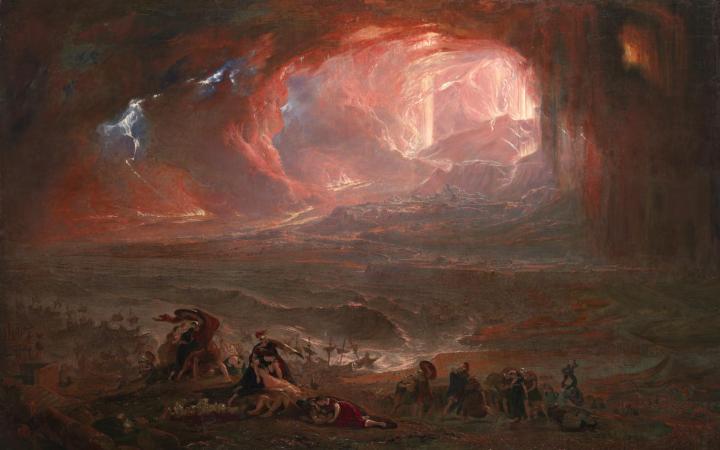
John Martin, The Destruction of Pompeii and Herculaneum, 1822
(London: Tate)
◊ ◊ ◊ ◊ ◊
From the conference website:
Imagining Apocalypse
Radcliffe Humanities Building, University of Oxford, 18 June 2016
Organised in collaboration with Dr Catherine Redford, the theme of this year’s RECSO conference is Imagining Apocalypse and will be held on 18th June. 2016 is a key anniversary for scholars studying long eighteenth-century depictions of apocalypse as it marks two hundred years since the famous ‘year without a summer’ of 1816, when the skies went dark and there was widespread speculation that the end of the world was nigh. This conference will allow a varied group of scholars working in the field of long eighteenth-century apocalypse studies to share their current research, giving them the chance to consider collaboratively current trends and research in apocalypse studies and to look forward to future projects. The project will ultimately encourage a more interdisciplinary approach to apocalypse studies.
Bringing together academics from across English, History, History of Art, Modern Languages, and Theology, the conference will introduce participants to the richness of apocalypse studies across a range of disciplines, both enhancing their research and laying the foundations for future projects, publications, and collaborations. A plenary lecture will be given by Professor Fiona Stafford (Professor of English Language and Literature, University of Oxford). Following the conference, a showcase of musical and literary performances will take place at St George’s Crypt, Oxford Castle. Registration is now open; see the conference website for further details.
Romanticism and Eighteenth-Century Studies Oxford (RECSO) is a graduate-led initiative for scholars across the Humanities Division. Our aim is to provide a platform for graduates and academics from various disciplines to discuss and share their research into the long eighteenth century. It also facilitates the development of projects, workshops and larger events, as well as providing a physical meeting space for RECSO’s growing body of members.
◊ ◊ ◊ ◊ ◊
P R O G R A M M E
9.30 Registration
10.15 Welcome and introduction by Catherine Redford and Emily Knight, University of Oxford
10.30 Morning Session
Panel A: The Eighteenth-Century Apocalyptic Imagination: The Interpretative Landscape
Chair: Amelia Greene
• Jonathan Downing, University of Bristol: ‘The Commentators’ Apocalypse: The Interpretation of Biblical Eschatology in Eighteenth-Century Popular Commentaries’
• Stephen Bygrave, University of Southampton: ‘Improvement and Apocalypse: Joseph Priestley’s Rhetoric in the 1790s’
Panel B: The Last Man
Chair: Eva-Charlotta Mebius
• Claire Sheridan, University of Greenwich: ‘Apocalypse as Domestic Melodrama: Dibdin Pitt’s The Last Man; or, the Miser of Eltham Green’
• Audrey Borowski, University of Oxford: ‘The Strange Indetermination of Cousin de Grainville’s “Last Man”’
• Adrian Tait, Independent Scholar: ‘Intimations of Apocalypse: From Mary Shelley’s The Last Man to M. P. Shiel’s The Purple Cloud’
12.00 Lunch
12.45 Afternoon Session, Part I
Panel A: Revelation/Revelations
Chair: Christian Zolles
• Natasha O’Hear, University of St Andrews: ‘Four Become One: The Preoccupation with the Fourth Horseman of the Apocalypse in the Eighteenth Century’
• Joanna Raisbeck, University of Oxford: ‘The Post-Kantian Apocalypse: Revelatory Visions in Jean Paul and Karoline von Günderrode’
• Randall Reinhard, University of Edinburgh: ‘The Revelation of Edward Irving: The Apocalypse as Social Criticism’
Panel B: Secular Apocalypse: Nature and the Human
Chair: TBC
• Amelia Greene, City University of New York: ‘Uncovered Earth: Scaled Apocalypse in John Clare’
• Lucia Scigliano, Durham University: ‘“What faith is crushed, what empires bleed”: Apocalypse and Nature in Percy Bysshe Shelley’s Hellas’
• Adam D. J. Laity, University of the West of England: ‘The Last Man, the Rückenfigur and Mad Max: Romantic Subjectivism and “the human” within the Apocalyptic Sublime Landscape’
2.15 Tea and coffee
2.45 Afternoon Session, Part II
Panel A: Ruin and Catastrophe
Chair: Audrey Borowski
• Jessica Stacey, King’s College London: ‘Apocalypse of Meaning: Catastrophes of Language in Eighteenth-Century France’
• Thomas Moynihan, University of Oxford: ‘Human Extinction and Romanticism: The Intellectual Discovery of the End of Thought’
• Helen Slaney, University of Oxford: ‘Original Ruins’
Panel B: Apocalyptic Afterlives
Chair: TBC
• Christian Zolles, University of Vienna: ‘Modern Apocalypse in Reverse: Edgar Allan Poe’s Dialogue The Conversation of Eiros and Charmion (1839)’
• Tom Bromwell, University of York: ‘A Sublime Armageddon: First World War Artists and the Burkean Sublime’
• Catherine Redford, University of Oxford: ‘From Mary Shelley to H. G. Wells: The Romantic Last Man Reimagined’
4.15 Plenary lecture
• Fiona Stafford, University of Oxford: ‘Barkless, branchless, blighted: Alpine Apocalypse in 1816’
5.15 Closing remarks; walk to Oxford Castle
6.15 Showcase in St. George’s Crypt, Oxford Castle: A selection of musical and literary imaginings of the Last Man on earth from the Romantic period.
7.00 Dinner
Conference | Making Britain Modern
From The Courtauld:
Conference in Celebration of Professor David H. Solkin: Making Britain Modern
The Courtauld Institute of Art, Somerset House, London, 2 July 2016
Organized by Katie Scott

Thomas Rowlandson, The Exhibition Stare-Case, Somerset House, Watercolor and pen and ink on medium, slightly textured, cream wove paper, ca. 1800 (Yale Center for British Art, Paul Mellon Collection)
This conference will celebrate the scholarship of Professor David H. Solkin and his outstanding contribution to the study of British art. Convening a younger generation of academics and curators whose work has been marked by David Solkin’s teaching and writing, the day will encapsulate the diverse ways in which his call for a trenchant social history of eighteenth-century British art has been answered.
The title Making Britain Modern alludes to David Solkin’s profound and wide-ranging engagement with the years between the Glorious Revolution and the death of George IV, a period in which the nation’s visual culture was transformed by broader ‘modernising’ processes of commercialisation, industrialisation and overseas expansion. Through extensive original research, acute dialectic analysis and incisive argumentation, Solkin’s historiography has advocated enquiry that is sensitive to the impact of broader social and political change on the era’s artists and artworks, and its public and commercial institutions. Thanks to an important corpus of monographs, essays, and ground-breaking exhibition catalogues, David Solkin has taught a whole generation of researchers how rigorous scholarship can be used to conjure a vivid impression of this transformational moment in British art and to restore the social significance of forgotten paintings, revising the standard account of such eminences as Richard Wilson, Joshua Reynolds, William Hogarth, Joseph Wright of Derby, and J.M.W. Turner in the process.
Making Britain Modern will offer a series of presentations on subjects and questions that are also themes current in David’s work. Dian Kriz takes up the issue of the portrayal of heroic masculinity as repurposed for contemporary colonial Jamaica. Violence is also a theme for Meredith Gamer and Joseph Monteyne, as spectacle of execution in the case of the former and as Gillray’s practice of etching in the case of the latter. In counterpoint, Matthew Hargraves considers narratives of modern sentiment in religious painting, while John Chu explores Constable’s sketches of the polite and leisured in commercial society. Questions of invention and experimentation in the context of industrialisation are raised by Richard Johns through a consideration of Wedgwood’s jasperware. Finally, Kate Grandjouan broaches the remaking of national identity in the context of British ascendency in Europe. The programme will open with a conversation between Martin Myrone and David Solkin, which explores the themes of his writing and the range of his contribution. A pop-up exhibition of works in the Courtauld Gallery, curated by Mark Hallett, will provide an opportunity to inspect important examples of the kinds of British drawings, watercolours, and prints which have been subjects of David Solkin’s research and teaching, but also allude to his long-standing activities as a collector. Sarah Monks will offer a summation of the day and consider what it conveys about his on-going impact to British art studies.
P R O G R A M M E
9.00 Registration
9.25 Welcome by Alixe Bovey (The Courtauld Institute of Art)
9.30 Martin Myrone (Tate Britain) in conversation with David Solkin
10.00 Meredith Gamer (Columbia University): The ‘Fine Art’ of Execution in Eighteenth-Century Britain
10.30 Kate Grandjouan (independent scholar): French Disruption: Alterity and the Satirical Print
11.00 Tea / coffee break
11.30 Matthew Hargraves (Yale Center for British Art): Devotions in Doncaster: Francis Hayman’s Good Samaritan
12.00 Richard Johns (University of York): The Trials of Josiah Wedgwood
12.30 Discussion and questions
13.00 Lunch break and pop-up exhibition in Prints and Drawings’ Room at The Courtauld Gallery curated by Mark Hallett
15.00 Joseph Monteyne (University of British Columbia): The Eye Under Attack: James Gillray’s Violent Ground of the Image
15.30 Dian Kriz (Brown University): A Military Artist Takes on the Indies: Abraham James and the Colonial Display of Martial Masculinity
16.00 Discussion and questions
16.30 Tea / coffee break
17.00 John Chu (National Trust; The Courtauld Institute of Art): Drawn Indoors: John Constable’s Idle Works
17.30 Sarah Monks (University of East Anglia): Summation and Discussion
18.00 Reception
Symposium | IFA and The Frick Host History of Art Symposium
This weekend’s symposium includes two papers on the eighteenth century; the full program is available as a PDF file here. Details are also available from The Frick Collection.
A Symposium on the History of Art
The Institute of Fine Arts of New York University (Friday) and The Frick Collection (Saturday), 15–16 April 2016
Friday, 15 April, 3:20pm, “‘An Event Like a Ritual’: Representative Fictions in The Declaration of Independence by John Trumbull” Abigail Glogower, University of Rochester
Saturday, 16 April, 10:00am, “Seductive Surfaces in Anne Vallayer Coster’s Still Life with Seashells and Coral (1769)” Kelsey Brosnan, Rutgers University
Conference | Transforming Topography
◊ ◊ ◊ ◊ ◊
From The Paul Mellon Centre:
Transforming Topography
The British Library, London, 6 May 2016
A conference, organised by The British Library and The Paul Mellon Centre, that promises to shed new light and fresh insights on the field of topography and on The British Library’s collection
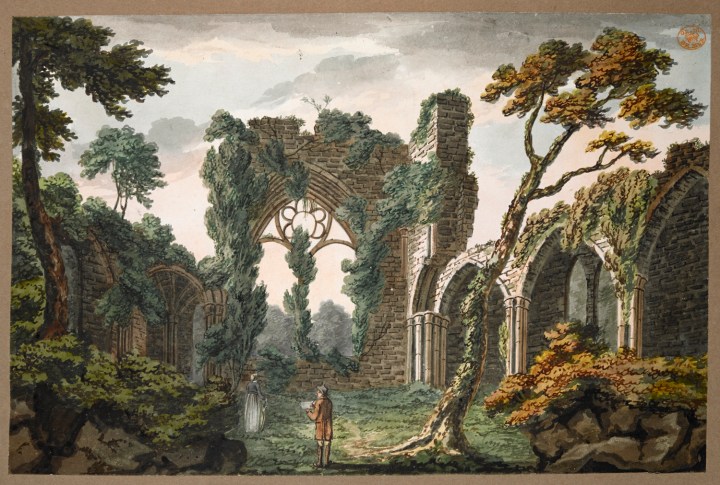
Topography is an emerging and dynamic field in cultural and art historical scholarship. The British Library holds an extensive and extremely fine collection of place-related material including topographical views, travel diaries, and antiquarian texts, amassed by distinguished collectors such as Charles I and II, Hans Sloane, and not least George III. The Transforming Topography conference is one element of an on-going research project which aims to explore The British Library’s topographic collections in the light of current research. George III’s topographical collection—estimated at 40,000 maps and views—is currently being catalogued and digitised with a new web space due in 2017. With talks delivered by both established and emerging scholars, the day will end with a chaired panel discussion, addressing the matter of ‘topography now’ in art history, cultural geography, and other disciplines. Ticket prices: £20 (full price, adult), £16 (senior citizens), £14 (students).
P R O G R A M M E
9:30 Registration
10:00 Welcome by Kristian Jensen (Head of Collections and Curation, British Library)
10:05 Introduction by Mark Hallett (Director of Studies, Paul Mellon Centre for Studies in British Art) and Felicity Myrone (Lead Curator, Western Prints and Drawings, British Library)
10:15 Session One
Chaired by Finola O’Kane Crimmins (University College Dublin)
Daniel Maudlin (University of Plymouth), A Narrow View of Nature: The Natural World Experienced through Early Modern Itineraries, Travel Maps, and Inns
This paper will consider how the road-building boom of Georgian Britain and British America transformed actual and imaginative experiences of travel. Drawing on the Library’s collection of contemporary travel aids, it will address how travel was recast as a distinctly linear experience: how printed itineraries and route maps presented a modern world defined by mobility but which reduced nature to a strip, experienced through a succession of views from a carriage window.
Kelly Presutti (Massachusetts Institute of Technology), Louis Garneray and Topographical Painting as Border Control
Ports were one of the earliest sites depicted topographically in fine art; the practice was institutionalized in France in 1817 when Louis Garneray (1783–1857) was named official painter to the navy. His Vues des côtes de France in the British Library’s King’s Topographical Collection reveal how topography was deployed as an instrument of state formation and as a means to secure the nation at the site where it is most vulnerable—its borders. Garneray’s work was also widely disseminated in various formats, and in ways which transcended historical divisions between fine and decorative arts, such as a porcelain service produced at the state-sponsored Sèvres manufactory.
11.15 Coffee
11:45 Session Two
Chaired by John Bonehill (University of Glasgow)
Matthew Sangster (University of Birmingham), Accumulating London
How did the topographical series produced in the late eighteenth and early nineteenth centuries seek to encompass and explain the rapidly-expanding metropolis of London? During this period, advances in print technologies, growing audiences and the interventions of clever entrepreneurs led to an unprecedented burgeoning of city images. As a legacy of past productions piled up, authors, artists and publishers began to cater to different constituencies by offering increasingly specialised versions of London. This talk will consider the contrasting ways in which these works organised, selected from and represented the city by employing digital methods and historical plans to display the geographical and cultural patterns that they trace.
Jenny Gaschke (Bristol Museum and Art Gallery), ‘Available for Useful Purposes’: The Braikenridge Collection of Topographical Drawings in Bristol
The antiquarian collector George Weare Braikenridge (1775–1856) brought together vast numbers of objects relating to Bristol’s history and keenly collected and commissioned views of Bristol, its harbour and environs. The Braikenridge collection will be evaluated within the wider practice of antiquarianism, and will also be situated within the development of British landscape art during the first half of the nineteenth century. Can the Braikenridge collection also shed light on how ‘topography’ is defined in the museum and art gallery, via collecting policies, storage, access, display, interpretation and research?
12.45 Lunch
13:45 Session Three
Chaired by Martin Postle (Paul Mellon Centre for Studies in British Art)
Mikael Ahlund (Museum Gustavianum, Uppsala University Museum), Topography, Iron-Making, and National Identity: A British–Swedish Comparison
This paper addresses the role British topography played in Scandinavia, paying particular attention to the output of two Swedish artists: Elias (1739–1818) and Johan Fredrik Martin (1755–1816). The brothers worked in London producing topographical images of the British countryside, and moved in the same circles as Paul Sandby. When they returned to Sweden in 1780 they emerged as the country’s leading topographical artists. With recourse to contemporary travel writing, this paper will attempt to identify themes in the brothers’ topographical imagery—themes connected to contemporary debates about national identity, economics, and social order.
Amy Concannon (University of Nottingham / Tate Britain), A Place for the ‘Full Exercise of the Intellectual Powers of a Topographical Writer’: Lambeth’s Topographical Image, ca. 1800–50
With important antiquarian sites like Lambeth Palace and places of popular entertainment like Vauxhall Gardens, the London parish of Lambeth was a rich resource for topographical artists and writers at the turn of the nineteenth century. It was also a landscape in flux: a traditional ‘rural retreat’ on the Surrey side of the Thames undergoing rapid urbanisation. With a particular focus on the work of Lambeth-born topographer Edmund Wedlake Brayley (1773–1854), how did contemporary producers of topographical material—both visual and textual—negotiate the changing landscape of Lambeth?
Lucy Hodgetts (University of York), Topography and Graphic Caricature in Dagaty’s and Rowlandson’s Six Views of Different Entrances to London (1797–98)
From 1797 Rudolph Ackermann published six views of entrances to London after drawings by Rowlandson and Dagaty. They were sold at his Strand gallery, the Repository of Arts. This paper will analyse the social identities of the human figures in the views, their mobility, and how metropolitan topographical settings were employed by artists and writers to comment on contemporary social anxieties. It will also reveal the possible political agendas of a generic cross-over between topography and graphic caricature in visualising politically unstable subjects.
15:15 Tea
15:45 Round Table Discussion: Topography Now
Chaired by Mark Hallett (Paul Mellon Centre for Studies in British Art)
Position papers and discussion with Jane Roberts (formerly Royal Collection, Windsor Castle), Stephen Daniels (University of Nottingham), John Barrell (Queen Mary, University of London), and Stephen Bann (University of Bristol)
17:00 Conclusion
Symposium | Jesuits and the Arts in China
From the symposium programme:
Jesuits and the Arts in China
Department of Fine Arts, The University of Hong Kong, 11–12 April 2016
A research symposium exploring the role of the Jesuits in the production of art and architecture in China in the 17th and 18th centuries. Hosted by the Faculty of Arts at the University of Hong Kong and funded by the Arts Faculty’s Strategic Research Theme in China-West Studies. With no registration necessary, the symposium is free and open to the public. For information, contact Professor Greg Thomas, gmthomas@hku.hk
M O N D A Y , 1 1 A P R I L 2 0 1 6
2:00 Welcome
2:10 Gauvin BAILEY (Queen’s University) keynote talk: The Migration of Forms in the Art of the Jesuit Missions in Japan and China
3:15 Tea break
3:30 SONG Gang (University of Hong Kong): Printing Tianxüe: The Ascendance of Catholic Imprints in 17th-Century China
4:15 QU Yi (Nanjing University of the Arts): Alphabetic Characters in European Images and their Influence in China
T U E S D A Y , 1 2 A P R I L 2 0 1 6
10:00 Greg THOMAS (University of Hong Kong): Religious Negotiation in the Decoration of the Western Palaces at Yuanming Yuan
10:45 CHIU Che Bing (Ecole Nationale Supérieure d’Architecture and School of Architecture Tianjin): The Jesuits and the Representation of Yuanming Yuan in the West
11:30 Tea break
11:45 YU Pei-chin (National Palace Museum Taipei): Issues Related to the Production of Ceramics as Seen in the Letters of Père François Xavier d’Entrecolles
12:30 Lunch break
2:30 Kee Il CHOI (art consultant, U.S., and University of Warwick): The Talented Mr. Panzi: A Jesuit Painter and His Lamentable Debut at the Qing Court
3:15 Marco MUSILLO (Kunsthistorisches Institut): Global Hagiographies versus Local Praxis: Giuseppe Castiglione in Jesuit History and in the Painting Workshop (1700–1766)
4:00 Reception
Seminar | ‘Those Wilder Sorts of Painting’: Revisiting Murals in Britain
From the seminar flyer:
‘Those Wilder Sorts of Painting’: Revisiting Murals in Britain, 1600–1750
Murray Edwards College, Cambridge, 16 September 2016
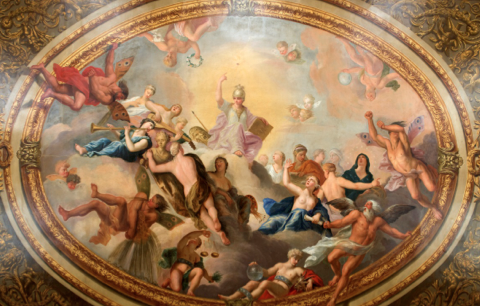
Antonio Verrio’s Ceiling for the Banqueting House at Hampton Court (Historic Royal Palaces)
This interdisciplinary seminar will focus on mural painting and its place within the cultural life of Britain in the seventeenth and early eighteenth centuries, highlighting new ways of looking at the work, its artists, and patrons. The aim is to stimulate interest in this often overlooked genre and its place in British art-historical studies. We hope to encourage curators, academics, and museum professionals to exchange ideas about the history, meaning, workshop practice, and iconography of mural art, as well as its significance within contemporary British and Continental visual cultures. The seminar is organised by the British Art Network Sub Group ‘British Mural Painting’. The event is free, but booking is essential; contact Lydia Hamlett, lkh25@cam.ac.uk.
Confirmed speakers and themes include
• Stijn Bussels (Leiden) and Ute Engel (LMU Munich) on Continental parallels
• Andrew Pinnock (Southampton) on opera
• Richard Johns (York) and David McNeil (Dalhousie) on architectural typologies
• Nick Nace (H-SC Virginia) on country house poetry
• Julie Farguson (Oxford) on artist/patron case studies
• Stacey Hickling (UCL) on Antonio Verrio
• Lydia Hamlett (Cambridge) on Louis Laguerre
• François Marandet (IESA) on Louis Chéron
• Anya Matthews (ORNC Greenwich) on James Thornhill
• Laurel Peterson (Yale) on Giovanni Antonio Pellegrini
Conference | Creating the Europe 1600–1815 Galleries at the V&A
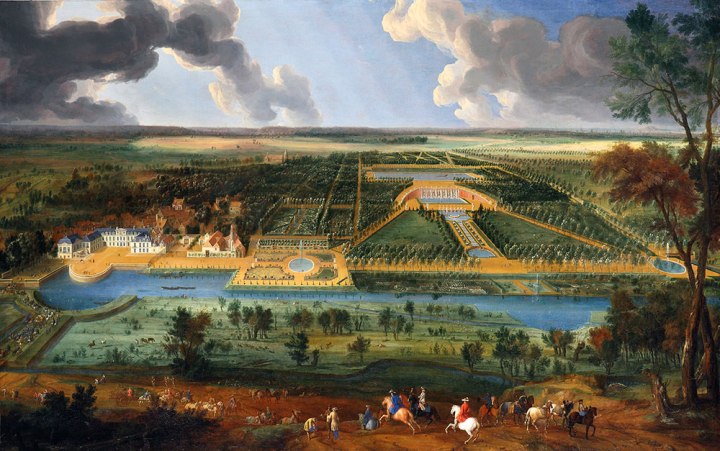
Pierre-Denis Martin, The Château de Juvisy,
165cm x 265cm, ca. 1700 (London: V&A)
◊ ◊ ◊ ◊ ◊
From H-ArtHist:
Creating the Europe 1600–1815 Galleries
Victoria and Albert Museum, London, 8 April 2016
This conference celebrates the opening of the V&A’s new Europe 1600–1815 Galleries. It will introduce some of the new patterns of living that laid the foundations for our modern world. The papers will be presented according to the three main themes that create a narrative structure for the displays and interpretation in the galleries: first, that, for the first time ever, Europeans systematically explored, exploited, and collected resources from Africa, Asia and the Americas in their art and design; second, that France took over from Italy as leader of fashion and art in the second half of the 17th century; and third, that ways of living came to resemble those we know today. The conference is supported by The Heritage Lottery Fund.
Booking information is available here»
◊ ◊ ◊ ◊ ◊
P R O G R A M M E
10.00 Registration
10.30 Welcome by Bill Sherman (Head of Collections and Research, V&A)
10.40 Session One: The Europe Galleries 1600–1815 at the V&A
• Why Does 17th- and 18th-century Europe Matter Now?, John Styles (Professor of History, University of Hertfordshire, Senior Research Fellow, V&A)
• Creating the Europe 1600–1815 Galleries, Lesley Miller (Lead Curator, Europe 1600–1815 Galleries, V&A) and Lucy Trench (Head of Interpretation, Science Museum, formerly Lead Educator, Europe 1600–1815 Galleries, V&A)
11.40 Session Two: Explored and Exploited
• A Global Context for Europe, Beverly Lemire (Henry Marshall Tory Chair, Department of History and Classics, University of Alberta)
• The Cabinet: Collecting Art and Science, Eric Jorink (Tylers Professor of Enlightenment and Religion, Leiden University and a Research Professor, Department of History of Science and Scholarship, Huygens Institute for the History of the Netherlands, The Hague)
• Displaying Spain and Spanish America, 1600–1720, Kirstin Kennedy (Curator of Metalwork, V&A)
13.15 Lunch
14:00 Session Three: The Rise of France
• The Invention of Comfort in the Modern City, Joan DeJean, (Trustee Professor of Romance Languages, University of Pennsylvania)
• Luxury and Shopping in the Long Eighteenth Century, Natacha Coquery (Professor of History, University of Lyon II; INHA, Paris)
• Displaying French Historical Interiors: La Tournerie and the Serilly Cabinet, Joanna Norman (Senior Curator, Research Department, V&A)
15.15 Refreshments
15:45 Session Four: Then and Now
• The Impact of the Enlightenment, Colin Jones (Professor of History, Queen Mary’s, University of London)
• Fashion in Print, Patrick Steorn (Director, Thielska Galleriet, Stockholm; participant in HERA Fashioning the Early Modern Research Project)
• Bringing Interactivity into the Galleries: The Masquerade, Dawn Hoskin and Nadine Langford (Assistant Curator and Assistant Educator, Europe 1600–1815, V&A)
16:45 Closing Remarks on V&A’s Approach to Gallery Development, Sofía Rodriguez Bernis (Director of Museo Nacional de Artes Decorativas, Madrid)
Capability Brown Festival 2016 Marks Designer’s 300th Birthday

Blenheim Palace
◊ ◊ ◊ ◊ ◊
Press release for the Festival, which includes events throughout the year:
Capability Brown Festival 2016
The Capability Brown Festival 2016 is the first-ever nationwide celebration of the work of Lancelot ‘Capability’ Brown (1716–1783). It marks the 300th anniversary of his birth in August 1716. The Festival unites 19 partner organisations, in the UK’s largest festival of its kind to date. It is funded with a grant from the Heritage Lottery Fund, with additional match funding, and funding in kind, from the Festival’s partners and supporters. The Festival is managed by the Landscape Institute.
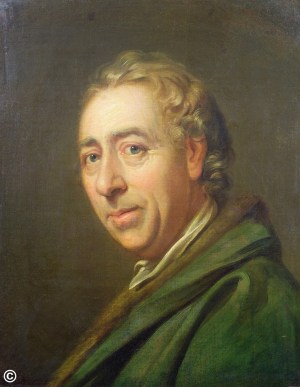
Richard Cosway, Portrait of Lancelot ‘Capability’ Brown, ca.1770–75 (Private Collection/Bridgeman Images)
The Festival has two key strands. The first is about increasing audiences and public access to the sites Brown worked or advised on. People will be able to explore and engage with Brown’s legacy landscapes, features and houses. The Festival will encourage as many Brown sites as possible to open in 2016, including those not ordinarily open to the public, and will support site owners and guardians in interpreting their landscapes for visitors. The second strand of the project is to discover more about Brown’s work and how he created his amazing landscapes and management systems with the tools available in the eighteenth century. Researchers, volunteers, independent groups and individuals, universities and sites themselves are being encouraged to undertake research projects on Brown and his work. This will be collated and shared through exhibitions, websites, social media and a range of events.
The Capability Brown Festival 2016 will
• Celebrate Capability Brown as an artist and landscape designer
• Encourage an increased number of people and a more diverse audience to visit, learn about and enjoy Brown’s landscapes
• Commission a range of interesting and innovative projects to encourage sites and people to get involved across the country
• Encourage a greater appreciation of our designed landscape heritage.
 To achieve this the Festival project team will
• Offer a comprehensive programme of support to owners of Brown sites, aiming to open as many as possible during Festival year, including those not normally open to the public
• Develop a network of hub sites across England to support and engage the Brown sites in their area or region
• Work with sites, with a special focus on those in urban areas and those commissioned to run projects, to bring Brown to new audiences
• Interpret all or as many sites as possible, using research by volunteers who will be trained and supported by the Festival
• Use media, PR, partner and central communication opportunities to promote understanding of Brown’s art and design influence
• Stimulate new research, and create a definitive record of Brown sites
• Ensure that the Festival’s findings, research and learning resources are accessible to as many people as possible, and share learning as it develops through a programme of regional seminars
• Engage volunteers in all aspects of the 2016 celebrations.
Lancelot ‘Capability’ Brown changed the face of eighteenth-century England, designing country estates and mansions, moving hills and making flowing lakes and serpentine rivers. Brown was baptised on 30 August 1716 at Kirkharle, Northumberland, the fifth of the six children of William Brown, a yeoman farmer and Ursula, née Hall, who had worked in the big house on the Kirkharle estate. He went to the village school at Cambo, and then began work as a gardener at Kirkharle, leaving in 1739. In 1741 he reached Stowe, Buckinghamshire where he rapidly assumed responsibility for the execution of both architectural and landscaping works in the famous garden. It was at Stowe in 1744 that Brown married Bridget Wayet, with whom he eventually had nine children. While at Stowe, Brown also began working as an independent designer and contractor and in autumn 1751, shortly after Cobham’s death, he was able to move with his family to the Mall, Hammersmith, the market garden area of London. His nickname of ‘Capability’ is thought to have come from his describing landscapes as having ‘great capabilities’.
Brown’s style derived from the two practical principles of comfort and elegance. On the one hand there was a determination that everything should work, and that a landscape should provide for every need of the great house. On the other his landscapes had to cohere and look elegant. While his designs have great variety, they also appear seamless owing to his use of the sunk fence or ‘ha-ha’ to confuse the eye into believing that different pieces of parkland, though managed and stocked quite differently, were one. His expansive lakes, at different levels and apparently unconnected, formed a single body of water as if a river through the landscape, that like the parkland itself, ran on indefinitely. This effortless coherence is taken for granted today in a way that was predicted in his obituary: ‘where he is the happiest man he will be least remembered, so closely did he copy nature his works will be mistaken’.
Brown offered a number of different services to his clients: for a round number of guineas, he could provide a survey and plans for buildings and landscape, and leave his client to execute his proposal; more frequently he provided a foreman to oversee the work, which would be carried out by labour recruited from the estate. Even in 1753, when he opened his account with Drummond’s Bank, Brown was employing four foremen and by the end of the decade he had over twenty foremen on his books. Finally, he could oversee and refine the work himself, usually by means of visits for a certain number of days each year. He also practiced architecture, and during the 1750s contributed to several country houses, including Burghley House, Blenheim, Chatsworth and Harewood. However, his architecture played second fiddle to his ‘place-making’. In 1764 he was appointed to the gardens of Hampton Court, Richmond and St James’s, and he then moved to Wilderness House, Hampton Court.
Brown had suffered from asthma all his life, and his habit of the constant travel, together with his practice of not always charging for work (he would sometimes allow his client to determine the value of what he had done and seems frequently to have submitted plans and surveys without a bill), did affect both his health and finances. He continued to work and travel however until his sudden collapse and death on February 6th, 1783. He died at his daughter Bridget Holland’s house in London, but was buried at Fenstanton, in Cambridgeshire, the only place he is known to have owned property and where he became Lord of the Manor.
Brown is best remembered for landscape on an immense scale, constructing not only gardens and parkland, but planting woods and building farms linked by carriage drives, or ‘ridings’, many miles from the main house. Although his work is continually reassessed, every landscape gardener and landscape architect since, both in Britain and across the developed world, has been influenced in one way or another by Brown. Over two centuries have passed since his death, but such are the enduring qualities of his work that over 150 of the 260 or so landscapes with which he is associated remain worth seeing today. The images that Brown created are as deeply embedded in the English character as the paintings of Turner and the poetry of Wordsworth.
Founding Partners
The Landscape Institute
The National Trust
The Historic Houses Association (HHA)
English Heritage
Historic England
VisitEngland
The National Garden Scheme
The Gardens Trust
Kolab
The National Association of Decorative & Fine Arts Societies (NADFAS)
VisitBritain
Parks & Gardens UK
Festival Partners
Blenheim Palace
The Royal Horticultural Society
Bridgeman Images
The Embroiderers’ Guild
Festival Supporter
The Georgian Group
Festival Funder
Heritage Lottery Fund
Conference | Keeping History Above Water

◊ ◊ ◊ ◊ ◊
One centerpiece of this upcoming conference on rising sea levels and historic preservation will be the NRF’s 74 Bridge Street Probe, a case study of possible mitigation adaptations for the ca. 1728 Christopher Townsend House and the surrounding colonial-era ‘Point’ neighborhood, which sits perilously close to mean sea level, and in which NRF owns about a dozen other eighteenth-century houses. From the conference website:
Keeping History Above Water: Sea Level Rise and Historic Preservation
Newport, Rhode Island, 10-13 April 2016
Keeping History Above Water will be one of the first national conversations to focus on the increasing and varied risks posed by sea level rise to historic coastal communities and their built environments. This is not a conference about climate change, but about what preservationists, engineers, city planners, legislators, insurers, historic home owners and other decision makers need to know about climate change—sea level rise in particular—and what can be done to protect historic buildings, landscapes and neighborhoods from the increasing threat of inundation.
Over four days, specialists from across the United States and abroad will share experiences, examine risks, and debate solutions with an emphasis on case studies and real world applications. Keeping History Above Water will approach sea level rise from a multi-disciplinary perspective in order to develop practical approaches to mitigation, protective adaptation, and general resilience.
For anyone concerned with preserving historic coastal communities, Keeping History Above Water offers an opportunity to hear from leaders in the field, participate in workshops on practical solutions, tour threatened areas and structures in Newport and its environs, and simply connect over this area of shared concern.
The Newport Restoration Foundation
Founded as a not-for-profit institution in 1968 by Doris Duke, the Newport Restoration Foundation (NRF) preserves, maintains, and interprets the early architectural heritage of Aquidneck Island and the fine and decorative art collections of Doris Duke. Since its founding, NRF has restored and preserved more than 80 eighteenth- and early nineteenth-century buildings, 74 of which are currently rented as private residences to tenant stewards and maintained by a full-time crew of carpenters and painters. This is one of the largest collections of period architecture owned by a single organization anywhere in the United States. More importantly, the majority of these structures are being lived in and used as they have for more than three centuries, making them an enduring and defining feature of the historic architectural fabric of Newport and a source of great pride for the community.
As a leader in the preservation of early American architecture, the NRF is well positioned to provide a forum for the exchange of information across disciplinary boundaries for collaborative problem solving in the areas of most critical concern to the field of historic preservation today.
Conference Partners
National Trust for Historic Preservation
Preserve Rhode Island
Roger Williams University
Salve Regina University
URI’s Coastal Resource Center
Union of Concerned Scientists










leave a comment