Symposium | Rembrandt and Printmaking
From the Miriam and Ira D. Wallach Art Gallery:
Rembrandt and Printmaking: New Views on a Golden Age
Columbia University, New York, 5 November 2015
Presented by the Miriam and Ira D. Wallach Art Gallery in conjunction with the exhibition Rembrandt’s Changing Impressions and the International Fine Print Dealers Association Print Fair, this symposium will spark a new and closer look at Rembrandt’s astonishing print practice, its context, and its contributions.
Thursday, 5 November 2015, 3–6pm
612 Schermerhorn Hall, Columbia University, 116th Street & Broadway, New York City
• “Hercules Segers and Rembrandt: Direct Influence or Kindred Spirits?” Nadine M. Orenstein, Drue Heinz Curator in Charge, Department of Drawings and Prints, The Metropolitan Museum of Art, New York
• “St. Jerome in Darkness and Light,” Clifford S. Ackley, Ruth and Carl J. Shapiro Curator of Prints and Drawings, Museum of Fine Arts, Boston
• “Rembrandt and the Faust Tradition,” Robert Fucci, exhibition curator
• “Edme-François Gersaint as Chroniqueur of Knowledge about Rembrandt’s Etchings,” Erik Hinterding, Curator of Prints, Rijksmuseum, Amsterdam
• “Desire and Disgust: Collecting Rembrandt’s Etchings in Georgian England,” Stephanie Dickey, Professor of Art History and Bader Chair in Northern Baroque Art, Queen’s University, Kingston, Ontario
• “Rembrandt as Experimental Etcher,” Jan Piet Filedt Kok, former Curator of Prints and Director of Collections, Rijksmuseum, Amsterdam
Reception and viewing of the exhibition to follow at 6pm at The Wallach Art Gallery
◊ ◊ ◊ ◊ ◊
 Rembrandt’s Changing Impressions, on view through December 12, is curated by art history PhD candidate Robert Fucci. This extraordinary project highlights Rembrandt’s most dramatically altered prints. It gathers 52 seventeenth-century impressions from 14 major U.S. collections to best examine his manipulations and transformations, and is an unprecedented opportunity to examine the range, power, and nuance of Rembrandt’s fine prints. A fully illustrated, 160-page catalogue, co-published by The Wallach Art Gallery and Verlag der Buchhandlung Walther König, Köln is available for $35.
This exhibition and related programming received generous support from the Netherland-America Foundation, the Dutch Culture USA program by the Consulate General of the Netherlands in New York, the IFPDA Foundation, and the European Institute at Columbia University. We are especially grateful for our collaboration with the European Institute and the Department of Art History and Archaeology in presenting this symposium.
Symposium | Portraiture as Interaction
From the Yale Center for British Art and the conference program:
Portraiture as Interaction: The Spaces and Interfaces of the British Portrait
The Huntington, San Marino, California, 11–12 December 2015
 This two-day international symposium has been inspired by the important collections of British portraits at the Huntington Art Gallery and the Yale Center for British Art, and by an upsurge of scholarly interest in the interactive nature of portraiture—both in its intrinsic character and as a curatorial construct.
Portraiture implies an interaction between the sitter and the spectator. It often rehearses an interaction between two or more protagonists and regularly focuses on the interaction between the person(s) represented and his, her, or their surroundings. Portraits—of husbands and wives, sisters and brothers, friends, and colleagues—are often depicted by artists and arranged by curators so as to interact with each other in meaningful ways. As they are created, and once they are completed, portraits (and the figures they represent) interact with their settings: with the studio, the exhibition space, the domestic interior, the public building or square; and with the objects, people, and spaces found in those settings. The same portrait, or portraits of the same sitter, can also find themselves interacting with each other across different media—paint, print sculpture, and more.
Furthermore, curators are continually thinking about the ways in which the portraits they display—and the individuals these pictures portray—will relate with each other across and around a gallery. The Thornton Portrait Gallery at the Huntington and the galleries at the Yale Center for British Art exemplify portraiture’s continuing forms of interaction: implied and actual, pictorial and physical, and formal and figural.
This symposium, which is jointly organized by the Yale Center for British Art, the Paul Mellon Centre for Studies in British Art, and the Huntington Library, Art Collections, and Botanical Gardens, will use the rich collections at the Center and the Huntington and the different concepts of interaction outlined above as points of departure and return, in order to open up new approaches to the history and workings of British portraiture up to the present.
Registration details are available here»
◊ ◊ ◊ ◊ ◊
F R I D A Y , 1 1 D E C E M B E R 2 0 1 5
8:30 Registration and coffee
9:30 Welcome by Steve Hindle (The Huntington)
9:35 Introduction
• Mark Hallett (Paul Mellon Centre for Studies in British Art) “Portraiture as Interaction”
10:00 Session 1
Moderator: Cassandra Albinson (Harvard Art Museums)
• Jack Hartnell (Columbia University), “Specimen, Surgeon, Self: Three Medical Portraits and Four Hundred Years”
• Adam Eaker (The Frick Collection), “The Scene of the Sitting”
12:00 Breakout Sessions in the Collections
• Ann Bermingham (University of California, Santa Barbara)
• Malcolm Warner (Laguna Art Museum)
• Kimberly Chrisman-Campbell (FIDM Museum & Galleries)
• Melinda McCurdy (The Huntington)
• Cora Gilroy-Ware (The Huntington and California Institute of Technology)
1:00 Lunch
2:00 Session 2
Moderator: Lars Kokkonen (Yale Center for British Art)
• Caroline Fowler (The Getty Research Institute), “Raphael’s Apostles and Portraiture in the Eighteenth Century”
• Brigid Von Preussen (Columbia University), “Wedgwood’s Portrait Medallions”
S A T U R D A Y , 1 2 D E C E M B E R 2 0 1 5
9:30 Registration and coffee
10:00 Session 3
Moderator: Catherine Hess (The Huntington)
• Sean Willcock (Queen Mary University of London), “The Politics of Interaction between British and Indian Portraits during the Victorian Period”
• Juliet Carey (Waddesdon Manor), “Faces for a House Party: British Portraits at Waddesdon Manor”
12:00 Lunch
1:00 Session 4
Moderator: Martina Droth (Yale Center for British Art)
• Petra ten-Doesschate Chu (Seton Hall University), “Interaction and ‘Interfacing’ in Lawrence Alma Tadema’s Portrait of Ignacy Jan Paderewski”
• Linda Docherty (Bowdoin College), “Encircling Robert Louis Stevenson: The Origins and Afterlife of Augustus Saint-Gaudens’s Profile Portrait”
3:00 Break
3:15 Session 5
Moderator: Mark Hallett
• Barbara Creed (University of Melbourne), “The Interactive Eye: Portraiture in Painting and Film”
• Steven Jacobs (Ghent University), “Noir Portraits: Hollywood’s Take on British Portraiture”
ASECS 2016, Pittsburgh
2016 American Society for Eighteenth-Century Studies Conference
Pittsburgh, 30 March — 2 April 2016
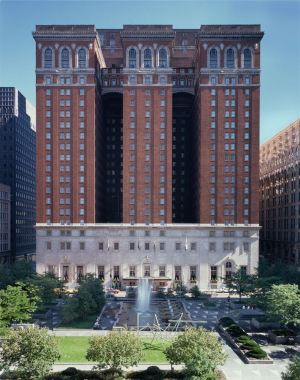 The 2016 ASECS conference takes place in Pittsburgh at the Omni William Penn. HECAA will be represented by the Anne Schroder New Scholars’ Session, chaired by Janet White and scheduled for Friday morning. Our annual luncheon and business meeting is also scheduled for Friday. A selection of additional panels is included below (of the 219 sessions scheduled, many others will, of course, interest HECAA members). For the full slate of offerings, see the program.
H E C A A E V E N T S
Anne Schroder New Scholars’ Session (Historians of Eighteenth-Century Art and Architecture)
Friday, 1 April, 8:00–9:30
Chair: Janet R. WHITE, University of Nevada, Las Vegas School of Architecture
1. Fanny BROCK, University of North Carolina Chapel Hill, “Drawing the Amateur: Draftsmanship and the Amateur in Eighteenth-Century France”
2. Daniella BERMAN, Institute of Fine Arts / New York University, “Creating French History: The Uses and Abuses of the Concours de l’An II”
3. Hannah Wirta KINNEY, Oxford University, “Con Fiducia: Commissioning Copies of Antiquities in Late-Medicean Florence”
4. Paul HOLMQUIST, McGill University, “L’harmonie tient tout dans un equilibre parfait: Re-enacting Origins in Claude Nicolas Ledoux’s Ideal City of Chaux”
◊ ◊ ◊ ◊ ◊
Historians of Eighteenth-Century Art and Architecture Luncheon
Friday, 1 April, 1:00–2:30
◊ ◊ ◊ ◊ ◊
O T H E R S E S S I O N S R E L A T E D T O T H E V I S U A L A R T S
T H U R S D A Y , 3 1 M A R C H 2 0 1 5
Picturing the News
Thursday, 31 March, 8:00–9:30
Chair: Leslie RITCHIE, Queen’s University
1. Rachael KING, University of California, Santa Barbara, “The Appearance of News in The London Gazette and The Tatler”
2. Darryl DOMINGO, University of Memphis, “‘To Catch the Reader’s Eye’: Seeing the Sights in Eighteenth-Century Newspaper Advertisements”
3. Laura ENGEL, Duquesne University: “Fashioning Faces: Portraits of Actresses, Princesses, and Queens in Late Eighteenth-Century Periodicals”
4. Jocelyn ANDERSON, The Cortauld Institute of Art, “‘Discovered in the Ruins’: British Newspaper Reports of Italian Antiquities”
◊ ◊ ◊ ◊ ◊
Freemasonry and the Arts
Thursday, 31 March, 8:00–9:30
Chair: Rebecca Dowd GEOFFROY-SCHWIDEN, University of North Texas
1. Bethany CENCER, State University of New York, Stony Brook,
“Masonic Harmony and Masculinity in the Music of the Noblemen and Gentlemen’s Catch Club, London 1761–1794”
2. Mary GREER, Independent Scholar, “The Secret Subscribers to C. P. E. Bach’s Oratorio Die Israeliten in der Wüste: The Masonic Connection”
3. Reva WOLF, State University of New York, New Paltz, “Goya’s Art and the Spirit of Freemasonry”
4. Nan WOLVERTON, American Antiquarian Society, “Masonic Ideologies and the Visual Arts: Paul Revere as Master Artisan and Grand Master”
◊ ◊ ◊ ◊ ◊
Oriental Networks: Culture, Commerce and Communication, 1662–1842
Thursday, 31 March, 9:45–11:15
Chair: Greg CLINGHAM, Bucknell University
1. Noriyuki HATTORI, University of Osaka, “Trafficking Spices, Silver, and Japan: Representations of the Amboina Massacre”
2. Chihyin HSIAO, University of Glasgow, “Affordable Luxury? Chinese Porcelain in the Inventories of the London Court of Orphans”
3. Madalina VERES, Central European University/Institute for Advanced Study, “The Habsburg Monarchy’s Contribution to the Global Enlightenment”
4. James WATT, University of York, “Charles Lamb and Networks of Empire”
◊ ◊ ◊ ◊ ◊
In the 1720s. . . (Roundtable)
Thursday, 31 March, 9:45–11:15
Chair: Regina JANES, Skidmore College
1. Maximillian NOVAK, University of California, Los Angeles, “Masquerade, Murder and Excess: Defoe’s Roxana in the 1720s”
2. Karen LIPSEDGE, Kingston University, “Men Made Homes, and Homes Made Men”
3. William E. RIVERS, University of South Carolina, “Nicholas Amhurst’s Writing as a Window on the Complex, Interconnected World of the 1720s”
4. Celestina SAVONIUS-WROTH, University of Illinois, Urbana-Champaign, “Jovial Devotion: Attacking and Defending Ritual and Popular Culture in the 1720s”
5. Malinda Gar SNOW, Georgia State University, “The Country House in Defoe’s Tour thro’ the Whole Island of Great Britain: Money Well Spent”
6. Anne Betty J. WEINSHENKER, Montclair State University, “Tombeaux des princes: A Unique Political-Cultural Painting Cycle”
7. Mattie BURKET, University of Wisconsin, Madison, “Predatory Lending: The South Sea Bubble and The Conscious Lovers”
8. Noel CHEVALIER, University of Regina, “‘Their Crimes conspir’d to make ’em Great’: Pirate Narratives and Political Morality in the 1720s”
◊ ◊ ◊ ◊ ◊
Violence and Death in Eighteenth-Century Visual Culture
Thursday, 31 March, 9:45–11:15
Chair: Amy FREUND, Southern Methodist University
1. Meredith GAMER, Yale University, “‘The Sheriff’s Picture Frame:’ Art and Execution in Eighteenth-Century Britain”
2. Catherine GIRARD, Columbia University, “Embedded Oudry: Drawing with Hunters”
3. Anne Nellis RICHTER, Independent Scholar, “‘This once elegant mansion’: Representing Revolutionary Violence in England in the 1790s”
4. Lela GRAYBILL, University of Utah, “Violence, Visibility, and the Neoclassical Idiom”
◊ ◊ ◊ ◊ ◊
Intersections of Digital and Public Humanities: New Media and New Audiences for (Roundtable)
Thursday, 31 March, 9:45–11:15
Chair: Jessica RICHARD, Wake Forest University
1. Martha F. BOWDEN, Kennesaw State University
2. Craig HANSON, Calvin College
3. Tonya-Marie HOWE, Marymount Univeristy
4. Emrys JONES, University of Greenwich
5. John O’BRIEN, University of Virginia
6. Alaina PINCUS, University of Illinois
7. Laura RUNGE-GORDON, University of South Florida
◊ ◊ ◊ ◊ ◊
Widows and Working Women: Making a Living without a Husband
Thursday, 31 March, 11:30–1:00
Chair: Amber LUDWIG, Honolulu Museum of Art
1. Jaclyn GELLER, Central Connecticut State University, “Widows, Spinsters, and Other Marriage Refugees: Satiric Utopianism in Sarah Scott’s Millennium Hall”
2. Evangeline VAN HOUTEN, University of Connecticut, “Charlotte Charke’s Perilous Play”
3. Christina LINDEMAN, University of South Alabama, “Collaboration as a Veil: The Widowed Anna Dorothea Therbusch”
4. Lois LEVEEN, Novelist, “Kitty Fisher Found It: Commodity Capitalism and the Creation of Celebrity in Eighteenth-Century England”
◊ ◊ ◊ ◊ ◊
The Objects of Performance
Thursday, 31 March, 11:30–1:00
Chair: Ashley BENDER, Texas Woman’s University
1. Kalissa HENDRICKSON, Arizona State University, “Indian Gowns in Comedies of Seduction”
2. Daniel GUSTAFSON, The City College of New York, City University of New York, “Corpsing Lothario”
3. Deirdre O’ROURKE, Independent scholar, “The Sculptures from Elkanah Settle’s The Empress of Morocco”
◊ ◊ ◊ ◊ ◊
Satirical Images: Between Sociability, Animosity, and Entertainment
Thursday, 31 March, 2:30–4:00
Chair: Kathryn DESPLANQUE, Duke University AND Jessica FRIPP, Texas Christian University
1. Pascal DUPUY, Université de Rouen, “The English Caricature and its Public: An Analytical Essay”
2. Dominic HARDY, Université du Québec à Montréal, “Recovered Laughter: An Inquiry into the Role of Women in the Authorship and Circulation of Caricature in Montréal, c. 1808–1811”
3. Allison M. STAGG, Technische Universität Berlin, “Friend or Foe? The Social Atmosphere for Political Caricatures in the Early Republic”
4. Andrew SCHULZ, The Pennsylvania State University, “Reading Between the (Etched) Lines: The Anonymous Manuscript Commentaries on Goya’s Caprichos”
◊ ◊ ◊ ◊ ◊
Framing the Eighteenth Century: Borders and Peripheries in Visual Culture
Thursday, 31 March, 2:30–4:00
Chairs: Blythe C. SOBOL, Institute of Fine Arts / New York University AND Daniella BERMAN, Institute of Fine Arts / New York University
1. Margot BERNSTEIN, Columbia University, “Inside Out: Crossing Thresholds and Blurring Boundaries with Eighteenth-Century Sedan Chairs”
2. Laurel PETERSON, Yale University, “Taking it All In: the Unity of Painting and Carving in the Country House Interior”
3. Agueda ITURBE-KENNEDY, Université Laval, Québec/ Université Pari IV, Paris, “Framing the Eighteenth-Century City: Jean-Gabriel Legendre’s Project”
◊ ◊ ◊ ◊ ◊
Inside the Artist’s Studio
Thursday, 31 March, 4:15–5:45
Chair: Heather MCPHERSON, University of Alabama at Birmingham
1. Wendy Wassyng ROWORTH, University of Rhode Island, “A Celebrity Artist’s Studio in Rome”
2. Francesca BOVE, University of East Anglia, Norwich, “The Modern Artist’s Studio: George Morland and the ‘curious scenery of his painting room’”
3. Sarah BAKKALI, University of Paris X Nanterre, “Friendship, Sociability, and the Art Market inside The Isabey Studio”
4. Susanne ANDERSON-RIEDEL, University of New Mexico, “Between Studio and Academy: Shifting Training Practices for Graphic Artists”
◊ ◊ ◊ ◊ ◊
Members’ Reception
Thursday, 31 March, 6:00–7:00, William Penn Ballroom
F R I D A Y , 1 A P R I L 2 0 1 5
Anne Schroder New Scholars’ Session
(Historians of Eighteenth-Century Art and Architecture)
Friday, 1 April, 8:00–9:30
Chair: Janet R. WHITE, University of Nevada, Las Vegas School of Architecture
1. Fanny BROCK, University of North Carolina Chapel Hill, “Drawing the Amateur: Draftsmanship and the Amateur in Eighteenth-Century France”
2. Daniella BERMAN, Institute of Fine Arts / New York University, “Creating French History: The Uses and Abuses of the Concours de l’An II”
3. Hannah Wirta KINNEY, Oxford University, “Con Fiducia: Commissioning Copies of Antiquities in Late-Medicean Florence”
4. Paul HOLMQUIST, McGill University, “L’harmonie tient tout dans un equilibre parfait: Re-enacting Origins in Claude Nicolas Ledoux’s Ideal City of Chaux”
◊ ◊ ◊ ◊ ◊
Empires of Print
Friday, 1 April, 8:00–9:30
Chair: Douglas FORDHAM, University of Virginia
1. Robbie RICHARDSON, University of Kent, “How Peter Williamson Became an Indian”
2. Holly SHAFFER, Dartmouth College, “Gods, Gold, and Antiquities: Edward Moor’s Narrative of the Anglo-Maratha Alliance Against Tipu Sultan of Mysore, 1790–1792”
3. Catriona KENNEDY, University of York, “Egypt Through Military Eyes: Illustrating the British Army’s 1801 Egyptian Campaign”
◊ ◊ ◊ ◊ ◊
Representing the Fragment
Friday, 1 April, 8:00–9:30
Chair: Olaf RECKTENWALD, McGill University
1. Jennifer DONNELLY, University of Pittsburgh, “‘Ces ombres immortelles’: Life and Death at the Musée des monuments français”
2. Rachel SCHNEIDER, Missouri University of Science and Technology, “Materializing the Literary Fragment”
3. Christopher Drew ARMSTRONG, University of Pittsburgh, “1700: Recasting Mediterranean Fragments in Global Context”
◊ ◊ ◊ ◊ ◊
Re-Framing the Picturesque
Friday, 1 April, 9:45–11:15
Chair: William C. SNYDER, St. Vincent College
1. Garland BEASLEY, University of Nevada, Las Vegas, “Observations Before the River Wye: The Rise of the Picturesque”
2. Peter C. MESSER, Mississippi State University, “Jeremy Belknap’s Picturesque Republic”
3. Tom HOTHEM, University of California, Merced, “Natural Fictions: Picturesque Aesthetics and the Eighteenth-Century Novel”
◊ ◊ ◊ ◊ ◊
‘The Delight of the Eye’: Eighteenth-Century Painting and/as Decoration – I
Friday, 1 April, 9:45–11:15
Chair: Yuriko JACKALL, National Gallery of Art AND Katherine BRION, Kalamazoo College
1. Aaron WILE, Harvard University, “Antoine Coypel’s Galerie d’Enée: Ancients, Moderns, and the Experience of Painting”
2. Susanna CAVIGLIA, University of Chicago, “Weighty Matters in Delightful Images: Rococo Painting and the Embodiment of a New Ideology”
3. Alden GORDON, Trinity College, “Painting and the Decorative Interior in France: The Innovations of the Marquis de Marigny for both Public and Private Patronage”
◊ ◊ ◊ ◊ ◊
ASECS / BSECS Plenary Lecture
Friday, 1 April, 9:45–11:15
Presiding: Heather MCPHERSON, University of Alabama, Birmingham
Shearer WEST, Sheffield University, “Selfiehood: Celebrity, Singularity and the Enlightenment”
◊ ◊ ◊ ◊ ◊
ASECS / BSECS Plenary Lecture Follow-up (Roundtable)
Friday, 1 April, 11:30–1:00
Chair: Michael YONAN, University of Missouri
1. Douglas FORDHAM, University of Virginia
2. Melissa HYDE, University of Florida
3. Kate JENSEN, Louisiana State University
4. Heather MCPHERSON, University of Alabama, Birmingham
5. Mary SHERIFF, University of North Carolina at Chapel Hill
Respondent: Shearer WEST, Sheffield University
◊ ◊ ◊ ◊ ◊
Disability Aesthetics: Tobin Sieber’s Legacy (Disability Studies Caucus)
Friday, 1 April, 11:30–1:00
Chairs: Stan BOOTH, University of Winchester AND Jason FARR, Texas A&M University, Corpus Christi
1. Abby COYKENDALL, Eastern Michigan University, “Unbecoming Aesthetics: Horace Walpole’s Castle of Otranto”
2. Jarred WIEHE, University of Connecticut, “Broken Bodies and English Taste: Samuel Foote and Disability Aesthetics”
3. Alden CAVANAUGH, Indiana State University, “Problem Skin: Greuze’s Portrait of Wille and Facial Disfigurement”
4. Tamar LEROY, University of Maryland, “Wartime and Crip Time in George Farquhar’s The Recruiting Officer”
◊ ◊ ◊ ◊ ◊
Sleeping through the long Eighteenth Century
Friday, 1 April, 11:30–1:00
Chair: Leah BENEDICT, University at Buffalo
1. Matt RIGILANO, University at Buffalo, “Extraordinary Sleepers and the Biopolitics of Early Modern Coma”
2. Jill CAMPBELL, Yale University, “‘Spare My Slumbers’: Sleep, Voice, and Memorialization in Eighteenth-Century Sculpture and Ekphrastic Verse”
3. Ana RUEDA,University of Kentucky, “Goya’s ‘Sleep of Reason’ and Other States of Somnolence”
4. Nicholas E. MILLER, Washington University in St. Louis, “‘My Long Sleep of Insensibility’: Corpse-Hopping and Consciousness in Robert Montgomery Bird’s Sheppard Lee”
◊ ◊ ◊ ◊ ◊
Historians of Eighteenth-Century Art and Architecture Luncheon
Friday, 1 April, 1:00–2:30
◊ ◊ ◊ ◊ ◊
Presidential Address, Awards Presentation, and ASECS Business Meeting
Friday, 1 April, 2:30–4:30
Presiding: Felicity NUSSBAUM, University of California, Los Angeles
Srinivas ARAVAMUDAN Duke University, “From Enlightenment to Anthropocene”
◊ ◊ ◊ ◊ ◊
‘The Delight of the Eye’: Eighteenth-Century Painting and/as Decoration – II
Friday, 1 April, 4:30–6:00
Chair: Yuriko JACKALL, National Gallery of Art AND Katherine BRION, Kalamazoo College
1. Jennifer GERMANN, Ithaca College, “The Status of the Decorative in the Portraits of Constance-Gabrielle-Magdeleine and Joseph Bonnier de la Mosson by Jean-Marc Nattier”
2. Edward STERRETT, The Getty Research Institute, “From Ornamental Print to Monumental Painting: The Elaboration of the Rococo in the Work of François Boucher”
3. Heidi STROBEL, University of Evansville, “‘A mere copier of nature can never produce anything great’: Mary Linwood, Sir Joshua Reynolds, and the Art of Making Copies”
S A T U R D A Y , 2 A P R I L 2 0 1 5
Tableaux Vivants: Life and/as Art
Saturday, 2 April, 8:00–9:30
Chairs: Noémie ETIENNE, Getty Research Institute AND Meredith MARTIN, New York University
1. Eugenia Zuroski JENKINS, McMaster University, “The Unstill Life of the Nautilus Cup”
2. Valérie KOBI, Bielefeld University, “Staging Life: The Preparation of Medical and Natural History Specimens in Eighteenth-Century Europe”
3. Charles KANG, Columbia University, “Re/constructive Surgery: Displaying the Bodily Interior in Late Eighteenth-Century France”
4. Amelia RAUSER, Franklin and Marshall College, “Whiteness: Modern Galateas”
◊ ◊ ◊ ◊ ◊
Music, Art, Literature (Society for Eighteenth-Century Music)
Saturday, 2 April, 9:45–11:15
Chair: Janet K. PAGE, University of Memphis
1. Kathryn Shanks LIBIN, Vassar College, “The ‘Music Room’ in a Bohemian Castle: Gabriele von Auersperg’s Souvenir de Senftenberg en 1814”
2. Elizabeth LIEBMAN, Independent Scholar, “The Bird Organ in Eighteenth-Century Art and Sound”
3. Lisa de ALWIS, University of Colorado, Boulder, “Famous and Forgotten Works that Influenced Viennese Theatrical Censorship”
◊ ◊ ◊ ◊ ◊
Portraiture Before 1750 – I
Saturday, 2 April, 9:45–11:15
Chair: Jennifer GERMANN, Ithaca College
1. Allison LEIGH, The Cooper Union for the Advancement of Science and Art, “Investing the Body: Russian Portraiture Before 1750”
2. Janine Yorimoto BOLDT, The College of William & Mary, “Boys in Livery: Picturing Slavery in English and Colonial American Portraiture”
3. Tara ZANARDI, Hunter College, “Tastemaker and Policy Shaper: Queen Isabel de Farnesio as Patron and Politician”
◊ ◊ ◊ ◊ ◊
Queer Lives? (Roundtable)
Saturday, 2 April, 9:45–11:15
Chair: George HAGGERTY, University of California, Riverside
1. Tom KING, Brandeis University, “Elizabeth Barry”
2. Ellen LEDOUX, Rutgers University, Camden, “Hannah Snell and Mary Jane Talbot”
3. Jason FARR, Texas A&M University, Corpus Christi, “William Hay”
4. Lisa MOORE, University of Texas at Austin, “Anna Seward”
5. Margaret WALLER, Pomona College, “Napoleon and La Mésangère”
6. Caroline GONDA, St. Catharine’s College, Cambridge, “Anne Damer”
◊ ◊ ◊ ◊ ◊
Rethinking the Academic Conference (Roundtable) (Women’s Caucus Professional Panel)
Saturday, 2 April, 9:45–11:15
Chair: Emily FRIEDMAN, Auburn University
1. Laura MILLER, University of West Georgia, “Removing Barriers to Junior Scholars at ASECS”
2. Emily M.N. KUGLER, Howard University, “Creating Resources and Scholarly Community: Examples from FemTechNet’s DOCC Summer Workshops and Disrupting DH”
3. Lauren HOLT, The Galloway School, “From Passive to Active: Participation beyond Q&A”
4. Rebecca SHAPIRO, City University of New York, “Closed Mouths do not Mean Closed Minds”
5. Susan LANSER, Brandeis University, “Fostering Intellectual Sociability”
◊ ◊ ◊ ◊ ◊
Clifford Lecture
Saturday, 2 April, 11:30–12:30
Presiding: Kathleen WILSON, State University of New York, Stony Brook
John BREWER California Institute of Technology, “Fire and Ice: Travel and the Natural Sublime in the Age of Enlightenment”
◊ ◊ ◊ ◊ ◊
Portraiture Before 1750 – II
Saturday, 2 April, 2:00–3:30
Chair: Jennifer GERMANN, Ithaca College
1. Liza OLIVER, Wellesley College, “The Portrait Between India and France”
2. Amy FREUND, Southern Methodist University, “Full Length, Four Legs: Early Eighteenth-Century Animal Portraiture”
3. Aurore CHÉRY, Université Jean Moulin/Lyon 3, “‘Being the Second One’: Were the Marriages of Marie Lezczynska and Marie-Josèphe de Saxe Second Hand Celebrations?”
◊ ◊ ◊ ◊ ◊
Felines and Philosophers
Saturday, 2 April, 3:45–5:15
Chair: Michael YONAN, University of Missouri
1. Tracey HUTCHINGS-GOETZ, Indiana University, “‘Catching the Cat’; or, Feeling the Feline in Enlightenment Sensualist Philosophy”
2. Adela RAMOS, Pacific Lutheran University, “‘This admirable machine’: Mousers, Mousetraps, and Species in William Guthrie’s The Life and Adventures of a Cat”
3. Karissa BUSHMAN, University of Alabama at Huntsville, “Ferocious to Friendly Felines in Goya’s Art”
◊ ◊ ◊ ◊ ◊
Food and Gender: Feeding the Eighteenth Century – II (Women’s Caucus Scholarly Panel)
Saturday, 2 April, 3:45–5:15
Chair: Lucinda COLE, University of Illinois Urbana-Champaign
1. Sarah Sylvester WILLIAMS, University of Missouri, Columbia, “Pigeon Pie or Peaches? Depictions of Food and Gender in Eighteenth-Century Paintings of Hunt Luncheons”
2. Leslie ARONSON, Saginaw Valley State University, “Women, Food, and the Threat Against Manhood: Consumption in the Expedition of Humphrey Clinker”
3. Corey GOERGEN, Emory University, “‘grotesque mixtures’: Feminine Intoxication in Edgeworth’s Belinda”
Conference | A Revolution in Taste: Francis Haskell’s Nineteenth Century

◊ ◊ ◊ ◊ ◊
From the conference website:
A Revolution in Taste: Francis Haskell’s Nineteenth Century
St John’s College and the Ashmolean Museum, Oxford, 23–24 October 2015
A two-day conference is to be held at St John’s College, Oxford and the Ashmolean Museum to explore the work of art historian Francis Haskell (1928–2000). Writing at the intersection of cultural history, art history and the history of ideas, Haskell made a seminal contribution to the study of the formation of taste in nineteenth-century Britain and Europe.
The conference will revisit terrain mapped out by Haskell in Rediscoveries in Art, namely the transformation of the art world between the 1770s and 1870s, a period when war, revolution, plunder and state-formation brought fundamental changes to the knowledge of and trade in Old Master paintings. Distinguished speakers include scholars and curators from Britain, France and Italy. The conference aims to comprehend the forces which transformed how art was acquired, displayed and interpreted in the nineteenth century. But it will also grapple with the methodological and philosophical issues raised by Haskell’s provocative approach to the history of collecting.
Both days of the conference will be held in the auditorium of St Johns College, Oxford. Delegates at the conference will receive lunch, teas and coffee, and a wine reception at the Ashmolean on Friday 23rd from 18.00 to 19.30 (this event is free although places are limited so it is essential to register). The fee for attending both days is £80 for professionals (£35 for students); the cost of attending for just one day is £45 for professionals (£20 for students). Registration for the conference is open until October 15th. To book, please follow this link.
The conference is organized by Dr Tom Stammers, cultural historian at the University of Durham and visiting Deakin Fellow in Oxford (2014–15). For all inquiries contact Tom directly (t.e.stammers@durham.ac.uk) or write to the conference email address francishaskell2015@gmail.com.
◊ ◊ ◊ ◊ ◊
F R I D A Y , 2 3 O C T O B E R 2 0 1 5
9.30 Registration
10.00 Welcome remarks by Tom Stammers
10.10 Keynote 1 | Nicholas Penny
Chair: Craig Clunas
11.00 Session 1 | Rediscoveries in Post-Revolutionary Europe
Chair: Christina Anderson
• Charlotte Guichard, Naming the Artist: Attribution and Artistic Expertise at the End of the Eighteenth Century
• Xanthe Brooke, William Roscoe (1753–1831) and His Collection of North European Renaissance Art in Liverpool
• Véronique Gerard-Powell, The Altamira Collection and the Sale of Spanish Art in London
12.30 Lunch
13.30 Session 2 | Art and Interpretation in Nineteenth-Century France
Chair: Frances Suzman Jowell
• Camille Mathieu, Breaking Up the Museum of Rome: Mobility and the Antique in the Napoleonic Era, 1796–1817
• Richard Wrigley, Ingres’ Monsieur Bertin and the Vicissitudes of Bourgeois Taste
• Juliet Simpson, Reimagining the Northern Nineteenth Century: Art and the Politics of Patrimony in the French Third Republic
15.00 Coffee
15.30 Session 3 | Private Palaces of Art
Chair: Arthur Macgregor
• Susanna Avery-Quash, Rediscovering John Julius Angerstein’s ‘Other’ Art Collection at ‘Woodlands’, Blackheath
• Stephen Lloyd, From Venice to Knowsley: The Rediscovery and Conservation of Borgognone’s Series of Paintings on Silver-gilt Leather, The Children of Israel
• Pauline Prévost-Marcilhacy, The Pereire Brothers and Collecting in the Second Empire
17.15 Keynote 2 | Charles Hope
Chair: Geraldine Johnson
18.00 Wine Reception at the Ashmolean
19.30 Dinner at the Ashmolean Restaurant
S A T U R D A Y , 2 4 O C T O B E R 2 0 1 5
9.30 Registration
9.45 Keynote 3 | Stephen Bann
Chair: Julia Langbein
10.30 Session 4 | History, Images and Criticism
Chair: Ludmilla Jordanova
• Donata Levi, Rediscovering Crowe
• Jenny Graham, Afterlives: Rewriting Giorgio Vasari in the Nineteenth Century
• Jon Whiteley, Francis Haskell and Nineteenth-Century French Art
12.30 Lunch
13.00 Session 5 | Exhibitions and Ephemeral Museums
Chair: Linda Whiteley
• Jeremy Warren, A Nineteenth-Century Phenomenon: The Birth of the New Kunstkammer
• Cécilia Hurley Griener, Juggling with Masterpieces in the Long Nineteenth Century
• Bénédicte Savoy, Les Spoliations Napoléonniennes (communication en français)
14.30 Coffee
15.00 Session 6 | Collecting Dynasties
Chair: Adriana Turpin
• Charles Sebag-Montefiore, The Barings: A Dynasty of Art Collectors
• Dora Thornton, Reinterpreting a Rothschild Schatzkammer at The British Museum: The Waddesdon Bequest
• Tom Stammers and Silvia Davoli, Orléans and Bonaparte in Exile: Collecting at the End of the Age of Revolutions
16.30 Keynote 4 | Pascal Griener
Chair: Matthew Walker
17.15 Closing discussion, with Larissa Haskell
Colloquium | Oberkampf et la toile imprimée XVIIIe–XIXe siècle
From the conference programme:
Oberkampf et la toile imprimée XVIIIe–XIXe siècle: Production, création, consommation
Musée de la toile de Jouy, Jouy-en-Josas, 8–10 October 2015
 J E U D I , 8 O C T O B R E 2 0 1 5
14.00 Accueil des participants par le Maire et le Secrétaire général d’HEC
14.30 L’industrie du coton en Île-de-France
Modérateur Aziza Gril-Mariotte
• Introduction par Serge Chassagne, président du comité scientifique, « Les entreprises cotonnières d’Île-de-France»
• Martine Lefèvre, conservateur en chef, Bibliothèque de l’Arsenal, « La manufacture de Jacques Daniel Cottin à l’Arsenal»
• Anne de Thoisy et le Groupe de Recherches Historiques de Jouy-en-Josas, « Les domaines textiles de la famille Oberkampf illustrés par Julie Féray »
• Karine Berthier, Laboratoire d’Archéologie et d’Histoire médiévales de l’Université de Picardie, EA 4284 TRAME, « Le centre de production des installations essonniennes : évolution, organisation et production, XVIIIe–XIXe siècle»
• Xavier Petitcol et Michel Perrier, « Chronologie de la production de la manufacture Oberkampf à partir des chefs de pièces et numéros de dessin »
17h30 Échanges avec la salle
V E N D R E D I , 9 O C T O B R E 2 0 1 5
9.30 Accueil des participants
10.00 Innovations et transferts techniques dans l’industrie cotonnière
Modérateur Natacha Coquery
• Sophie Patte, Musée des arts décoratifs de l’Océan Indien, «Les Mascareignes, îles privées de la Compagnie des Indes, terres d’expérimentation dans la quête de la chimie de la couleur, au XVIIIe siècle »
• Marguerite Martin, « Une matière première : L’indigo, l’approvisionnement au XVIIIe siècle »
• Philip Sykas, Manchester University, « Entente cordiale: Anglo-French exchange among calico printers »
• Ezio Ritrovato, Università di Bari Aldo Moro, « L’impression et la teinture du coton dans les
études et dans la vie d’un chimiste italien du XIXe siècle »
12.00 Échanges avec la salle
14.30 Histoire industrielle
Modérateur Pascale Gorguet-Ballesteros
• Isabelle Bernier, FRAMESPA UMR 5136 Université Toulouse II Jean Jaurès, « L’indiennage, moteur de l’industrialisation à Mulhouse au début du XVIIIe siècle »
• Roberto Rossi, Dept of Economics and Statistics, University of Salerno, « The division of labor and salary skills in the Barcelona’s indianas manufactures in the second half of the XVIII Century »
• Aziza Gril-Mariotte, « Évolution de l’impression aux plaques de cuivre à Jouy »
• Vibe Maria Martens, Ph.D Researcher European University Institute, Florence, « Cotton printing at the European fringe: the case of Denmark »
16.20 Évolution artistique
Modérateur Pascale Gorguet-Ballesteros
• William DeGregorio, PhD Candidate, Bard Graduate Center, New York, « Two newly discovered Indian chintzes copied at the Oberkampf manufactory ca. 1774: Preliminary investigations into design, origins, and context »
• Ji Eun You, Ph.D candidate, University of North Carolina, « Toile-de-Jouy at the Garde Meuble de la Couronne during the French Revolution »
17h00 Échanges avec la salle
S A M E D I , 1 0 O C T O B R E 2 0 1 5
10.00 Accueil des participants
10.30 Histoire des collections
Modérateur Esclarmonde Monteil
• Danièle Veron-Denise, Conservateur honoraire du Patrimoine, « Destins croisés : les toiles imprimées de Jouy et de Mulhouse dans l’ameublement du château de Fontainebleau »
• Véronique de La Hougue, Conservateur en chef, Musée des Arts décoratifs, « Les toiles de Jouy dans la collection des Arts Décoratifs »
• Kirsten Toftegaard, textile curator, Designmuseum Danmark, « A study of West European printed textiles in the State Hermitage Museum’s collection focusing on the tradition of narrative prints »
• Jacqueline Jacqué, conservateur honoraire du patrimoine, «Des toiles de Jouy à Mulhouse, histoire croisée de deux collections»
Conclusion du colloque : S. Chassagne & E. Monteil
Après-midi : Visite de l’exposition Oberkampf au Musée de la Toile de Jouy
Study Day | Maria Hadfield Cosway
This colloquium accompanies a two-day conference (16-17 October) held in Bergamo on Luigi Marchesi, the international castrato singing superstar, who was portrayed by Richard Cosway in London and who had a close musical friendship with Maria Cosway in both London dung the late 1780s and in northern Italy during the early 1790s. From the flyer:
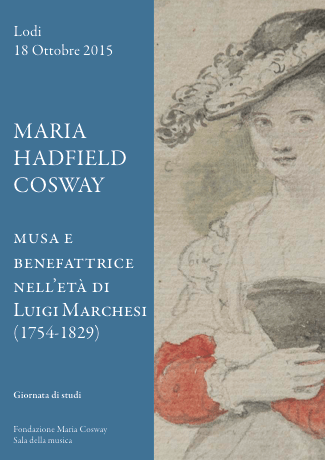
Maria Hadfield Cosway: Musa e benefattrice nell’età di Luigi Marchesi (1754–1829)
Fondazione Maria Cosway, Lodi, 18 October 2015
 10.00 Saluti istituzionali: Francesco Chiodaroli (Fondazione Maria Cosway, Lodi), Angelo Bianchi (Università Cattolica del Sacro Cuore, Milano), Gabriella Molina (Fondazione Ospedale Marchesi, Inzago)
• Riccardo Benzoni, Napoleone a scuola: rinnovamento dell’istruzione e celebrazione del potere negli anni del Primo Impero (1804–1814)
• Cristina Cenadella, «Figlie di tutti sono le figlie di nessuno». L’orfanotrofio della Stella di Milano e le scuole di formazione interne
• Laura Giuliacci, Donne e società in Italia e in Francia ai tempi di Maria Cosway: l’educazione distinta
• Giliola Barbero, L’Europa di Maria Cosway nella sua biblioteca.
13.00 Pausa pranzo
14.30 Sessione pomeridiana
• Rosa Cafiero, L’insegnamento della musica nel Collegio delle dame inglesi: modelli europei per Maria Cosway
• Stephen Lloyd, ‘Wonderment for the table-talk of the town’: Regency London’s social and artistic context for Richard Cosway’s portrait of Luigi Marchesi (1790)
• Stefano Aresi, «If you want to hear what Italian Singing is, come to London»: Marchesi, Londra e il rapporto con Maria Cosway
16.00 Presentazione volume
Gian Carlo Sciolla presenta il nuovo volume di Tino Gipponi, La veridica storia di Maria Hadfield Cosway e il ritratto ritrovato (Lodi: PMP Editore, 2015).
Conference | Luigi Marchesi: Career of a Castrato
From the conference flyer (with more information about The Luigi Marchese project available here). . .
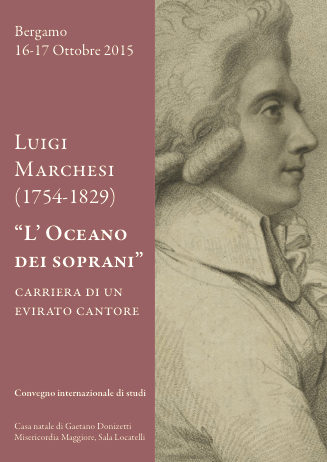
Luigi Marchesi (1754–1829): “L’ Oceano dei soprani” carriera di un evirato cantore
Casa Natale di Gaetano Donizetti, Bergamo, 16-17 October 2015
1 6 O T T O B R E 2 0 1 5
 14.00 Apertura dei lavori
Interventi di benvenuto ed introduzione
• Damien Colas (Centre National de la Recherche Scientifique), Alla ricerca delle esecuzioni perdute: come far rivivere oggi l’arte di Luigi Marchesi?
• Lorenzo Mattei (Università degli Studi ‘Aldo Moro’, Bari), La mia Cecchina è un castrato! L’opera buffa degli evirati cantori
• Teresa M. Gialdroni (Università di Roma ‘Tor Vergata’)
• Giulia Giovani (Centro Studi sulla Cantata Italiana), Luigi Marchesi a Roma: echi nella stampa coeva
• Paola De Simone (Conservatorio ‘C. G. da Venosa’, Potenza), Mito e storia per una voce alla corte di Napoli: Luigi Marchesi nei ruoli di Amore e Arbace nella stagione 1780–1781 al Real Teatro di San Carlo
• Lucio Tufano (Napoli), Marchesi in concerto
• Nastasja Gandolfo (Hochschule für Musik, Würzburg), Il ruolo di Luigi Marchesi nell’Ezio di Josef Mysliveček per la corte elettorale di Monaco (1777)
• Annarita Colturato (Università degli Studi di Torino), Luigi Marchesi musico soprano a corte
• Luca Benedetti (Bergamo)
• Federico Zavanelli (Cremona), Comunicazioni bibliografiche: aggiornamenti da Bergamo e Londra
18.00 Villa Facheris, Inzago, Milano
Aperitivo presso la Villa Facheris e visita alla mostra ivi dedicata a Marchesi. Visita della villa appartenuta al cantante. Cena dei convegnisti e degli sponsor presso il ristorante Enotavola Pietra- santa in Treviglio (Bergamo).
1 7 O T T O B R E 2 0 1 5
9.30 Presiede: Giulia Giovani
• Nicholas Baragwanath (University of Nottingham), Alla ricerca dell’arte d’improvvisare di Marchesi: le revisioni per il debutto londinese nel ruolo di Giulio Sabino (1788)
• Simone Laghi (University of Cardiff), Le esibizioni di Luigi Marchesi a Londra (1788-1790): i castrati e il true taste
• Giovanni Polin (Conservatorio ‘C. G. da Venosa’, Potenza), «Sempre uguale a sé stesso nel dilettare e sorpren- dere»: note sulla carriera veneta di Luigi Marchesi
• Marilena Laterza (Università degli Studi di Milano), «Arietta grata che intorno spiri»: Luigi Marchesi compositore
• Livio Aragona (Fondazione Donizetti, Bergamo)
• Rosa Cafiero (Università Cattolica del Sacro Cuore, Milano), Da Lodoiska a Lovinski: Camilla Balsamini nei panni di Marchesi
• Giacomo Sances (Università di Roma ‘Tor Vergata’), «Il nostro amicone Zingaro deve essere superbo d’un così bravo scolare». Luigi Marchesi e il suo «veridico sentimento» per Bellini
15.00 Presiede: Claudio Toscani (Università degli studi di Milano)
• Marco Beghelli (Università degli Studi di Bologna), «Nella sua voce fa sentire tre voci diverse»: la voce multipla dei castrati
• Roberto Scoccimarro (Hochschule für Musik und Tanz, Köln), Luigi Marchesi nel ruolo di Achille: Ifigenia in Aulide e Achille in Sciro
• Paolo Russo (Università degli Studi di Parma) Marchesi, il ‘disertore’
• Livio Marcaletti (Universität Bern), Le «variazioni» di Luigi Marchesi: trascrizioni di un’esecuzione o esercizi didattici?
• Stefano Aresi (Stile Galante, Amsterdam), Gli abbellimenti vocali di Luigi Marchesi: possibili approcci alle fonti
Symposium | Penser le Rococo, XVIIIe–XXIe siècles
From the symposium programme:
Penser le Rococo (XVIIIe–XXIe siècles) / Reconsidering the Rococo
Université de Lausanne, 5–6 November 2015
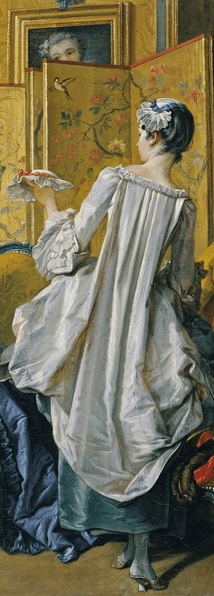 Le rococo, en dépit de la méfiance ou de l’ironie qu’il suscite, occupe une place centrale dans l’historiographie. En tant que catégorie stylistique et critique, il structure notre appréhension de l’art du XVIIIe siècle et détermine le regard que l’on porte sur celui-ci. Ce colloque, conçu en écho aux stimulantes recherches de ces vingt dernières années sur le rococo, vise à développer une réflexion épistémologique sur une notion protéiforme. La perspective privilégée pour ce colloque est celle, critique, de l’étude d’une notion devenue catégorie, le rococo, appelant à réfléchir sur son apparition, sa sédimentation, sa diffusion. Quelles sont les premières formulations de ce terme ? Sur quels présupposés se fonde-t-il ? Comment devient-il un canon formel et esthétique ? De quelles sources se nourrit-il ? En fonction de quels enjeux établit-on les frontières et les corpus du rococo ? Comment la situation d’énonciation des exégètes, aux XIXe, XXe et XXIe siècles, a-t-elle orienté la mise en récit de son histoire ? Comment les idées véhiculées dans leurs travaux agissent-elles sur la production tardive d’objets imitant le XVIIIe siècle ? Comment ces revivals agissent-ils en retour sur notre compréhension du rococo ?
Despite the scepticism or irony which it provokes, the notion of the Rococo occupies a central position within the historiography of 18th-century art. It structures our understanding of this epoch and determines the way in which we see it. This symposium, planned as an answer to the stimulating research of the last twenty years on the Rococo, aims at an epistemological reflection on a protean notion which was progressively defined as a style during the 19th century. This symposium therefore favours a critical approach to this notion, urging contributors to reconsider how it emerged, how it was formed and diffused. What were the first manifestations of the Rococo, on what preconceived ideas was it founded, and how did it become a formal and aesthetic canon? Which sources did it draw upon? What ideas and categories have been used to structure it? How were the boundaries of the Rococo established? How has the context in which interpreters have written about the Rococo oriented the formulation of narratives during the 19th, 20th and 21st centuries? How have the ideas upon which their work is founded inflected the production of imitations of 18th-century objects? How have these revivals, in turn, acted upon our understanding of the Rococo?
Organisation scientifique
Carl Magnusson (Université de Lausanne)
Marie-Pauline Martin (Aix-Marseille Université, UMR 7303 TELEMME-CNRS)
Comité scientifique
Jan Blanc (Université de Genève), Frédéric Dassas (Musée du Louvre), Michaël Decrossas (INHA, Paris), Peter Fuhring (Fondation Custodia, Paris), Christian Michel (Université de Lausanne)
Organisation logistique et contact
Geneviève Dutoit (Université de Lausanne) / genevieve.dutoit@unil.ch
◊ ◊ ◊ ◊ ◊
J E U D I , 5 N O V E M B R E 2 0 1 5
8.30 Accueil
8.45 Introduction par Carl MAGNUSSON et Marie-Pauline MARTIN
9.00 1 | Les champs du rococo, du décor à la sculpture
Président de séance : Peter Fuhring
• Carl MAGNUSSON (Université de Lausanne)—Le rococo, style «décoratif» par excellence
• David PULLINS (Harvard University)—«Quelques misérables places à remplir» : locating chantourné painting in eighteenth-century France
• Malcolm BAKER (University of California)—Reconsidering ‘Rococo’ sculpture
14.00 2 | Pertinence d’une catégorie ?
Président de séance : Frédéric Dassas
• Fabrice MOULIN (Université de Paris X-Nanterre)—Les « mauvais choix » en art et en amour : le rococo mis en fiction dans L’homme du monde éclairé par les arts (1773)
• Marie-Pauline MARTIN (Université d’Aix-Marseille)—Du sobriquet à la catégorie de style
• Floriane DAGUISÉ (Université de Paris-Sorbonne)—De l’usage du rococo dans la recherche en littérature
• Elisabeth FRITZ (Friedrich-Schiller-Unversität Jena)—La fête galante : un genre paradigmatique dans le discours ambigu du rococo
V E N D R E D I , 6 N O V E M B R E 2 0 1 5
9.00 3 | Mécanismes et composantes du rococo
Présidence de séance : Cyril Lécosse
• Bérangère POULAIN (Université de Genève)—Rococo et fugacité du regard: émergence et modifications de la notion de ‘papillotage’ (XVIIIe–XXIe siècle)
• Melissa HYDE (University of Florida)—Déjà-vu All Over Again ? Rococo, Then and Now
• Aleksandra WOJDA (Université Jagellon, Cracovie)—Du romantique au penseur d’un rococo moderne : Gautier et les ambiguïtés de la concrétion esthétique
14.00 4 | Les géographies éclatées du rococo
Président de séance : Christian Michel
• Jean-François BÉDARD (Syracuse University)—Fiske Kimball, diffuseur de la rocaille
• Étienne TORNIER (Université de Paris X-Nanterre / University of Minnesota)—Rococo revival ou l’élaboration du goût et du style américain (1850–1900)
• Raul C. SAMPAIO LOPES (Seoul National University)—Ce que l’historiographie des manifestations périphériques du rococo nous dit sur la construction de cette notion stylistique
17.30 Discussion et conclusions
Symposium | Asian Gardens in the West
From the symposium website:
Asian Gardens in the West
Haus der Universität Düsseldorf and Benrath Palace, Düsseldorf, 1–3 October 2015
Organized by the Department of Japanese Studies, University of Düsseldorf, and the Benrath Palace and Park Foundation
Many people in the West believe that Asian gardens are mystic places indicating a very special and subtle understanding of nature and a refined aestheticism. The symposium traces the history of these notions back to the 18th and 19th centuries and shows how Western and Asian pundits, gardeners and officials together created these visions of Asian gardens. We also ask about current trends in building and interpreting Asian gardens in the West.
 Japanese gardens come to mind as a prime example of Asian gardens in the West as they are one of the strongest symbols for Japan. Their long-lasting fashion started in the second half of the 19th century because Japanese governments used gardens to represent the country at world’s fairs, albeit with no clear comprehension of the concept of a ‘Japanese garden’. Only through the international appreciation did the Japanese begin to fully understand the merit of gardens for self-representation. As a consequence Japanese garden experts created a canonized idea of the aesthetic arrangement of Japanese gardens.
However, Japanese gardens are not the only example of the spatial staging of a national Asian identity. Already in the 18th century, Chinese garden art had become fashionable in Europe. Yet Chinese gardeners and garden experts were only very marginally involved in this vogue. Western garden enthusiasts—mostly aristocrats—built Chinese gardens following accounts of Asia which were written by Jesuits and merchants. In the last three to four decades many Chinese gardens have been built in North America and Europe once again.
As leading Asian countries, China and Japan are role models for self-representation through cultural diplomacy. Thus Chinese and Japanese gardens incite other Asian countries as well as Western garden experts to build Korean, Indonesian and Indian gardens.
◊ ◊ ◊ ◊ ◊
1 O C T O B E R 2 0 1 5
13:30 Introduction
14:00 Address by Vice President for International Relations, Andrea von Hülsen-Esch
14:20 Stefan Schweizer, Gardens and National Stereotypes
15:15 Panel I | China / The Representation of Asian Gardens in Asia
• James Bartos, China, Chinoiserie, and the English Landscape Garden Revisited
• Bianca Maria Rinaldi, The Invention of the Chinese Garden
• Christof Baier, Heritage Gardens: Singapore’s Asian Garden Representation at Gardens by the Bay as Third Space?
2 O C T O B E R 2 0 1 5
9:00 Excursion to the Japanese Garden in Leverkusen
13:30 Panel II | India
• Karin Seeber, Imaginary Gardens: Marie Luise Gothein’s Book on Indian Garden History (1926)
• Henry J. Noltie, The Indian Career of Hugh Cleghorn (1820–1895): Economic Botany and the Transfer of Knowledge through Botanical Gardens
15:30 Panel III | Japanese Gardens
• Wybe Kuitert, Context and Praxis: Thoughts on Japan and Gardens
• Tagsold, Christian, Japanese Gardens Unleashed: From Miniatures to Advertising
19:30 Keynote Lecture
John Dixon Hunt, Questions of Authenticity
3 O C T O B E R 2 0 1 5
10:00 Panel IV | Representing Japanese Gardens
• Katahira Miyuki, Constructing the Image of Japanese Gardens:
Analysis of the Discourse on Japanese Gardens in Japan and the West
• Elisabeth Scherer, Elaborate ‘Contact Spaces’: Staging Japanese gardens for Cinema
12:00 Final discussion
Abstracts are available here»
Journée d’études | L’architecture et l’urbanisme des ingénieurs
From the conference programme:
L’architecture et l’urbanisme des ingénieurs, 1650–1850: Paris, province et capitales européennes
Versailles, Bibliothèque municipale Galerie des Affaires étrangères, 10 October 2015

Louis-Nicolas Van Blarenberghe, Vue de l’accident survenu en 1759 sur le chantier de l’Hôtel des Affaires étrangères et de la Marine à Versailles, 1759, BMV, ©Pierrick Daul
Les années 1980 furent propices à l’étude du travail des ingénieurs : en 1981, Anne Blanchard publiait un Dictionnaire des ingénieurs militaires actifs en France entre 1691 et 1791, témoignant par son volume de l’importance de leur activité, tandis qu’en 1988, Antoine Picon, dans son ouvrage Architectes et ingénieurs au siècle des Lumières, accordait enfin aux ingénieurs des Ponts l’attention qu’ils méritaient et examinait leur formation et leurs méthodes de travail au regard de celles des architectes de l’Académie royale d’architecture.
Au-delà des programmes attendus, fortifications, ouvrages hydrauliques, ponts et routes, les ingénieurs, militaires et des Ponts et Chaussées, honorèrent des commandes dans le domaine de l’architecture publique monumentale, de l’architecture religieuse et hospitalière, mais aussi dans celui de l’architecture domestique et de l’art des jardins.
L’historiographie fait la part belle aux architectes dans les embellissements de la capitale, mais l’action des ingénieurs en matière d’architecture et d’urbanisme reste à évaluer. Cette seconde journée sera l’occasion de présenter les limites de cette opposition architecte/ingénieur et d’initier un travail systématique sur l’activité de ces derniers du règne de Louis XIV à l’aube du Second Empire.
Après une première rencontre dédiée à l’habitat (8 novembre 2014), la seconde journée sera consacrée plus particulièrement au projet urbain et à l’architecture publique monumentale, à Paris, en province et dans les capitales européennes. Une troisième rencontre se déroulera au printemps 2016.
Journée d’études organisée par Basile Baudez, Alexia Lebeurre et Dominique Massounie avec le concours des Universités Bordeaux-Montaigne, Paris-Ouest-Nanterre, Paris-Sorbonne, de la Ville de Versailles et du GHAMU.
◊ ◊ ◊ ◊ ◊
P R O G R A M M E
9.30 Accueil café
10.00 Dominique Massounie (Université Paris-Ouest-Nanterre), Pour un inventaire de l’architecture des ingénieurs des Ponts et Chaussées au XVIIIe siècle
10.45 Béatrice Gaillard (LéaV-ENSAV), Le traité de l’ingénieur Antoine d’Alleman à la lumière de sa pratique architecturale
11.15 Robert Carvais (CNRS-CTAD) et Philippe Bernardi (CNRS- Lamop), Un ingénieur au pays de l’architecture. Antoine D’Alleman (1679–1760) et son traité inachevé
12.30 Pause déjeuner
14.00 Aline Lemonnier (GHAMU), Les phares normands de l’ingénieur Duchesne sous Louis XVI
14.30 Théodore Guuinic (Université Paris-Diderot), L’ingénieur Charles-Etienne Durand (1762–1840) : théorie et pratique de l’architecture pratique selon les principes antiques
15.00 Adrián Almoguera (Université Paris-Sorbonne), Ut urbis hortis: que la ville soit à l’image d’un jardin. Les ingénieurs et la transformation urbaine de Madrid au Siècle des Lumières
16.00 Basile Baudez (Université Paris-Sorbonne), Jean-Baptiste Berthier, ingénieur et architecte de l’administration
Visite de la Bibliothèque municipale de Versailles, ancien ministère des Affaires étrangères et de la Marine
Conclusion: Alexia Lebeurre (Université Bordeaux-Montaigne)










leave a comment