Exhibition | Souvenir Nation: Relics, Keepsakes, and Curios
From the Smithsonian’s National Museum of American History:
Souvenir Nation: Relics, Keepsakes, and Curios
Smithsonian Castle, Washington, D.C., 9 August 2013 — 17 August 2014
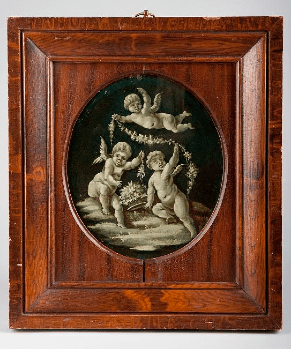
Panel from George Washington’s Coach, 17 x 15 inches. President Washington’s state coach featured four side panels representing the seasons; this panel, encased in an oak frame, depicts ‘Spring’ (Smithsonian)
Souvenir Nation: Relics, Keepsakes and Curios features a selection of diminutive and personal objects that Americans have taken, made and saved as historical mementos from the Early Republic up to the present day. Many of the postcards, structural fragments such as a brick from George Washington’s childhood home, consumer goods, locks of hair and other keepsakes on display are part of the earliest Smithsonian collections now in the museum’s Division of Political History. Highlights include a fragment of Plymouth Rock, presidential hair, wood from George Washington’s coffin and pieces from Joan of Arc’s dungeon, the Bastille, and the Berlin Wall.
◊ ◊ ◊ ◊ ◊
From Princeton Architectural Press:
William Bird, Souvenir Nation: Relics, Keepsakes, and Curios from the Smithsonian’s National Museum of American History (Princeton: Princeton Architectural Press, 2013), 176 pages, ISBN: 978-1616891350, $25.
 Buried within the collection of the Smithsonian Institution’s National Museum of American History exists an astonishing group of historical relics from the pre-Revolutionary War era to the present day, many of which have never been on display. Donated to the museum by generations of souvenir collectors, these ordinary objects of extraordinary circumstance all have amazing tales to tell about their roles in American history. Souvenir Nation presents fifty of the museum’s most eccentric items. Objects include a chunk broken off Plymouth Rock; a lock of Andrew Jackson’s hair; a dish towel used as the flag of truce to end the Civil War; the microphones used by FDR for his Fireside Chats; and the chairs that seated Nixon and Kennedy in their 1960 television debate. This fascinating collection of Americana includes an introductory essay on this nation’s passion for souvenir collecting, as well as a brief history and a glimpse behind the scenes of the Smithsonian.
Exhibition | Bernard Picart: Cérémonies et coutumes religieuses
From the National Gallery in Prague:
Bernard Picart: Slavnosti a náboženské zvyky národů celého světa
Schwarzenberg Palace, Prague, 1 July — 7 October 2013
Curated by Dalibor Lešovský
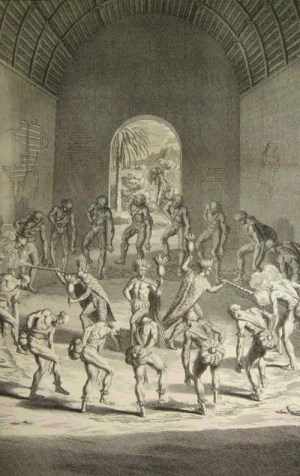 Bernard Picart (1673–1733) byl francouzský rytec, který většinu svého života strávil v Holandsku. Přestože byl autorem řady knižních ilustrací, zcela nezastupitelné místo v jeho tvorbě zaujímá soubor grafik pro knihu Cérémonies et coutumes religieuses de tous les peuples du monde (Slavnosti a náboženské zvyky národů celého světa) [1723–43]. V knize, která se nevěnovala pouze zvykům a tradicím spojeným s duchovním životem monoteistických kultur, s nimiž se grafik mohl seznámit v evropském prostředí, byl věnován velký prostor i náboženským zvyklostem amerických Indiánů, Afričanů, Indů, Číňanů, ale také některým evropským herezím. Přestože Picart nikdy neopustil Evropu, přispěl svými formálně i obsahově nesmírně poutavými ilustracemi ke vzniku díla, které se stalo prvním univerzálním přehledem světových náboženství.
◊ ◊ ◊ ◊ ◊
Translation via Google . . .
Bernard Picart (1673–1733) was a French engraver, who spent most of his life in Holland. Although he was the author of numerous book illustrations, completely irreplaceable in his work occupies a set of prints for the book Ceremonies coutumes Religieuses et de tous les Peuples du monde (Festivals and Religious Customs of Nations around the World) [1723–43]. In the book, which is not only on customs and traditions associated with the spiritual life of monotheistic cultures with which the graphics can get to know the European environment has ample space and religious practices of Native Americans, Africans, Indians, Chinese, but also some European heresies. Although Picart never left Europe, contributed their form and content extremely eye-catching illustrations of the works, which became the first universal overview of world religions.
Exhibition | Emma Hamilton Dancing
From The Lewis Walpole Library:
Emma Hamilton Dancing
The Lewis Walpole Library, Farmington, CT, October 2013 — April 2014
Curated by John Cooper
◊ ◊ ◊ ◊ ◊
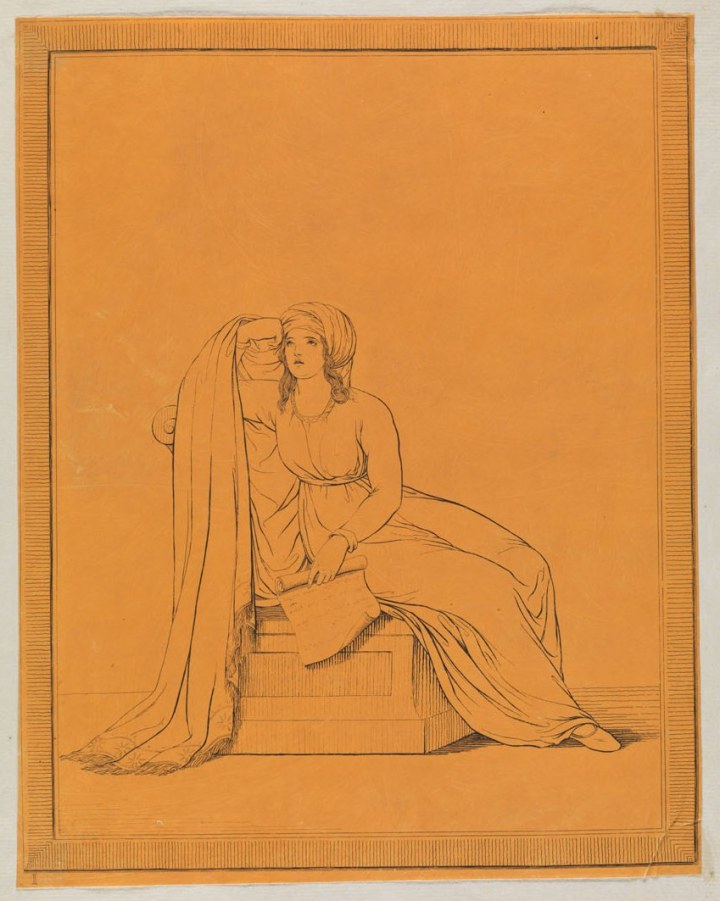
Emma Hamilton (1761?–1815) first performed the Attitudes in Naples in the 1790s. The twelve neoclassical engravings of the Attitudes by Frederick Rehberg published in 1794 and 1797 and the twelve parodies of the same attributed to James Gillray and published by Hannah Humphrey in 1807 will be the centerpieces of the exhibition. Hamilton’s embodied performances will be presented alongside prints and illustrated books representing a range of social and theatrical dancing in Europe that will include contemporary images of the Neapolitan dance the Taranatella, Greek dance from William Hamilton’s volumes on antique vases, social dances including the Minuet, Cotillion, Quadrille, Allemande and Waltz, as well images of the classical ballet. The exhibition will present a new context for the Attitudes and will open up a new space in which to imagine the connections between art history and performance in Europe before the twentieth century.
The exhibition is curated by John Cooper, a Clare-Mellon Fellow in the History of Art and Graduate Research Assistant at the Yale Center for British Art.
Exhibition | Treasures of the Fan Museum
Thanks to Pierre-Henri Biger for noting this upcoming fan exhibition in Paris. From the press release:
Les Trésors du Musée de l’Éventail
L’Atelier Hoguet Musée de l’Éventail, Paris, 15 October 2013 — 15 February 2014
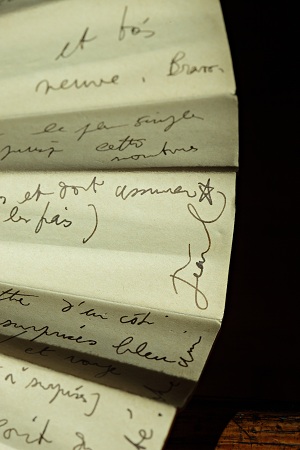 Le Musée de l’Eventail – Hervé Hoguet, seul musée français consacré à cet accessoire, fêtera en octobre 2013 ses 20 ans d’existence. Cette date anniversaire sera d’autant plus symbolique qu’elle célèbrera également les 120 ans de la création du décor du musée et la réinstallation, à l’angle des boulevards Saint-Denis et de Strasbourg, de l’enseigne du XIXème siècle qui doit être remise en état à cette occasion–salon d’exposition et enseigne classés aux monuments historiques en 2004.
Un catalogue sera édité. Il présentera certaines pièces de la collection d’éventails selon l’histoire, les différents styles et les thématiques abordées à travers le temps ainsi que des illustrations et reproductions de documents.
Le musée de l’éventail porte le nom d’Hervé Hoguet, successeur de la Maison Ernest Kees fondée en 1805. Il est le seul musée français exclusivement consacré à l’éventail. Cette initiative est née de la volonté de préserver ce lieu d’histoire, véritable témoin du patrimoine artisanal comme de l’excellence de la capitale française dans l’éventaillerie.
Le musée de l’Eventail est le seul musée en France à conserver dans ses collections des éventails datant du XVIe aux XXe siècles. Plus de deux milles pièces les constituent aujourd’hui. Parmi elles, vingt-deux, datant du XVIIIème au XXème siècle, sont classées à l’inventaire des monuments historiques. Issu en premier lieu des ateliers des maisons d’éventaillistes qui se sont succédées à cette adresse, le fonds constitué par Hervé Hoguet a été considérablement enrichi par le soin de l’association AHME, de la collection d’Anne Hoguet, maître d’art et actuelle directrice du musée. Ce sont aussi des années de dons qui ont permis de les faire croître. Les collections sont régulièrement présentées au public à l’occasion d’expositions temporaires thématiques au sein du musée mais aussi grâce aux prêts effectués lors de manifestations culturelles en France et ailleurs.
Exhibition | Artists & Amateurs: Etching in Eighteenth-Century France
Press release (3 June 2013) from The Met:
Artists and Amateurs: Etching in Eighteenth-Century France
The Metropolitan Museum of Art, New York, 1 October 2013 — 5 January 2014
Curated by Perrin Stein
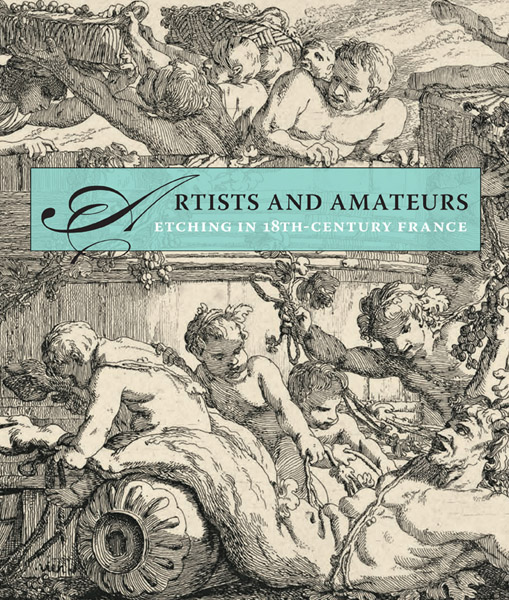 During the eighteenth century in France, a great number of artists—painters, sculptors, draftsmen, and amateurs—experimented with etching, a highly accessible printmaking technique akin to drawing. Featuring 130 works by such artists as Watteau, Boucher, Fragonard, Hubert Robert, and many others, Artists and Amateurs: Etching in Eighteenth-Century France will be the first exhibition to focus on the original etchings created by painters and amateurs in eighteenth-century France. It will present a fresh exploration of how etching flourished in ancien régime France, shedding new light on artistic practice and patronage at that time. In a period when artists strained to navigate the highly regulated Académie Royale and the increasingly discordant public spheres of the marketplace and the Salon, etching afforded them stylistic freedom and allowed them to produce exquisite works of art in a spirit of collaboration and experimentation. The exhibition will present etchings, plus a few drawings and preparatory sketches, from the Metropolitan Museum’s rich holdings, as well as loans from North American museums and private collections. The selection of prints includes a number of rare or unique examples.
While printmaking was dominated by professionals for much of its early history, the technique of soft-ground etching—where a plate was coated in varnish and could then be drawn on with a metal stylus—transformed the practice from a specialized technique practiced by an exclusive group with extensive training, to a highly accessible art form. Some artists, like Antoine Watteau and François Boucher, encountered the process within the thriving commerce of the Paris print trade, where a painter would sometimes be asked to make a preliminary sketch on a prepared copper plate to guide the professional printmaker who would later reinforce the design with engraving. Others, like Jean-Honoré Fragonard and Hubert Robert, first experimented with the technique during their student years in Rome, where Piranesi’s studio was in close proximity to the French Academy. For some, like Jean-Baptiste-Marie Pierre, etching formed a bridge with amateurs, wealthy members of the court or aristocracy who wanted to learn etching as a cultured, leisure pursuit. Because of these relationships, the making of the prints became intermingled with the collecting and studying of prints, creating an environment of cross-fertilization which led to a flourishing of the art form.
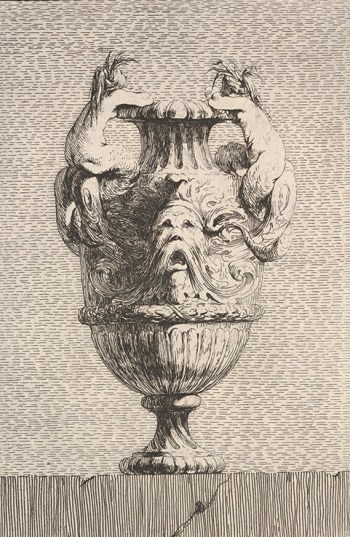
Jacques François Joseph Saly, Design for a Vase with Two Mermaids, from the “Vases” series, 1746 (NY: The Metropolitan Museum of Art)
Artists and Amateurs will highlight the freedom, spontaneity, and creativity of the medium of etching in the hands of artists and collectors. Over the course of the century, etching came to be viewed not solely as a reproduction medium, but also, as one capable of original artistic expression. As the free and improvisational aesthetic of the etching process increasingly was embraced, French artists looked to seventeenth-century masters—such as Rembrandt in the North and Salvator Rosa and Giovanni Benedetto Castiglione to the South—for inspiration. The expressive potential of the technique was also explored in a more experimental manner by artists like Gabriel de Saint-Aubin and Louis Jean Desprez, who harnessed the inky tonalities of the medium to their personal and idiosyncratic vision. The painters who felt the urge to pick up the etching needle were drawn to the freedom and accessibility of the technique, and not necessarily focused on exploiting commercial potential. Their prints tend to be rare and are valued for their qualities of expressiveness and experimentation—in many ways the opposite of the mass production and technical expertise of professional printmakers like Demarteau and Bonnet.
The exhibition will also focus on the French Academy in Rome as a setting that provided the means and freedom to explore this medium; the etchings made by amateurs, both in Rome and in Paris; and, finally, the increasing stylistic engagement with past masters. Overall there will be a balance between works of the most successful painters of the period and lesser known, but equally accomplished figures, including the work of amateurs and the working relationships between them where the influence went both ways.
The exhibition will be organized thematically and will explore how, where, and why artists first learned to etch, their occasional experimentation with marketing their prints for sale, and their technical innovations as they found new ways to manipulate the medium for individual expression. Highlights include Watteau’s Recruits Going to Join the Regiment (ca. 1715-16), Fragonard’s The Satyr’s Family (1763) and The Armoire (1778), Liotard’s Self-Portrait, Boucher’s Andromeda (1734), Gabriel de Saint-Aubin’s View of the Salon of 1753, de Boissieu’s Study of Thirteen Heads (ca.1770), and amateur Ange-Laurent de la Live de Jully’s etching after a drawing by Jacques-François-Joseph Saly of Nicolas Bremont, Cook at the French Academy in Rome (ca. 1754).
From Yale UP:
Perrin Stein, ed., Artists and Amateurs: Etching in Eighteenth-Century France (New York: The Metropolitan Museum of Art, 2013), 240 pages, ISBN: 978-0300197006, $60. With essay by Charlotte Guichard, Rena M. Hoisington, Elizabeth Rudy, and Perrin Stein.
Exhibition | Illuminated Palaces: Extra-Illustrated Books
Press release (15 May 2013) for the exhibition now on at The Huntington:
Illuminated Palaces: Extra-Illustrated Books from The Huntington Library
The Huntington Library, San Marino, 27 July — 28 October 2013
Curated by Stephen Tabor and Lori Anne Ferrell

Image from Mémoires du comte de Grammont (London, 1794)
with extra illustrations added by Richard Bull
◊ ◊ ◊ ◊ ◊
The eccentric art of customizing printed books by adding illustrations is the focus of a new exhibition now on view at The Huntington Library, Art Collections, and Botanical Gardens. Illuminated Palaces: Extra-Illustrated Books from The Huntington Library features more than 40 works dating from the late 1700s to the early 1900s, when the practice was most popular.
Extra-illustration is often referred to as ‘Grangerizing’, after a British clergyman named James Granger, but he did not invent the practice. In fact, extra-illustration has probably been practiced since the beginning of the printed book, says Stephen Tabor, the Huntington’s curator of early printed books and co-curator of the exhibition with Lori Anne Ferrell, English and history professor at Claremont Graduate University. But the practice did not soar in popularity until Granger published his Biographical History of England, from Egbert the Great to the Revolution in 1769. Granger’s book was essentially a catalog of portrait prints of famous English people, arranged by class—from otherwise ordinary commoners “remarkable from only one circumstance in their lives” to scientists, politicians, noblemen, kings, and queens. By creating an organized list of desiderata, Granger unwittingly motivated some collectors to illustrate copies of his own book with the portraits, setting off what one later critic called “a general rummage after, and plunder of, old prints.”
“Without intending to, he began a craze that lasted well into the 1900s, in which people would purchase a book, dismantle it, customize it with inserted illustrations, manuscripts, even other whole printed books, and reconstitute everything in a new form,” says Tabor. The practice gathered popularity at a time when wealthy Englishmen began collecting large numbers of engravings; it then caught on in America. “It’s at once fascinating and horrifying—the idea that someone would purposefully destroy a book, raid other books for illustrations, trim fine prints to size, and clip signatures of famous people in order to build their own custom creation.”
But, in fact, The Huntington has more than a thousand extra-illustrated books. Henry E. Huntington purchased most of them as part of the rare books and manuscripts he assembled in the early 20th century. Perhaps most surprisingly, says Tabor, “extra-illustrated books in the Library are home to more than 90 percent of the artwork at The Huntington. Truthfully, we’re still being surprised by what we find in these books because we’ve never had the resources to catalog them completely. That would take somebody expert in art history, manuscripts, and bibliography, and funds to keep the person on staff for many years.”
In fact, while working on the exhibition, Tabor and Ferrell discovered a pre-Revolutionary letter from George Washington to his brother Samuel. A prominent collector of American autographs bought it in 1886 and had it bound in an extra-illustrated book that Henry Huntington acquired in 1922. Soon after its rediscovery Tabor was able to bring it to the attention of a visiting editor of the ongoing Papers of George Washington project, who was delighted to have traced the missing original.
When important original works of art are found in extra-illustrated books, they are sometimes transferred from the Library to The Huntington’s art collections for cataloging and storage. A watercolor by William Blake, studies by Parmigianino, and numerous drawings by famous illustrators have turned up in the Library’s grangerized books.
Grangerizing became a matter of great intrigue for co-curator Ferrell when she was curating The Huntington’s exhibition The Bible and the People, in 2005. “It turns out that some of the most compelling of the Bibles are those that are extra-illustrated, and for obvious reasons,” she says. The blockbuster object of the Bible exhibition, she says, was the Huntington’s Kitto Bible, probably the largest Bible in the world. A 60-volume set, the Kitto was created in the mid 1800s by James Gibbs, who set out to “extra-illustrate” a regular two-volume Bible. By the time Gibbs finished his project, the Kitto Bible had expanded to hold more than 30,000 prints, engravings, and drawings, and a variety of other inserted materials. The entire Bible was displayed in the exhibition. “It’s an incredible work, absolutely astonishing,” says Ferrell. One volume of the Kitto—a massive tome containing just the books of Romans and I Corinthians—will be included in the Illuminated Palaces exhibition.
There was nothing simple or typical about how people went about the process of extra-illustration. Hobbyists went beyond illustrations to add other materials, including maps, pamphlets, original drawings, manuscripts, and news clippings. To create tidy volumes with leaves all the same size they mounted the added material, and often the leaves of the original book itself, in paper frames. But the process involved cutting and permanently altering the original material, “and for today’s book lovers and book conservators,” says Ferrell, “it’s considered a very questionable practice.” Extra-illustration, popular through the early 1900s, eventually vanished because collecting habits changed, the market for prints dropped, and the Great Depression made it impossible for most collectors to indulge this very expensive hobby.
Shakespeare has a particular appeal to grangerizers. On view in the exhibition will be one grangerized project of nine volumes of Shakespeare’s works expanded to 45. Other examples will include a rare pre-Granger example of extra-illustration, a copy of Virgil’s works from 1492, augmented 200 years later by a suite of German prints keyed to specific passages. “Faced with illustrations that were larger than the book,” says Ferrell, “the owner simply folded them to fit.”
The first and most famous of the grangerizers was a member of parliament, Richard Bull (1725–1806); he produced some 70 extra-illustrated volumes. After Granger published his Biographical History, Bull wrote to congratulate him: “I shall have pleasure in shewing you that I am endeavoring to follow your plan as near as I can.” He then went on to amass more than 14,000 prints and created, from Granger’s original work, 36 “giant bound volumes, using cuttings from the original book as the fragile thread running through the whole,” says Ferrell.
Two short videos produced by The Huntington will accompany the exhibition to help visitors get a richer sense of the ‘internal workings’ of grangerized books. Also, see this blog posting (25 July 2013) from The Huntington on how to inlay a print.
Exhibition | Useful Hours: Needlework and Painted Textiles
Press release (20 February 2013) for the exhibition now on at The Huntington:
Useful Hours: Needlework and Painted Textiles from Southern California Collections
The Huntington Library, Art Collections, and Botanical Gardens, San Marino, 1 June — 2 September 2013
Curated by Harold B. Nelson

Taking its title from a verse stitched in a 1796 sampler by 10-year-old Anne ‘Nancy’ Moulton, Useful Hours: Needlework and Painted Textiles from Southern California Collections explores the development of needlework and painted textiles in the United States in the late 18th and early 19th centuries. With a selection of 29 rare and finely wrought examples, the exhibition offers extraordinary insight into the early training, daily lives, and social and cultural values of American women during this rich period in American history.
Useful Hours includes several exceedingly rare pieces of 18th-century American needlework, drawn in large part from the collection of Victor Gail and Thomas H. Oxford, a promised gift to The Huntington, as well as from the collections of Los Angeles County Museum of Art and private lenders. The 25 surprisingly beautiful, touching, and painstakingly executed examples of American works are juxtaposed with four examples of British needlework, a related painting, American furniture, and other decorative arts objects, along with books and manuscripts from The Huntington’s collections.
“I hope visitors feel the sense of amazement that I feel when I explore these young women’s accomplishments,” said Hal Nelson, The Huntington’s curator of American decorative arts. “Their technical skill and creativity within needlework traditions of the time are truly marvelous. I also think people will be surprised when they realize these remarkable pieces are all from Southern California collections,” he added. “A common misconception is that the best American art collections are only on the East Coast, but when you see these pieces you instantly realize that is far from the case.”
Useful Hours is organized thematically, focusing on a variety of subjects, themes, and formats, including coats of arms, pictorial samplers, mourning pictures and memorials, family trees, pockets and pocket books, marking samplers (showing the basic stitches for practical domestic needs), and the relationship between needlework teachers and students. Each section of the exhibition illuminates the lives and accomplishments of the young needleworkers based on new curatorial research. (more…)
Exhibition | In the Name of the Rose: The Jacobite Rebellions
From Fairfax House:
In the Name of the Rose: The Jacobite Rebellions — Symbolism and Allegiance
Fairfax House, York, 9 August — 31 December 2013
 The Jacobite rebellions of 1715 and 1745 had a dramatic impact upon Georgian society. Shedding light on the secretive world of Jacobite allegiance during this troubled period, In the Name of the Rose uncovers the use of symbolism to convey covert messages of loyalty to the cause of the exiled Stuarts. At the heart of this exhibition lies the rose, the most potent and evocative of Jacobite symbols, inspiring faith, courage, and hope.
In association with the exhibition, Fairfax House will be hosting a one-day colloquium exploring the symbolic cultures of Jacobitism on Friday November 15, 2013.
◊ ◊ ◊ ◊ ◊
A fine Georgian townhouse, Fairfax House was originally built in 1762 as a winter home for Viscount Fairfax. Its richly decorated interiors were designed by York’s most distinguished 18th-century architect, John Carr. Converted to a cinema and dance hall during the early twentieth century, it was rescued from dereliction in the 1980s by York Civic Trust. The restored interiors are (now) beautifully complemented by Noel Terry collection of furniture, clocks, paintings and decorative arts, one of the finest private collections of its kind.
Exhibition | Picturing America
In addition to the exhibition, the Dixon has devised a truly-inspired plan to lure visitors to the museums on Fridays: food trucks in the parking lot!
Picturing America: Signature Works from the Westmoreland Museum of American Art
Dixon Gallery and Gardens, Memphis, 4 August — 6 October 2013
Vero Beach Museum of Art, Vero Beach, Florida, 15 February — 25 May 2014
 Over the past fifty years, the Westmoreland Museum of American Art, in Greensburg, Pennsylvania, has assembled a collection of works by significant American artists, concentrating on the mid-18th through the mid-20th centuries. Featuring works by John Singleton Copley, Charles Wilson Peale, and Mary Cassatt, Picturing America showcases the signature works from the museum’s collections, from preeminent American artists of the Hudson River School to modernists such as Milton Avery and Doris Lee.
Barbara Jones, Picturing America: Signature Works from the Westmoreland Museum of American Art (Greensburg, PA: Westmoreland Museum of American Art, 2010), 256 pages, ISBN: 978-0931241376, $45.
Exhibition | The Taste of Diderot
This upcoming exhibition at the Musée Fabre de Montpellier marks the 300th anniversary of Diderot’s birth (5 October 1713); today, incidentally, is the anniversary of his death (31 July 1784). From the museum’s programme brochure:
Le Goût de Diderot
Musée Fabre de Montpellier, 5 October 2013 — 12 January 2014
Fondation de l’Hermitage, Lausanne, 7 February — 1 June 2014
Le goût est sourd à la prière. Ce que Malherbe a dit de la mort,
je le dirais presque de la critique; tout est soumis à sa loi.
Diderot, Préface du Salon de 1765
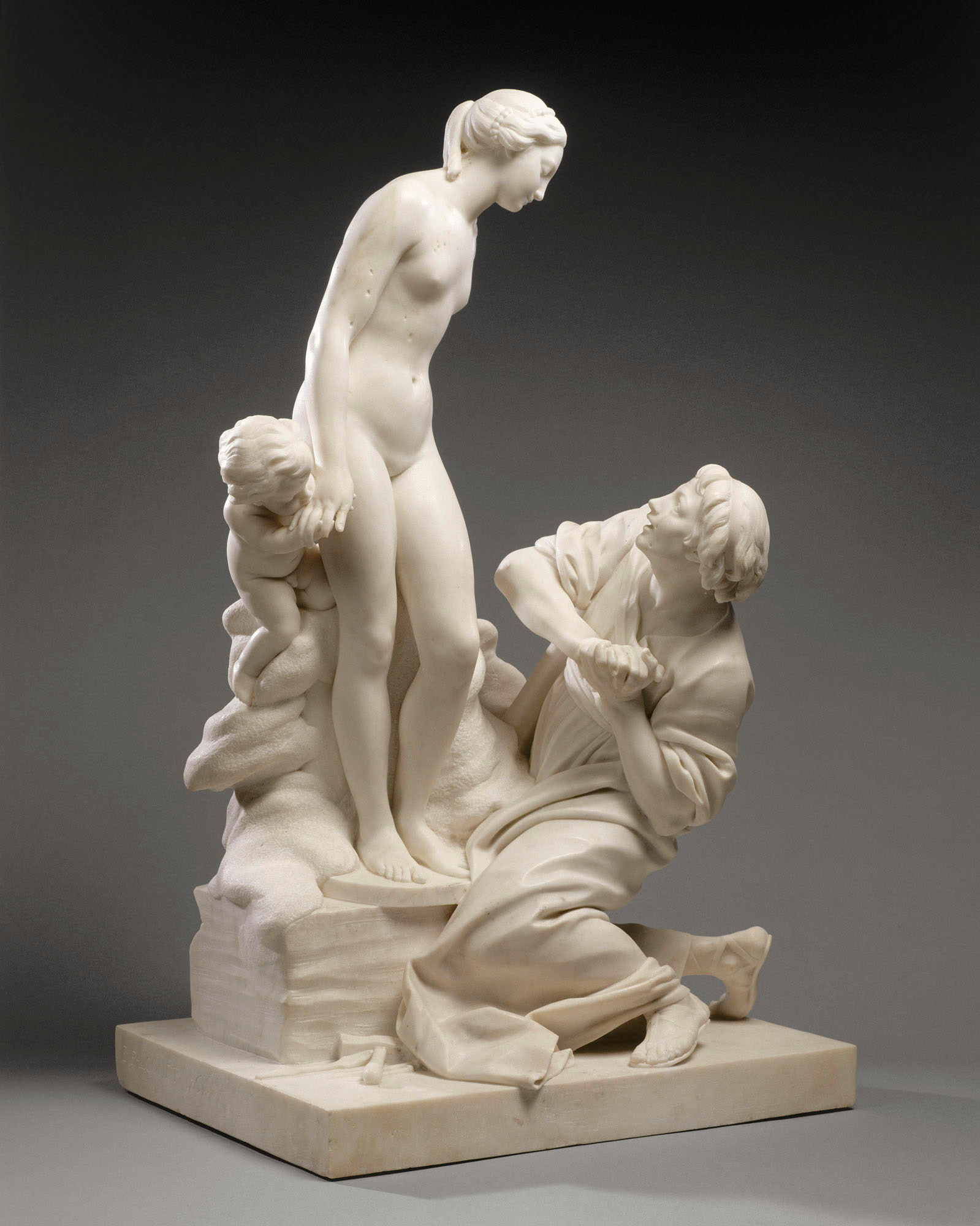
Etienne-Maurice Falconet, Pygmalion et Galatée, 1761, marbre ©RMN-Grand Palais (musée du Louvre) / Hervé Lewandowski
Le musée Fabre de Montpellier Agglomération et la Fondation de l’Hermitage de Lausanne s’associent pour célébrer le tricentenaire de la naissance de Denis Diderot (1713–1784), une figure majeure des Lumières françaises.
Philosophe, romancier, dramaturge, encyclopédiste, Diderot a également joué un rôle pionnier dans le domaine des arts, en rédigeant à partir de 1759, pour la Correspondance littéraire, les comptes rendus des expositions publiques de peinture et de sculpture que l’Académie royale organisait tous les deux ans dans le Salon carré du Louvre. Ces textes serviront et servent encore de modèle et de référence à la critique d’art.
A travers une sélection de peintures (Boucher, Chardin, Vien, Greuze, Vernet, David…), de sculptures (Pigalle, Falconet, Houdon…), de dessins et de gravures, l’exposition propose un aperçu de ce qu’était l’art au temps des Lumières auquel Diderot fut confronté, et de la manière dont il développa et exerça son goût propre. Sa culture visuelle, plastique, architecturale se développe progressivement, ses Salons deviennent au cours des années 1760 la rubrique fétiche de la Correspondance littéraire. Dans les années 1770, il est sollicité comme courtier par Catherine II lors des grandes ventes des collections privées françaises. Goethe lit ses Essais sur la peinture en Allemagne, ses idées esthétiques et sa dramaturgie influencent de façon décisive le courant Sturm und Drang.
Mais ce qu’on retiendra surtout, ce sont les mises en relation audacieuses qu’il propose, où genres, modes, médiums se rencontrent : Greuze avec Boucher, le vrai faux moral et le faux vrai libertin ; Deshays et Doyen avec Homère, Vien et Falconet avec Anacréon, pour que le peintre soit aussi un poète ; Vernet le paysagiste avec les verres et les fruits de Chardin, pour la magie de l’art. L’exposition proposera au spectateur de faire l’expérience de ces rencontres, guidé par la verve inimitable de Diderot.
Note (added 31 March 2014) — The original posting failed to note the mounting of the exhibition in Lausanne.










leave a comment