Reviewed | Wax Exhibition in Venice
Notice of this exhibition appeared here at Enfilade back in March, but it’s nice to include a portion of Allison Goudie’s review from The British Society for Eighteenth-Century Studies. It also serves as a reminder of the rich offerings at the BSECS site. Links to other relevant reviews are included toward the bottom of this posting.
◊ ◊ ◊ ◊ ◊
From BSECS:
Avere una Bella Cera: Le Figure in Cera a Venezia e in Italia, Exhibition at the Fortuny Museum, Venice (10 March – 25 June 2012)
Reviewed by Allison Goudie, University of Oxford; posted 16 May 2012
. . .The current exhibition was conceived by its curator, Andrea Daninos, as a tribute to Schlosser’s pioneering efforts. Daninos recently published an Italian translation of Schlosser’s History (Officina Libraria, 2011), accompanied by an augmented catalogue of works, complementing the 2008 English translation that was incorporated into the outstanding Getty Research Institute publication ‘Ephemeral Bodies: Wax Sculpture and the Human Figure‘. Certainly, as such publications demonstrate, recent scholarly interest in the medium of wax has already very quickly made up for lost time and made significant inroads towards writing the medium back into the history of art. The Italian title of the exhibition translates in English as ‘in the pink’ – an apposite assessment of the current scholarly enthusiasm for the medium.
All the while however, what has been lacking, rather conspicuously – and of particular urgency given the investment in the materiality of wax by contemporary scholarship – is a cohesive exhibition in which the physical objects of this hitherto lost chapter in the history of portraiture may be viewed quite literally in the flesh. The exhibition at Palazzo Fortuny does exactly this. While its scope may be limited to the Italian context, its treatment of it is comprehensive, surveying almost all the life-size wax portraits extant today in Italian collections, public and private, and broaching private and commemorative, religious and quasi-scientific applications of wax portraiture. A notable absence in this survey of Italian wax portraiture would be the work of Medardo Rosso, however Schlosser, too, chose not to extend his exploration of the topic into the modern age. It was the eighteenth century that witnessed an expansion of wax portraiture on a scale incomparable in other periods, and the majority of portraits on display are eighteenth-century works. . .
The full review is available here»
◊ ◊ ◊ ◊ ◊
Additional reviews available at the BSECS site
Nicholas Hawksmoor: Architect of the Imagination
Location: Royal Academy of Arts, London
Event Date: June 2012
Reviewed By: David Frazer Lewis, University of Oxford
An homage to Hawksmoor to mark the 350th anniversary of his birth.
Location: Institut National d’Histoire de l’Art (INHA), Galerie Colbert, Paris
Event Date: June 2012
Reviewed By: Valérie Kobi, University of Neuchâtel
This perfectly formed exhibition captures the essence of how knowledge was visualised in the age of the encyclopaedia.
Johan Zoffany RA: Society Observed
Location: Royal Academy of Arts, London
Event Date: June 2012
Reviewed By: Allison Goudie, New College, Oxford
An impressive exhibition of the RA’s very own master of the conversation piece, Johan Zoffany.
Turner Inspired: in the Light of Claude
Location: National Gallery, London
Event Date: June 2012
Reviewed By: Clare Pettitt, King’s College, London
The new National Gallery show emphasises links between Turner and Claude, to the detriment of both.
Taking Time: Paintings by Chardin
Location: Waddeston Manor, Aylesbury
Event Date: May 2012
Reviewed By: Hannah Williams, University of Oxford
An enlightening exhibition of the four versions of Chardin’s Boy Building a House of Cards.
Location: Museo di Roma
Event Date: May 2012
Reviewed By: Hannah Malone
A subtle exhibition showing Rome and its many faces, as city and myth.
Location: The Foundling Museum, London
Event Date: May 2012
Reviewed By: Olive Baldwin and Thelma Wilson
Explore the world of Vauxhall Gardens at the Foundling Museum.
Exhibition | Drawings of Natoire and the Roots of Artistic Creation
Thanks to Hélène Bremer for noting this exhibition at the Musée des Beaux-Arts in Nîmes. It brings together more than 90 drawings from private and public collections, including loans from the Louvre and the Atger Museum (an English description is available here).
◊ ◊ ◊ ◊ ◊
Charles-Joseph Natoire (1700-77): Le dessin à l’origine de la création artistique
Musée des Beaux-Arts de Nîmes, 8 June — 16 September 2012
 A l’occasion de la parution de la monographie de Natoire aux éditions Arthena, rédigée par Susanna Caviglia-Brunel, le Musée des Beaux-Arts propose une exposition sur Charles-Joseph Natoire dessinateur (Nîmes, 1700 – Castel Gandolfo, 1777). Après les célébrations du bicentenaire de la mort de Natoire en 1977 et le tricentenaire de sa naissance en 2000, le Musée des Beaux-Arts rend hommage, par l’exposition inédite de sa production graphique, à cet artiste d’origine nîmoise, considéré comme l’un des grands représentants de la peinture française du XVIIIe siècle.
Né à Nîmes en 1700, Charles-Joseph Natoire illustre sans doute le mieux, avec François Boucher, un certain esprit de la peinture française sous le règne de Louis XV. Peintre subtil, dessinateur inspiré et virtuose, sa réputation s’établit rapidement après son entrée à l’Académie Royale de peinture et de sculpture en 1734 et les nombreuses commandes royales qu’il exécute avec brio (Fontainebleau, Versailles…). A partir de 1756, Natoire réduit sa production peinte au profit du dessin.
Au cœur des peintures de grands formats dont font partie les quatre cartons de tapisseries du Cycle de l’Histoire de Marc-Antoine que conserve le musée (L’entrée de Marc-Antoine à Ephèse, L’Arrivée de Cléopâtre à Tarse et Le Repas de Cléopâtre et Marc-Antoine, La Paix de Tarente), près de 90 dessins sortent exceptionnellement des réserves de collections privées et publiques (dont le musée du Louvre et le Musée Atger de Montpellier) pour le plus grand plaisir du public. Les sanguines, pierres noires et lavis permettent d’aborder les différentes fonctions du dessin dans les étapes de la création chez Charles-Joseph Natoire. Copie d’après l’Antique, étude des grands maitres, dessin sur le motif, moyen d’exercice, étude préparatoire de l’œuvre d’art ou œuvre d’art… le dessin chez Natoire révèle un charme des contours, une harmonieuse association des matériaux, le goût de l’élégance, la recherche de la beauté.
Exposition organisée avec la participation du musée du Louvre et l’aide de la DRac Languedoc-Roussillon et de l’AAMAC.
◊ ◊ ◊ ◊ ◊
From Dossier de l’Art:
Dossier de l’Art: Natoire. N° 196 (May 2012), 9€.
 C’est l’un des plus illustres enfants de Nîmes que célèbre aujourd’hui le musée des Beaux-Arts en consacrant une exposition à l’abondante production graphique de Charles-Joseph Natoire. Près de quatre-vingt-dix feuilles sorties exceptionnellement des réserves de collections privées et publiques offrent un large panorama de l’usage qu’il fit du dessin tout au long de sa carrière, des bancs de l’Académie de peinture et de sculpture de Paris à la direction de l’Académie de France à Rome. Sanguines, pierres noires, lavis, études rehaussées à la craie ou à l’aquarelle illustrent les différentes étapes du processus de création, de la copie de motifs d’après les maîtres au premier tracé, de l’étude de variantes à l’esquisse minutieuse et jusqu’au dessin comme œuvre autonome.
Articles
Entretien avec Pierre Rosenberg, de l’Académie française
Le dessin à l’origine de la création
Arrêt sur une oeuvre : la copie de motif
Arrêt sur une oeuvre : la première pensée
Arrêt sur une oeuvre : les reprises et les variantes
Arrêt sur une oeuvre : les dessins de paysage
Les techniques graphiques au XVIIIe siècle
Le songe d’une Académie idéale
Le cas Greuze
L’invention à l’œuvre
Actualités
Le musée Atger, une collection exceptionnelle de dessins anciens
Le musée des Beaux-Arts de Nîmes
Les dessins du XVIIIe siècle du musée Fabre
Les collectionneurs de dessins au XVIIIe siècle
Les dessins de la collection Adrien au musée des Beaux-Arts de Rennes
Art Fair | Masterpiece London 2012
From the fair’s website:
Masterpiece London 2012
Royal Hospital Chelsea, London, 28 June — 4 July 2012
 Now in its third year Masterpiece London confirms its position as the capital’s leading art and antiques fair. This is no ordinary event, but a forum for distinctive design and aesthetic excellence where every exhibit offered is scrutinized by a team of experts to ensure every confidence in each purchase. The variety on offer at the fair is second to none: cars, wine, contemporary design and exquisite jewellery sit alongside the best of the fine and decorative arts. Presenting a snapshot of the history of art and design from antiquity to the present day, visitors will relish the chance to acquire rare collectors’ items or simply enjoy temptation on a grand scale. There is nowhere better than Masterpiece London 2012 to discover a rich and varied treasure trove. . .
If your interest is piqued by what you see, Masterpiece London offers you the chance to develop your knowledge and appreciation. During each day of the fair, select exhibitors will present insights into their given area of expertise so if your interest is portraits or pocket watches, mirrors or miniatures, Degas or diamonds, Masterpiece London gives you the opportunity to get up close and personal with some of the finest examples shown at the fair and to learn from the world’s leading luminaries.
Building on the success of 2010 and 2011 Masterpiece London promises you an impressive choice of art and design enlivened with its own special twist to ensure you have a memorable and enjoyable visit. All is displayed in a fresh and lavish setting, so that whether you are a seasoned collector, or a new buyer or just an admirer of exquisite beauty, you will experience countless opportunities to buy, enjoy and learn from.
◊ ◊ ◊ ◊ ◊
Of all the events associated with the fair, Saturday’s Wallace Collection Symposium might be most interesting to Enfilade readers:
Wallace Collection Symposium at Masterpiece London
Royal Hospital Chelsea, London, 30 June 2012
The Wallace Collection will be hosting a symposium on Saturday 30 June, led by Director, Dr Christoph Vogtherr. There will be four talks by Collection curators, from 11.30 – 16.00 on great collectors and their collections to include the French court of Louis XVI and British collecting in the nineteenth century.
11.30 A Golden Age: Collecting Medieval and Renaissance Sculpture and Decorative Arts in the Nineteenth Century
Jeremy Warren, Collections and Academic Director
12.00 Nineteenth-Century British Collectors of Contemporary French Paintings
Stephen Duffy, Curator of Pictures
13.00 Lunch
14.30 Royal Collectors at the Court of Louis XVI
Helen Jacobsen, Curator French Eighteenth-Century Decorative Arts
15.15 How Paintings Were Displayed in the Eighteenth Century
Christoph Vogtherr, Director
The day and each talk is free to Masterpiece London ticket holders. To reserve a place at the symposium, please email contact@masterpiecefair.com with your full name and address, with the subject: The Wallace Collection Symposium, indicating how many spaces you wish to reserve and a confirmation letter will be sent to you. Places are subject to availability.
◊ ◊ ◊ ◊ ◊
Note (added 9 July 2012) — A press release highlighting the successes of Masterpiece London 2012 is available at Art Daily.
Enfilade at Three — Buy a Book and Open a Door
From the Editor
 Enfilade turns three today, and to celebrate, I’m announcing a campaign to establish June 22 as Buy-an-Art-Book Day. As I’ve said repeatedly, you deserve credit for making this site so much more than I could have possibly envisioned when I stepped on-board several years ago as newsletter editor. With more than 220,000 hits on some 1300 posts, Enfilade attests to the global depth of interest in eighteenth-century art — both among scholars and a wider, engaged public. The site now receives around 10,000 hits each month with some 1500 from returning visits. In short, there are hundreds of you who read Enfilade on a regular basis, and the site’s success depends on you. Thank you!
With these numbers in mind, it seems to me that Enfilade readers could mobilize to make an impact — modest perhaps but still an impact. In transitioning from traditional print formats to the digital realm, academic publishing, particularly art historical publishing, faces tremendous challenges. With the ‘business’ of the academy more generally plagued by questions of sustainability, it’s easy to see how hard decisions about budgets have wreaked havoc on the sales of books (when major universities are cutting whole departments, declining library budgets may seem relatively benign, but in both cases, fewer books will be sold). For most of us, such gloomy observations are all too familiar, and you don’t turn to Enfilade for more bad news. Today is after all a birthday celebration!
So as a gesture of positive action, I’m asking all of you to buy a book today (and fellow bloggers to spread the word). It’s easy to think that it won’t matter, but it does. Most people are astounded to learn just how small the circulation numbers are for art history books published by university presses. However humbling it may be for those of us who spend years of our lives producing a book, it’s not uncommon for only 400 or 500 copies to be sold. Surpass 1000 and you’re a superstar. There’s a tendency to assume that university presses receive generous funding from their host universities. It’s almost never the case. If they’re not in the business to turn huge profits, they must still be economically viable. Several years ago, I heard Susan Bielstein, executive editor at the University of Chicago Press, give a talk on the nuts and bolts of publishing. How did she begin? By asking members of her audience (almost entirely composed of art historians) to go buy a book. She was entirely serious. So am I.

Many of you buy lots of art history books already. Bravo! Buying a book today won’t be any major change for you. As I think about my own buying habits, they tend to go something like this: I buy discounted display copies at conferences, I buy things I need for an upcoming talk, I buy remaindered copies of books I should have bought a year or two earlier, or I buy used copies I need for an article via Amazon. None of that’s what I have in mind in launching Buy-an-Art-Book Day. Those used books do nothing to help the authors or the university presses who produced them. For that matter, new purchases through Amazon often result in smaller royalties than buying from the publisher directly. Ever wonder who shoulders the expense of that reduced price? Yes, the publisher and the writer.
If 200 or 300 of you buy an art history book this week — ideally one treating the eighteenth century and, better yet, one written by a HECAA member — it would send a strong message that there is an eager audience for such books. Whether you spend $6 or $1000, buy a book.
I like the metaphor of an enfilade because of the way it suggests an open — almost limitless — vista, with each room leading to a deeper, more intimate experience. But such a vision is premised on those doors being opened. Reading a book — buying a book — is one way we turn the handle, one way we open doors to the eighteenth century.
-Craig Hanson
At Christie’s | Exceptional Decorative Arts
Press release (1 June 2012) from Christie’s:
At Christie’s, The Exceptional Sale: Decorative Arts (#5702)
London, 5 July 2012

“Brand Cabinet,” a George II ivory-mounted padouk medal-cabinet, ca 1743. Est: £800,000-1,200,000. Photo: Christie’s Images.
In 2008 Christie’s launched a unique sale platform for the very best decorative arts; The Exceptional Furniture Sale saw 10 masterpiece works realise a total of £10.3 million. Building on the success of this sale and The Exceptional Sale held in 2011, Christie’s is pleased to announce details of The Exceptional Sale 2012 which will take place on the evening of 5 July. Comprising 48 lots, the sale presents three centuries of decorative arts, from the first quarter of the 16th century to the first quarter of the 19th century. Featuring the finest examples of furniture, silver, sculpture, clocks and porcelain – including recent discoveries and previously unknown examples – the sale exemplifies the very best of European decorative arts. It is expected to realise a total in excess of £13 million. Robert Copley, Deputy Chairman Christie’s UK, International Head of Furniture and Decorative Arts states: ‘With The Exceptional Sale Christie’s celebrates excellence in furniture and the decorative arts. The attributes of this carefully curated auction are provenance, rarity, design, and craftsmanship. From exquisite furniture by André-Charles Boulle and Thomas Chippendale to the magnificent Leinster silver dinner-service; from a rare maiolica plate by Nicola da Urbino to a newly discovered marble group by Jan van Delen; from glittering Chinese clocks and ormolu-mounted porcelain to the finest examples of Italian pietre dure, The Exceptional Sale offers collectors an opportunity to acquire the very best.’
The exceptional Brand Cabinet, a George II ivory-mounted padouk medal-cabinet, circa 1743 (estimate: £800,000-1,200,000), was made for the wealthy young Dilettante Thomas Brand, who like many English milordi went on The Grand Tour, arriving in Rome in 1738. It is here that he probably purchased the ivory plaques that depict figures from Classical mythology such as Leda and the Swan. A couple of years later, Brand’s contemporary and ‘intimate friend’ Horace Walpole also made the Tour. On his return he designed a cabinet to house his precious ‘enamels and miniatures’. No doubt inspired by William Kent, his cabinet and Brand’s are both made of padouk and are attributed to William Hallett of Great Newport Street, in Covent Garden. Walpole’s cabinet subsequently hung in the Tribune at Strawberry Hill and is now in the Victoria and Albert Museum, while Brand’s cabinet remained at the family house, The Hoo, in Hertfordshire until it was first sold at Christie’s in 1938.

The Ogden Mills Armoires a Six Medailles. Attributed to Andre-Charles Boulle and his workshop, first half 18th century. Estimate: £1,000,000-1,500,000. Photo: Christie’s Images Ltd 2012.
The Ogden Mills ‘Armoires à Six Medailles’ are lavishly decorated with spectacular gilt-bronze mounts that fuse seamlessly with the scrolling foliate pattern of the sumptuous ground of brass and tortoiseshell première and contre-partie marquetry (estimate: £1,000,000–1,500,000). The Louis XIV armoire in contre partie is attributed to André-Charles Boulle, while the late Louis XVI in première partie is by Delorme. They are decorated to the doors with trails of medals celebrating the Life of Louis XIV as well as the figures of Aspasia and Socrates. Conceived initially with shelves to house collections of precious medals this series of armoires proved so successful it remained in production in Boulle’s workshop throughout the first half of the 18th century and was subsequently continued by Boulle’s followers. (more…)
Exhibition | Canaletto: The Venetian Notebook
Thanks to Stacey Sloboda for noting this one that almost slipped by me (a brief English description is available here). From the Palazzo Grimani:
Canaletto: Il Quaderno Veneziano
Palazzo Grimani, Venice, 1 April — 1 July 2012
Curated by Annalisa Perissa Torrini
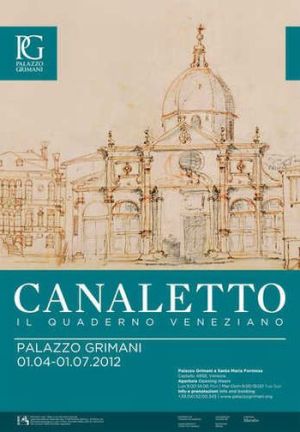 Apre a Venezia il 1 aprile, nella cornice straordinaria delle sale di Palazzo Grimani, la mostra Canaletto. Il Quaderno veneziano dedicata al celebre Quaderno di schizzi di Canaletto, un unicum nella storia dell’arte del Settecento, codice mai visibile al pubblico, ora presentato assieme a ventiquattro disegni di antica provenienza veneziana, appartenenti a collezioni pubbliche e private, per la prima volta insieme.
Il progetto espositivo è a cura del Direttore del Gabinetto dei Disegni delle Gallerie dell’Accademia, Annalisa Perissa Torrini, programmato nell’ambito della valorizzazione del fondo grafico, promosso dalla Soprintendenza Speciale per il Patrimonio storico, artistico ed etnoantropologico e per il Polo Museale della città di Venezia e dei comuni della Gronda lagunare e prodotto da Venezia Accademia con il contributo di Save Venice Inc.
La mostra indaga il modus operandi dell’artista, definendone la concreta operatività nella fase di costruzione grafica e stabilisce il ruolo svolto dalla camera ottica nell’ideazione e realizzazione delle vedute di Venezia.
Il Quaderno di Canaletto è un prezioso piccolo volume (mm 175×235) formato da 7 fascicoli, rilegati nell’Ottocento, ma in origine sciolti, ricolmo di schizzi realizzati probabilmente in un breve arco di tempo, poi riutilizzato dal pittore veneziano negli anni. Ogni fascicolo racconta il processo creativo del suo lavoro: le tipiche annotazioni sui colori, sui materiali e sui luoghi ritratti, le correzioni e abrasioni, i cambi di inchiostro e di penna, lo sporadico uso del righello e l’impiego della punta metallica, la cui presenza è stata osservata nel corso degli studi e delle analisi delle tecniche e della carta.
Insieme al Quaderno, vengono esposti otto fogli, tra cui il cosiddetto “scarabotto” con il Canal Grande di fronte alla Salute e il Traghetto di San Moisé, della raccolta delle Gallerie, sette fogli della Galleria Nazionale d’Arte Antica di Trieste, sette fogli poco noti di collezione privata italiana di provenienza Corniani-Algarotti, il foglio della Fondazione Cini e quello del Museo Correr di Venezia. Importanti dipinti di collezioni pubbliche e private mostreranno poi la realizzazione pittorica di alcuni disegni esposti in mostra: capolavori delle Gallerie dell’Accademia, di Ca’ Rezzonico, degli Uffizi, di Castello Sforzesco e di importanti collezioni private italiane, mentre alcune incisioni, di Visentini e Smith, documentano l’importanza delle stampe sia nell’iter creativo dell’artista, che nella diffusione della sua opera.
In occasione della mostra verrà pubblicato un fac-simile del Quaderno di Canaletto, edito da Marsilio Editori, accompagnato da un saggio storico interpretativo di Annalisa Perissa Torrini e seguito da uno studio sulla fascicolazione e rilegatura condotto da Barbara Biciocchi, da un testo sulla camera ottica a cura di Dario Maran, e documenti sulla vita di Canaletto trovati da Alessandra Schiavon all’Archivio di Stato di Venezia.
Il progetto di allestimento, curato da Annunziata Genchi, comprende supporti audiovisivi e multimediali didattici, fra i quali una riproduzione digitale del Quaderno, realizzata da Mauro Tarantino, che permetterà al visitatore di sfogliare virtualmente tutte le pagine del prezioso codice, mentre diversi filmati illustreranno l’utilizzo e le finalità della camera ottica, i modi di fascicolazione del volume e le tecniche grafiche di esecuzione, un filmato in 3D con il confronto tra i disegni e i dipinti ed un altro sul funzionamento della camera ottica. Un modello funzionante di camera ottica, inoltre, è stato realizzato in collaborazione con il Musée Maillol di Parigi, dove il visitatore potrà guardare le “vedute” come faceva lo stesso Canaletto.
◊ ◊ ◊ ◊ ◊
From Marsilio:
Annalisa Perissa Torrini, ed., Canaletto. Il Quaderno veneziano (Marsilio, 2012), 236 pages, ISBN: 9788831713009, €33.
 In occasione della mostra Canaletto. Il Quaderno veneziano, in programma a Venezia nella splendida cornice di Palazzo Grimani dall’1 aprile all’1 luglio, verrà pubblicato un fac-simile dell’affascinante manufatto, un unicum nella storia dell’arte del Settecento, solitamente non visibile al pubblico. Il prezioso volume formato da sette fascicoli, rilegati nell’Ottocento ma in origine sciolti, ricolmo di schizzi realizzati probabilmente in un breve arco di tempo, venne riutilizzato negli anni da Canaletto come strumento di lavoro. Ogni fascicolo racconta l’operare del maestro veneziano: racchiude le tipiche annotazioni sui colori, sui materiali e sui luoghi raffigurati, le correzioni e le abrasioni, i cambi di inchiostro e di penna, tutte quelle tracce che rappresentano la sua memoria grafica, la registrazione di dati veri, oggettivi, esatti da interpretare e rielaborare nella fase creativa della composizione della veduta. In apparato al fac-simile saranno inseriti, oltre agli interessanti risultati delle recenti analisi sulle cosiddette informazioni “nascoste” – non visibili a occhio nudo – e su fascicolazione e rilegatura dell’opera, anche un saggio storico interpretativo di Annalisa Perissa e un testo di Dario Maran che stabilisce il ruolo svolto dalla camera ottica nell’ideazione e realizzazione delle vedute di Venezia.
◊ ◊ ◊ ◊ ◊
Call for Papers | ASECS 2013 in Cleveland
2013 American Society for Eighteenth-Century Studies Conference
Cleveland, 4-7 April 2013
Proposals due by 15 September 2012
The 2013 ASECS conference takes place in Cleveland, 4-7 April. Along with our annual luncheon and business meeting, HECAA will be represented by two panels chaired by Christopher Johns and Heather McPherson. In addition to these, a wide selection of sessions that might be relevant for HECAA members are also included below. A full list of panels is available here.
◊ ◊ ◊ ◊ ◊
Anne Schroder New Scholar’s Session (Historians of Eighteenth-Century Art and Architecture)
Christopher M.S. Johns, 1112 Wildwind Ct., Nashville, TN 37209; Tel: (615) 516 9337; Christopher.Johns@vanderbilt.edu
Named in honor of the late Anne Schroder, this seminar will feature outstanding new research by emerging scholars.
◊ ◊ ◊ ◊ ◊
Interiors as Space and Image (Historians of Eighteenth-Century Art and Architecture)
Heather McPherson, Dept. of Art and Art History, 113 HUM , 900 13th St. South, U. of Alabama at Birmingham, Birmingham, AL 35294; Tel: (205) 934-4942, Fax: (205)-996-6986; hmcphers@uab.edu
In recent years scholars have reconsidered the significance of the eighteenth-century interior as a complex site of social interaction and nexus of display associated with daily life, exhibition practices, and conspicuous consumption. This session invites papers on eighteenth-century interiors as actual spaces experienced in multiple ways (socially, aesthetically, temporally, etc.) OR as represented in paintings, prints, or other art forms. Topics might include functions of different types of interior spaces, furnishings, decorative arts, display of artworks or other objects, etc. in any geographical area during the long eighteenth century.
◊ ◊ ◊ ◊ ◊ (more…)
Exhibition | Expanding Horizons: Lusieri and the Panoramic Landscape
From the National Galleries of Scotland, as noted by Hélène Bremer:
Expanding Horizons: Giovanni Battista Lusieri and the Panoramic Landscape
Scottish National Gallery, Edinburgh, 30 June — 28 October 2012
Curated by Aidan Weston-Lewis

Giovanni Battista Lusieri, The Monument to Philopappos, Athens, ca. 1805-07
Giovanni Battista Lusieri (1754–1821) was hailed during his lifetime as one of the most gifted of all living landscape artists and his exquisitely crafted works were eagerly sought by collectors. But within a few years of his death his reputation descended into an obscurity from which it has only recently begun to re-emerge. His name will still be unfamiliar to all but a few specialists, a neglect which this exhibition, the first ever devoted to the artist, aims to redress.
Lusieri was one of very few Italian artists to have adopted watercolour as their favoured medium. From the outset his work exhibits the meticulous detail, precision and faultless perspective that remained the hallmarks of his style throughout his career, combined with a panoramic breadth of vision and an astonishing ability to render brilliant effects of light. The latter part of Lusieri’s career was spent mainly in Athens as Lord Elgin’s resident artist and agent. In that capacity he was closely involved in supervising the removal and shipping of the celebrated marbles from the Acropolis, now in the British Museum.
◊ ◊ ◊ ◊ ◊
Catalogue: Aidan Weston-Lewis with Fabrizia Spirito, Kim Sloan, and Dyfri Williams, Giovanni Battista Lusieri and the Panoramic Landscape: Expanding Horizons (Edinburgh: National Galleries of Scotland, 2012), 236 pages, ISBN: 9781906270469, £25 / $63 — available from Artbooks.com in August
 This is the first publication in English devoted to the extraordinary work of the Italian landscape watercolourist Giovanni Battista Lusieri (1754-1821). His career took him from his native Rome to Naples, then to Sicily and finally to the eastern Mediterranean, where he spent twenty years in the service of the 7th Earl of Elgin as his resident artist and agent in Athens. In that capacity he was closely involved in the removal of the celebrated marbles from the Parthenon and other monuments in Greece. Lusieri’s watercolours combine a broad, panoramic vision, an uncanny ability to capture brilliant Mediterranean light and a meticulous, almost photographic attention to detail. He was widely acclaimed as one of the most accomplished landscape artists of his day, and his works were eagerly sought by British Grand Tourists, but after his death he was soon forgotten, and only recently have his exceptional gifts begun to be recognised once again.
Contents
Foreword
Acknowledgements
Aidan Weston-Lewis — ‘The most exact and eloquent transcriptions of nature I ever saw’: Giovanni Battista Lusieri, Life, and Work
Fabrizia Spirito — Lusieri and his Contemporaries | Drawing on the Spot around Rome and Naples
Aidan Weston-Lewis — Rome | An Early Patron: Philip Yorke; entries 1-13
Kim Sloan — Naples | ‘Naples, where the landscape painter is most truly in his element’; entries 14-59
Fabrizia Spirito — Sicily | Lusieri in Sicily; entries 60-66
Dyfri Williams — Greece | Lusieri in the Eastern Mediterranean, 1800-1821; entries 67-92
Bibliography
Notes and References
◊ ◊ ◊ ◊ ◊
Aidan Weston-Lewis is Chief Curator at the Scottish National Gallery with responsibility for the Italian and Spanish collections. He has organised numerous exhibitions at the Gallery and been closely involved with many major acquisitions. He has a particular interest in north Italian painting and drawing of the sixteenth and seventeenth centuries and has published widely in this area.
CAA International Travel Grant Program for 2013
International Travel Grant Program for the 2013 CAA Conference
New York, 11-16 February 2013
Applications due by 15 August 2012
CAA invites individuals to apply to the International Travel Grant Program, generously supported by the Getty Foundation. This program provides funding to twenty art historians, museum curators, and artists who teach art history to attend the 101st Annual Conference, taking place February 13–16, 2013, in New York. The grant covers travel expenses, hotel accommodations, per diems, conference registrations, and one-year CAA memberships. For 2013, CAA will offer preconference meetings on February 11 and 12 for grant recipients to present and discuss their common professional interests and issues.
The goal of the program is to increase international participation in CAA and to diversify the organization’s membership (presently seventy-two countries are represented). CAA also wishes to familiarize international participants with the submission process for conference sessions and to expand their professional network in the visual arts. As they did last year, members of CAA’s International Committee and the National Committee for the History of Art have agreed to host the participants.
Are You Eligible? (more…)
Versailles 3D
Thanks to David Pullins for sharing news of this collaborative project between Versailles and Google:
◊ ◊ ◊ ◊ ◊
Palace History Gallery at Versailles
Château de Versailles, opened 14 June 2012
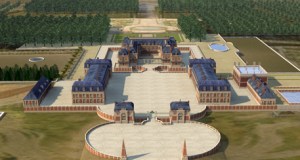 What did Versailles look like before Louis XIV? How did the small hunting lodge of Louis XIII become the largest Palace in Europe? What embellishments did the young Sun King want in his Palace of festivities and amusements? Did you know that the Hall of Mirrors was originally a terrace overlooking the gardens?
The palace of Versailles is a unique place, a royal residence, a history museum and a Republican palace. The complexity of the site needs to be explained to the over 6 million visitors from all over the world who come to Versailles each year. The Palace of Versailles, in partnership with Google, opens the Palace History Gallery on 14 June 2012. As a prologue to the visit to the State Apartments, eleven rooms explain to visitors the richly varied functions of the places they are about to explore. The visit combines the presentation of the collections of Versailles with physical scale models and striking 3D reconstructions.
Google / Versailles Partnership
The technological programme rolled out to accompany the opening of the Palace History Gallery is the fruit of close collaboration over more than a year between the teams of the Palace and those of Google. An ambitious technological policy has been implemented in Versailles for several years now to back up its scientific and cultural communication, disseminate knowledge about it more widely and develop new links with the visitors and with new audiences. From the origin of the project, the exhibition curators decided on the role and the scope of the multimedia in each exhibition and online. The partnership with Google provided the opportunity for a more in-depth approach to the use of technologies to develop, enliven and make more incisive its scientific and cultural communication. 3D technology, in particular, is used extensively in different media (in the rooms, on the Internet, on mobile terminals). Google’s Cultural Institute develops technological solutions for viewing, hosting and digitising materials to favour the creative presentation, protection and promotion of culture online.
Thanks to its dedicated team of engineers, Google’s Cultural Institute has already collaborated with organisations in several countries on different projects, notably for putting online thousands of artworks in the framework of the Art Project, the digitisation of the archives of Nelson Mandela and the Dead Sea Manuscripts.










leave a comment