New Book | Studies on Anton von Maron
Published by Campisano and available from ArtBooks.com:
Antonello Cesareo, Studi su Anton von Maron, 2001–2012 (Rome: Campisano Editore, 2014), 200 pages, ISBN: 9788898229239, 30€ / $59.
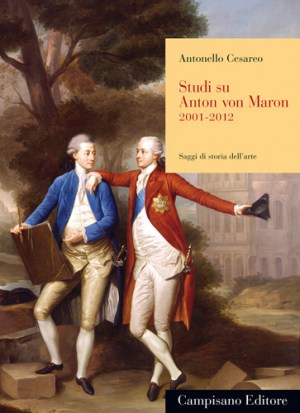 Il volume racchiude gli scritti dedicati per più di un decennio da Antonello Cesareo ad Anton von Maron (1731–1808), sommo ritrattista Neoclassico, di cui l’autore ricostruisce la personalità e il catalogo delle opere. Grazie all’attenta analisi della sua produzione, rivivono le principali figure della storia politica e culturale del Settecento, dall’archeologo tedesco Johan Joachim Winckelmann agli Accademici di San Luca, dalle nobildonne e dai gentiluomini europei attori del Grand-Tour fino alla coppia imperiale austriaca. «La nobile semplicità dei suoi ritratti», come scrive lo stesso autore, è raggiunta «grazie ad una sapiente resa atmosferica che oltrepassa il modello batoniano, seppure dallo stesso Maron più volte ripreso, per giungere a definire un esempio che trascende la resa del personaggio incipriato nel massimo del suo splendore».
È l’Europa del Secolo dei Lumi a sfilare davanti a noi, ancora vivida e pregna di significato attraverso i volti dei suoi protagonisti.
Antonello Cesareo (L’Aquila 1971 – Trento 2013) si è laureato, specializzato e ha conseguito il titolo di dottore di ricerca presso l’Università degli Studi di Roma La Sapienza studiando artisti e collezionisti inglesi in Italia tra Seicento e Settecento, quali Gavin Hamilton e Thomas Howard secondo conte di Arundel. È stato autore di saggi e approfondimenti su artisti quali Thomas Jenkins, Marcello Bacciarelli e committenti come il cardinale Henry Stuart duca di York, il cardinale Ercole Consalvi e Angelo Maria Ricci. Nel 2012 ha dedicato un volume alla ricostruzione del fecondo rapporto di Antonio Canova con l’Accademia di San Luca, grazie al ritrovamento di numerosi documenti inediti, frutto di un triennio di studi trascorso come borsista presso la prestigiosa istituzione. Nel 2013 la commissione per l’Abilitazione Scientifica Nazionale, riconoscendo l’alto valore innovativo dei suoi contributi, gli ha attribuito le funzioni di professore di II fascia.
S O M M A R I O
Hugh Honour, Prefazione
Alvar González-Palacios, Antonello
1. Nobile, fiero e di gentile aspetto: su di un Autoritratto giovanile di Anton von Maron; pubblicato in Neoclassico 20 (2001): 22–33.
2. ‘Valentissimo pittor divenuto…’: un Autoritratto di Anton von Maron; pubblicato in Bollettino del Museo Civico di Bassano 25 (2004): 251–68.
3. Anton von Maron: ‘The first portrait painter at present in Rome’; pubblicato in Antologia di Belle Arti, II (2007): 104–29.
4. ‘I cui nomi sono cogniti per ogni dove…’. A proposito di Caterina Cherubini Preciado e Theresa Mengs Maron; pubblicato in Les Cahiers d’Histoire de l’Art 6 (2008): 78–87.
5. Ancora su Anton von Maron ritrattista (pubblicato in Antologia di Belle Arti, III, 2009, pp. 62-93)
6. ‘Mein Lieber Meister…’. Appunti sulla bottega di Anton von Maron; pubblicato in Ricerche di Storia dell’Arte 101 (2010): 81–88.
7. Anton von Maron e l’Accademia di San Luca; pubblicato in Studi sul Settecento Romano 26 (2010): 201–34.
8. ‘Con maestra mano usa il pennello creando opere sublimi’. Anton von Maron ritrattista al servizio della corte austriaca; conferenza tenuta all’Accademia degli Agiati di Rovereto l’8 marzo 2012.
Bibliografia di Antonello Cesareo
Exhibition | The English Manner: Mezzotint Masterpieces
From the Universalmuseum Joanneum:
The English Manner: Mezzotint Masterpieces
Die Schwarze Kunst: Meisterwerke der Schabkunst
Schloss Eggenberg, Graz, 24 April — 20 July 2014
Curated by Karin Leitner-Ruhe and Christine Rabensteiner
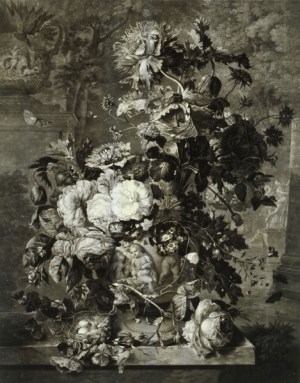
Richard Earlom (1743–1822), Floral Still Life, after Jan van Huysum, mezzotint, 56 x 42 cm (Graz: Alte Galerie)
Mezzotint is one of the most fascinating and elaborate printed graphic techniques in history. Invented in the 17th century by the German Ludwig von Siegen, it is—unlike etching and engraving—the first surface technology in intaglio printing. It was mainly used for the reproduction of paintings and is marked by a velvety and deep black base, in which the artist scrapes the bright lights.
In the Graphic Collection of the Alte Galerie, there are somewhat more than 350 objects to be found, both from English (including James McArdell, Valentine Green, Richard Earlom among others) and German artists circles (Johann Gottfried Haid, Rugendas, Johann Peter Pichler etc.). The Neue Galerie Graz also owns around 20 sheets from the 19th and 20th centuries. 60 works from this rich trove are presented as part of the temporary exhibition in the special exhibition rooms in Schloss Eggenberg, titled The English Manor.
Candle-lit Theater
Michael Hawcroft’s article in the current issue of French Studies should be useful for anyone thinking about candles and early modern lighting conditions, particularly in the theater. At a more immediately experiential level, The Globe’s new Wanamaker Playhouse (opened since January) serves as the ideal venue.

Les Farceurs italiens et français, ca. 1670
(Paris: Collections Comédie-Française)
◊ ◊ ◊ ◊ ◊
Michael Hawcroft, “New Light on Candles on the Seventeenth-Century French Stage,” French Studies 68 (2014): 180–92.
Abstract: Modern accounts of the seventeenth-century French stage have repeatedly asserted that plays were divided into short acts of some twenty to thirty minutes in performance because the candles that lit the theatres had to be snuffed at frequent intervals. This article claims that there is no evidence for this assertion and aims to evoke the technological constraints of candle usage at the time so as to suggest that candles could be managed in such a way that they did not actually dictate dramaturgical practice. The article considers seventeenth-century theoretical discussion of the division of plays into acts: such discussion never alludes to candles, but refers to historical precedent and spectator attention spans as perceived explanations for the phenomenon of act division. It aims to adduce compelling evidence against the traditional view and concludes that the snuffing of candles took advantage of the opportunity offered by act division, but was never its cause.
◊ ◊ ◊ ◊ ◊

The Wanamaker Playhouse as described by Andrew Dickson for The Guardian:
Andrew Dickson, “New Globe Playhouse Draws Us inside Shakespeare’s Inner Space,” The Guardian (7 January 2014).
Crafted from oak and lit by candles, the Globe’s new playhouse isn’t just a jewel box of a theatre—it’s also a time machine
The new Sam Wanamaker Playhouse—an offshoot of the modern Globe, named in memory of its founder—aims to bring the work of Shakespeare and his contemporaries in from the cold, creating an indoor playhouse closely modelled on the one his company began to use in 1608, across the Thames at Blackfriars. Although it’s not the first time someone has attempted the feat—US scholars constructed a rival Blackfriars in the unlikely setting of a small city in Virginia 13 years ago—this will be the most authentic version yet, accurate (or as close as is possible) down to every hollow-bored oak pillar and trompe-l’oeil fresco. The whole project has cost £7.2m: one reason it’s taken the Globe nearly two decades to get around to building it. . . .
The first shock, after descending from the attic, is how tiny the auditorium feels: while the Globe can accommodate 1,500 people, with up to 700 jostling on foot, the Playhouse seats just 340. But this only makes it more intimate, says academic Farah Karim-Cooper, who chairs the research group that has steered the project. “The proximity is unbelievable,” she says. “You can get intimacy in the Globe—and when that happens it’s beautiful. But here, it’s really something.” . . .
But the greatest indoor breakthrough was something we now take for granted: control over light, impossible in the open air until the invention of gas lighting in the late 18th century. The Playhouse will be illuminated exclusively by candles, with artificial electronic daylight filtering through internal ‘windows’. The team hopes this will be the new space’s true revelation. The Jacobeans used candles made from animal fat, but the Globe have gone for pure beeswax, costing up to £500 per show. . .
Exhibition | 100 Masterworks of the Albertina
From the Albertina:
The Origins of the Albertina: From Dürer to Napoleon
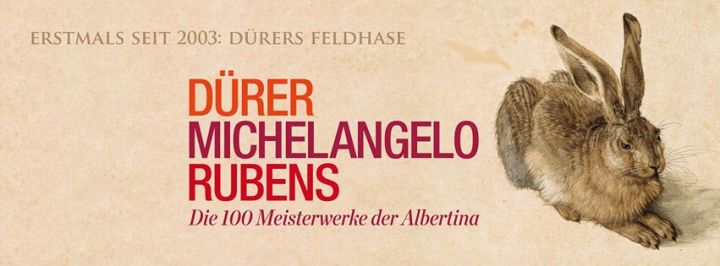
Dürer, Michelangelo, Rubens: The 100 Masterworks of the Albertina
Albertina, Vienna, 14 March — 29 June 2014
The exhibit Dürer, Michelangelo, Rubens: The 100 Masterworks of the Albertina for the first time shows around 100 top-class masterpieces from the collection of the Albertina in the context of the chequered and exciting life story of its founders, Prince Albert of Saxony, Duke of Teschen and Archduchess Marie Christine. The large-scale presentation unites the highlights of the collection, from Michelangelo through Rembrandt and Rubens to Caspar David Friedrich. The centrepiece of the Albertina, Dürer’s famous Young Hare, is now once again accessible to an interested public in the context of this exhibit after a decade-long period of grace.

Anonymous, Duke Albert of Saxe-Teschen with the Map of the Battle of Maxen, oil on canvas, 1777 (Albertina, Vienna)
The time span documented by the large-scale exhibit extends from 1738 to 1822: from the age of the courtly Baroque under Maria Theresia and the Enlightenment under Joseph II, through the premodern period and the years of the revolutions in America and Europe to the Biedermeier period of the Vormärz (the years leading up to the revolutions of 1848 in Germany) following the Vienna Congress. The stations in life of the founders of the collection, Prince Albert of Saxony, Duke of Teschen and Archduchess Marie Christine, including Dresden, Rome, Paris, Brussels and Vienna, present the leading centres of art and politics, and in the process provide insight into the multi-layered networks of collectors and art dealers, the feudal life of the European aristocracy, as well as the political and intellectual reorientation under the auspices of the Enlightenment.
Loans from throughout the world supplement the holdings of the Albertina in this presentation and convey a poignant picture of the circumstances and the passion for collecting of the namesake of the Albertina. A splendid service, as well as paintings and busts of the Duke and his wife, but also other important documents of the time, such as the hat of Napoleon, worn by him at the Battle of Eylau, originate from, among other sources, the Metropolitan Museum of Art, the Louvre, the Staatliche Kunstsammlungen Dresden, the Vatican and various private collections.
◊ ◊ ◊ ◊ ◊
Call for Papers | Understanding British Portraits 2014 Seminar
From the Understanding British Portraits website:
Understanding British Portraits Annual Seminar 2014
National Portrait Gallery, London, 26 November 2014
Proposals due by 13 June 2014
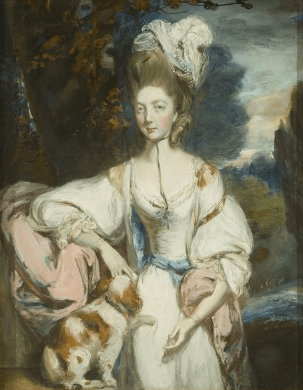
Mrs Henchman by Daniel Gardner (?1750-1805), drawing and watercolour © Bristol Musuem & Art Gallery
The ‘Understanding British Portraits’ Annual Seminar aims to highlight current scholarly research, museum-based learning programmes, conservation discoveries and curatorial practice relating to British portraits of all media and time periods. This year’s Annual Seminar will be held at the National Portrait Gallery, London, on Wednesday 26 November.
We invite proposals for 20/25 minute-papers from professionals who would like to share case studies and ideas which relate to the aims of the seminar as given above. Please send an outline of approximately 200 words, along with a brief biographical note, to mail@britishportraits.org.uk before Friday 13 June. Those who have submitted papers for consideration in the past are very welcome to do so again this year.
Understanding British Portraits is an active network with free membership for professionals working with British portraits including curators, museum learning professionals, researchers, academics and conservators. They aim to enhance the knowledge and understanding of portraits in all
media in British collections, for the benefit of future research,
exhibitions, interpretation, display and learning programmes.
Display | The Flowering of American Tinware

Tray, made in Pontypool, Wales or Birmingham, England, 1740–60
(Winterthur: Bequest of H.F. du Pont, 1958.2282)
From Winterthur:
The Flowering of American Tinware
Winterthur Museum, Delaware, 18 May 2013 — 4 May 2014
Tinware objects with lively, bright colors and hand painted with fruit, flowers, birds, and borders were once ubiquitous in the young United States. The base material, sheet iron coated with tin, provided an appealing surface for painted or punched ornament to be applied. At first glance, it may look like amateur artwork, but this exhibition examines the professional and practical roots of a material that is still produced by artists today.
The story of antique tinware may be surprising. Useful household objects were created by tinsmiths for myriad home and work purposes, such as to keep paperwork or tobacco dry and safe, to hold dry or liquid cooking ingredients, or to support a candle for light. Tinware objects that survived were often decorated ones, although, unpainted, shiny white tinware once was even more prevalent. American painted tinware has origins in an industry that emerged in the late 1690s in Britain with artistic influences coming from lands as far away as China and Japan.
During that time of developing sea-born trade, imported lacquerwork and other goods from Asia became very desirable to Europeans consumers who could afford them. Experiments in Wales and England led to ‘japanned’ varnishes and colorants that could be baked directly on to the surface of tinware, creating opaque, dark coatings that resembled more expensive imported lacquerwork. Soon after, the colors and designs prevalent in local decorative arts were added with oil paints to ‘flower’ or enhance tinware’s appeal to new markets in Europe and America. This Western process was generically called ‘japanning’, and Americans used the term to describe all manner of painted and varnished items.
This pocket-size exhibition highlights the collection of decorated tinware that Henry Francis du Pont acquired from antiques dealers in New England and Pennsylvania, particularly from Ephrata, Lancaster, Carlisle, and York. These beautiful, hand-painted objects feature decorative techniques that have been in use from the early 1700s to today.
The exhibition website is available here»
Call for Papers | L’architecture des ingénieurs, 1650–1850
From the Call for Papers:
L’architecture des ingénieurs, 1650–1850
Galerie Colbert, Paris, 8 November 2014
Proposals due by 15 May 2014

Jacques-Pierre-Jean Rousseau, ingénieur des ponts et chaussées, puis architecte de la ville d’Amiens, reliefs de la façade du théâtre de la ville, 1778, Archives départementales de la Somme
Organisée par les universités Bordeaux III, Paris-Sorbonne, Paris-Ouest, avec le concours du GHAMU
Les années 1980 furent propices à l’étude du travail des ingénieurs : en 1981, Anne Blanchard publiait un Dictionnaire des ingénieurs militaires actifs en France entre 1691 et 1791, témoignant par son volume de l’importance de leur activité, tandis qu’en 1988, Antoine Picon, dans son ouvrage Architectes et ingénieurs au siècle des Lumières, accordait enfin aux ingénieurs des Ponts l’attention qu’ils méritaient et examinait leur formation et leurs méthodes de travail au regard de celles des architectes de l’Académie royale d’architecture.
Au-delà des programmes attendus, fortifications, ouvrages hydrauliques, ponts et routes, les ingénieurs, militaires et des Ponts et Chaussées, honorèrent des commandes dans le domaine de l’architecture publique monumentale, de l’architecture religieuse et hospitalière, mais aussi dans celui de l’architecture domestique et de l’art des jardins.
L’historiographie fait la part belle aux architectes dans les embellissements de la capitale, tandis que les études récentes sur la province accordent aux ingénieurs une place de plus en plus importante : le tableau est en réalité bien plus nuancé. Cette journée sera l’occasion de présenter les limites de cette opposition et d’initier un travail systématique sur l’activité des ingénieurs du règne de Louis XIV à la monarchie de Juillet.
Pour cette première rencontre sont attendues plus spécialement les communications portant sur l’architecture privée et son décor, la distribution et le projet urbain.
Une deuxième rencontre se déroulera en 2015.
Direction scientifique : Basile Baudez, maître de conférences, Paris IV, Alexia Lebeurre, maître de conférences, Bordeaux III, et Dominique Massounie, maître de conférences, Paris Ouest-Nanterre.
Propositions à transmettre avant le 15 mai 2014 : alexialebeurre@aliceadsl.fr, basile.baudez@gmail.com, dommassounie@aol.com
New Book | Jodice: Canova

◊ ◊ ◊ ◊ ◊
Accompanying an exhibition of photographs by Mimmo Jodice of works by Canova (Museo Civico di Bassano del Grappa, 15 September 2013 to 23 March 2014), the catalogue will appear in English this September. As reported at the Robb Rebort, in 2009 Silvio Berlusconi presented members of the G8 with copies of the book Antonio Canova: L’invenzione della bellezza, each handmade with a marble cover weighing 21 pounds and 77 photographs by Jodice; only 39 copies were published by Marilena Ferrari House of Fine Art and Foundation (FMR) of Bologna, with 4 copies being donated to museums and 25 copies offered for sale at a whopping $200,000 each (itself interesting for the reception history of Canova). -CH
From ArtBooks.com:
Giuliana Ericani, Jodice: Canova (Venice: Marsilio, 2014), 116 pages, ISBN: 978-8831717571, $47.
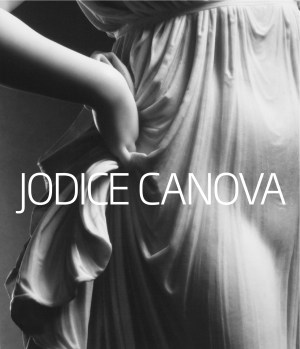 A disquiet expressed with a timeless vision. The decision to pay homage to Antonio Canova could not but start out of the encounter with the man who, back in 1992, had already understood his sculptures and captured their essence in images that have themselves become works of art. This man, this contemporary artist, could only be Mimmo Jodice. He is not only a photographer of art but a person with a keen gaze and vision who has decided to tackle perhaps the most complex sculptor of all time. Jodice chose to approach Canova with love and intellectual nobility and now, through a fascinating series of unprecedented details, is offering us a new, contemporary, conceptually lucid, authoritative, and captivating view of one of the greatest artists in history.
Giuliana Ericani was born in Trieste and graduated in Art History with Rodolfo Pallucchini at the University of Padua. She
is the director of the museums at Bassano del Grappa.
Book Discussion | Basile Baudez on Architecture et tradition académique
From the École Nationale des Chartes:
Basile Baudez on Architecture et tradition académique, with Katie Scott
École Nationale des Chartes, Paris, 29 March 2014
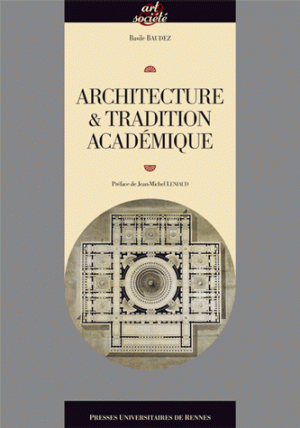 Basile Baudez, Architecture & tradition académique au temps des Lumières (Presses Universitaires de Rennes, 2013), 390 pages, ISBN: 978-2753521223, 24€.
Issu d’une thèse de doctorat soutenue à l’Éphé sous la direction de Jean-Michel Leniaud, cet ouvrage, constitue la première synthèse jamais publiée traitant des rapports entre l’architecture, les architectes et l’institution académique au XVIIIe siècle en Europe.
Adoptant une méthode comparatiste, ce livre permet d’interroger la pertinence d’un modèle élaboré dans l’Italie humaniste et transformé au XVIIe siècle pour servir la politique culturelle de Louis XIV. Le succès considérable de cette forme institutionnelle dans l’Europe des Lumières s’explique en grande partie par sa souplesse, à l’opposé de son évolution au XIXe siècle et sa capacité à organiser de manière efficace les rapports entre certains artistes, le pouvoir et le public.
Étudier l’histoire de l’architecture sous l’angle de la tradition académique, c’est mettre au jour la naissance de la profession architecturale telle qu’on la connait aujourd’hui. L’appartenance à une académie sanctionnée par le pouvoir politique permet en effet de définir les critères au nom desquels l’exercice de la profession était possible, d’une part, et la relation du milieu de l’architecture au pouvoir, d’autre part, la soif de reconnaissance et de protection à la fois.
L’auteur
Archiviste paléographe (prom. 2000), Basile Baudez est agrégé d’histoire, maître de conférences en histoire du patrimoine moderne et contemporain à l’Université Paris-Sorbonne et travaille sur l’histoire de l’architecture européenne au XVIIIe siècle ainsi que sur l’histoire des institutions artistiques.
Le discutant
Katie Scott travaille au Courtauld Institute of Art with et s’est spécialisée dans les représentations du quotidien en particulier à travers les arts éphémères. Sa récente étude est dédiée à ce sujet, plus particulièrement dans le Paris du XVIIIe siècle : Trade and the Ephemeral Everyday in Eighteenth-century Paris.
La conférence se déroulera à 17 h, en grande salle de cours de l’École nationale des chartes, au 19, rue de la Sorbonne (Paris Ve).

Call for Papers | CAA in New York 2015, Donald Posner Session
Here’s the description for the HECAA-sponsored, 90-minute session—chaired by Andria Derstine and Rena Hoisington—on the legacy of Donald Posner:
103rd Annual Conference of the College Art Association
New York, 11–14 February 2015
Proposals due by 9 May 2014
The 2015 Call for Participation for the 103rd Annual Conference, taking place February 11–14 in New York, describes many of next year’s sessions. CAA and the session chairs invite your participation: please follow the instructions in the booklet to submit a proposal for a paper or presentation. This publication also includes a call for Poster Session proposals.
◊ ◊ ◊ ◊ ◊
Donald Posner and the Study of Seventeenth- and Eighteenth-Century French and Italian Art
Andria Derstine, Allen Memorial Art Museum, Oberlin College; Rena M. Hoisington, Baltimore Museum of Art, Andria.Derstine@oberlin.edu and RHoisington@artbma.org
Donald Posner (1931–2005), the Ailsa Mellon Bruce Professor of Fine Arts at the Institute of Fine Arts, New York University, was one of a select group of art historians who, beginning in the 1950s and 1960s, significantly advanced scholarly inquiry into the Italian and French Baroque. From his first published article, on Le Brun’s Triumphs of Alexander series (1959), to his work on Annibale Carracci, Caravaggio, Domenichino, Lanfranco, Callot, and Poussin, his work helped to initiate and direct future research in the field. In the late 1960s and early 1970s, he began to turn his attention toward the eighteenth century—then a notably understudied area. His publications on Watteau, Fragonard, Boucher, Tiepolo, Rigaud, and Nattier set standards for art historical scholarship and greatly contributed to the burgeoning interest in this ‘new’ century. As wide-ranging as the topics he took up was his critical method, encompassing connoisseurship, patronage and collecting, iconography, stylistic issues, taste, and aesthetics, among others. Posner promoted and encouraged research and publication over the course of his long career, and served CAA as Editor-in-Chief of The Art Bulletin from 1968 to 1971 and as Chairman of The Art Bulletin Editorial Board from 1991 to 1994. Ten years after his death, this panel celebrates Posner’s rich legacy by inviting papers that take up particular areas of his field of inquiry and present new information, or that are stimulated by his scholarship and relate to his broad interests.
Descriptions for additional sessions are available here»










 Enfilade
leave a comment