Journée d’études | L’architecture des ingénieurs, 1650–1850
From the conference programme:
L’architecture des ingénieurs, 1650–1850
Bibliothèque municipale, Versailles 8 November 2014
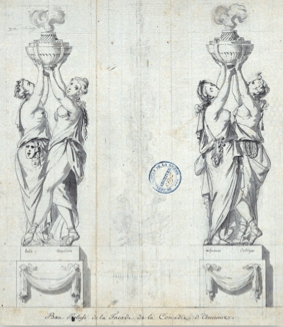
Jacques-Pierre-Jean Rousseau, ingénieur des ponts et chaussées, puis architecte de la ville d’Amiens, reliefs de la façade du théâtre de la ville, 1778, Archives départementales de la Somme
Organisée par les universités Bordeaux-Montaigne, Paris-Sorbonne, Paris-Ouest, avec le concours du Ghamu
Les années 1980 furent propices à l’étude du travail des ingénieurs : en 1981, Anne Blanchard publiait un Dictionnaire des ingénieurs militaires actifs en France entre 1691 et 1791, témoignant par son volume de l’importance de leur activité, tandis qu’en 1988, Antoine Picon, dans son ouvrage Architectes et ingénieurs au siècle des Lumières, accordait enfin aux ingénieurs des Ponts l’attention qu’ils méritaient et examinait leur formation et leurs méthodes de travail au regard de celles des architectes de l’Académie royale d’architecture.
Au-delà des programmes attendus, fortifications, ouvrages hydrauliques, ponts et routes, les ingénieurs, militaires et des Ponts et Chaussées, honorèrent des commandes dans le domaine de l’architecture publique monumentale, de l’architecture religieuse et hospitalière, mais aussi dans celui de l’architecture domestique et de l’art des jardins. L’historiographie fait la part belle aux architectes dans les embellissements de la capitale, tandis que les études récentes sur la province accordent aux ingénieurs une place de plus en plus importante : le tableau est en réalité bien plus nuancé. Cette journée sera l’occasion de présenter les limites de cette opposition et d’initier un travail systématique sur l’activité des ingénieurs du règne de Louis XIV à la monarchie de Juillet.
Cette première rencontre se concentre plus particulièrement sur l’architecture privée et son décor, la distribution et le projet urbain. Une deuxième rencontre se déroulera en 2015.
Direction scientifique : Basile Baudez, maître de conférences, Paris-Sorbonne, Alexia Lebeurre, maître de conférences, Bordeaux-Montaigne, et Dominique Massounie, maître de conférences, Paris Ouest-Nanterre.
Contacts : basile.baudez@gmail.com, alexialebeurre@gmail.com, dommassounie@aol.com
◊ ◊ ◊ ◊ ◊
P R O G R A M M E
9:30 Accueil
Matinée: L’ingénieur et l’habitat, 10:00–12:00
Introduction et présidence, Dominique Massounie (maître de conférences, Paris Ouest-Nanterre-La Défense)
• Jean-Loup Leguay (attaché de conservation, musée de Picardie, Amiens), Le château de Saint-Gratien, près Amiens, une merveille de l’ingénieur Rousseau
• Adrian Almoguera (doctorant, allocataire-moniteur, Paris-Sorbonne), L’influence des ingénieurs militaires français sur l’architecture espagnole au XVIIIe siècle : Charles Lemeaur (1720–1785) et le palais Rajoy à Saint-Jacques de Compostelle
• Alexia Lebeurre (maître de conférences, Bordeaux-Montaigne), Charles-François Mandar et la décoration intérieure : les projets pour l’hôtel d’Osuna à Madrid (1799)
Déjeuner
Après-midi: L’art urbain des ingénieurs, 14:00–16:00
Présidente de séance, Alexia Lebeurre, maître de conférences, Bordeaux-Montaigne
• Samuel Bothamy (doctorant, Bordeaux-Montaigne), L’ingénieur militaire Isaac Robelin à Rennes (1721–1724) : plan d’embellissement, transfert foncier, système global des constructions.
• Agueda Iturbe-Kennedy (doctorante, université Laval, Québec), La porte de ville au sein du projet urbain de l’ingénieur
• Linnéa Rollenhagen-Tilly, (UMR AUSSER), Joseph-Marie de Saget, ingénieur des États du Languedoc (1725–1782)
• Raphaël Tassin (doctorant, EPHE), Richard Mique. Chantiers publics et urbanistiques en Lorraine (1755–1766)
Symposium | The Century of Taste: Art in the Age of Enlightenment
As noted at H-ArtHist:
Das Jahrhundert des Geschmacks: Kunst im Zeitalter der Aufklärung
Historischer Saal der Ravensberger Spinnerei, Ravensberger Park, Bielefeld, 28 November 2014
Eine Veranstaltung der Kunstsammlung Rudolf-August Oetker GmbH, des Museum Huelsmann und der Professur für Kunstgeschichte der Universität Bielefeld. Konzeption: Monika Bachtler, Johannes Grave und Hildegard Wiewelhove
Das 18. Jahrhundert hat in vielerlei Hinsicht den modernen Kunstbegriff geprägt, der—ungeachtet aller Zuspitzungen und Infragestellungen—noch bis in unsere Gegenwart nachwirkt. Was wir unter Kunst verstehen, aber auch wie wir mit Kunst umgehen und sie in unser soziales Leben einbinden, ist erheblich durch Entwicklungen beeinflusst worden, die im 18. Jahrhundert ihren Anfang genommen haben. In das Jahrhundert der Aufklärung fallen die Etablierung regelmäßiger Kunstausstellungen, die Entstehung der Kunstkritik und die zunehmende Verbreitung einer bürgerlich geprägten Sammelkultur ebenso wie die Begründung der Ästhetik als einer philosophischen Disziplin, die der Sinnlichkeit eine eigene Erkenntniskraft zumisst. All diese Entwicklungen haben ihrerseits in ohem Maße auf die Künstler und ihre Werke zurückgewirkt. In exemplarischer Weise lässt sich in dieser Zeit daher beobachten, wie sich die Kunstproduktion, der Umgang mit Kunst und das Nachdenken über das Ästhetische wechselseitig beeinflussen.
Anlässlich der Ausstellung Wie es uns gefällt. Kostbarkeiten aus der Sammlung Rudolf-August Oetker, die das 18. Jahrhundert mit ausgewählten Werken der Kunst und des Kunsthandwerks vor Augen führt, soll das Symposium Schlaglichter auf die Kunst und ästhetische Kultur dieser Zeit werfen. In sechs Vorträgen wird sich die Veranstaltung sowohl exemplarischen Werken oder Werkgruppen als auch dem kulturellen Kontext zuwenden, um zu einem besseren Verständnis des Jahrhunderts des Geschmacks beizutragen. Dabei könnte sich erweisen, dass die durchaus spielerischen Formen, in denen im 18. Jahrhundert Kunst und Leben immer wieder neu zueinander ins Verhältnis gesetzt wurden, von überraschender Aktualität sind.
Tagungsgebühr: 20€; ermäßigt für Studierende und Auszubildende: 10€. Anmeldung unter (0521) 51-3767 oder info@museumhuelsmann.de
◊ ◊ ◊ ◊ ◊
P R O G R A M M
10.00 Dr. Monika Bachtler (Kunstsammlung Rudolf-August Oetker GmbH) und Prof. Dr. Hildegard Wiewelhove (Museum Huelsmann), Begrüßung
10.15 Prof. Dr. Johannes Grave (Universität Bielefeld), Einführung
10.30 Dr. Christoph Martin Vogtherr (Wallace Collection London), Niederländische und französische Malerei im Paris des 18. Jahrhunderts
11.30 Dr. Ulrike Grimm (Karlsruhe), Ein Schloss, “in welchem guter Geschmack mehr Gewicht besitzt als äußere Pracht”. Zur Residenz der Caroline Luise von Baden in Karlsruhe
12.30 Mittagspause mit kleinem Imbiss
13.30 Prof. Dr. Anna Zika (Fachhochschule Bielefeld), … und nur das Natürliche ist schön. Modediskurse in deutschsprachigen Journalen des späten 18. Jahrhunderts
14.30 Prof. Dr. Reinhard Wegner (Friedrich-Schiller-Universität Jena), Wie kommt die Farbe ins Bild? Newtons Lichttheorie und die Schönen Künste
15.30 Kaffeepause
16.00 Prof. Dr. Beate Söntgen (Leuphana Universität, Lüneburg), Stiller Austausch. Chardins Formen der Kommunikation
17.00 Prof. Dr. Thomas Kirchner (Deutsches Forum für Kunstgeschichte, Paris), Die Französische Revolution und die Demokratisierung der Kunst
18.00 Abschlussdiskussion
Conference | Artistic Circulation between Rome and Lisbon
Projects, Models, and Artistic Circulation between Rome and Lisbon in the Eighteenth Century
Universidade Nova de Lisboa, 7 November 2014
This international workshop deals with the richness and complexity of the international relations between Lisbon and Rome in the eighteenth century. The transcendence of the Roman Paradigm is well documented in Portugal, but the Lusitanian Rome is still a topic of research that deserves better attention. From a multidisciplinary approach the participants of this workshop are trying to shed some light on a some sort of Iberian Grand Tour.
◊ ◊ ◊ ◊ ◊
From the conference programme:
Projectos, Modelos, e Circulação Artística entre Lisboa e Roma no Sécolo XVIII
Universidade Nova de Lisboa, 7 November 2014
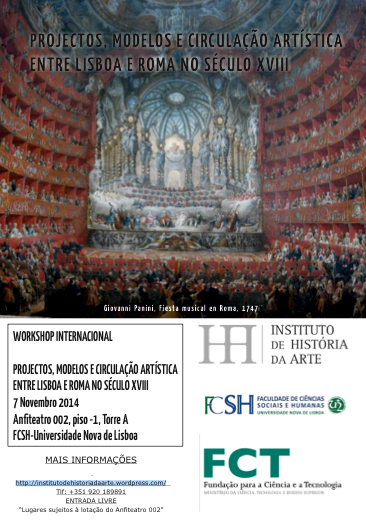 A partir de várias formas de produção artística, assim como de diferentes métodos de investigação, este seminário pretende apreender a complexidade do século XVIII como plataforma de circulação de modelos, actores e projectos, tendo como foco o eixo Roma-Lisboa. As relações entre ambas cidades são postas em relevo com o objectivo de determinar a presença e a importância do mundo ibérico no fenómeno transnacional do Gran Tour, bem como a sua possível participação na República das Letras, tendo em conta que a tradição historiográfica europeia costuma excluir o âmbito ibérico nessas áreas. Assim, o estudo dessas relações permitirá reconsiderar o papel delas no seio dos desafios europeus da época no domínio da arte.
Nessa perspectiva, os olhares cruzados entre estudos específicos e complementares nos campos da música, das artes visuais e da arquitetura pretendem consolidar uma abordagem multidisciplinar dos fenómenos artísticos duma forma global no século XVIII e favorecer um foro de discussão entre os diversos especialistas.
The conference flyer is available here»
Journée d’étude | Madame de Pompadour et l’art de la toilette
As noted at Histoire de Mode with details from the preliminary programme:
Madame de Pompadour et l’Art de la Toilette
Archives Nationales de France, Hôtel Soubise, Paris, 7 October 2014
L’association ART & LUXE prépare le nouvel évènement consacré à l’histoire du design, de la mode et du luxe, ainsi qu’à celle de ses métiers. Mardi 7 octobre 2014, à l’hôtel Soubise, rue des Francs Bourgeois à Paris, aura lieu à partir de 14.30 une nouvelle demie-journée d’étude consacrée à Madame de Pompadour, sur le thème de l’art de la toilette. Participation aux frais : 5 euros. Inscription préalable dans la limite des places disponibles à Association ART & LUXE 38 Boulevard Henri IV 75004 Paris, Art-luxe@live.fr.
P R O G R A M M E
14.00 Accueil
14.30 Lesley Ellis Miller (Victoria and Albert Museum, Londres), Trois portraits pour trois garde-robes de la marquise de Pompadour
15.00 Corinne Thépaut-Cabasset (Paris), Objets de modes et de toilette achetés pour madame de Pompadour chez Lazare-Duvaux rue Saint-Honoré à Paris
15.30 Georgina Letourmy-Bordier (Le Cercle de l’Eventail, Paris), D’or et de vent, la mode de l’éventail sous Louis XV
16.00 HERA Fashioning the Early Modern, Object in Focus : La « mouche » ou le matin
16.30 Discussion
17.00 Arlette Vermeiren Zucoli (Tournai), Installation éphémère dans le Grand Salon Ovale de l’appartement du prince de Soubise
Conference | Neoclassical Reverberations of Discovering Antiquity
As noted at H-ArtHist; abstracts are available here.
Neoclassical Reverberations of Discovering Antiquity
Archivio di Stato, Turin, 6–9 October 2014
Twelfth Conference of the ICTM Study Group for the Iconography of the Performing Arts, Istituto per i Beni Musicali in Piemonte
M O N D A Y , 6 O C T O B E R 2 0 1 4
9.30 Registration
10.00 Welcome and Introduction
10.30 Frame Session
Chair: Cristina Santarelli (Istituto per i Beni Musicali in Piemonte, Torino)
• Christian Greco (Museo Egizio, Torino), The Role Played by Turin in the Field of Aegyptological Research
• Zdravko Blažeković (Research Center for Music Iconography, The Graduate Center, CUNY), Ancient Organology before and after Herculaneum
• Paola d’Alconzo (Università “Federico II”, Napoli), Facing Antiquity Departure and Return: Naples in the Eighteenth Century
• Michela Costantini (Torino), Common Antiquarian Interests Found in the Epistolary Exchanges between the Architect and Piedmontese Erudite Francesco Ottavio Magnocavalli and Members of the Roman Arcadia in the Middle of the Eighteenth Century: The Case of the Ancient Theater of Herculaneum
13.00 Lunch
15.00 Neoclassicism in European Painting, Sculpture and Applied Arts, Part I
Chair: Nicoletta Guidobaldi (Università di Bologna, Dipartimento di Beni Culturali, Ravenna)
• Jordi Ballester Gibert (Universitat Autònoma de Barcelona), Music and Poetics of Ancient Rome in the Work of the Spanish Painter Mariano Fortuny (1838–1874)
• Daniela Castaldo (University of Salento, Lecce), Ancient Music in Paintings of Lawrence Alma-Tadema (1836–1912)
• Cristina Santarelli (Istituto per i Beni Musicali in Piemonte, Torino), From A Musician to The Quartet: Albert Moore (1841–1893) between Classicism and Aesthetic Movement
• Alexandra Voutrya (Aristotle University, Thessaloniki), Ingres, Apollo, Mozart and Music
• María Isabel Rodríguez López (Universidad Complutense de Madrid), Chant and Enchantments: Iconography of Orpheus, from Gluck to Moreau
• Elena Le Barbier Ramos (Universidad de Oviedo), Ancient Musical Iconography in Neoclassical Painting
T U E S D A Y , 7 O C T O B E R 2 0 1 4
9.30 Neoclassicism in European Painting, Sculpture and Applied Arts, Part II
Chair: Daniela Castaldo (Università del Salento, Lecce)
• Anna Maria Ioannoni Fiore (Conservatorio Statale di Musica “L. D’Annunzio”, Pescara), Neoclassical Influences in the Depiction of Landscapes on Castelli Maioliche: The Ethical Value of Music among Myths and Ancient Ruins
• Nicoletta Guidebaldi (Università di Bologna Dipartimento di Beni Culturali, Ravenna), Rediscovering Antiquity and Musical Myths in Felice Giani’s Pictorial Cycles in Faenza
• Esma Sulejmanagic (Muzi?ka akademija, Sarajevo), Music Iconography on Numismatic Products of Antiquity and the Nineteenth Century: Antique Musical Practice and Neoclassical Musical Symbolism
11.00 Coffee
11.30 Keynote Address by Elena Barassi (Università di Pavia, sede di Cremona), Iconography of Iconography: Dance in Ancient Roman Representations, Canova’s Works and Reproductions in Engraving
1.00 Lunch
15.00 Neoclassicism in European Painting, Sculpture and Applied Arts, Part III
Chair: Jordi Ballester Gibert (Universitàt Autònoma de Barcelona)
• Licia Mari (Università Cattolica del Sacro Cuore, Brescia & Archivio Storico Diocesano, Mantova), Saints, Myths, Allegories in the Scenographic Frescos by Giorgio Anselmi
• Carlo Fiore (Conservatorio di Musica ‘Vincenzo Bellini’, Palermo) and Floriana Tessitore (Teatro Massimo, Palermo), The Teatro Massimo in Palermo between Modernism and Neoclassicism
• Luis Correia de Sousa and Luzia Valeiro Rocha (Centro de Estudos de Sociologia e Estética Musical, Universidade Nova de Lisboa), New Fashions, Old Models: The Antiquity Charm in Portuguese Musical
Neoclassicism
16.30 Coffee
17.00 Free Papers
• Emma Petrosyan (Institute of Archaeology and Ethnography, Armenian National Academy of Sciences, Yerevan), Music and Dance in Statues and Gemmes from Artashat
• Maryam Dolati Fard (Tehran), The Relationship Between Text and Music in Persian Manuscripts: Ilkhanid to Safavid Era, Images of Oud Player
W E D N E S D A Y , 8 O C T O B E R 2 0 1 4
9:30 Neoclassical Attitudes in Operatic Stage, Part I
Chair: Maria Teresa Arfini (Università della Valle d’Aosta)
• Diana Blichmann (Roma), The Temple of Jupiter Statore in La Clemenza di Tito of Pietro Metastasio and Giovanni Carlo Galli Bibiena
• Maria Ida Biggi (Fondazione Cini / Università “Ca’ Foscari”, Venezia), Borsato, Bagnara and Basoli: Archaelogical References and Reverberations on the Venetian and Bolognese Neoclassical Stage
• Gabriella Olivero (Torino), The “New” Babylon by Alessandro Sanquirico
11.00 Coffee
11.30 Keynote address by Mercedes Viale Ferrero (Torino), The Last Day of Pompeii as Imagined by Alessandro Sanquirico, or: How to Rebuild Pompeii in Order to Destroy It
13.00 Lunch
15.00 Neoclassical Attitudes in Operatic Stage, Part II
Chair: Maria Ida Biggi (Fondazione Cini /Università Ca’ Foscari, Venezia)
• Inna Naroditskaya (Northwestern University), Elizaveta of Russia – A Euro-Asian Princess and Heir of Roman Augustus: A Spectacle of Coronation and Imperial Opera
• Dario de Cicco (Conservatorio Statale di Musica “Giuseppe Verdi”, Torino / Université de Genève), Verdi and the Egyptian Culture between Anegdots, Epistolar Sources and Imagination
• Donatella Melini (Fondazione “Antonio Carlo Monzino”, Milano), “Or che i Numi son vinti, a me la cetra, A me l’altar!”: Stories and Iconographies about the Lyra Made for Arrigo Boito’s Nerone
• Timothy Flynn (Olivet College, MI), Classical Reverberations in the Music and Life of Camille Saint-Saëns (1835–1921)
T H U R S D A Y , 9 O C T O B E R 2 0 1 4
9.30 Neoclassical Attitudes in Operatic Stage, Part III
Chair: Jordi Ballester Gibert (Universitàt Autònoma de Barcelona)
• Sanna Litti (Hyvinkää, Finland), Heroism in Gasparo Spontini’s Opera La Vestale
• Maria Teresa Arfini (Università della Valle d’Aosta), Around Antigone: Reflections on Iconography and Music in the German Revival of the Classical Tragedy
• Maia Sigua (Tbilisi State Conservatory), The Concept of Tragedy after Aristotle and Daphne by Richard Strauss
11.00 Coffee
11.30 Antiquaria: Documents and Testimonies through the Ages
Chair: Maria Teresa Arfini (Università della Valle d’Aosta)
• John McKay (University of South Carolina, School of Music), Roles for Musical Curiosities in Kircher’s Antiquarian Visions
• Stefania Macioce (Università “La Sapienza”, Roma), Apollo: Figurative Variations of a Neoclassical Ideal
• Francesca Cannella (Università del Salento, Lecce), «Gli eroi della storia favolosa e le invenzioni per essi nobilitate»: The Myth of the Argonauts between Musical Iconography and Literary Invention of the Modern Age
13.00 Lunch
15.00 Musical Impressions from the Grand Tour
Chair: Alexandra Voutyra (Aristotle University, Thessaloniki)
• Siegwart Reichwald (Petrie School of Music, Converse College, Spartanburg, SC), Eyes Wide Open: The Compositional Impact of Mendelssohn’s Artistic and Religious Grand Tour Experiences
• Sylvain Perrot (French School at Athens), Musical Impressions in Views of Greece during the Nineteenth Century
• María Jesús Fernández Sinde (Universidad Complutense de Madrid), Music Dreaming: Iconographic Sources from Spanish Painters? Recreation of Identities and Grand Tours
Conference | Carlo Fontana (1638–1714): Celebrato Architetto
From the Accademia Nazionale di San Luca:
Carlo Fontana (1638–1714): Celebrato Architetto
Accademia Nazionale di San Luca, Rome 22–24 October 2014
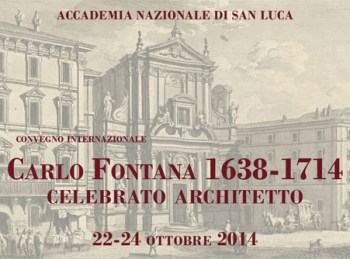 Convegno internazionale in occasione del trecentesimo anniversario della morte di Carlo Fontana
The conference is dedicated to the architect Carlo Fontanaon the occasion of the 300th anniversary of his death. The protagonist of Roman architecture as the Baroque was waning, Fontana—descending from a famous dynasty of Ticinese architects—organized the teaching and the practice of architecture based on the exercise of drawing and geometry. His workshop thus prefigured modern design studios. The propagandistic usage of graphic sheets and printed volumes illustrating and diffusing Fontana’s works and ideas constituted yet another factor of his modernity. In fact, Fontana understood perfectly the dimension of intellectual and creative freedom of print, liberating himself from a dependence on patrons and from morphological and typological conventions of his time.
Promo ufficiale del Convegno Fontana 2014 sul sito dell’Accademia Nazionale di San Luca.
Comitato scientifico: Paolo Portoghesi, Francesco Moschini, Giuseppe Bonaccorso, Elisabeth Kieven
Convegno organizzato da: Accademia Nazionale di San Luca, Roma;
Bibliotheca Hertziana – Max-Plank-Institut für Kunstgeschichte, Roma.
Con la collaborazione di: Dipartimento di Ingegneria dell’Impresa, Università di Roma “Tor Vergata”
◊ ◊ ◊ ◊ ◊
2 2 O T T O B R E 2 0 1 4
10.00 Saluti e presentazione
• Paolo Portoghesi (Presidente dell’Accademia Nazionale di San Luca) e Francesco Moschini (Segretario Generale dell’Accademia Nazionale di San Luca)
• Giuseppe Bonaccorso (Università di Roma Tor Vergata), Elisabeth Kieven (Bibliotheca Hertziana, Roma), Omaggio a Hellmut Hager
10.40 1: Genealogia familiare e esordi architettonici (Coordina: Andrea Spiriti)
• Stefania Bianchi (Archivio Storico di Mendrisio; Accademia di Architettura di Mendrisio), Intorno ai Fontana: spunti anagrafici e ipotesi interpretative
• Andrea Spiriti (Università degli Studi dell’Insubria, Varese), Fontana e gli Odescalchi
• Dimitri Ticconi (“Sapienza” Università di Roma), La collaborazione tra Carlo Fontana e l’atelier di Carlo Rainaldi nell’ambito dei cantieri delle chiese gemelle di piazza del Popolo
• Simona Zani (Roma), Carlo Fontana e la razionalizzazione dell’impulso barocco. L’esordio per i Chigi e altri interventi nei Castelli Romani
12.20 2: Teatro e scenografie (Coordina: Elena Tamburini)
• Elena Tamburini (Università di Bologna), Carlo Fontana, architetto di teatro e di scene, e la “scuola romana”
• Alessandro Spila (“Sapienza” Università di Roma), Scenografia ed Effimero nell’eredità di Carlo Fontana: il mecenatismo del cardinale Carlo Colonna
• Dominique Lauvernier (Caen University), Carlo Fontana, stage designer
15.00 3: L’ambizione dell’architetto: progetti e architetture per lasciare un segno (Coordina: Augusto Roca de Amicis)
• Fabio Colonnese (“Sapienza” Università di Roma), «La Maestria di eccellenti artefici». Note sulla costruzione e la divulgazione della Cappella Cybo di Carlo Fontana
• Carla Benocci (Sovrintendenza Capitolina ai Beni Culturali, Roma), Carlo Fontana e i giardini Colonna e Chigi: progettazione, rappresentazione, rapporti con la cultura francese
• Angela Marino (Università degli Studi dell’Aquila), Il progetto di Carlo Fontana per il palazzo Chigi a San Quirico d’ Orcia
• Bruno Mussari (Università degli Studi Mediterranea di Reggio Calabria), Carlo Fontana a Siena: idee e ipotesi progettuali tra tradizione e innovazione
16.45 4: Fontana architetto. temi e approfondimenti (Coordina: Francesco Moschini)
• Marcello Fagiolo (“Sapienza” Università di Roma), Carlo Fontana e Bernini
• Paolo Portoghesi (“Sapienza” Università di Roma), Fontana versus Borromini. Una cerniera nella cultura del barocco
• Giuseppe Bonaccorso (Università di Roma Tor Vergata), L’attualità di Carlo Fontana
• Giovanna Curcio (Università Iuav, Venezia), Carlo e Francesco Fontana
• Elisabeth Kieven (Bibliotheca Hertziana, Roma), Sulla grafica di Carlo Fontana
19.30 Evento musicale
2 3 O T T O B R E 2 0 1 4
9.30 5: Incisioni e volumi a stampa: propaganda e ambizione trattatistica (Coordina: Werner Oechslin)
• Werner Oechslin (Stiftung Bibliothek Werner Oechslin, Einsiedeln), Carlo Fontana, l’impatto e il successo internazionale e le ragioni della mancata fama internazionale nella storiografia del barocco
• Aloisio Antinori (Università degli Studi del Molise), Le origini dell’affermazione internazionale di Carlo Fontana: il ruolo delle stampe
• Kimberley Skelton (independent scholar, USA), Empiricism, the Imagination, and Carlo Fontana’s Inverted Architectural Book
• Erik Wegerhoff (Technische Universität, München), Una restituzione in senso inverso: il progetto di Carlo Fontana per il Colosseo
11.10 6: Idraulica e infrastrutture suburbane (Coordina: Mario Bevilacqua)
• María Margarita Segarra Lagunes (Università Roma Tre), Carlo Fontana e i progetti per il Tevere
• Fabrizio Di Marco (“Sapienza” Università di Roma), Carlo Fontana e Cornelio Meyer. La disputa sulla scienza idraulica
• Marisa Tabarrini (“Sapienza” Università di Roma), Dagli Effetti delle acque di Vincenzo Della Greca all’ Utilissimo trattato sulle acque correnti: metodo, fonti e apografia in Carlo Fontana teorico
• Michela Lucci (Università di Roma Tor Vergata), Carlo e Girolamo Fontana tecnici al servizio dei Colonna
15.00 7: Committenti stranieri, progetti per l’estero e cantieri controllati a distanza (Coordina: Marcello Fagiolo)
• Sara Muniain Ederra (Universidad San Jorge, Zaragoza) e Jorge Fernández-Santos Ortiz-Iribas (Universitat Jaume I, Castelló), Carlo Fontana e la Spagna: prospettive di indagine
• Iacopo Benincampi (Roma), Carlo Fontana e il Santuario di Loyola, progettazione italiana e pratiche costruttive spagnole
• Friedrich Polleroß (Institut für Kunstgeschichte der Universität, Wien), Carlo Fontana e i rappresentanti imperiali a Roma
• Pavel Kalina (Czech Technical University, Prague), Carlo Fontana and Bohemia: Architect’s Vision and Builder’s Reality around 1700
• Tommaso Manfredi (Università degli Studi Mediterranea di Reggio Calabria), Carlo Fontana e l’architettura residenziale nell’Europa del primo Settecento
17.20 8. I viaggi e i committenti “di lingua italiana” (Coordina Aurora Scotti)
• Lorenzo Finocchi Ghersi (Università Iulm, Milano), Carlo Fontana e Palladio: il progetto per «un casino in Venezia»
• Andrea Bonavita (Politecnico di Milano), Sergio Monferrini (Archivio Dal Pozzo d’Annone), «Huomo… abbondante di parole» all’«acquisto… di tanti padroni»: Carlo Fontana in Lombardia
• Francesco Repishti (Politecnico di Milano), La ricerca di un architetto “romano”. Carlo Fontana e il Duomo di Milano
• Maria Gabriella Pezone (Seconda Università di Napoli), Carlo Fontana e Napoli
• Valentina Russo (Università degli Studi di Napoli), «Una memoria al vivente». Carlo Fontana e i progetti di fine Seicento per la cattedrale di Napoli
2 4 O T T O B R E 2 0 1 4
9.30 9: Fontana e l’antico: dal progetto al restauro (Coordina: Howard Burns)
• Enrico Da Gai (Roma), «Per accompagnare l’antico…»: Carlo Fontana e il restauro/riuso dei monumenti antichi • Maria Vitiello (“Sapienza” Università di Roma), Particolarità ed “incongruenze” del portico settecentesco di S. Maria in Trastevere
• Marcello Villani (Università degli Studi G. d’Annunzio), Carlo Fontana Architetto per la Reverenda Fabbrica di S. Pietro
• Nicoletta Marconi (Università di Roma Tor Vergata), Carlo Fontana per la basilica Vaticana: la cappella del Battesimo, il trasporto del sepolcro porfirico di Ottone II e altri «straordinari riattamenti»
11.20 10: Professione e conoscenza tecnica (Coordina: Claudia Conforti)
• Hermann Schlimme (Bibliotheca Hertziana, Roma), Carlo Fontana e la cupola di Montefiascone alla luce di nuovi rilievi
• Maria Grazia D’Amelio (Università di Roma Tor Vergata), Fabrizio De Cesaris (“Sapienza” Università di Roma), Roma 1700: pareri e perizie di Carlo Fontana sull’architettura e sulla città
• Barbara Tetti (“Sapienza” Università di Roma), Carlo Fontana. Sistemi costruttivi per apparati effimeri. Il catafalco di Pedro II in S. Antonio dei Portoghesi
• Alicia Adamczak (École du Louvre; Institut catholique de Paris), Carlo Fontana sculturae inventor. Il ruolo dell’architetto nei cantieri di scultura del tardo barocco romano
15.00 11: Insegnamento e apprendistato presso fontana: tra atelier e accademia (Coordina: Giuseppe Bonaccorso)
• Rosa Maria Giusto (Napoli), Carlo Fontana, la formazione dell’architetto e il «senso pratico del mestiere»
• Giuseppe Dardanello (Università di Torino), Affinità e discontinuità nel disegno di Filippo Juvarra e Carlo Fontana
• John Pinto (Princenton University), The Legacy of Carlo Fontana: Nicola Michetti and the Pallavicini-Rospigliosi Chapel in S. Francesco a Ripa
• Francesco Amendolagine, Federico Bulfone Gransinigh (Università degli Studi di Udine), Architettura e arte plastica nell’opera di Carlo e Baldassarre Fontana: un connubio perfetto
16.50 12: Carlo e il rapporto con allievi, epigoni e collaboratori (Coordina: Elisabeth Kieven)
• Peter Heinrich Jahn (Technische Universität, Dresden), Early impacts in the German Holy Roman Empire of Carlo Fontana’s design for a memorial church inside the Colosseum (Johann Lucas Hildebrandt and Matthäus Daniel Pöppelmann)
• Martin Olin (Swedish Institute in Rome), «Le vieux Chevalier Charles Fontana vit-il encore ou non?». Nicodemus Tessin and the Fontana style in the North
• Saverio Sturm (Università di Roma Tre), L’eredità svedese di Carlo Fontana. Gli architetti della Corona di
Svezia, da Nicodemus Tessin il vecchio a Carl Gustav Tessin
• Elena Manzo (Seconda Università degli Studi di Napoli), La lezione di Carlo Fontana in Danimarca: tecniche e modelli
• Marco Rosario Nobile, Domenica Sutera (Università di Palermo), Nelle terre degli eretici. L’opera degli allievi di Carlo Fontana in Sicilia
19.10 Conclusioni
Paolo Portoghesi, Francesco Moschini, Giuseppe Bonaccorso, Elisabeth Kieven
Symposium | Portuguese and Italian Relations
Programme from the Centro de História d’Aquém e d’Além-Mar:
Portugal e os territórios italianos (séculos XVI–XVIII)
The Centre for Overseas History (CHAM), Lisbon, 22 September 2014
 Este Workshop tem como objectivo propor- cionar uma visão global das relações políticas, económicas, sociais, artísticas e culturais do relacionamento entre Portugal e a península italiana na Idade Moderna. As linhas de força do encontro são sinteti- zadas pela imagem do coche, escolhida como “símbolo dinâmico” do conjunto de abordagens transnacionais desenvolvidas e apresentadas neste workshop.
P R O G R A M A
9:00 Boas-vindas
9:15 Mario Spedicato (Facoltá di Lettere e Filosofia, Università del Salento), Napoli e la Penisola Iberica nei recenti studi di Storia Sociale e Religiosa
10:00 A Comunidade Portuguesa em Roma
• Antonio J. Díaz Rodríguez, (CIDEHUS-UÉ), Os agentes de Portugal em Roma durante a dinastia filipina
• James Nelson Novoa (CESAB/CLEPUL, UL), A nação na Cidade Eterna: cristãos-novos portugueses em Roma, 1542–1590
10:40 Pausa-café
11:00 A Monarquia Portuguesa e os Estados Italianos: Entre o Comércio e a Política
• Francisco Zamora Rodríguez (CHAM, FCSH/ NOVA-UAc), Pedro de Silva Enriques, a Companhia Geral do Comércio do Brasil e a posição de Portugal em Itália
• David Martín Marcos (Universidad Nacional de Educación a Distancia), Estratégias matrimoniais e diplomacia entre Portugal e os estados italianos: o caso de D. Isabel Luísa Josefa, Princesa da Beira (1669–1690)
• Sara Pereira (ISCTE/IUL), A Partilha de Informação Política e Cultural entre Nápoles e Lisboa na segunda metade de Setecentos: dinâmica diplomática
12:00 Arte e Cultura entre Itália e Portugal
• Pilar Diez del Corral Corredoira (IHA, FCSH/ NOVA), La política artística de João V (1689–1750) en el marco de las relaciones diplomáticas con la Santa Sede
• Paola Nestola (CHSC-UC), Linhas de Erudição ou Itinerários do Olhar? Listas dominicanas barrocas entre Lisboa e Península Itálica
◊ ◊ ◊ ◊ ◊
About the Centro de História d’Aquém e d’Além-Mar:
The Centre for Overseas History (CHAM) is an inter-universitary research unit of the Faculty of Social and Human Sciences, of the New University of Lisbon and of Azores University, financed by Portuguese Foundation for Science and Technology. CHAM develops research related to the History of the Discoveries and the Portuguese Expansion, as well as the Portuguese presence around the world, with a special focus in the period between the origins of the Overseas Expansion and the Independence of Brazil (1822), with an interdisciplinary perspective and incorporating comparative history, paying particular attention to the history of the regions with which Portugal maintained contacts.
Study Day | Rome, Naples, Paris, Lisbon: Musical Practices
From the conference programme:
Roma, Nápoles, Paris, Lisboa: artistas, estilos e repertórios em trânsito ao longo do século XVIII
Casa-Museu Dr. Anastácio Gonçalves, Lisbon, 7 October 2014
 Grupo de Investigação ESTUDOS HISTÓRICOS E CULTURAIS EM MÚSICA do INET-MD/FCSH-UNL
P R O G R A M A
10:00 ROMA COMO MODELO
(Moderador: Rui Vieira Nery)
• Pilar Diez del Corral: “Para nos ter Roma inveja”: artistas ibéricos e o paradigma romano em confronto
• Cristina Fernandes: Lázaro Leitão Aranha (1678–1767), secretário régio da Embaixada do Marquês de Fontes e Principal da Patriarcal: um agente na circulação de modelos culturais e musicais entre Roma e Lisboa
11:00 Coffee Break
11:30 PERCURSOS ARTÍSTICOS E PROFISSIONAIS
(Moderadora: Cristina Fernandes)
• Vanda de Sá: Irmandade da Gloriosa Virgem e Mártir Santa Cecília dos Professores da Arte da Música da Corte de Lisboa – Implementação local na segunda metade do século XVIII: os casos de Évora e Porto
• Fernando Miguel Jalôto: ‘D. Antonio Tedeschi, Virtuoso della Cappella Reale’: 37 anos ao serviço de Sua Majestade Fidelíssima
• Diana Vinagre: João Baptista André Avondano/Jean-Pierre Duport: a ligação improvável à escola francesa de violoncello
13:00 Almoço
14:30 REPERTÓRIOS E PRÁTICAS MUSICAIS
(Moderadora: Vanda de Sá)
• Rui Vieira Nery: Do “som tremendo” aos “minuetes saltitantes”: o órgão litúrgico português na visão dos viajantes estrangeiros
• Cristiana Spadaro: A realização do baixo contínuo nos Motetes de Giovanni Giorgi destinados à Patriarcal de Lisboa
• Pedro Castro: A problemática de classificação das serenatas no tempo de D. Maria I: exemplos ibéricos e italianos
• Maria João Albuquerque: A circulação de edições de música parisienses em Lisboa nos finais do séc. XVIII
16:30 Coffee Break
17:00 MOMENTO MUSICAL
(precedido de breve apresentação da Linha Temática do INET-MD “Abordagens Históricas à Performance Musical”, a funcionar a partir de 2015)
• Anónimo Português? (século XVIII)
Obras para instrumento melódico e baixo contínuo em Sol menor / Sonata: [Adagio] & [Allegro] – Minuet
Biblioteca Geral da Universidade de Coimbra, MM63
• José António Carlos de Seixas (1704–1742)
Sonata para cravo nº 19-7 em Lá Maior / Allegretto – Adagio – Allegro
Biblioteca Nacional de Portugal, MM338
• Jean-Pierre Duport (1741–1818)
Sonata para violoncelo e baixo op.2 n.º1 em Fá Maior / Allegro – Andante – Allegretto
Paris, 1772
• Juan Bautista Plà (fl. 1747–73) ou José Plà (1728–1762)
Sonata para oboe e baixo contínuo em Dó menor / Allegretto – Andante – Allegro assai
Kungliga Musikaliska Akademiens Bibliotek – Estocolmo
Pedro Castro, oboé barroco; Diana Vinagre, violoncelo barroco; Fernando Miguel Jalôto, cravo
Conference | Scholars’ Monuments
From Vienna’s Institut für Kunstgeschichte:
Scholars’ Monuments: Historical Meaning and Cultural Significance
Institut für Kunstgeschichte, Universität Wien, Vienna, 24–26 September 2014
Registration due by 17 September 2014
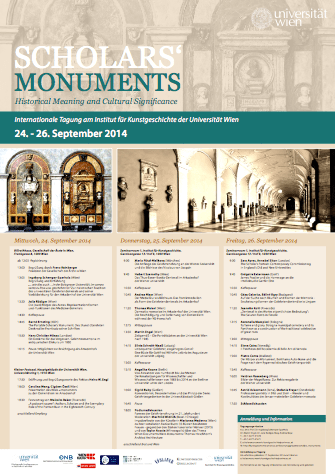 Der Arkadenhof der Universität Wien stellt mit seinen über 150 Gelehrtendenkmälern eine der größten und qualitätsvollsten Ehrenhallen Europas dar. Aus welcher Tradition heraus entstand dieser akademische Gedenkort? Welche Repräsentationsformen nutzten die Künstler, um die Wissenschaftler zu charakterisieren? Und welche zeitgemäße Darstellungsform eignet sich zur überfälligen Ehrung von weiblichen Gelehrten?
Im Rahmen dieser internationalen Tagung am Institut für Kunstgeschichte werden aktuelle, kunst- und kulturhistorische Forschungspositionen zu Gelehrtendenkmälern zusammengetragen und im Spiegel des Arkadenhofs der Wiener Universität reflektiert. Die Tagungsbeiträge nähern sich der Gelehrtenmemoria aus unterschiedlichen methodischen Richtungen und Disziplinen (Kunstgeschichte, Zeitgeschichte, Wissenschaftsgeschichte, cultural memory studies, gender studies). In diesem Rahmen wird nicht nur die Tradition universitärer Ehrenhallen als Funktionsgedächtnis sichtbar, sondern anhand der Auswahl (und Ausgrenzung) von WissenschaftlerInnen lassen sich zeit- und wissenschaftshistorische Konflikte aufdecken. Diese zeigen sich besonders markant bei politisch-ideologisch und gender-spezifisch motivierter Ausgrenzung. So beleuchtet die Tagung nicht nur die lange Wissenschaftstradition der Universität Wien, sondern wirkt mit ihrem Interesse für die Zukunft dieses Gedenkorts auch identitätsstiftend für die scientific community des 21. Jahrhunderts.
Um Anmeldung wird gebeten unter scholarsmonuments.kunstgeschichte@univie.ac.at.
◊ ◊ ◊ ◊ ◊
M I T T W O C H , 2 4 S E P T E M B E R
12:00 Registrierung
13:00 Begrüßung durch Franz Kainberger, Präsident der Gesellschaft der Ärzte in Wien
13:05 Ingeborg Schemper-Sparholz (Wien), Begrüßung und Einführung „… wie dies auch …in der Bologneser Universität, im campo santo zu Pisa usw. geschehen ist.“ Zur italienischen Tradition des universitären Gelehrtendenkmals und seiner Vorbildwirkung für den Arkadenhof der Universität Wien.
13:50 Julia Rüdiger (Wien), Die (zwei) Körper des Arztes. Repräsentationsformen und -funktionen des Medizinerdenkmals
14:30 Kaffeepause
14:45 Bernd Ernsting (Köln), The Portable Scholar’s Monument. Des (Kunst-)Gelehrten Denkmal im Frontispiz seiner Schriften
15:30 Hans Christian Hönes (London), Ein Denkmal für das Vergessen. Gelehrtenmemoria im antiquarischen Diskurs um 1800
16:15 Pause / Möglichkeit zur Besichtigung des Arkadenhofs der Universität Wien
17:30 Eröffnung und Begrüßungsworte des Rektors
18:00 Caroline Mang, Cigdem Özel (Wien), Präsentation des Wikis u:monuments zu den Denkmälern im Arkadenhof
18:30 Festvortrag: Malcolm Baker (Riverside), “A puissant spurre”: Authors, Scholars and the Exemplary Role of the Portrait Bust in the Eighteenth Century
D O N N E R S T A G , 2 5 S E P T E M B E R
9:00 Maria Pötzl-Malikova (München), Die Anfänge der Gelehrtenehrung an der Wiener Universität und die Bildnisse des Nicolaus von Jacquin
9:45 Hubert Szemethy (Wien), Das Thun-Exner-Bonitz-Denkmal im Arkadenhof der Wiener Universität
10:30 Kaffeepause
10:45 Andrea Mayr (Wien), Der Medailleur als Bildhauer. Das Porträtmedaillon als Form des Gelehrtendenkmals im Arkadenhof
11:30 Thomas Maisel (Wien), Damnatio memoriae im Arkadenhof der Universität Wien. Die Beschädigung und Entfernung von Denkmälern während der NS-Herrschaft
12:15 Mittagspause
13:30 Martin Engel (Wien), Zeitgemäß – Die Porträtbüsten an der Universität Wien nach 1945
14:15 Silvia Schmitt-Maaß (Leipzig), Unbequemer Gelehrter, eingehegtes Genie? Eine Büste für Gottfried Wilhelm Leibniz im Augusteum der Universität Leipzig
15:00 Kaffeepause
15:15, Angelika Keune (Berlin), Von Alexander von Humboldt bis Lise Meitner. Denkmalsetzungen für Wissenschaftler und Wissenschaftlerinnen von 1883 bis 2014 an der Berliner Universität Unter den Linden
16:00 Sigrid Ruby (Gießen), Konventionen, Besonderheiten und das Prinzip der Serie: Gelehrtengedenken in der Universitätsstadt Gießen
16:45 Pause
18:00 Podiumsdiskussion: Formen der Gelehrtenehrung im 21. Jahrhundert — Moderation: Mechtild Widrich (Basel/Chicago), Impulsreferate von der Künstlerin Marianne Maderna (Wien) zu ihrer Installation Radical Busts: 33 Büsten berühmter Frauen – gegenüber den Büsten honorierter Männer (2015) und von Taylor Acosta (Minneapolis) über das Thema When Documents Were Monuments: Thomas Hirschhorn’s Archival Architecture
F R E I T A G , 2 6 S E P T E M B E R
9:00 Sara Ayres, Annabel Elton (London), The Scholar’s Portrait: Contemporary Commissioning in England’s Old and New Universities
9:45 Grégoire Extermann (Genf), James Pradier und die Hommage an die intellektuelle Genfer Elite
10:30 Kaffeepause
10:45 Géza Galavics, Bálint Ugry (Budapest), Auf der Suche nach Räumen und Formen der Memoria – Erscheinungsformen der Gelehrtendenkmäler in Ungarn
11:30 Jeanette Kohl (Riverside), „Denkmal in des Wortes eigentlichster Bedeutung“: The Salutati Tomb in
Fiesole
12:15 Antonella Mampieri (Bologna), To Fame and Glory: Bologna Municipal Cemetery and Its Pantheon as a Continuation of the Traditional Celebration of Great Men
13:00 Mittagspause
14:15 Elena Catra (Venedig), Il Pantheon dell’Accademia di Belle Arti di Venezia
15:00 Pietro Conte (Mailand), Der Körper als Monument. Benthams Auto-Ikone und die Frage nach dem hyperrealistischen Gelehrtenporträt
15:45 Kaffeepause
16:00 Heidrun Rosenberg (Wien), Bilder der Magnifizenz. Zur Rektorengalerie der Wiener Universität
16:45 Astrid Ackermann (Jena), Stefanie Freyer (Osnabrück), Professorenporträts in Bild und Stein – Wandel und Kontinuitäten der Jenaer materiellen Gelehrtenmemoria
17:30 Schlussdiskussion
Exhibition | The Generous Georgian: Dr Richard Mead
From The Foundling Museum:
The Generous Georgian: Dr Richard Mead
The Foundling Museum, London, 26 September 2014 — 4 January 2015
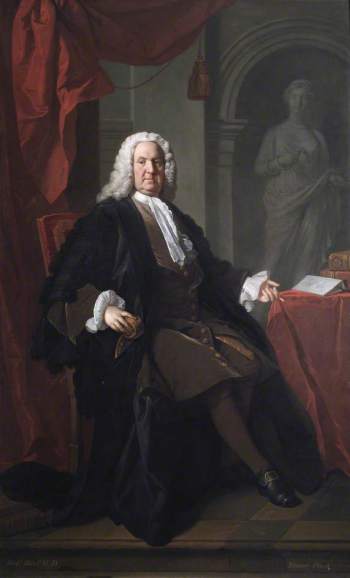
Allan Ramsay, Dr Richard Mead, 1747
(London: The Foundling Museum)
Dr Richard Mead (1673–1754) was one of the most eminent physicians, patrons, collectors, and philanthropists of his day, as well as a significant figure in the early history of the Foundling Hospital. A leading expert on poisons, scurvy, smallpox, and public health, Mead counted among his patients Queen Anne, King George II, Sir Isaac Newton, and the painter Antoine Watteau. A man of action, Mead explored poisons by drinking snake venom and is said to have defended his theory on smallpox treatment to the point of fighting a duel.
His home on Great Ormond Street backed onto the Foundling Hospital grounds and housed a magnificent collection of paintings, sculptures, antiquities, coins, and a library of over 10,000 volumes. Painters and scholars were given access to Mead’s renowned collection, which in a time before public galleries offered visitors a rare chance to view masterpieces from around the world. Examining its significance in London’s cultural landscape, this exhibition reunites key objects from his life and collection, such as the ancient bronze Arundel Head (2nd century BC) and Allan Ramsay’s half-length portrait of Mead.
Exploring Mead ‘in the round’, as a collector, philanthropist and physician, this exhibition will bring to light the Foundling Hospital’s relationship with a truly remarkable individual who, according to his contemporary the writer Samuel Johnson, “lived more in the broad sunshine of life than almost any man.”
The Generous Georgian: Dr Richard Mead is supported by the Wellcome Trust, the City of London Corporation and Verita.
◊ ◊ ◊ ◊ ◊
Conference programme from The Foundling:
Dr Richard Mead: Physician, Philanthropist, Collector
The Foundling Museum, London, 20 October 2014
To accompany the Museum’s autumn exhibition, The Generous Georgian: Dr Richard Mead, this one-day interdisciplinary conference considers the life, work, and collections of Mead. Adults £20, Concessions £15. To book, download a booking form or book online (subject to an 8% booking fee). Please send completed booking forms to: Stephanie Chapman, 40 Brunswick Square, London, WC1N 1AZ. For enquiries please contact exhibitions@foundlingmuseum.org.uk.
P R O G R A M M E
8:30 Optional early morning tour of the Royal College of Physicians (11 St Andrews Place, Regent’s Park) with curator Emma Shepley, addressing Richard Mead and his role in the institution.
9:15 Travel to the Foundling Museum. You will need to make your own way by public transport from RCP to the Foundling Museum, but staff will be able to recommend routes. The journey time is approximately 30 minutes.
9:30 Coffee and registration
10:00 Welcome
10:15 Ludmilla Jordanova, ‘The Problem of Richard Mead’
11:00 Break
11:30 Karen Howell, ‘The Curious Prescriptions of Dr Mead’
12:00 Janette Bright, ‘Dr Mead and the Curious Herbal’
12:30 Kevin Brown, ‘Richard Mead, George Anson’s Circumnavigation of the Globe, and the Health of the Seaman’
13:00 Lunch
14:00 Stephanie Chapman, ‘Richard Mead and the Foundling Hospital’
14:30 Tour of the exhibition, The Generous Georgian: Dr Richard Mead
15:00 Charles Avery, ‘The Large Brass Medallions Cast by Soldani, Selvi, and Pozzi in the Musaeum Meadianum’
15:30 Craig Hanson, ‘Debating Dissent in Leiden’
16:00 Refreshments










leave a comment