Interdisciplinary Approaches to Material Culture at Cambridge
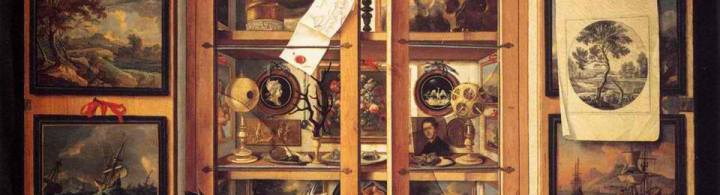
Domenico Remps, "Trompe-l'oeil with an Open Cabinet" (detail), ca. 1700 (Florence: Museo dell'Opificio delle Pietre Dure)
From CRASSH at the University of Cambridge:
Things: Material Cultures of the Long Eighteen Century
Centre for Research in the Arts, Social Sciences and Humanities (CRASSH), Cambridge, ongoing series
The eighteenth century was the century of ‘stuff.’ Public production, collection, display and consumption of objects grew in influence, popularity, and scale. The form, function, and use of objects, ranging from scientific and musical instruments to weaponry and furnishings were influenced by distinct features of the time. Eighteenth-century knowledge was not divided into strict disciplines, in fact practice across what we now see as academic boundaries was essential to material creation. This seminar series will use an approach based on objects to encourage us to consider the unity of ideas of the long-eighteenth century, to emphasise the lived human experience of technology and art, and the global dimension of material culture. We will re-discover the interdisciplinary thinking through which eighteenth-century material culture was conceived, gaining new perspectives on the period through its artefacts. Subscribe to the group mailing list at https://lists.cam.ac.uk/mailman/listinfo/crassh-things
Conveners
Katy Barrett Co-Secretary (Department of History and Philosophy of Science)
Sophie Waring Co-Secretary (Department of History and Philosophy of Science)
Adrian Leonard Treasurer (Affiliate Research Student, Winton Centre for Financial History)
Susannah Brooke (Faculty of History)
Molly Dorkin (Department of History of Art)
Simon Layton (Faculty of History)
Eoin Phillips (Department of History and Philosophy of Science)
Jonathan Yarker (Department of History of Art)
Faculty Advisors
Dr Melisssa Calaresu (Faculty of History)
Dr Patricia Fara (Director of Studies, Dept of History and Philosophy of Science)
Dr Mark Goldie (Chairman and Reader in British Intellectual History, Fac of History)
Dr William O’Reilly (Associate Director, Centre for History and Economics)
Professor Simon Schaffer (Professor of History of Science, HPS)
Professor Liba Taub (Director and Curator of the Whipple Museum, HPS)
Professor Nick Thomas (Prof of Historical Anthropology, Director of the Museum of Archaeology and Anthropology)
Dr Richard Dunn (Curator of the History of Navigation, National Maritime Museum)
Dr Catherine Eagleton (Curator of Modern Money, British Museum)
Dr Kim Sloan (Francis Finlay Curator of the Enlightenment Galleries and Curator of British Watercolours and Drawings before 1880, British Museum)
◊ ◊ ◊ ◊ ◊
The fall schedule:
Things: Material Cultures of the Long 18th Century
Programme for Michaelmas Term 2011
Each seminar will feature two talks each considering the same type of object from different perspectives.
A R T E F A C T S
Tuesday, 11 Oct 2011
Professor Simon Schaffer (HPS, Cambridge) and Professor Nick Thomas (Museum of Archaeology and Anthropology, Cambridge)
B O T A N Y
Tuesday, 25 Oct 2011
Dr Kim Sloan (British Museum) and Dr Charlie Jarvis (Natural History Museum)
S C I E N T I F I C I N S T R U M E N T S
Tuesday, 8 Nov 2011
Dr Richard Dunn (National Maritime Museum) and Dr Alexi Baker (HPS, Cambridge)
C O I N S
Tuesday, 22 Nov 2011
Dr Catherine Eagleton (British Museum) and Dr Martin Allen (Fitzwilliam Museum, Cambridge)
Evening of Linen at Fenton House
As noted at Treasure Hunt (with lovely photos), Selvedge Magazine, in association with the National Trust, is hosting an evening on linen. From the website invitation:
We Love Linen
Fenton House, Hampstead (London), 28 June 2011
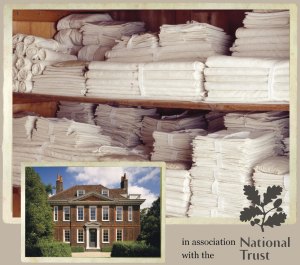
Linen cupboard at Hardwick Hall, Derbyshire ©NTPL, Nadia Mackenzie / Exterior of Fenton House ©NTPL, Matthew Antrobus
Join Selvedge at Fenton House in Hampstead on Tuesday 28 June. The charming 17th-century merchant’s house which has remained virtually unaltered over the last 300 years of continuous occupation, will provide a period backdrop to our evening dedicated to the beauty of linen. And if the weather is fine there will be a short time to explore the beautifully kept gardens, enjoy a glass of wine and strawberries and cream before the talks begin.
Our first speaker is Amanda Vickery, author of Behind Closed Doors: At Home in Georgian England and our “The Lure of White Linen” article, issue 39, page 22. Amanda will speak about the role of household linens in Georgian England. She will be followed by Elizabeth Baer, who will be sharing her lifelong passion for linen, and the forming of her collection. There will be time after the talks to view some of Elizabeth’s
antique linens and a selection will be available to purchase.
Ticket includes entrance to the house, glass of wine, and
strawberries and cream. Tickets, £35, concessions* £30.
Tickets are available here»
This Week’s Romantic Objects Seminar in London: Blake and Varley
Philippa Simpson and Sibylle Erle, Varley’s Visionary Heads and Blake’s The Ghost of a Flea
Institute of English Studies, University of London, 15 June 2011

William Blake, "The Ghost of a Flea," ca. 1819-20, tempera heightened with gold on mahogany support (London: Tate Britain)
Romantic Objects is a seminar series that runs over two terms (Spring and Summer) on Wednesdays 5:30-7:30, as part of the inter-university seminar in Romantic Studies at Senate House, co-organized by Birkbeck and the Open University at the Institute of English Studies. This series of seminars will rethink Romantic period material culture in the tension between Romantic attempts to recenter aesthetic experience as subjective just as a new culture of exhibitions, viewing, and collecting practices defines the centrality of objects. The aim is to provide a forum for graduate students, scholars, and curators working in the period 1750-1850 or on questions relating to objects, exhibitions, material culture.
This week’s seminar features Dr Philippa Simpson (Tate Britain) and Dr Sibylle Erle (Bishop Grosseteste College, Lincoln) on John Varley’s Visionary Heads and William Blake’s The Ghost of a Flea. Erle and Simpson curated the current display of Blake and Physiognomy at Tate Britain. Erle is the author of Blake, Lavater and Physiognomy (2010). Simpson, an expert in late eighteenth-century exhibition culture and the
reception of the old masters, co-curated the exhibition Turner and the
Masters. The seminar takes place Wednesday, 15 June, 17:30-19:30, in
STB8 Stewart House, basement, 32 Russell Square. All are welcome!
Reading:
Alexander Gilchrist, Life of Blake (1863), pp. 249-57, (via Googlebooks)
◊ ◊ ◊ ◊ ◊
Sibylle Erle, Blake, Lavater, and Physiognomy (Oxford: Legenda, 2010), 244 pages, ISBN: 9781906540692, $89.

ISBN: 9781906540692
William Blake never travelled to the continent, and yet his creation myth is far more European than has so far been acknowledged. His early illuminated books, of the 1790s, run alongside his professional work as a copy-engraver on Henry Hunter’s translation of Johann Caspar Lavater’s Essays on Physiognomy (1789-98) — work in which Blake helped to make a likeness of a book about likenesses. For Blake, as for Lavater, Henry Fuseli, Joshua Reynolds, and others of his age, the art of the portrait was to find the right balance between likeness and type. Blake, Lavater, and Physiognomy demonstrates how the problems occurring during the production of the Hunter translation resonate in Blake’s treatment of the Genesis story. Blake takes us back to the creation of the human body, and interrogates the idea that ‘God created man after his own likeness’. He introduces the ‘Net of Religion’, a device which presses the human form into material shape, giving it personality and identity. As Erle shows, Blake’s startlingly original take on the creation myth is informed by Lavater’s pursuit of physiognomy: the search for divine likeness, traced in the faces of their contemporary men.
◊ ◊ ◊ ◊ ◊
Blake and Physiognomy
Tate Britain, London, 8 November 2010 — 17 April 2011
Curated by Philippa Simpson and Sibylle Erle
[There is] not a man who does not judge of all things…by their physiognomy;
that is, of their internal worth by their external appearance.
–Johann Caspar Lavater
Johann Caspar Lavater’s Essays on Physiognomy, translated into English in 1789, catalysed a vogue for the theory that people’s characters could be read in their features. Although this would seem to serve as a model of detached observation and scientific classification, Lavater saw these judgements as stemming from an instinctive understanding of expression and appearance. At the heart of his work was a strongly-held Christian belief, according to which all forms were divinely created, and derived from the one perfect God. Lavater’s ideas were also informed by eighteenth-century codes of racial stereotyping that are deeply troubling to the modern reader.
Many British artists, including William Blake, experimented with physiognomic systems in their work. Blake’s involvement, though, was closer than most. He not only engraved illustrations for the 1789 translation of Lavater’s book but, over thirty years later collaborated with his friend, artist and astrologer John Varley, on a publication entitled Zodiacal Physiognomy. This book sought to attribute character according to time of birth, and Varley used prints after Blake’s works to illustrate different star signs. These enterprises suggest that Blake’s visual language, which often seems highly innovative – even idiosyncratic – may be read in the context of broader pseudo-scientific and artistic trends.
Eighteenth-Century Maps: A Fair, a Lecture, and a New Reference Book
Press release from The London Map Fair:
2011 London Antique Map Fair
Royal Geographic Society, London, 11-12 June 2011

Johann Baptist Homann. "Sphærarum Artificialium Typica..." Nuremberg, ca.1730.
The 2011 London Map Fair, taking place in the historic surroundings of the Royal Geographical Society, is the most established and largest antiquarian map fair in Europe: over forty of the leading national and international specialist map dealers will be exhibiting in June. Visitors to the fair will discover a vast selection of original antique maps covering the whole world and printed between the 15th and 19th centuries. Highlights include a map of the universe by seventeenth-century Venetian cartographer Coronelli, revealing the Nine Circles of Hell as described in Dante’s Divine Comedy, as well as a 19th-century curiosity map of Europe depicting each country in the form of a caricature: the United Kingdom
figures as an old crone.
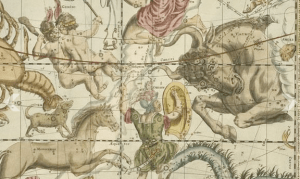
Johann Gabriel Doppelmayr, "Globi Coelestis," 1 of 6 Celestial Charts, Nuremberg, Homann, 1742
Other fine maps offered this year will include: an example of Ogilby’s innovative and incredibly detailed, 17th-century road map, marking all inns, churches and other landmarks on the road from London to Portsmouth – the course of the modern A3; an impression of Braun and Hogenberg’s bird’s-eye view of London; the earliest surviving printed plan of the city, dated 1574; and Christoph Vetter’s rare and beautiful 17th-century depiction of Bohemia stylised as a rose, with Prague at its centre and Vienna, the seat of the Hapsburg Dynasty, at its root. Exhibitors will offer atlases, travel books, globes, sea charts, town plans, celestial maps, topographical prints and
reference books; there are prices to suit all pockets ranging
from a very affordable £10 to over £100,000 for exceptional
pieces.
◊ ◊ ◊ ◊ ◊
2011 London Map Fair Lecture: Laurence Worms and Ashley Baynton-Williams
Royal Geographic Society, London, 11 June 2011
On Saturday, 11 June 2011, at 2:30pm, Laurence Worms and Ashley Baynton-Williams will launch their long-awaited Dictionary of British Map Engravers at the Fair. The product of over twenty years of research, it offers a wealth of fresh material on the map trade and a new insight into the lives of its most important figures, revealing some surprising links and relationships in the process.
◊ ◊ ◊ ◊ ◊
From the International League of Antiquarian Booksellers:
Laurence Worms and Ashley Baynton-Williams, British Map Engravers: A Dictionary of Engravers, Lithographers and Their Principal Employers to 1850 (London: Rare Book Society, 2011), approximately 750 pages, £125.
 The ultimate guide to the identification of British antique maps and their makers: An illustrated dictionary of over 1,500 members of the map trade in England, Ireland, Scotland and Wales, of British-born engravers working overseas and foreign engravers working in the British Isles, from the beginnings until the mid 19th century. Included are all the known engravers and lithographers, globemakers and retailers, the principal map sellers and publishers, key cartographers, makers of map-based games and puzzles, but also the remarkable lives of many artists, dealers and publishers, whose fates have been unknown so far. (more…)
Turkish Taste at the Frick Opens June 8
In conjunction with the exhibition at the Frick Collection, Turkish Taste at the Court of Marie-Antoinette (opening June 8), the museum is hosting a seminar on Monday, 27 June, 6:00-7:30 p.m. From the Frick’s website:
Carlotte Vignon and Adrienne L. Childs, Turkish Taste at the Court of Marie-Antoinette
The Frick Collection, New York, 27 June 2011
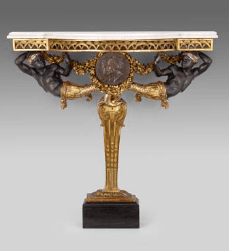
Small Console Table with Supporting Figures of Nubians (one of a pair), c.1780, gilded and painted wood and marble slab (NY: The Frick Collection), photo by Michael Bodycomb
This seminar will offer participants a detailed look at several objects from the special exhibition. Charlotte Vignon will discuss the Frick’s two French console tables, which feature Nubian slaves with pearl-accented turbans, floral garlands, and a frieze of crossed crescents, a symbol of the Ottoman Empire. She will also examine a pair of firedogs from Marie-Antoinette’s Turkish boudoir at Fontainebleau, on loan from the Musée du Louvre, and a pair of wall panels created for the Turkish cabinet of her brother-in-law, the comte d’Artois, from The Metropolitan Museum of Art. Click here to register at the regular rate of $100 per person. Members of The Frick Collection may click here to register at the discounted membership rate of $90 per person. Discounts will be applied upon verification of membership. To register over the phone, please call 212.547.0704.
Collecting and the Art Market in Venice and Rome
This round table has been organized by Nathalie Volle et Chantal Georgel. From the INHA:
Collectionnisme et marché de l’art à Venise et à Rome au XVIIIème siècle
Institut national d’histoire de l’art, Paris, 17 May 2011
Table ronde autour des livres de Paolo Coen (Il mercato dei quadri a Roma nel Diciottesimo secolo, la domanda, la offerta e la circolazione delle opere in un grande centro artistico europeo), et de Stefania Mason (Il collezionismo d’arte a Venezia. Il Settecento). Participants: Paolo Coen, Stefania Mason, Daniela Gallo, Nathalie Volle.
◊ ◊ ◊ ◊ ◊
Linda Borean, Stefania Mason, eds. Il collezionismo d’arte a Venezia. Il Settecento (Venice: Marsilio, 2009), 432 pages, ISBN: 9788831799263, €35.
 Questa pubblicazione, la terza di una collana specificatamente dedicata al collezionismo artistico a Venezia in età moderna, prende in esame il Settecento, il secolo definito della “gloria” di Venezia, particolarmente ricco e articolato per l’evoluzione del gusto e degli orientamenti del fenomeno, con elementi di continuità e altri di contrasto con l’epoca che lo precede. Composto da saggi tematici che illuminano tipologie di opere, aspetti e problemi del commercio artistico (anche in connessione con le conseguenze delle soppressioni delle corporazioni religiose), presenze forestiere di artisti, collezionisti e agenti, casi-studio di raccolte particolarmente significative per i loro proprietari (una casata di antica nobiltà e un facoltoso imprenditore della manifattura del tabacco) e la loro formazione, il volume è completato da un corpus di oltre quaranta voci biografiche su raccoglitori, mercanti, agenti, diplomatici e critici che hanno assunto un ruolo determinante nello sviluppo del collezionismo nel Settecento veneziano: accanto a personalità in parte conosciute, ne compaiono numerose altre dal profilo sinora indefinito nonostante la loro rilevanza nel panorama del tempo. Un’appendice di documenti inediti offre un campione rappresentativo delle diverse tipologie di fonti archivistiche disponibili, da quelle “classiche” quali inventari, testamenti e carteggi, ad altre prodotte da precise contingenze storiche, ad esempio i saccheggi compiuti nei palazzi veneziani nel 1797.
◊ ◊ ◊ ◊ ◊
Paolo Coen, Il Mercato Dei Quadri a Roma nel Diciottesimo Secolo: La Domanda, l’Offerta e la Circolazione delle Opere in un Grande Centro Artistico Europeo, 2 vols (Florence: Leo S. Olschki Editore, 2010), 816 pages, ISBN: 9788822258953), €80.
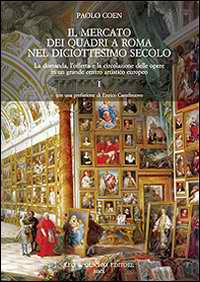 Il binomio arte-denaro, oggi persino ovvio, esisteva anche in passato, sebbene attraverso forme e meccanismi in parte differenti. Tradizionalmente uno dei centri del mercato pittorico fu Roma, meta prediletta di artisti e viaggiatori provenienti da ogni parte del globo. Il libro ricostruisce questo complesso fenomeno individuando un momento chiave nel diciottesimo secolo, quando la città, anche sulla scia del Grand Tour, vede ancor più aumentare il suo peso nei sistemi artistici d’Europa.
Lecture: The Figure of the Amateur in the Eighteenth Century
From Le Blog de L’APAHAU:
Charlotte Guichard, La figure de l’amateur au XVIIIe siècle
Centre allemand d’histoire de l’art, Paris, 28 April 2011

Jean-Baptiste Greuze, "Portrait of Claude-Henri Watelet," ca. 1765 ( Louvre)
Traditionnellement associé au collectionneur ou relégué au rang de simple dilettante, l’amateur est en réalité au XVIIIe siècle une figure centrale dans la constitution des savoirs artistiques. A distance de la conception kantienne, le langage du goût renvoie alors à des opérations cognitives dans le monde des amateurs. Non pas désintéressés, mais passionnément liés aux objets, à leur matérialité et à leur ordonnancement, les savoirs de l’amateur sont des savoirs du geste, articulés à un faire et à une praxis. La conférence présentera la spécificité de cette figure et son rôle dans la formation du discours de l’histoire de l’art, à travers l’exemple des « Rymbranesques », ces gravures d’artistes amateurs qui furent un des lieux où se construisit la grandeur de Rembrandt et son intégration dans le canon artistique.
‘Paris: Life & Luxury’ Opens at the Getty
The Getty exhibition on life in an eighteenth-century Parisian townhouse opens next week. The image list is available here. Programming includes the following, as noted in the Press Kit:
Paris: Life & Luxury
J. Paul Getty Museum, Los Angeles, 26 April — 7 August 2011
Museum of Fine Arts, Houston, 18 September — 10 December 2011
Curated by Charissa Bremer-David with Peter Björn Kerber
 Evoking the elegant, prosperous world of Rococo Paris, this major, international loan exhibition brings to life activities that took place inside a Parisian town house over the course of a typical day—from dressing and letter writing to dining, music, and other evening entertainments. Paris: Life and Luxury unites prime examples of the extraordinary creative virtuosity of the period’s great artists and craftsmen, including furniture, fashion, silver, paintings, sculpture, musical instruments, clocks, and books. Rarely shown together, these objects literally and figuratively open up, allowing their functions and the parts they played in the fine art of eighteenth-century Parisian living to be understood by contemporary visitors.
L E C T U R E S
Blogging, Now and Then (250 Years Ago)
Thursday, April 28, 7:00 pm
Long before the Internet, Europeans exchanged information in ways that anticipated blogging. The key element of their information system was the anecdote, a term that meant nearly the opposite then from what it means today. Robert Darnton (Carl H. Pforzheimer University Professor and Director of the Harvard University Library at Harvard University) explains how anecdotes became a staple in the daily diet of news consumed by readers in 18th-century France and England.
Street Songs and Sedition in 18th-Century Paris: A Cabaret-Lecture
Saturday, April 30, 7:30 pm
In 18th-century Paris, most information traveled through oral systems of communication, and the most powerful means of transmission was song. Parisians composed new verses to old tunes nearly every day. The songs provided a running commentary on current events. In this presentation, Parisian cabaret artist Hélène Delavault sings historical songs and, with Robert Darnton (Carl H. Pforzheimer University Professor and Director of the Harvard University Library, Harvard University), explains their complex meanings.
Representing Interiors in French 18th-Century Portraits
Sunday, May 22, 3:00 pm
Xavier Salmon, Director of Patrimony and the Collections at the Château of Fontainebleau, explores the development and significance of domestic portraiture in 18th-century France. During this period, painters were careful to provide indications of the profession or social standing of their sitters, and the genre developed to showcase the subjects in domestic settings.
C O U R S E S
Life and Luxury in 18th-Century Paris
Saturday, July 16, 10:30 am—3:30 pm
Join this focused course exploring the domestic activities of the 18th-century French elite. Educators Noelle Valentino and Christine Spier, together with one of the exhibition’s curators, examine how decorative arts relate to the daily rituals of the period. Course fee: $35; $25 students.
Culinary Workshop: Taste of Paris
Thursday, June 16, 10:30 am – 2:00 pm; repeats June 17
Travel to an 18th century Parisian town house in the exhibition Paris: Life and Luxury and discover the prevailing culinary and artistic tastes of the prosperous world of Rococo Paris. Then prepare and enjoy a class meal inspired by period foods and recipes. Course fee $75. Open to 20 participants.
A R T I S T – A T – W O R K – D E M O N S T R A T I O N
Paris Fashion
Sunday, May 1, 15, & 29, and June 5 & 19, 1:00—3:00 pm
Join historic costume designer Maxwell Barr as he explores fashion in the prosperous world of 18th-century Paris. Barr demonstrates the extraordinary craftsmanship and virtuosity of the textiles and designs used to create period clothing. (more…)
At CUNY: Three Revolutions of Liberty: England, America, and France
From the Center for Humanities at CUNY:
Three Revolutions of Liberty: England, America, and France
Philippe Raynaud, Nadia Urbinati, Jeremy Jennings, and Richard Wolin
Center for the Humanities, The City University of New York, 13 April 2011
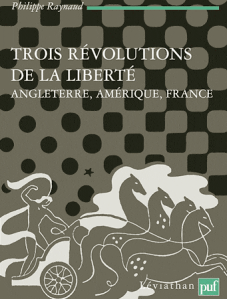
400 pages, ISBN: 9782130568742
Over the last few decades, the revival of political liberalism has gone hand in hand with a reassessment of the commonalities and differences subtending the eighteenth-century trans-Atlantic revolutions. A comparative perspective allows us to better appreciate the standpoints of both the revolutions’ leading intellectual progenitors (Locke, Montesquieu, and Jefferson) as well as of their leading critics (Edmund Burke, Madame de Stael, and Alexis de Tocqueville). In Trois révolutions de la liberté, Angleterre, États-Unis, France (2009), Philippe Raynaud, one of the protagonists of the French liberal revival, has fashioned a unique interpretation of the intellectual lineage that defines this trans-Atlantic revolutionary heritage – a heritage that, in so many ways, continues to define the central terms of modern politics. Join Prof. Raynaud (Political Science, University of Paris II), Nadia Urbinati (Political Science, Columbia University), Jeremy Jennings (Political Science, Queen Mary, University College London), and Richard Wolin (Political Science and
History, The Graduate Center, CUNY) for a vigorous debate on the
implications and relevance of the revolutionary legacy for both the history
of ideas as well as contemporary politics.
Susan Taylor-Leduc on the French Picturesque Garden
From the Bard Graduate Center:
Susan Taylor-Leduc, The “Pleasures of Surprise” in the French Picturesque Garden
Bard Graduate Center, New York, 27 April 2011
Just as video games, smart phone ‘apps’ and online betting solicit the attention of early 21st-century subjects, gaming, particularly high-stakes gambling, was irresistible to eighteenth-century French Society. Whereas gambling was considered as an abstract science combining mathematical calculation and chance, its corollary, surprise, inspired the imagination. Baron de Montesquieu linked the two in his “Essay on Taste” in 1754, suggesting how the social practices of gambling inspired surprising images, behaviors, and sensations. Comparing playing cards, board games, engravings, and paintings to garden plans and extant garden sites, this talk investigates how gambling was projected from the card table to the picturesque gardens created by elite patrons who were themselves addicted gamers. It argues that by fostering a game-like sense of surprise, such gardens promoted new sensate experiences that reconfigured eighteenth century notions of amusement and pleasure and contributed to the formulation of modern aesthetic discourses. (more…)










leave a comment