Works in Progress from The Met’s Fellow Program
A series of colloquia take place from 26 February to 30 April 2013. On Tuesday, 9 April, Donato Esposito is scheduled to speak on Reynolds’s collection in the nineteenth-century. The full schedule is available (as a PDF) here»
◊ ◊ ◊ ◊ ◊
The Metropolitan Museum’s Fellowship Colloquium
The Metropolitan Museum of Art, New York, 9 April 2013
The Fellowship Program at The Metropolitan Museum of Art cordially invites you to attend colloquia on works in progress by art history, conservation, and scientific research fellows. The following talks will be held in Bonnie J. Sacerdote Lecture Hall, Ruth and Harold D. Uris Center for Education. These colloquia are made possible in part by Mrs. Henry S. Blackwood.
Moderator: Xavier F. Salomon, Curator, European Paintings
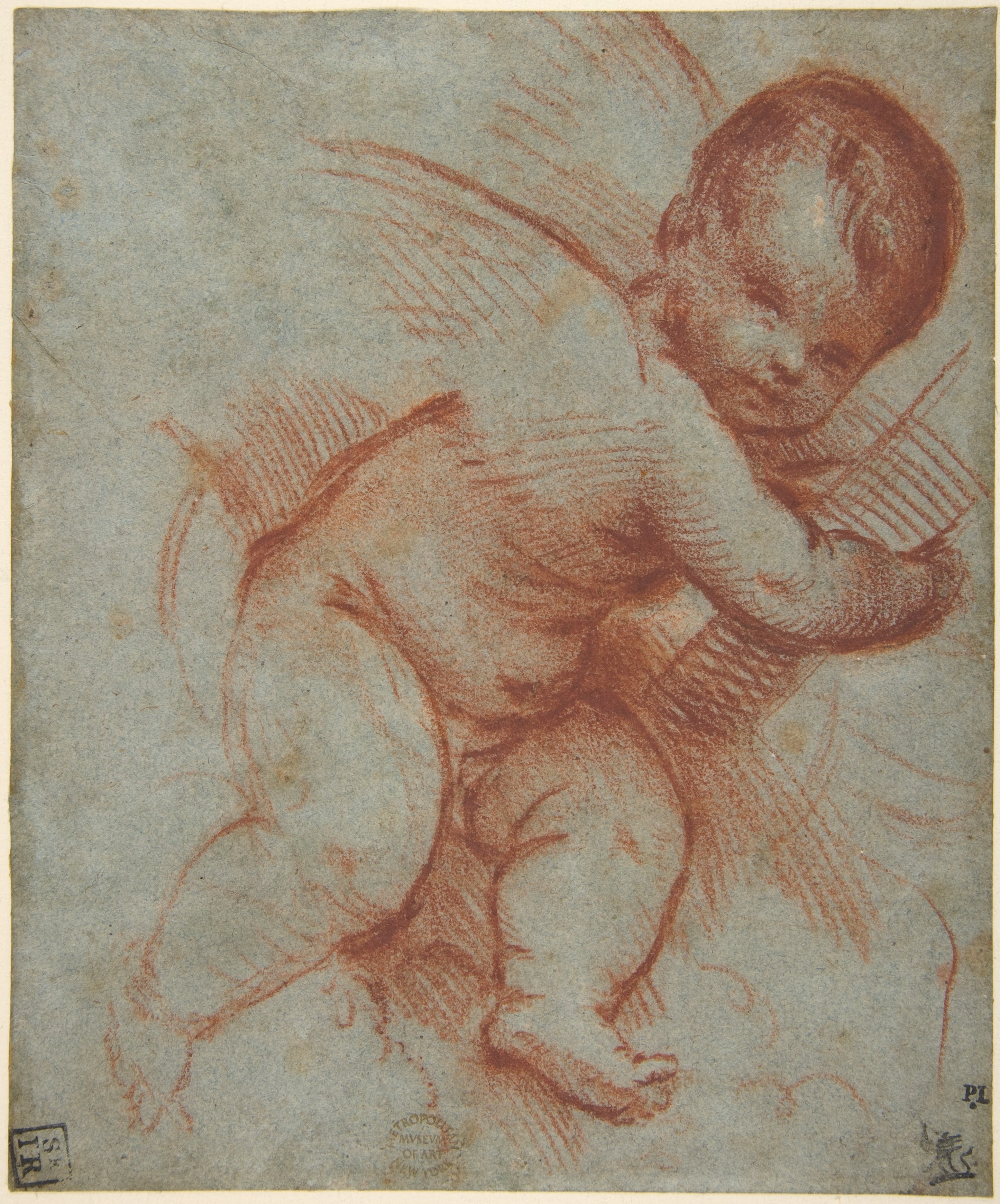
Circle of Titian, Putto Holding the Base of a Cross (New York: Metropolitan Museum of Art, Rogers Fund, 1911). Part of the collection of Joshua Reynolds in the eighteenth century.
10:00 Ronda Kasl (Chester Dale Fellow, European Paintings), “Miquel Alcanyís and Gherardo Starnina: Two Altarpieces from the Valencian Church of San Juan del Hospital”
10:30 Linda Borean (Andrew W. Mellon Fellow, European Paintings), “Self-Portraits and Portraits of Artists in Seicento Venice”
11:00 Valeria De Lucca (Jane and Morgan Whitney Fellow, Musical Instruments), “Roman Heroes / Roman Patrons: Constructing Aristocratic Identity in Seventeenth-Century Rome”
Intermission
11:45 Furio Rinaldi (Andrew W. Mellon Fellow, Drawings and Prints), “Timoteo Viti (1469/70–1523): An Artist and Collector in the Footsteps of Raphael”
12:15 Donato Esposito (Andrew W. Mellon Fellow, Drawings and Prints), “‘Many Curious and Valuable Things’: Sir Joshua Reynolds’s Collection in Nineteenth-Century New York”
12:45 Allen Doyle (Jane and Morgan Whitney Fellow, Robert Lehman Collection), “Michelangelo as Bad Object: Horace
Vernet’s Renaissance”
Forthcoming Book | Stretch: America’s First Family of Clockmakers
From ACC Distribution:
Donald L. Fennimore & Frank L. Hohmann with Onie Rollins, Stretch: America’s First Family of Clockmakers (Winterthur Museum, 2013), 376 pages, ISBN: 978-0912724706, $75.
 This volume presents the definitive history of the UK-born Stretch family of clockmakers who emigrated to Philadelphia in 1703 and played an influential role in the city’s early clockmaking, civic, and Quaker communities. Initial essays discuss the family and the importance of their Quaker beliefs; time-telling and the clockmaking community in pre-1750 Philadelphia; innovative mechanical advances made by the Stretches; and their notable civic and cultural contributions to the city.
The catalog section of the book features 84 of the 133 Peter, Thomas, and William Stretch clocks discovered during the course of the project, illustrating and fully describing both the cases and the works. The majority of the clocks, passed down through the generations and still in private collections, are being published for the first time.
C O N T E N T S
Foreword, Acknowledgments, Introduction
Chapter 1 – Time and Telling Time in Early Philadelphia
Chapter 2 – Peter Stretch and Family
Chapter 3 – Stretch Clocks and the Philadelphia Clockmaking Community before 1750
Catalogue: Peter Stretch Clocks, Nos. 1 – 62; Thomas Stretch Clocks, Nos. 63 – 78; William Stretch Clocks, Nos. 79 – 84
Appendix 1 – Peter Stretch Will and Inventory
Appendix 2 – Thomas Stretch Will and Inventory
Appendix 3 – Samuel Stretch Will and Inventory
Appendix 4 – Clock Owners in Philadelphia, 1684 – 1750
Appendix 5 – Stretch Signature Plates: A Comparison
Appendix 6 – Stretch Clocks: A Comparison
Appendix 7 – Identified Stretch Clocks
Appendix 8 – Genealogy
Endnotes, Bibliography, Index
Donald L. Fennimore, Curator Emeritus, served as metalwork specialist at Winterthur Museum, Delaware, for 34 years. The list of his numerous publications includes Metalwork in Early America (Winterthur, 1996); Iron at Winterthur (Winterthur, 2004); and Silversmiths to the Nation: Thomas Fletcher and Sidney Gardiner (ACC, 2007).
Frank L. Hohmann III, a retired Wall Street executive, is a collector of 18th-century furniture, with a concentration on brass dial clocks. He co-authored and published the volume Timeless: Masterpiece American Brass Dial Clocks (2009). He is a Trustee of Winterthur Museum, Delaware and a Liveryman in the Worshipful Company of Clockmakers.
Exhibition | Indiennes Sublimes
Thanks to Hélène Bremer for noting this exhibition of eighteenth- and nineteenth-century printed textiles at the Musée de la Toile de Jouy (an English description is available here) . . .
Indiennes Sublimes
Villa Rosemaine, Toulon, 13 September 2011 — 31 January 2012
Musée de la Toile de Jouy, Jouy-en-Josas, 21 February — 23 June 2013
 L’exposition Indiennes sublimes est proposée au musée de la Toile de Jouy par la Villa Rosemaine, centre d’étude et de diffusion du patrimoine textile situé à Toulon. Elle présente les indiennes, toiles de coton peintes et imprimées des Indes, de Perse, de Provence mais aussi de Jouy. Moins connues que les fameuses « toiles de Jouy », si on donne à ce terme le sens de « toiles monochromes à personnages », leur production était pourtant bien plus importante.
Nous remontons le temps grâce à cette exposition, aux origines et à l’apparition du coton imprimé en occident à la fin du XVIIe siècle et à la naissance des compagnies d’importation occidentale. Les compagnies des Indes portugaises, anglaises, hollandaises puis françaises vont « déballer » en Europe et à Marseille des produits jusqu’alors inconnus : le café, les épices, les pierres précieuses et… les indiennes, initialement réservées à la noblesse ou à la riche bourgeoisie. Les 1ères impressions françaises et anglaises étaient de simples imitations, pour devenir grâce aux efforts technologiques et esthétiques, de véritables “labels” avec le développement d’importants centres
d’indiennage.

Motif aux écailles imbriquées, circa 1790, Manufacture Oberkampf, Jouy-en-Josas. © Serge Liagre / Villa Rosemaine. Click on the photo for additional images
Indiennes sublimes sera présentée grâce à la passion de collectionneurs provençaux qui ont réuni une sélection de leurs plus belles pièces parmi lesquelles de nombreux costumes. Elle sera enrichie par des œuvres des collections du musée de la Toile de Jouy (costumes, kalemkhar, boutis etc.). Cette exposition a fait l’objet d’un très beau catalogue lors de sa présentation à la Villa Rosemaine (Toulon) qui sera mis en vente à la boutique du musée.
Paper-Cut Project
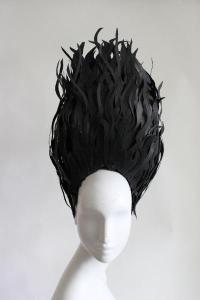
Amy Flurry and Nikki Nye, Marie Antoinette (2006), paper, 2012

Amy Flurry and Nikki Nye, Marie Antoinette (1938), paper, 2012
As profiled by Rinne Allen and Lucy Allen Gillis in the recent issue of Selvedge Magazine 50 (Jan/Feb 2013), Amy Flurry and Nikki Nye, co-founders of the Atlanta-based company Paper-Cut Project, contributed sixteen paper wigs for the V&A’s recent exhibition Hollywood Costume. Given that notice of Isabelle de Borchgrave’s paper dresses exhibited in San Francisco in 2011 remains one of the most popular postings here at Enfilade, I would expect readers to be similarly interested in these paper hair pieces.
–CH
New Book | Le Ciseau et la Tiare: Les Sculpteurs dans la Rome des Papes
From Publications de l’École Française de Rome:
Anne-Lise Desmas, Le ciseau et la tiare : les sculpteurs dans la Rome de Benoît XIII, Clément XII et Benoît XIV, 1724-1758 (Rome: École Française de Rome, 2012), 471 pages, ISBN: 978-2728309405, 50€ / $95. [available from Artbooks.com]
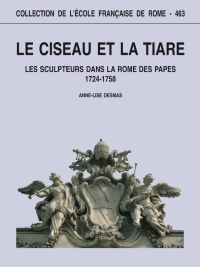 L’image monumentale de la Ville éternelle, des statues de la fontaine de Trevi ou de la façade du Latran à celles des fondateurs d’ordres dans la nef de Saint-Pierre, a été largement façonnée par les sculpteurs des pontificats de Benoît XIII, Clément XII et Benoît XIV. Pourtant, ces artistes, tels Maini, Bracci et Della Valle, restent méconnus.
C’est ce grand atelier et ses acteurs que cet ouvrage fait revivre, entrelaçant recherches monographiques et études sociales, reconstitutions de carrières, enquêtes sur les institutions artistiques et examen stylistique des œuvres.
Cette approche globale prend en compte tous les rouages de ce vaste chantier sculptural, du transport du marbre à la composition des décors éphémères, de la restauration d’antiques aux concours, des commandes privées de monuments funéraires à l’organisation des grands chantiers, souvent dominés par la figure de l’architecte. Elle examine aussi différents milieux, dont celui de l’Académie de France où brillent Adam et Bouchardon, et retrace le parcours romain de sculpteurs italiens, tels le Napolitain Benaglia, le Florentin Cornacchini ou le Vénitien Corradini.
Ces années, entre Rusconi et Canova, restent dominées par le poids de la tradition héritée du siècle de Bernin. Or c’est l’un des paradoxes que cherche à élucider cette étude : pourquoi la Rome des Lumières n’a-t-elle pas laissé émerger l’un de ces artistes qui, incontestablement talentueux, lui assurèrent une abondante et remarquable production sculpturale ?
The table of contents is available as a PDF here»
Exhibition | Dalou, Regards sur le XVIIIe Siècle
Press release from the Cognac-Jay:
Dalou, Regards sur le XVIIIe Siècle
Musée Cognac-Jay, Paris, 18 April — 13 July 2013
Curated by Cécilie Champy-Vinas and Benjamin Couilleaux
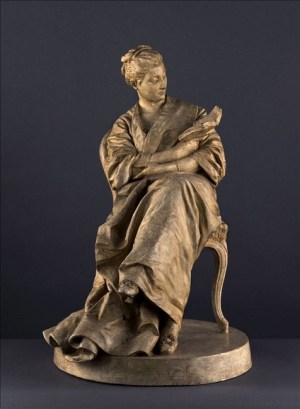
Aimé-Jules Dalou, La Liseuse (Paris: Petit Palais, Musée des Beaux-Arts de la Ville de Paris) © Petit Palais/ Roger-Viollet
À l’occasion de la publication du catalogue raisonné du fonds Dalou conservé au Petit Palais, le Musée Cognacq-Jay accueille une sélection d’œuvres de ce grand sculpteur du XIXe siècle, en les confrontant à ses propres collections du XVIIIe siècle.Trente-cinq terres cuites, plâtres et bronzes, issus des collections du Petit Palais et du musée Carnavalet, sont présentés parmi les collections permanentes. Cette manifestation montre comment un grand artiste républicain du XIXe siècle pouvait puiser son inspiration dans le siècle des Lumières, balançant entre l’exaltation des hauts faits de la Révolution et la nostalgie des grâces de l’art rocaille.
D’une famille parisienne modeste, « communard » en 1871, ce qui lui valut de s’exiler à Londres jusqu’en 1879, le sculpteur Aimé-Jules Dalou (1838-1902) commence sa carrière en France dans les années 1880. Artiste engagé, il eut à cœur de célébrer la République depuis ses origines, c’est-à-dire depuis la Révolution. Sa carrière est jalonnée de monuments ambitieux à la gloire des grands hommes de ce temps, de Mirabeau répondant à Dreux-Brézé le 23 juin 1789, un des épisodes fondateurs de la Révolution, en 1883, au Monument à
Hoche, dernière commande publique passée à l’artiste en 1900.
Pendant son exil à Londres et après son retour à Paris, Dalou a également réalisé de nombreuses œuvres intimistes. Pour celles-ci, il se tourne souvent vers un autre XVIIIe siècle, celui des grâces enfantines, des bacchanales et des intrigues d’alcôves. Ses portraits d’enfants, ses baigneuses et ses groupes mythologiques font écho aux créations de Boucher, Clodion ou Lemoyne.
En parallèle, le Petit Palais, musée des Beaux-arts de la Ville de Paris, présente du 18 avril au 13 juillet Dalou. Le sculpteur de la République, première exposition monographique consacrée à l’artiste. Près de trois cents œuvres seront présentées, en grande partie inédites, provenant de collections publiques et privées en France et à l’étranger.
Exhibition | Plain or Fancy?
Press release (25 February 2013) from The Met:
Plain or Fancy? Restraint and Exuberance in the Decorative Arts
The Metropolitan Museum of Art, New York, 26 February — 18 August 2013
Curated by Luke Syson and Ellenor Alcorn
 The tension in design between austerity and opulence—the simple and the ornate—is a long-standing one. Plain or Fancy? Restraint and Exuberance in the Decorative Arts, on view February 26 through August 18, 2013 at The Metropolitan Museum of Art, invites visitors to consider their own preferences and suggests some of the cultural meanings that have been associated with the two words. The challenge is not to identify quality, or to determine “good taste” versus “bad taste.” Rather the exhibition touches on some historical moments when austerity and flamboyance in design were actively debated. In a departure from a conventional chronological presentation, the show raises a question, encouraging visitors to explore their own reactions. The 40 works of art on view are drawn from the Museum’s holdings of European decorative arts, and include ceramics, metalwork, and works in glass ranging in date from the late 14th to the early 20th century.
The word “fancy” is a shortened form of “fantasy,” which suggests that imagination and exuberance might be seen as prized formal qualities, equally present in a rustic pot and a treasury piece. Fanciness has sometimes been linked to the notion of luxury, and with it, expensive indulgences. In ancient Greece and Rome, costly imported commodities were sometimes seen as a threat to the local economy, and in later centuries condemned as a symptom of an unwelcome social mobility that challenged the existing power structure. But grandeur also had its place in securing the social hierarchy, for example, at the court of Louis XIV. Plainness, by contrast, has tended to be associated with moral virtue and purity.
A century after the Austrian architect Adolf Loos delivered his polemic “Ornament and Crime,” the Modernist aesthetic, which married form with function, remains a dominant influence. But this was not the first time that the merits of ornament had been debated. Court culture in Spain in the 16th century was permeated with the somber gravitas of King Philip II. A contemporary treatise promoting restraint in dress, comportment, and decoration argued: “…a quiet manner is the inevitable mark of a grave and dignified man, ruled by reason rather than by appetite…” These values are expressed in the architecture and metalwork of the period, which is characterized by a distinctive geometric simplicity. Implicit in this taste, which is often referred to as the “Severe Style,” is a rejection of what was seen as the sensuous decadence of Mannerist design.

Coffee and tea service, Sèvres Manufactory. Designer: Hyacinthe Régnier, 1855–61 (New York: The Metropolitan Museum of Art).
Another moment of debate occurred in the 18th century, when the Rococo style was derided by advocates of Neoclassicism. The English artist William Hogarth campaigned for spontaneity and asymmetry, writing in 1753, “Simplicity, without variety, is wholly insipid…” But the same year, the whimsical fantasies of Rococo designers, which were rooted in nature’s capriciousness, were ridiculed as excessive and depraved. The taste for fanciful Chinese subjects was mocked as the “monstrous offspring of wild imagination, undirected by nature and truth.”
Plain or Fancy? points out that aesthetic responses are never neutral. Our judgments have roots in our culture, socioeconomic status, generational values, and aspirations. For some, “plain” is sophisticated, while for others “plain” is dull. The exhibition does not aspire to settle the debate but encourages visitors to consider their own responses to this issue as they experience works of art throughout the Museum. To ask now if people like art “plain” or “fancy” is to ask whether they are aristocrats or revolutionaries, Protestants or Catholics, forward-looking or nostalgic. In looking at works of art, people look at themselves.
The exhibition features an in-gallery and web-based interactive component that encourages visitors to explore, consider, and share their own sensibilities in the decorative arts. Displayed on iPads in the exhibition and as a presentation in MetMedia, it features six works from the installation whose character—whether plain or fancy—can be debated. After viewing the objects, visitors are invited to share their personal opinions in a 120-character tweet (@PlainOrFancy), deciding for themselves whether a work is “plain” or “fancy” and if it suits their personal style.
Plain or Fancy? Restraint and Exuberance in the Decorative Arts is organized by Luke Syson, Iris and B. Gerald Cantor Curator in Charge, and Ellenor Alcorn, Associate Curator, both of the Metropolitan Museum’s Department of European Sculpture and Decorative Arts. Installation design is by Michael Langley, Exhibition Design Manager; graphic design is by Mortimer Lebigre, Graphics Designer; and lighting is by Clint Ross Coller and Richard Lichte, Lighting Design Managers, all of the Metropolitan Museum’s Design Department.
Education programs include exhibition tours and a Friday evening program during which visitors will participate in a multi-sensory exploration of the question of “Plain or Fancy?” through several collection galleries.
◊ ◊ ◊ ◊ ◊
Plain or Fancy? Restraint and Exuberance: A Conversation about Taste
The Metropolitan Museum of Art, New York, 15 May 2013
Wayne Koestenbaum, author, The Queen’s Throat and Humiliation, and Luke Syson, Iris and Gerald B. Cantor Curator in Charge, Department of European Sculpture and Decorative Arts, MMA
The Metropolitan Museum of Art’s exhibition Plain or Fancy? Restraint and Exuberance in the Decorative Arts culls highlights from the Met’s permanent collections to contrast restrained—plain—works of art with richly ornamented—fancy—ones, focusing on those moments in history when pendulum shifts made a sharp swing in one direction or another. Wayne Koestenbaum (The Queen’s Throat, Humiliation), one of today’s most influential and controversial cultural critics, joins Luke Syson, Iris and B. Gerald Cantor Curator in Charge, European Sculpture and Decorative Arts, for a conversation exploring the ways in which stylistic choices may also be moral ones—and how our aesthetic responses are shaped by shame and judgment. Do you like your art “plain” or “fancy”? And what does taste mean, really?
Details for this ticketed event are available here»
New Book | Architecture & Tradition Académique au Temps des Lumières
Basile Baudez, Architecture & tradition académique au temps des Lumières (Presses Universitaires de Rennes, 2013), 390 pages, ISBN: 978-2753521223, 24€.
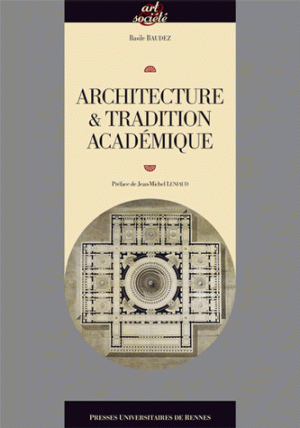 Dans le système des beaux-arts, l’architecture, en tant qu’art utile, a toujours occupé une place singulière. Issue des arts du dessin, elle côtoyait sur un pied d’égalité la peinture et la sculpture dans les premières académies fondées par les humanistes de la Renaissance. Ces institutions connurent leur âge d’or au siècle des Lumières dans le domaine des sciences, des lettres et des arts. Les académies artistiques d’Europe se définissaient comme des cercles professionnels, des organes de consultation pour le pouvoir politique et des écoles visant à transmettre un certain nombre de principes esthétiques.
Elles jouèrent un rôle crucial pour la structuration de la profession architecturale, l’établissement de normes théoriques et la diffusion de la pratique de l’expertise dans l’Europe classique. Cet ouvrage examine pour la première fois la manière dont ce modèle propre au monde occidental, si décrié à la fin du XIXe siècle, a donné naissance dans la seconde moitié du XVIIIe siècle à la profession moderne d’architecte et à une façon de concevoir l’art de bâtir qui est encore la nôtre.
Basile Baudez, archiviste paléographe, agrégé d’histoire, est maître de conférences en histoire du patrimoine moderne et contemporain à l’université Paris-Sorbonne. Ses recherches portent sur l’histoire de l’architecture européenne de l’époque classique.
A full description is available at Le Blog de L’ApAhAu.
The Nelson-Atkins Names Antonia Boström as Curatorial Director
Press release (27 February 2013) from the museum:
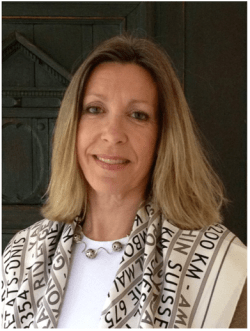 Following an international search, The Nelson-Atkins Museum of Art in Kansas City today announced the appointment of Antonia Boström as Director of Curatorial Affairs, a position that will lead the Nelson-Atkins’s dynamic curatorial team. Boström brings a wealth of experience from art museums in London and the United States, including her current leadership position at the J. Paul Getty Museum, Los Angeles. She will begin her new post at the Nelson-Atkins in May.
“Dr. Boström’s wealth of experience across continents and in institutions with world-class collections made her unequivocally the ideal candidate for this position,” said Julián Zugazagoitia, Director & CEO of the Nelson-Atkins. “She brings a depth of scholarship and invaluable skills that will advance the curatorial voice of the Nelson-Atkins toward even higher levels of excellence.”
Boström has pursued art throughout her life, and her scholarship and management skills have led her to the Getty Museum, the Detroit Institute of Arts, the Royal Academy of Art, London, and the Victoria and Albert Museum, London, among others. She is excited to come to Kansas City and work with the esteemed collection at the Nelson-Atkins.
“The museum is at a great moment of transition, with the exquisite new Bloch Building, a gem of architecture, and with the leadership of Julián Zugazagoitia,” Boström said. “I am interested in working with a collection that is so renowned, but that perhaps is not widely enough known, and in discovering what the museum means to Kansas City. I look forward to working with a talented group of curators as we strive to reach new audiences.”
Born and raised in London, the daughter of a paintings conservator, she received her B.A. (1979) in the History of Art from the Courtauld Institute of Art, London University, and obtained her PhD in 1996 from the same institution. She worked in London as museum assistant at the National Portrait Gallery (1980), in the National Art Library and as an assistant curator at the Victoria and Albert Museum (1980-1985), as a commissioning editor at the Grove Dictionary of Art for Macmillan Publishers (1985-1988), and as acting curator of the Permanent Collection of Paintings and Sculpture at the Royal Academy of Arts (1995-96).
Boström, fluent in five languages, spent important years at the Detroit Institute of Arts from 1996 to 2004, working with that institution’s rich collection as an assistant, then associate curator in the Department of European Sculpture and Decorative Arts. While there she was co-author of Catalogue of Italian Sculpture in the Detroit Institute of Arts, and she was an adjunct professor at Wayne State University.
Since 2004 she has been the Senior Curator and Department Head, Sculpture and Decorative Arts Department at the J. Paul Getty Museum. Boström led the installation of the Fran and Ray Stark Sculpture Garden and Terrace in collaboration with Richard Meier Architects & Olin Patnership, plus the reinstallation of several Sculpture and Decorative Arts galleries. Among the many she has been involved with are two recent exhibitions at the Getty Museum – Messerschmidt and Modernity and Cast in Bronze: French Sculpture from Renaissance to Revolution. (more…)










 Enfilade
leave a comment