Exhibition | Fired by Passion: Masterpieces of Du Paquier Porcelain
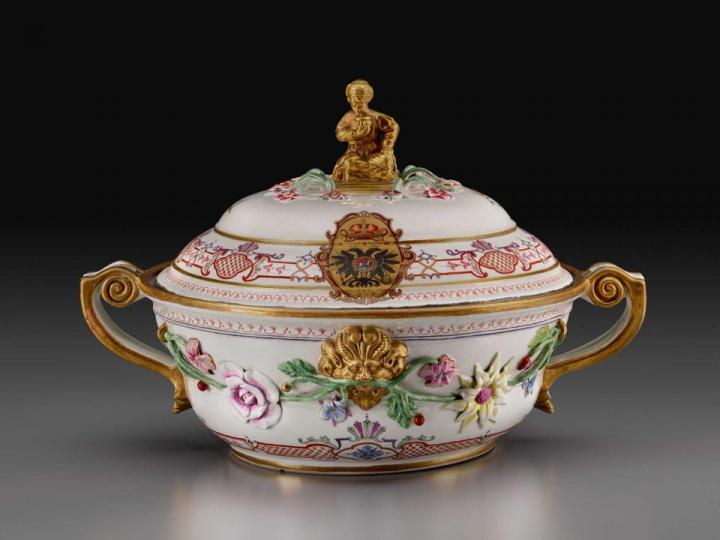
Du Paquier Manufactory, Tureen from the Service for Czarina Anna Ivanovna,; ca. 1735; hard-paste porcelain, 23.2 × 36.5 × 28.9 cm (The Frick Collection; gift of from the Melinda and Paul Sullivan Collection, 2016).
◊ ◊ ◊ ◊ ◊
Now on view at The Frick:
Fired by Passion: Masterpieces of Du Paquier Porcelain from the Sullivan Collection
The Frick Collection, New York, 8 June 2017 — 12 August 2018
Curated by Charlotte Vignon
The Frick Collection announces a new year-long installation in the Portico Gallery, Fired by Passion, inspired by the generous gift of fourteen pieces of Du Paquier porcelain made to the Frick in 2016 by Paul Sullivan and Trustee Melinda Martin Sullivan. The Du Paquier Manufactory was established in Vienna in 1718 by Claudius Innocentius du Paquier, an entrepreneur and official at the Viennese Court, and was only the second manufactory in Europe to produce true porcelain, after the Royal Meissen Manufactory, outside Dresden. Although in operation for only twenty-five years, Du Paquier left an impressive body of inventive and often whimsical work, forging a distinct identity in the history of European porcelain production.
 Fired by Passion presents about forty tureens, drinking vessels, platters, and other objects produced by Du Paquier between 1720 to 1740, which were coveted by aristocrats in Vienna and throughout Europe. In addition to exploring the rivalry between the Du Paquier and Meissen manufactories, the exhibition highlights the eclectic mix of references—many of them East Asian—that inspired Du Paquier porcelain. Splendid examples with coats of arms and heraldic symbols from commissions across Europe also illustrate the manufactory’s success and influence beyond Vienna. Fired By Passion is organized by Charlotte Vignon, Curator of Decorative Arts, The Frick Collection.
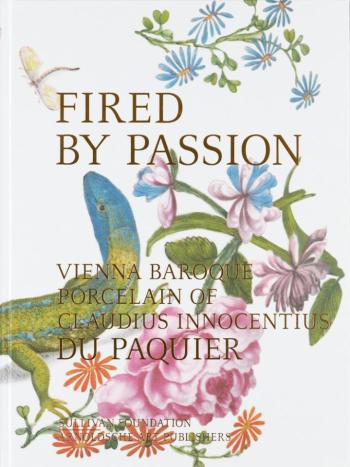
Meredith Chilton and Claudia Lehner-Jobst, Fired by Passion: Vienna Baroque Porcelain of Claudius Innocentius du Paquier (Stuttgart: Arnoldsche Art Publishers, 2009), 1432 pages, ISBN: 978 38979 03043 (English) / ISBN: 978 38979 03081 (German), $200.
The first comprehensive publication on this important porcelain manufactory, this work has been made possible through a five-year research program conducted by the Melinda and Paul Sullivan Foundation for the Decorative Arts. The objects shown, many of them for the first time here, are in major public and private collections. This 3-volume set presents the distinctive style and the exciting history of Du Paquier porcelain in the context of Baroque Vienna.
Extensive additional information, including photographs of all objects in the exhibition, is available here»
◊ ◊ ◊ ◊ ◊
Note (added 14 June 2017) — The original version of this posting mistakenly listed the date of the catalogue as 2017; in fact, it appeared in 2009.
New Book | Roma hispánica
Published by CEEH, and now available from Artbooks.com:
Pablo González Tornel, Roma hispánica: Cultura festiva española en la capital del Barroco (Madrid: Centro de Estudios Europa Hispánica, 2017), 392 pages, ISBN: 978 8415245 582, 34€ / $65.
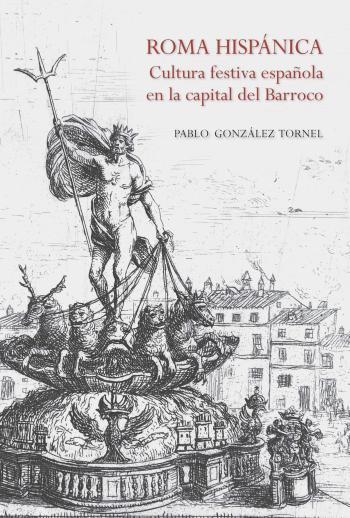 Roma y España mantuvieron un vínculo muy intenso desde tiempos de los Reyes Católicos hasta los albores del mundo contemporáneo. La ciudad era la sede del príncipe de la Iglesia, y la Monarquía Hispánica—que hizo del catolicismo militante el eje de su teología política, sobre todo bajo el gobierno de los Habsburgo—necesitaba de manera imperiosa la aprobación papal. Este lazo indisoluble entre la Monarquía Hispánica y el Papado durante la Edad Moderna dio lugar a una intensísima labor diplomática. La presencia española en Roma fue, desde finales del siglo xv, cada vez más numerosa, y las necesidades representativas de los súbditos de la Corona dieron lugar a una verdadera geografía hispánica en la ciudad, cuyos hitos principales eran el palacio de la Embajada de España y las iglesias nacionales de aragoneses y castellanos de Santa Maria di Monserrato y San Giacomo degli Spagnoli.
Gonzalez Tornel estudia en este libro uno de los elementos fundamentales de la rica y polifacética presencia hispana en Roma: la fiesta. Los rituales y las celebraciones que protagonizaron allí los españoles sirvieron para cohesionar a la comunidad y, sobre todo, tuvieron un papel clave en la acción propagandística de la Corona. Canonizaciones, entradas triunfales, celebraciones de éxitos políticos, fiestas religiosas o funerales regios hicieron presente a España tanto o más que las personas que los protagonizaron o los lugares donde se desarrollaron. Durante la Edad Moderna la fiesta fue capital a la hora de entender tanto el poder como las relaciones entre la Iglesia y los Estados, y aquella que protagonizó la Monarquía Hispánica en Roma es imprescindible para explicar ambas realidades.
Pablo González Tornel, doctor en Historia del Arte, es profesor en la Universitat Jaume I de Castellón. Durante sus estancias en la Università degli Studi di Palermo, la Biblioteca Hertziana, la Università di Roma La Sapienza o la Villa I Tatti (Harvard University), se ha centrado en la historia cultural de la Monarquía Hispánica, especialmente en la arquitectura y la cultura festiva durante la Edad Moderna. Entre sus trabajos destacan Los Habsburgo. Arte y propaganda en la colección de grabados de la Biblioteca Casanatense de Roma (2013), La fiesta barroca: los reinos de Nápoles y Sicilia (2014) o Cuatro reyes para Sicilia. Proclamaciones y coronaciones en Palermo 1700–1735 (2016).
At Bonhams | Sèvres Vases
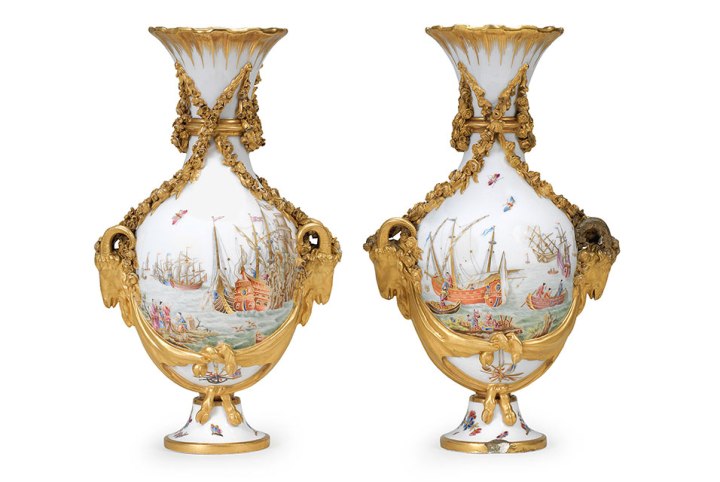
Pair of Sèvres hard-paste vases, decorated by the gilder Jean-Jacques Dieu, ca. 1778. Lot 217: Estimated £70,000–90,000
(Photo: Bonhams)
◊ ◊ ◊ ◊ ◊
Press release (9 June 2017) from Bonhams:
Fine European Ceramics
Bonhams, London, 14 June 2017
A rare pair of late 18th-century Sèvres hard-paste vases (Lot 217), made for a member of the Court of Louis XVI at Versailles, lead Bonhams Fine European Ceramics sale on Wednesday 14 June 2017. Once in the collection of the Earls Spencer, they are estimated at £70,000–90,000.
Only 13 vases of this style were ever made by the Sèvres porcelain factory. They were manufactured to order between 1778 and 1779, and buyers included the King himself and his aunt, Madame Victoire. It is believed that the pair of vases in the Bonhams sale was bought by the king and presented to his sister in law, the Comtesse d’Artois.
The vases were decorated by the prominent gilder, Jean-Jacques Dieu, whose name appears in the archives of the Sèvres porcelain manufactory between 1777 and 1811. They are richly decorated with chinoiserie sea battles—one ship on each vase bears a shield with the French royal arms—and have goats head handles. A service with comparable battle scenes is in the Wallace Collection. The only other pair of vases of this shape is in the Getty Museum.
Just over ten years after the vases were delivered to Versailles, the French Revolution broke out in 1789 and many of the aristocracy, including the Comtesse d’Artois, fled. The pair in the Bonhams sale next appear in England in the collection of diplomat William Poyntz, though how he acquired them is not known. They passed by inheritance to Poyntz’s daughter Georgina who, in 1755, had married John Spencer, later First Earl Spencer, the family of Princess Diana.
Bonhams Head of European Ceramics Nette Megens, said, “These vases are exceptionally rare and with a wonderful provenance, having been in distinguished English collections for most of their existence. Their close connection with the court of Louis XVI make them even more intriguing and attractive.”
Other items in the sale:
• A rare Capodimonte teapot and cover, ca. 1750, £15,000–20,000
• A rare tureen from the Brühl’sche Allerlei Service, ca. 1745–46, £10,000–15,000
• A large Royal Copenhagen Flora Danica dinner service, second half 20th century, £35,000–55,000.
• A large framed Berlin plaque of The Wise and Foolish Virgins, 1884, £20,000–30,000.
Display | Eighteenth-Century Pastel Portraits
From The Met:
Eighteenth-Century Pastel Portraits
The Metropolitan Museum of Art, New York, 26 July — 29 October 2017
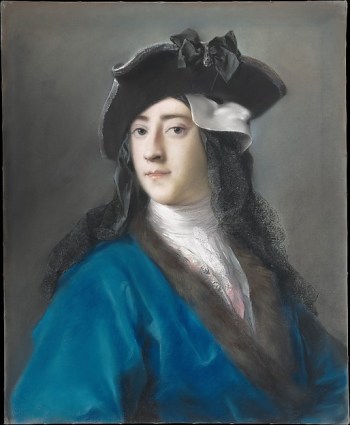
Rosalba Carriera, Gustavus Hamilton (1710–1746), Second Viscount Boyne, in Masquerade Costume, 1730–31; pastel on paper, laid down on canvas (New York: The Metropolitan Museum of Art, 2002.22).
Pastel portraiture flourished in 18th-century Europe owing to the medium’s distinctive optical properties—its brilliant colors and warm glow. The powdery nature of pastel crayons allowed artists to bathe their sitters in flattering light. The dual nature of the paintings—realistic yet ephemeral—inspired in viewers a sense of wonder.
This exhibition will draw from a small but important group of French, Italian, German, and British pastels in the Museum’s collection. Examining works by Rosalba Carriera, Charles Antoine Coypel, Adélaïde Labille-Guiard, and other leading portraitists, it will explore the rising popularity of pastel in conjunction with artistic practices and technological advances of the day.
On view at The Met Fifth Avenue in Gallery 624.
Exhibition | Cristóbal de Villalpando: Mexican Painter of the Baroque
Press release from The Met:
Cristóbal de Villalpando: Mexican Painter of the Baroque
Palacio de Cultura Banamex – Palacio de Iturbide, Mexico City, 9 March — 4 June 2017
The Metropolitan Museum of Art, New York, 25 July — 15 October 2017
Curated by Ronda Kasl, Jonathan Brown, and Clara Bargellini
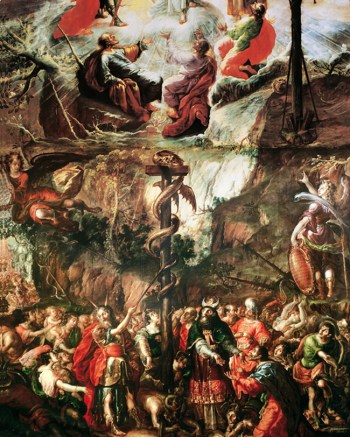
Cristóbal de Villalpando, Moses and the Brazen Serpent and the Transfiguration of Jesus (detail), 1683; oil on Canvas. Col. Propiedad de la Nación Mexicana, Secretaría de Cultura, Dirección General de Sitios y Monumentos del Patrimonio Cultural Acervo de la Catedral de Nuestra Señora de la Inmaculada Concepción, Puebla, Mexico.
Cristóbal de Villalpando (ca. 1649–1714) emerged in the 1680s not only as the leading painter in viceregal Mexico, but also as one of the most innovative and accomplished artists in the entire Spanish world. Opening July 25 at The Metropolitan Museum of Art, the exhibition Cristóbal de Villalpando: Mexican Painter of the Baroque features his earliest masterpiece, a monumental painting depicting the biblical accounts of Moses and the brazen serpent and the Transfiguration of Jesus that was painted in 1683 for a chapel in Puebla Cathedral. Newly conserved, this 28-foot-tall canvas has never been exhibited outside its place of origin. Ten additional works, most of which have never been shown in the United States, will also be exhibited. Highlights include Villalpando’s recently discovered Adoration of the Magi, on loan from Fordham University, and The Holy Name of Mary, from the Museum of the Basilica of Guadalupe.
Born in Mexico City around mid-century, Cristobal de Villalpando may have begun his career in the workshop of Baltasar de Echave Rioja (1632–1682). Villalpando’s rise to prominence coincided with the death of Echave Rioja in 1682, just one year before Villalpando painted his ambitious Moses and the Brazen Serpent and the Transfiguration of Jesus. Villalpando was celebrated in his lifetime, rewarded with prestigious commissions, and honored as an officer of the Mexico City painters’ guild.
The exhibition begins with Villalpando’s masterful Moses and the Brazen Serpent and the Transfiguration of Jesus, which was painted to decorate a chapel in Puebla Cathedral that was dedicated to a miracle-working image of Christ at the Column. In wealth and importance, Puebla Cathedral was second only to the Metropolitan Cathedral in Mexico City.
This painting—the first in a series of important ecclesiastical commissions—marks a breakthrough in Villalpando’s work, in terms of its grand scale and its audacious conception and execution. He signed it Villalpando inventor, an inscription that distinguishes the artist’s intellectual achievement from his manual skill and asserts his professional status as the learned practitioner of a noble art. In a bold and erudite arrangement, Villalpando juxtaposed the Old Testament story of Moses and the brazen serpent with the New Testament account of the Transfiguration—an unprecedented pairing of subjects. The two biblical events are staged within a single, continuous sacred landscape that encompasses the wilderness of Exodus and the holy mounts of Calvary and Tabor. Life-size figures of every age and gender, clothed and nude and in an astounding variety of poses and attitudes, populate the composition. The painting’s lower half features the story of Moses making and using the image of the brazen serpent according to God’s instructions to heal Israelites bitten by poisonous serpents. This episode provides a scriptural precedent for the making and use of images in worship, while also affirming the importance of art and artists. The upper half of the composition represents the transfiguration of Jesus’s corporeal body into light, a scene that demanded nothing less than the materialization of light in paint, which Villalpando attained through shimmering color and fluid brushwork.
Ten additional paintings by Villalpando will demonstrate his intense striving as an inventor; his great originality and skill; his ability to convey complex subject matter; and his capacity to envision the divine.
Catalogues in English and Spanish published by Fomento Cultural Banamex will accompany the exhibition. Essays address the major themes of the exhibition. The catalogues will be available for purchase in The Met book shop. A series of exhibition tours will complement the exhibition.
The exhibition was curated by Ronda Kasl, Curator of Latin American Art in The American Wing at The Met; Jonathan Brown, Carol and Milton Petrie Professor of Fine Arts, Institute of Fine Arts, New York University; and Clara Bargellini, Professor, Instituto de Investigaciones Estéticas, Universidad Nacional Autónoma de México. The work of Dr. Brown and Dr. Bargellini was commissioned by Fomento Cultural Banamex. At The Met, the exhibition is designed by Michael Langley, Exhibition Design Manager; graphics are by Mortimer Lebigre, Graphic Designer; and lighting is by Clint Ross Coller and Richard Lichte, Lighting Design Managers, all of the Museum’s Design Department.
New Book | Elfenbeinkunst im Grünen Gewölbe zu Dresden
This catalogue of ivory works in the Green Vault in Dresden is distributed by Sandstein Verlag:
Jutta Kappel, Elfenbeinkunst im Grünen Gewölbe zu Dresden (Staatliche Kunstsammlungen Dresden, 2017), 652 pages, ISBN: 978 395498 2264, 78€.
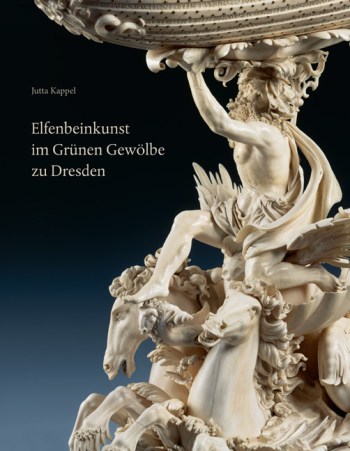 Das Grüne Gewölbe zu Dresden verwahrt eine der umfangreichsten, kunsthistorisch höchst bedeutsamen Elfenbeinsammlungen der Welt. Nach Jahren intensiver Forschung kann erstmalig der Bestand an aus Elfenbein geschnittenen Statuetten, Figurengruppen, Reliefs und in Silber gefassten Prunkgefäßen in diesem opulent illustrierten wissenschaftlichen Katalogwerk zusammenfassend vorgestellt werden.
Die frühesten Werke stammen aus byzantinischer Zeit, der Großteil aus dem 17. und 18. Jahrhundert, darunter Arbeiten solch berühmter, mit Dresden eng verbundener Elfenbeinkünstler wie Jacob Zeller, Melchior Barthel, Balthasar Permoser und Johann Christoph Ludwig Lücke. Die chronologische Gliederung des Bestandskataloges basiert auf den Inventaren der Dresdner Kunstkammer und des Grünen Gewölbes.
Dem Leser erschließt sich über stilkritische Analysen, Vergleiche, ikonographische und künstlermonographische Darlegungen zum Einzelwerk ein facettenreiches Spektrum an Motiven, Themen und Vorlagen. Zugleich werden die Geschichte dieser historisch gewachsenen Sammlung, deren Entwicklungslinien und dynastische Traditionen sichtbar gemacht. Mit dieser »Spurensuche« wird Neuland betreten.
Exhibition | Bonnie Prince Charlie and the Jacobites
Press release (24 February 2017) for the exhibition:
Bonnie Prince Charlie and the Jacobites
National Museum of Scotland, Edinburgh, 23 June — 12 November 2017
Curated by David Forsyth
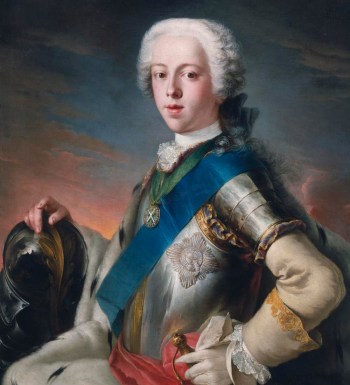
Louis Gabriel Blanchet, Portrait of Prince Charles Edward Stuart, 1739 (Royal Collection Trust).
This summer National Museums Scotland will present the largest exhibition about the Jacobites to be held in over 70 years. As well as drawing on National Museums Scotland’s own collections, the exhibition will feature spectacular loans from the United Kingdom and Europe. More than 300 paintings, costumes, documents, weapons, books, and many unique objects owned by the exiled Jacobite kings will help tell the wider story of Bonnie Prince Charlie and the Jacobites.
David Forsyth, the exhibition’s lead curator, said, “The story of Bonnie Prince Charlie and the Jacobites has had an enduring and generally romantic fascination for subsequent generations, from Sir Walter Scott to the current Outlander TV programme, along with many other representations in literature, TV, and film. This exhibition will enable us to use the best material there is—real objects and contemporary accounts and depictions—to present the truth of a story more layered, complex, and dramatic than even these fictional imaginings.”
The Jacobites (from Jacobus, the Latin for James) were supporters of a movement to reinstate the Roman Catholic Stuart king, James VII & II and his heirs to the throne after his exile to France in 1688. Bonnie Prince Charlie and the Jacobites presents a detailed and dynamic, multi-faceted re-examination of this familiar yet much-contested story, showing how the Jacobite challenge for the three kingdoms was a complex civil war, which even pitched Scot against Scot. Support for the cause was drawn from Scotland, England, Ireland, and Continental Europe; it was part of the broader dynastic and political rivalries of Europe’s great powers.
Bonnie Prince Charlie
Bonnie Prince Charlie has a place in popular consciousness as the romantic personification and figurehead of the movement. This is at least in part due to the Victorian fascination with the period, illustrated by the portrait which opens the exhibition of the Prince arriving at a ball at the Palace of Holyroodhouse. The work, by John Pettie, was painted over a century after Charles’s death and actually depicts a scene from Sir Walter Scott’s novel Waverley.
In fact, Charles Edward Louis John Casimir Sylvester Maria Stuart (1720–1788) was born and died in Rome, spending less than fourteen months in Scotland during his lifetime. The exhibition will explore the full story of the Jacobites, which spans two centuries and encompasses Britain, Ireland, and Continental Europe.
The Stuart Dynasty: Divided by Faith
At the heart of the story lies one family—The Royal House of Stuart—one of Europe’s most enduring dynasties, a dynasty with a claim to unite three kingdoms: Scotland, England, and Ireland.
James VII & II had taken the throne in 1685 after the death of his brother, Charles II. By 1688 political and religious pressures drove a wedge through the family. James’ Catholic faith, shown in spectacular altar pieces bought in 1686 for his chapel at Holyrood, caused widespread concern and, when he announced the birth of a male heir which heralded the prospect of a Catholic succession, he was deposed in the Glorious Revolution, replaced by his daughter Mary and her husband, William of Orange, while her baby half-brother was smuggled out the country for his own safety.
These events led to James VII & II, Bonnie Prince Charlie’s grandfather, spending the rest of his days in exile in France, while the house of Hanover succeeded to the throne in 1714. The Hanoverian line is shown through the basin and ewer of the Winter Queen, Elizabeth of Bohemia, daughter of James VI & I, whose grandson George became King after the death of Queen Anne in 1714.
Courtly Exile in Europe
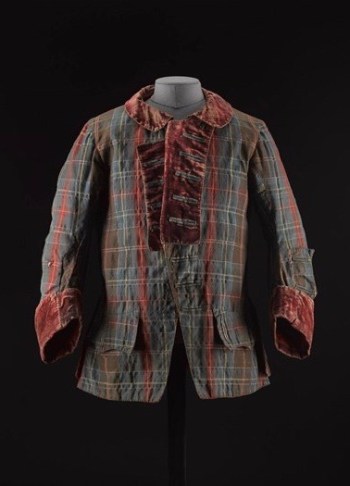
Short tartan frock coat with velvet collar and cuffs and lined in wool twill and linen, associated with Prince Charles Edward Stuart (National Museums Scotland).
The baby smuggled to safety was Charles’s father, James Francis Stuart (1688–1766); to supporters loyal to the exiled Stuarts, he became James VIII & III and was formally recognised as such by Louis XIV of France. The exhibition will bring to the forefront the lives of the Jacobites in exile at the courts they established in Saint Germain, France, and later in Rome, where they were joined by many of their followers. A display of remarkable and symbolic objects including the targe (shield), broadsword, and travelling canteen, commissioned by supporters at home, will be shown in the context of the exiled Stuart court in Rome. These objects, all later recovered from the baggage train at Culloden, were produced to promote the Jacobites’ dynastic claims, affirming their royal status and showing their connections with their distant supporters while in exile. Secret signs and insignias marked out those loyal to the ‘kings over the water’, ranging from a subtle white rose to a seditious full tartan suit, made for leading English Jacobite Sir John Hyde Cotton.
James Francis Stuart married a Polish Princess, Clementina Sobieski. His marriage certificate will be shown, as will the baptismal certificate of their first
son, Charles Edward Stuart.
Five Jacobite Challenges for the Throne
Meanwhile, in Scotland, this tumultuous period was characterized by five Jacobite challenges to the throne, in 1689–90, 1708, 1715, culminating in Bonnie Prince Charlie’s campaign of 1745–46. Weapons, plans, paintings, and commemorative objects show the earlier campaigns. Charles’s time in Scotland, while short, forms one of largest sections of the exhibition, including spectacular costume including items associated with Charles himself and dresses of the time thought to have been worn at the Court he briefly held at the Palace of Holyroodhouse in Edinburgh. Alongside this, the ‘lost’ Ramsay portrait of Charles in the guise of a European prince, recently acquired by the National Galleries of Scotland, will be shown.
Bonnie Prince Charlie and the Last Jacobite Challenge
After further advances followed by a long retreat, the campaign came to an abrupt and bloody end in little more than an hour at Culloden. The plan of the battle, a portrait of the Duke of Cumberland and numerous weapons and effects of those who fell will form a reflective backdrop as a Gaelic lament plays in the background.
Retribution across the Highlands was swift and brutal. Charles spent five months evading government forces eventually sailing for France, leaving the Jacobite cause in tatters. Portraits of Anne MacKintosh and Flora MacDonald introduce two of the key figures in Charles’ eventful escape.
Kings over the Water
The denouement to the story and to the exhibition is the remaining years in exile of James, Charles, and his brother Henry who, after Culloden, joined the priesthood of the Catholic Church while Charles, his ambitions thereby thwarted once and for all, dwindled towards a dissolute end. A pair of portraits of Henry and Charles in their later years serves to illustrate their contrasting fates. Henry, Charles, and their father James are all buried in the Vatican, the latter being the only monarch interred there.
A closing selection of Jacobite memorial treasures is presented, including the ‘Spottiswoode’ Amen glass, c.1775. On loan from William Grant and Sons, owners of Drambuie, this is one of the finest ‘Amen’ glasses in existence, so called due to its engraving with the Jacobite anthem of James VIII and dedicatory inscriptions to his sons, Prince Charles and Prince Henry.
The exhibition is supported by Baillie Gifford Investment Managers and will be accompanied by a programme of public events and by two publications.
The National Museum of Scotland is part of a new trail of 26 attractions across Scotland whose history is intertwined with the Jacobite story. Learn more here.
David Forsyth, ed., Bonnie Prince Charlie and the Jacobites (Edinburgh: National Museums Scotland, 2017), 256 pages, ISBN: 978 191068 2081, £25.
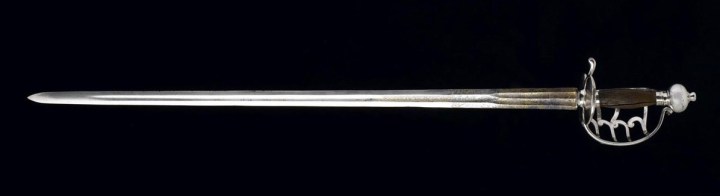
Broadsword with a silver hilt made by Edinburgh goldsmith Harry Bethune, ca. 1715 (National Museums Scotland, H.LA 124). The inscription shows support for James ‘VIII’, the son of the deposed King James VII and father of Bonnie Prince Charlie.
◊ ◊ ◊ ◊ ◊
S T U D Y D A Y — 2 8 O C T O B E R 2 0 1 7
Chaired by historian Fiona Watson, our expert panel will examine the wider Jacobite story: Bonnie Prince Charlie’s court at the Palace of Holyroodhouse, the Stuart courts in exile in France and Italy, and how our conservators prepared costume pieces for display.
10:00 Registration
10:30 Fiona Watson, Welcome and Introduction
Watson is an author, broadcaster, and historian. She is best known for her 2001 BBC series In Search of Scotland. She is former Senior Lecturer in Scottish History and founding Director of the Centre for Environmental History at the University of Stirling.
10:45 David Forsyth, Bonnie Prince Charlie and the Rise and Fall of the Jacobites
Drawing on exceptional material from Scottish collections as well as treasures from across the UK and France, this talk will reveal who the Jacobites were and explores the cause that drove their campaigns. Forsyth is Principal Curator of Medieval–Early Modern Collections in the Department of Scottish History and Archaeology at National Museums Scotland and the curator of Bonnie Prince Charlie and the Jacobites.
11:15 Deborah Clarke, Bonnie Prince Charlie at the Palace of Holyroodhouse
In 1745, the Jacobites seized the city of Edinburgh and Bonnie Prince Charlie set up court at the Palace of Holyroodhouse. This talk uncovers the famous court of the ’45 Rising and discusses the ceremonies and events that took place during the Prince’s residence at the Stuart palace. Clarke is Senior Curator, Royal Collection Trust, at the Palace of Holyroodhouse.
11:45 Danielle Connolly and Miriam McLeod, Conserving the Jacobites
The National Museum of Scotland’s Jacobite textile collections are of international importance. They are often unique objects, covering a range of materials and techniques. This talk will highlight the painstaking textile conservation work undertaken on large costume pieces—such as the silk dress said to have been worn by Margaret Oliphant of Gask at the Great Ball of Holyrood after the Battle of Prestonpans—and the small but highly symbolic white cockade. Connolly is Assistant Textile Conservator at National Museums Scotland; McLeod is Textile Conservator at National Museums Scotland.
12:15 Lunch Break and Opportunity to View Exhibition
National Museums Scotland Research Librarians will be on hand to showcase related material in South Hall. The scope of the library collection reflects the strengths and variety of the Museums’ collections and Library staff can offer advice and support in locating items and using the collections. The Research Library is our main reading room on level 3 of the National Museum of Scotland.
13:30 Edward Corp, The Stuart Court in France and Italy
An analysis of the Jacobite Court in exile—re-assessing its importance and highlighting the significance of Stuart relations with the European monarchy and the Papacy. This talk will also explore how the court came to an end—and how it has since been misrepresented. Corp was Professor of British History at the University of Toulouse until 2011 and since then has been Emeritus Professor. Edward curated The King over the Water, a major exhibition on the exiled Stuart Court at the Scottish National Portrait Gallery in 2001 and wrote the associated publication The King over the Water: Portraits of the Stuarts in Exile after 1689 (National Galleries of Scotland, 2001). He has also written a three volume history of the Stuart Court in exile: A Court in Exile: The Stuarts in France, 1689–1718; The Jacobites at Urbino: An Exiled Court in Transition; and The Stuarts in Italy, 1719–1766: A Royal Court in Permanent Exile.
14:15 Panel Discussion and Audience Q&A, Chaired by Fiona Watson
Additional programming details are available here»
New Book | Das Kloster der Kaiserin
Vienna’s Salesianerinnenkirche, home of the monastery of the Salesian nuns, was founded in 1717 by the widow of Emperor Joseph I, Empress Amalia Wilhelmina (the uncle and aunt of Maria Theresa), with foundations laid on May 13, the same day the future Holy Roman Empress was born. From Michael Imhof Verlag:
Helga Penz, ed., Das Kloster der Kaiserin: 300 Jahre Salesianerinnen in Wien (Petersberg: Michael Imhof Verlag, 2017), 264 pages, ISBN: 978 37319 03390, 35€.
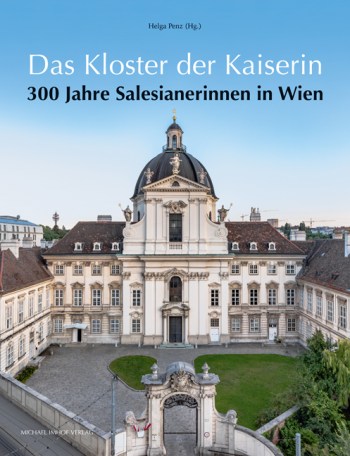 Eines der ältesten Frauenklöster Wiens feiert sein 300-jähriges Jubiläum. Am 13. Mai 1717, dem Tag, an dem die nachmalige Kaiserin Maria Theresia geboren wurde, fand die Grundsteinlegung für die großzügige Klosteranlage statt. Gestiftet wurde das Kloster von Kaiserin Amalia Wilhelmina, Gemahlin Kaiser Josephs I. Sie richtete sich in dem prachtvollen Barockbau von Donato Felice Allio ihre Witwenresidenz ein.
Die Ordensfrauen des französischen „Ordens von der Heimsuchung Mariens“ werden nach ihrem Gründer, dem hl. Franz von Sales, Salesianerinnen genannt. Der Orden ist kontemplativ und lebt eine strenge Klausur. Das Kloster in Wien führte lange Zeit ein Mädchenpensionat, das sich beim Adel der Habsburgermonarchie besonderer Beliebtheit erfreute. Die Salesianerinnen gehörten zu einem bedeutsamen adeligen Frauennetzwerk.
Das Jubiläumsbuch würdigt die reiche Geschichte und das kostbare kulturelle Erbe der Wiener Salesianerinnen. 16 Autorinnen und Autoren stellen die Stifterin und ihre Klosterresidenz vor, erörtern die Geschichte und die Bedeutung des Ordens im europäischen Kontext, beleuchten verschiedene Aspekte des klösterlichen Lebens von den Anfängen bis ins 20. Jahrhundert und bieten neue Erkenntnisse zu Baugeschichte und künstlerischer Ausstattung. Zahlreiche farbige Abbildungen geben einen einzigartigen Einblick in das barocke Kloster und seine Kunstschätze.
I N H A L T
Grußworte
• 300 Jahre Kloster der Heimsuchung Mariens in Wien, Kardinal Dr. Christoph Schönborn, Erzbischof von Wien
• Ein Werk des Herzens Jesu, Mutter Maria Gratia Baier OVSM und die Schwestern von der Heimsuchung Mariens in Wien
• Die Kraft der Stille. St. Georgs-Orden
• Im Schatten der Lilien vom Rennweg – anstatt eines Grußwortes, Prof. Dr. Christian Meyer, Vizerektor der Universität für Musik und darstellende Kunst Wien
• Gott, Kaiserin, Vaterland, Verein der Freunde der Salesianerinnen
Einleitung
Helga Penz, Vive Jésus: 300 Jahre Salesianerinnen in Wien
Die Stifterin Kaiserinwitwe Wilhelmina Amalia
• Michael Pölzl, Wie der regenbogen in der lufft: Die Stifterin Amalia Wilhelmina von Braunschweig-Lüneburg
• Elisabeth Germs-Cornides, Zur spirituellen Prägung der Stifterin: Jugendjahre der Wilhelmina Amalia von Braunschweig-Lüneburg in Paris
• Maureen Cassidy-Geiger, In der und ausser der Clausur: Kaiserinwitwe Wilhelmina Amalias Appartement im Kloster am Rennweg
Der Orden von der Heimsuchung Mariens und das Kloster in Wien
• Herbert Winklehner OSFS, Ein einzigartiges Beispiel geistlicher Freundschaft. Johanna Franziska von Chantal und Franz von Sales
• Gisela Fleckenstein OFS, Der Orden von der Heimsuchung Mariens: Grundlagen, Entwicklung, Struktur
• Christine Schneider, Der Konvent und das Pensionat des Wiener Heimsuchungsklosters von der Gründung bis zum Tod der Stifterin im Jahre 1742
• Peter Wiesflecker, Kloster, Kaiserhaus und Adel: Die Salesianerinnen am Rennweg und der habsburgische Hof
• Johann Weissensteiner, Die Visitation des Klosters der Salesianerinnen durch Erzbischof Vinzenz Eduard Milde im Jahr 1846
• Peter Wiesflecker, Unter fremden Dächern wohnt Ihr Frauenchor: Das Salesianerinnenkloster als „Benediktinerinnen- abtei“ und Exilort im Zweiten Weltkrieg
Architektur und künstlerische Ausstattung
• Herbert Karner, Die Kirche zur Heimsuchung Marias: Ein Sakral- raum zwischen kaiserlicher Repräsentation und salesianischer Spiritualität
• Werner Telesko, Die Ausstattung der Salesianerinnenkirche mit Deckenmalereien und Altarbildern: Überlegungen zum ikonografischen Programm
• Herbert Karner, Das Heimsuchungskloster: Architektur und Raumkonzept
• Gernot Mayer, Kloster/Residenz: Ein Ort des Rückzugs, ein Ort der Repräsentation? Zur Ambiguität der Residenz von Kaiserinwitwe Wilhelmina Amalia am Rennweg
• Helmut Halb, Die Bildausstattung der Innenräume und ihre Funktion im klösterlichen Leben
• Manfred Koller, Restaurierergebnisse nach 1945: Gemälde, Altarbilder und Kuppelmalerei
• Markus Santner, Robert Linke, Johann Nimmrichter, Johannes Jacob, Die gotische Madonna des Heimsuchungsklosters: Restauriergeschichte und Konservierung
• Werner Telesko, Die Sammlung von Thesenblättern
• Eva Voglhuber, Vom Hofkleid zum liturgischen Gewand: Die Para- mentensammlung der Wiener Salesianerinnen
Die Musikuniversität im Kloster
• Stefan Weiss, Die Geschichte der mdw am Standort Salesianerinnenkloster
Anhang
Liste der Oberinnen
Literaturverzeichnis
Verzeichnis der Abkürzungen und Siglen
Abbildungsnachweis
New Book | Heinrich Graf von Brühl
Papers from the March 2014 conference, which marked the 250th anniversary of Heinrich Graf von Brühl’s death, have recently been published by Sandstein Verlag.
Ute Koch and Cristina Ruggero, eds., Heinrich Graf von Brühl: Ein sächsischer Mäzen in Europa—Akten der internationalen Tagung zum 250. Todesjahr (Dresden: Sandstein Verlag, 2017), 548 pages, ISBN: 978 39549 82974, 68€. With essays in German, English, French, and Italian.
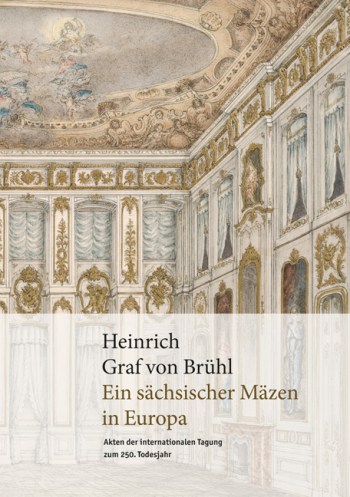 Die Brühlsche Terrasse, das Schwanenservice oder auch die Sixtinische Madonna—sie alle sind auf das Engste mit dem sächsischen Premierminister Heinrich Graf von Brühl (1700–1763) verbunden. Als Mäzen setzte er zudem—mit eigenen kostbaren Sammlungen und Schlössern—Maßstäbe in ganz Europa. Die vorliegende Publikation bricht die Verengung des Blicks auf Brühls regionale Bedeutung für Dresden und Sachsen auf und legt erstaunliche Verbindungen frei. Sie versteht sich als »Türöffner« für die Erforschung der kulturellen und politischen Bedeutung Sachsens im 18. Jahrhundert in Europa und der Welt.
Brühl’s Terrace, the Swan Service, and the Sistine Madonna are all closely connected with the Saxon Prime Minister Heinrich Count von Bruhl (1700–1763). He was a patron of the arts whose precious collections and castles set standards in the whole of Europe. The present publication moves away from the somewhat narrow focus on Brühl’s regional importance for Dresden and Saxony. It reveals unexpected connections and opens the door for the study of the cultural and political importance of 18th-century Saxony in Europe and the rest of the world.
Exhibition | The Demolition of the Château de Meudon: Hubert Robert
Now on view at the Château de Sceaux, Hauts-de-Seine:
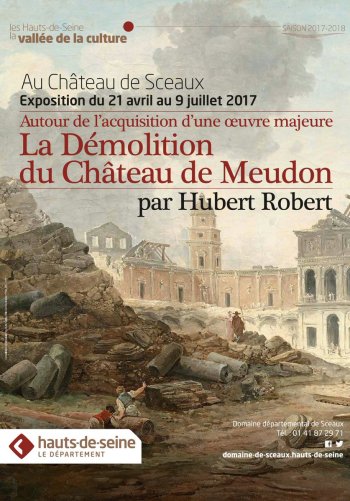
La Démolition du Château de Meudon par Hubert Robert
Château de Sceaux, 21 April — 9 July 2017
 Le château de Meudon fut l’un de ces grands domaines prestigieux de l’ouest parisien, propriété de plusieurs personnages illustres, comme la duchesse d’Étampes, le cardinal de Lorraine, Abel Servien ou le marquis de Louvois, et le plus fameux : Louis de France (1661–1711), dit le Grand Dauphin, fils de Louis XIV, qui porta le domaine de Meudon à son apogée.
Constitué d’un Château-Vieux—ayant connu, depuis la Renaissance, une suite ininterrompue de transformations—et d’un Château-Neuf, voulu par le Grand Dauphin, l’ensemble était environné de jardins en terrasses générant des points de vue exceptionnels sur la campagne, la Seine et Paris. Résidence de nombreux hôtes de marque, au cours du XVIIIe siècle, le domaine fut saisi par la Nation, en 1793, et devint un lieu d’expérimentations scientifiques. C’est au cours de l’une d’elle que l’aile gauche du Château-Vieux fut incendiée, en 1795. Laissé en l’état durant une dizaine d’années, le bâtiment fut finalement démoli à partir de 1803.
Le peintre Hubert Robert, qui avait été chargé sous Louis XVI de divers aménagements dans les jardins de Meudon, fut une fois de plus sensible à l’image de ces terribles vestiges de l’Ancien Régime. Dans un élan préromantique, il a immortalisé sur la toile le moment pathétique de la disparition de l’un de ses plus beaux symboles. Le tableau final est aujourd’hui conservé au Getty Museum de Los Angeles, mais le musée du Domaine départemental de Sceaux a pu se porter acquéreur, en vente publique, de l’esquisse aboutie de cette œuvre. Hubert Robert s’y montre à la fois d’une grande virtuosité dans l’écriture et d’une parfaite délicatesse dans le coloris. Un chef-d’œuvre qui vient enrichir les collections du musée et qui est ici révélé au public dans le cadre d’une exposition-dossier.
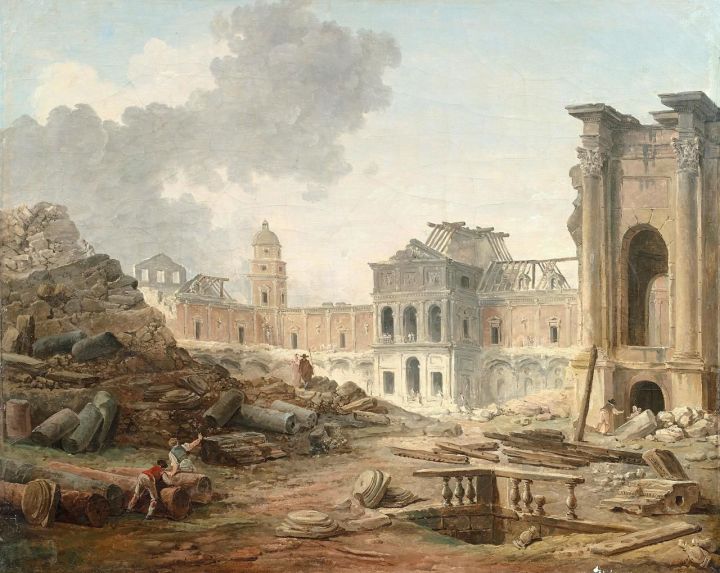
Hubert Robert, The Demolition of the Château de Meudon, 1803
(CD92/MDDS – Cab. Turquin)
◊ ◊ ◊ ◊ ◊
As reported by Art Media Agency (AMA), 15 October 2016:
Estimated at between €40,000 and €60,000, a work by Hubert Robert has been pre-empted at €111,600 by France’s Musées Nationaux, in favour of the department of Hauts-de-Seine. The painting was identified by its owner following a visit to the Louvre, during the Hubert Robert (1733–1808): Un peintre visionnaire exhibition last spring. The work was assessed by Bertrand Couton. It is a small version of a painting conserved at the J. Paul Getty Museum in Los Angeles, which featured in the Paris exhibition. It represents a demolition scene at the Château de Meudon, one of the symbols of the monarchy’s Ancien Régime.
Reconstitution 3D du château de Meudon vers 1715 (published 22 October 2014). Restitution réalisée par la société PHIDIAS 3D pour l’Association pour la Restauration du Château de Meudon.
◊ ◊ ◊ ◊ ◊
A YouTube clip from The Getty, with commentary by Jon Seydl, is available here»










 Enfilade
leave a comment